
It’s a familiar scene: the house is quiet, lights are off, and just as you’re drifting off to sleep, your dog erupts into a series of sharp barks aimed at an empty corner or the dark backyard. There’s no intruder, no raccoon at the window—just silence. Yet your dog remains on high alert. This behavior frustrates many pet owners, but it’s rarely about disobedience. Dogs don’t bark without reason—even when the cause isn’t obvious to us. Understanding the underlying triggers and applying targeted calming techniques can transform restless nights into peaceful ones.
Why Dogs Bark at Seemingly Nothing at Night
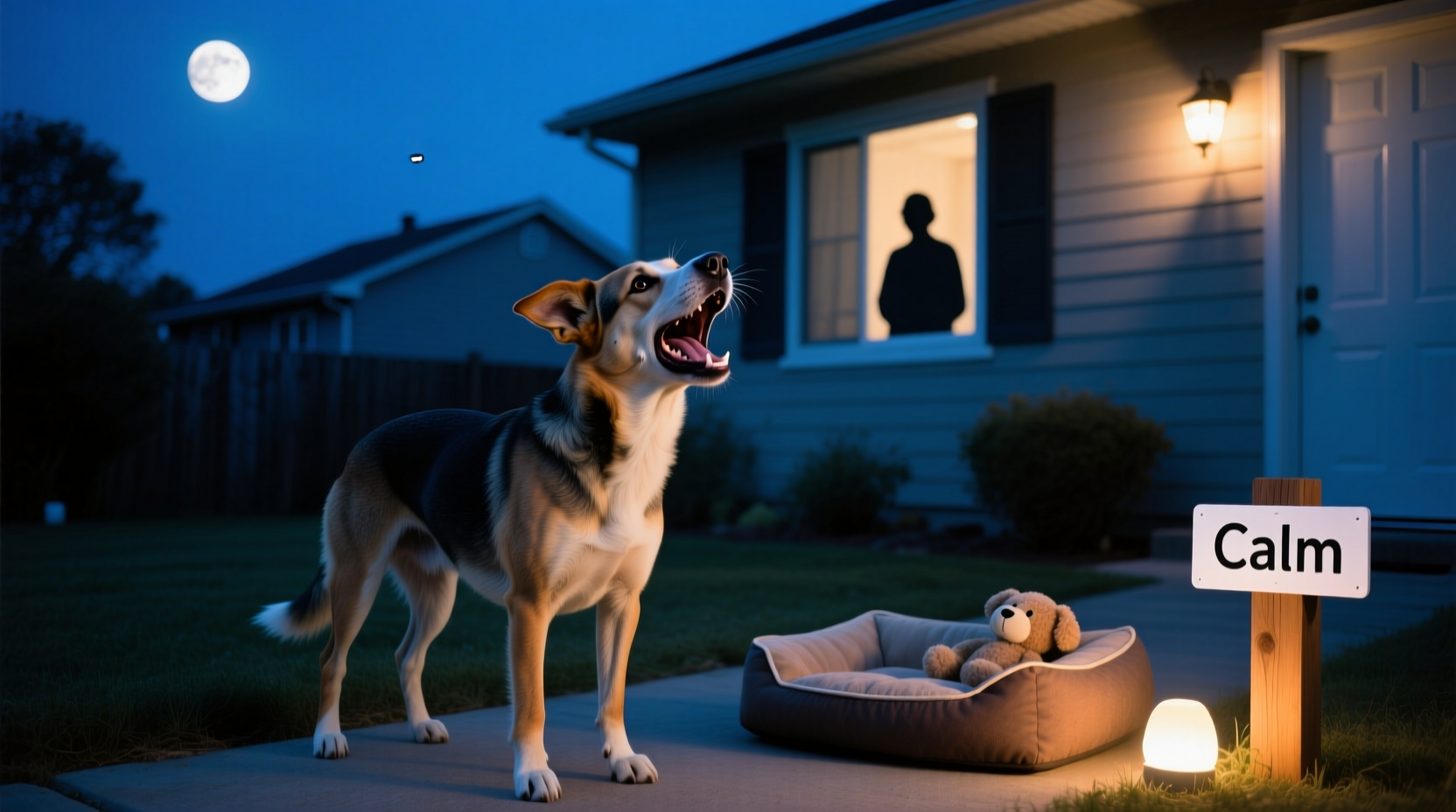
Dogs possess senses far more acute than humans. What appears to be “nothing” to us might be a distant sound, subtle movement, or even a scent carried on the breeze. At night, reduced visual stimuli heighten their reliance on hearing and smell, making them more reactive to faint environmental cues. But beyond sensory perception, several psychological and physiological factors contribute to nighttime barking.
- Hypervigilance: Many dogs are naturally protective. Even without direct threats, they may perceive shadows, wind rustling trees, or distant traffic noises as potential dangers.
- Cognitive decline: Older dogs suffering from canine cognitive dysfunction (CCD) often become disoriented at night, leading to confusion and anxiety-driven vocalizations.
- Boredom or under-stimulation: A dog that hasn’t had enough physical or mental exercise during the day may become restless at night, using barking as an outlet.
- Separation anxiety: If your dog sleeps alone while the rest of the household is asleep, they may feel isolated and bark to seek attention or reassurance.
- Past trauma or fear conditioning: Rescue dogs or those with negative experiences may react strongly to stimuli associated with past stressors, even if the current environment is safe.
Common Triggers and How to Identify Them
Before addressing the behavior, pinpointing the root cause is essential. The same symptom—barking at night—can stem from vastly different issues. Misdiagnosing the trigger leads to ineffective solutions.
Start by observing patterns. Does the barking happen at the same time each night? Is it directed toward a specific location, like a window or basement door? Does it occur only when certain conditions exist—such as windy weather or after a thunderstorm?
“Owners often assume their dog is misbehaving, but in most cases, the dog is responding to real stimuli we simply can’t perceive. The key is to shift from punishment to understanding.” — Dr. Lena Torres, Veterinary Ethologist
Environmental vs. Internal Causes
Triggers fall into two broad categories: external (environmental) and internal (physiological or emotional).
| Cause Type | Examples | How to Confirm |
|---|---|---|
| Environmental | Nighttime wildlife (raccoons, opossums), distant sirens, wind against windows, neighbor activity | Install motion-sensor outdoor lighting or use a night-vision camera to monitor activity outside |
| Physiological | Canine cognitive dysfunction, hearing loss, arthritis pain | Veterinary exam; observe for pacing, confusion, or discomfort |
| Emotional | Anxiety, fear, boredom, loneliness | Note body language: trembling, tail tucking, refusal to settle |
Calming Strategies That Actually Work
Effective intervention requires a multi-pronged approach. Simply yelling “Quiet!” or ignoring the behavior rarely resolves the issue and may worsen anxiety. Instead, combine environmental management, behavioral training, and physiological support.
1. Reduce Environmental Stimuli
Minimize what your dog can see and hear at night. Draw curtains or blinds on ground-floor windows facing streets or wooded areas. Use white noise machines or soft classical music to mask sudden outdoor sounds.
2. Establish a Predictable Evening Routine
Dogs thrive on consistency. A structured pre-bed routine signals that it’s time to wind down. Include a final potty break, light play session, and a calming activity such as chewing on a food-filled toy or listening to quiet music.
3. Use Calming Aids Strategically
Not all calming products are equal. Research-backed options include:
- Adaptil diffusers: Release synthetic dog-appeasing pheromones that mimic those of a nursing mother, reducing anxiety.
- Melatonin supplements: For older dogs with disrupted sleep cycles due to CCD. Always consult your vet before dosing.
- Weighted blankets: Provide gentle pressure that can soothe nervous systems, similar to swaddling an infant.
4. Train the “Quiet” Command During the Day
Reactive training at night fails because the dog is already aroused. Instead, practice during calm daytime moments. Here’s how:
- Wait for your dog to bark voluntarily (e.g., at the doorbell).
- Say “Quiet” in a calm, firm tone the moment they pause.
- Immediately reward with a treat when they stop barking.
- Repeat daily until the command becomes reliable.
This builds a conditioned response, making it easier to interrupt barking episodes later.
Step-by-Step Plan to Stop Nighttime Barking
Implement this 7-day plan to address both immediate symptoms and long-term causes.
- Day 1–2: Observation & Documentation
Keep a log: time of barking, duration, direction, and your dog’s behavior before and after. Note any environmental changes. - Day 3: Environmental Audit
Close curtains, turn on white noise, remove access to windows where barking occurs. Test one change at a time. - Day 4: Increase Daytime Stimulation
Add 20 minutes of mental exercise—sniff walks, puzzle toys, or obedience drills—to reduce nighttime restlessness. - Day 5: Begin Quiet Command Training
Spend 10 minutes twice daily practicing the “Quiet” cue with positive reinforcement. - Day 6: Introduce Calming Tools
Plug in an Adaptil diffuser or try a calming vest. Monitor for changes in overall anxiety levels. - Day 7: Evaluate & Adjust
Review your log. Has barking decreased in frequency or intensity? Refine your strategy based on results.
Consistency over three weeks typically yields measurable improvement. If no progress occurs, consider professional help.
Real-Life Example: Max, the Night Watchdog
Max, a 4-year-old German Shepherd, began barking every night around 2:00 AM at the backyard fence. His owners initially assumed he saw animals, but trail cameras showed nothing. Frustrated, they tried scolding and even moving him to the basement, which only increased his agitation.
A veterinary behaviorist suggested a three-part solution: installing blackout curtains to block streetlight shadows, introducing a stuffed Kong with frozen peanut butter before bed, and playing a calming music playlist. Within five days, Max’s barking dropped from nightly outbursts to once every few nights. By week three, he was sleeping through the night.
The breakthrough wasn’t discipline—it was recognizing that Max was reacting to flickering light patterns on the fence, interpreted as movement. Removing the visual trigger, combined with a soothing bedtime ritual, resolved the issue.
When to Seek Professional Help
While most cases improve with consistent effort, some dogs need expert intervention. Consult a veterinarian or certified animal behaviorist if:
- Barking increases despite interventions.
- Your dog shows signs of distress: panting, pacing, destructive behavior.
- The behavior is new and unexplained in an older dog (possible CCD).
- You suspect pain or medical issues are contributing.
In severe anxiety cases, veterinarians may prescribe short-term medications like fluoxetine or trazodone alongside behavioral therapy. These are not quick fixes but tools to enable learning in highly stressed animals.
Frequently Asked Questions
Is my dog barking at ghosts or spirits?
Dogs do not bark at supernatural entities. Their heightened senses allow them to detect stimuli beyond human perception—high-frequency sounds, subtle air currents, or faint scents—but there’s no scientific evidence supporting paranormal awareness. Attributing barking to “ghosts” distracts from identifying real, addressable causes.
Should I punish my dog for barking at night?
No. Punishment escalates anxiety and damages trust. Yelling, spraying water, or using shock collars may suppress barking temporarily but worsen the underlying emotional issue. Focus on positive reinforcement and environmental management instead.
Can diet affect nighttime barking?
Indirectly, yes. Diets high in fillers or artificial additives may contribute to hyperactivity or digestive discomfort, disrupting sleep. Older dogs benefit from senior formulas containing antioxidants and omega-3s, which support brain health and reduce cognitive decline symptoms.
Final Checklist: Action Steps to Stop Nighttime Barking
- ✅ Observe and log barking episodes for at least 48 hours.
- ✅ Block visual access to triggering areas (windows, doors).
- ✅ Play white noise or calming music at night.
- ✅ Increase daytime physical and mental exercise.
- ✅ Train the “Quiet” command using positive reinforcement.
- ✅ Try a pheromone diffuser or calming supplement (with vet approval).
- ✅ Consult a veterinarian if barking persists or worsens.
Conclusion: Peaceful Nights Are Possible
Seeing your dog distressed or unable to settle at night is exhausting—for both of you. But behind every bout of seemingly irrational barking lies a reason rooted in instinct, environment, or emotion. With patience and the right strategies, most dogs can learn to relax after dark. The goal isn’t silence at any cost, but a balanced state where your dog feels safe, tired, and secure.




 浙公网安备
33010002000092号
浙公网安备
33010002000092号 浙B2-20120091-4
Comments
No comments yet. Why don't you start the discussion?