
For decades, veterinarians have relied on visual assessment—body shape, ear set, coat type, and behavioral tendencies—to estimate a dog’s breed composition. It was common for owners to hear, “Looks like a Border Collie mix,” or “Probably has some Pit Bull in there.” But with the rise of at-home dog DNA tests, pet owners now have access to genetic insights that promise precision over guesswork. The question remains: Is knowing your dog’s exact breed mix actually useful, or is it just a novelty?
The answer isn’t straightforward. While DNA tests offer scientific backing, their real-world utility depends on how you plan to use the information. From health management to training strategies, understanding your dog’s genetics can be valuable—but only if interpreted wisely.
The Limits of Vet Guesswork
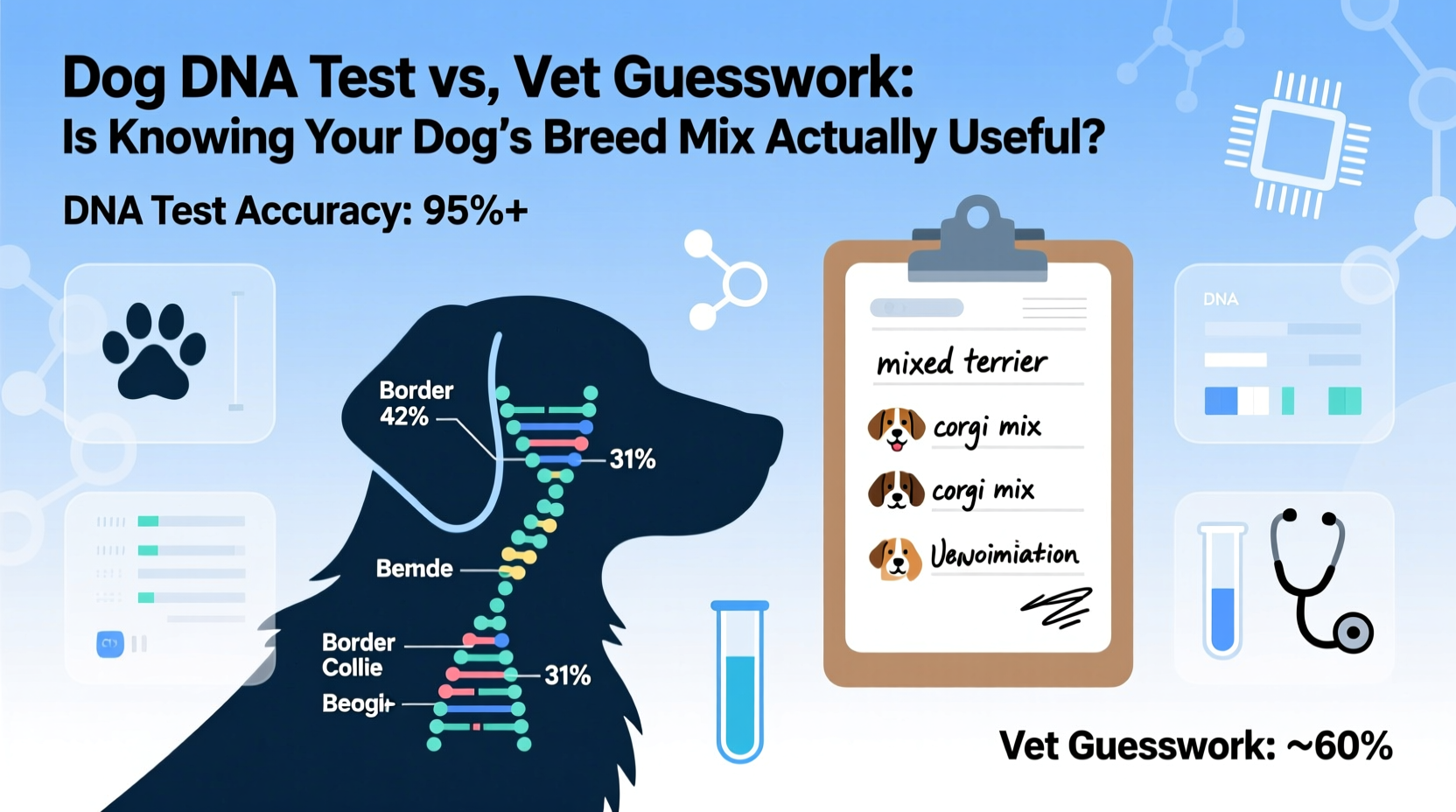
Veterinarians are trained to assess animals holistically, but breed identification by sight is inherently subjective. A 2019 study published in the Journal of the American Veterinary Medical Association found that even experienced shelter staff and vets were accurate in identifying dominant breeds in mixed-breed dogs less than 25% of the time when compared to DNA results.
Why is visual guessing so unreliable?
- Phenotypic variation: Mixed-breed dogs often express traits from one parent more strongly, masking others.
- Breed convergence: Unrelated breeds (e.g., Australian Shepherds and Rough Collies) share similar appearances.
- Regional influences: Local breeding patterns create unique mixes not easily categorized.
Dr. Karen Becker, a proactive and integrative wellness veterinarian, notes:
“While physical characteristics give us clues, they don’t tell the whole story. A dog may look like a Labrador, but genetically carry predispositions from a breed you’d never suspect.”
This gap between appearance and genetics is where DNA testing enters the conversation—not as a replacement for veterinary expertise, but as a complementary tool.
How Dog DNA Tests Work
Most commercial dog DNA kits—such as Embark, Wisdom Panel, and DNA My Dog—use a cheek swab to collect epithelial cells. The sample is analyzed for genetic markers associated with known purebred lineages. By comparing these markers to reference databases, companies estimate breed percentages and identify potential health-related gene variants.
The process typically includes:
- Purchasing a kit and registering it online.
- Swabbing the inside of your dog’s cheek (non-invasive and painless).
- Mailing the sample to the lab.
- Receiving results in 3–6 weeks via email or app.
Results usually include:
- Breed composition breakdown (e.g., 40% German Shepherd, 30% Beagle, 30% Poodle).
- Genetic health markers (e.g., MDR1 mutation, degenerative myelopathy risk).
- Coat color and trait insights (e.g., likelihood of shedding, blue eyes).
- Ancestry timeline showing generational lineage.
However, accuracy varies by company and database size. Embark, for example, uses one of the largest canine genomic databases and screens for over 200 health conditions, while smaller companies may only test for 30–50 breeds and lack comprehensive health panels.
DNA Test vs. Vet Assessment: A Practical Comparison
To understand the trade-offs, consider this side-by-side analysis of DNA testing and vet-based breed guessing.
| Factor | Dog DNA Test | Vet Guesswork |
|---|---|---|
| Accuracy | High for major breeds; less precise for rare or regional ones | Low to moderate; highly subjective |
| Cost | $80–$150 per test | Free or included in exam |
| Turnaround Time | 3–6 weeks | Immediate |
| Health Insights | Yes—identifies carrier status and disease risks | Limited to observable symptoms |
| Behavioral Predictions | Indirect—based on breed tendencies | Based on observed behavior and appearance |
| Practical Usefulness | High for health planning, moderate for behavior | Low for long-term planning, useful for triage |
The table shows that while DNA tests cost more and take longer, they deliver data with lasting relevance—especially when it comes to preventive healthcare.
When Knowing the Breed Mix Actually Matters
For many owners, discovering their dog is “12.5% Shiba Inu” might be fun trivia. But in specific scenarios, breed knowledge translates into actionable care.
1. Preventive Health Management
Certain breeds carry genetic predispositions. For example:
- Doberman Pinschers: High risk for dilated cardiomyopathy.
- Cocker Spaniels: Prone to progressive retinal atrophy (PRA).
- German Shepherds: Susceptible to degenerative myelopathy.
If your mixed-breed dog tests positive for high-risk ancestry, your vet can recommend early screenings—like echocardiograms or DNA-based eye tests—that could catch issues before symptoms appear.
2. Medication Sensitivity
The MDR1 gene mutation, common in herding breeds like Collies and Australian Shepherds, affects how dogs metabolize certain drugs. Affected dogs can have severe reactions to medications like ivermectin or loperamide.
A DNA test can flag this mutation, allowing vets to adjust treatment plans safely.
3. Tailored Training and Exercise
Understanding genetic background helps interpret behavior. A dog with strong Terrier ancestry may be more prone to digging and chasing small animals. One with Husky genes likely needs high activity levels to prevent boredom-related destruction.
As certified dog trainer Sarah Thornton explains:
“Knowing a dog’s breed mix doesn’t excuse bad behavior, but it does help us design better training strategies. You wouldn’t train a Greyhound like a Basset Hound—and genetics can guide those distinctions.”
Real-World Example: Max, the Mystery Mix
Max, a 3-year-old rescue from Texas, was labeled a “Lab-Pit mix” at the shelter. His owners noticed he had unusually high energy, barked at shadows, and struggled with crate anxiety. Their vet suggested standard obedience training and increased exercise.
Curious, they ordered an Embark test. Results revealed Max was only 15% Labrador and 10% American Pit Bull Terrier. His dominant breed? 50% Australian Cattle Dog—a breed known for intense work drive, alertness, and sensitivity to isolation.
With this insight, his owners adjusted his routine: added advanced agility training, introduced puzzle toys, and used gradual desensitization for crate time. Within two months, Max’s anxiety decreased significantly, and his focus improved.
In this case, DNA didn’t change Max’s identity—it changed his care plan.
Limitations and Misconceptions
DNA tests aren’t foolproof. Important caveats include:
- Database bias: Most reference genomes come from North American and European breeds, making results less accurate for village dogs or underrepresented lineages.
- Small percentages: A result showing “5% Chihuahua” may be statistical noise rather than actual ancestry.
- Behavior isn’t destiny: Genetics influence temperament, but environment and socialization play larger roles.
- False reassurance: A clean health report doesn’t guarantee your dog won’t develop diseases—especially those influenced by lifestyle or unknown genes.
Moreover, some owners misinterpret results. Discovering a dog has “Pit Bull ancestry” may trigger unnecessary fear due to stigma, despite no change in the dog’s actual behavior or needs.
Step-by-Step Guide: Using DNA Results Effectively
If you decide to test your dog, follow this sequence to maximize usefulness:
- Choose a reputable kit with health screening (preferably Embark or Wisdom Panel).
- Collect the sample when your dog is calm, following instructions precisely.
- Review results with your vet, especially health markers and medication sensitivities.
- Adjust care plan: Modify diet, exercise, or training based on breed tendencies.
- Schedule preventive screenings for identified risks (e.g., annual heart ultrasounds for Doberman-line dogs).
- Update emergency records with genetic findings for future reference.
This structured approach turns genetic data into proactive care.
Frequently Asked Questions
Can a DNA test diagnose my dog’s current health problem?
No. DNA tests identify genetic predispositions, not active diseases. If your dog is sick, diagnostic testing (blood work, imaging, etc.) is required. However, DNA results can guide which tests your vet might prioritize.
Are shelter dogs too mixed for accurate testing?
No. Modern tests can detect ancestry even in highly mixed dogs. While pinpointing every minor breed may be impossible, dominant lineages and health markers are usually identifiable.
Should I get a DNA test for an older dog?
Yes. Even late in life, knowing about genetic risks can improve quality of care. For example, detecting a predisposition to kidney disease in a senior dog may prompt dietary changes or earlier monitoring.
Checklist: Is a Dog DNA Test Right for You?
Use this checklist to decide:
- ✅ I want to understand potential genetic health risks.
- ✅ My dog exhibits behaviors I don’t understand (e.g., extreme anxiety, hyperactivity).
- ✅ I’m committed to adjusting care based on results.
- ✅ I adopt rescue dogs regularly and want consistent health tracking.
- ❌ I only want to confirm what I already suspect visually.
- ❌ I’m looking for an excuse to label or restrict my dog’s potential.
If most checked items are positive, a DNA test is likely a worthwhile investment.
Conclusion: Beyond the Hype, Toward Smarter Care
Dog DNA tests aren’t magic. They won’t transform a poorly trained dog into a perfect companion, nor should they encourage breed-based stereotypes. But when used thoughtfully, they shift pet care from reactive to proactive.
Vet guesswork has its place—especially in urgent situations where immediate decisions are needed. But for long-term wellness, genetic insight offers something guessing never can: foresight.
Knowing your dog’s breed mix becomes useful not when it satisfies curiosity, but when it informs better nutrition, smarter training, and earlier medical intervention. That’s not vanity—it’s responsibility.




 浙公网安备
33010002000092号
浙公网安备
33010002000092号 浙B2-20120091-4
Comments
No comments yet. Why don't you start the discussion?