
When the skies open and rain turns sidewalks into rivers, walking your dog becomes a test of preparation. Should you reach for the raincoat, slip on the booties, or use both? The choice isn’t just about fashion—it’s about function, safety, and long-term comfort for your pet. While both dog raincoats and booties serve protective roles in wet weather, their effectiveness varies based on breed, environment, activity level, and individual tolerance. Understanding the strengths and limitations of each helps pet owners make informed decisions that keep their dogs dry, warm, and happy—even when storms roll in.
Understanding the Role of Wet-Weather Gear
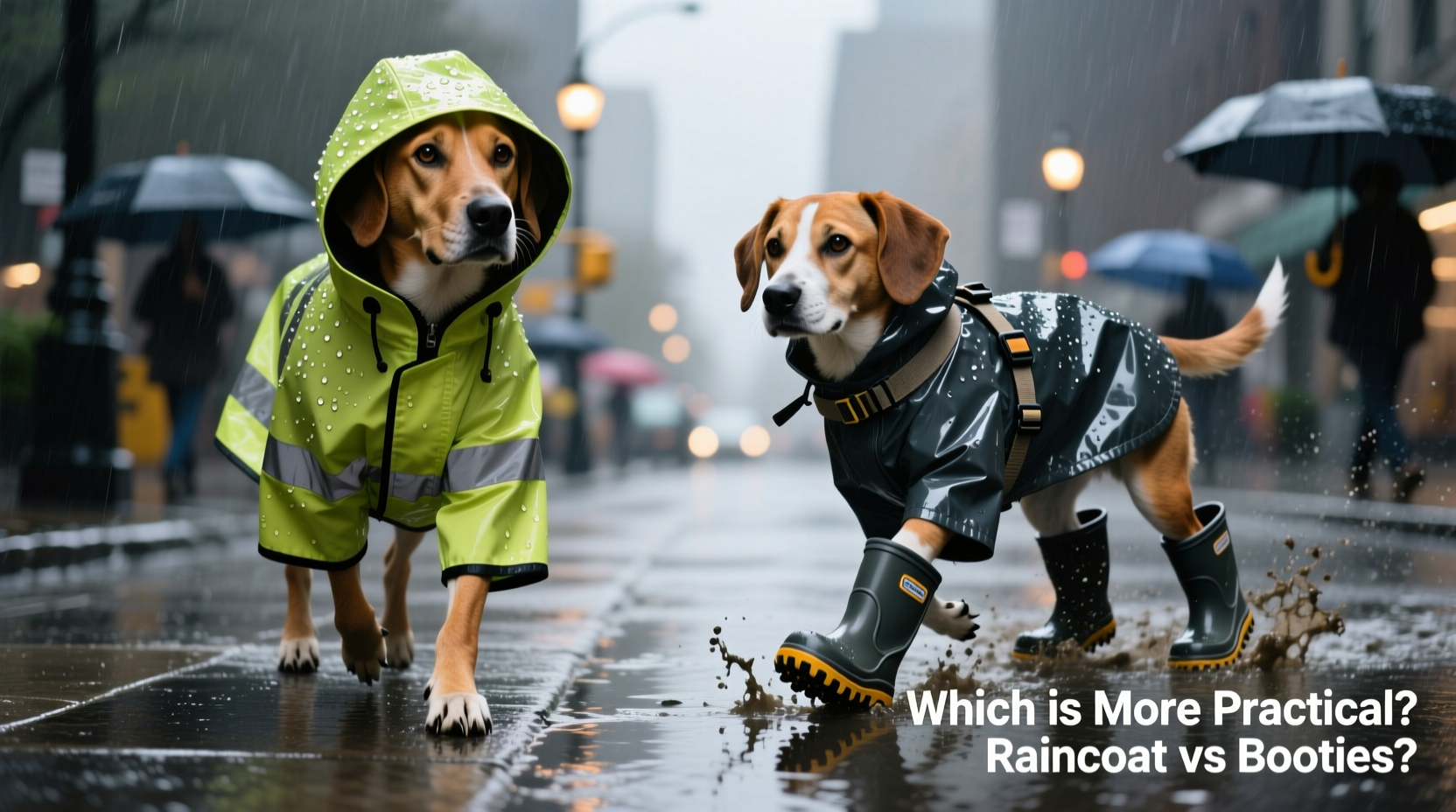
Dogs may have natural fur insulation, but prolonged exposure to cold rain can lead to discomfort, lowered body temperature, and even health issues like hypothermia—especially in short-haired, small, or senior breeds. Wet fur takes time to dry and can trap moisture against the skin, increasing the risk of irritation or fungal infections. Additionally, walking through puddles exposes paws to contaminants such as road salt, chemicals, and bacteria.
Raincoats and booties address different aspects of this challenge. A raincoat primarily shields the torso and back from water saturation, preserving core warmth. Booties protect the paws—the only part of the dog that directly contacts the ground—and prevent slipping on slick surfaces while reducing exposure to irritants.
The key question isn't whether protection is needed—it's determining *where* it's most needed and how practical each option is under real-life conditions.
Comparing Raincoats and Booties: Features and Functionality
To assess practicality, consider three factors: coverage, durability, and ease of use. These determine how well each item performs during a typical storm walk.
| Feature | Raincoat | Booties |
|---|---|---|
| Coverage Area | Torso, back, sides (up to 70% of body) | Paws only (4 contact points) |
| Water Resistance | High (if made with sealed seams and waterproof fabric) | Moderate (many allow seepage over time) |
| Drying Time After Use | Medium to long (depending on material) | Quick (small surface area) |
| Durability in Storm Conditions | Generally high (resists wind, heavy rain) | Low to moderate (prone to tearing or loss) |
| Dog Acceptance Rate | Moderate to high (most adjust quickly) | Low to moderate (many resist wearing them) |
| Cleaning & Maintenance | Machine washable (usually) | Hand washing often required; easy to lose pairs |
From this comparison, raincoats offer broader protection and are generally more reliable in sustained downpours. They're especially beneficial for dogs with thin coats—such as Chihuahuas, Greyhounds, or Whippets—who lose body heat rapidly when wet. Booties, while useful, provide limited overall defense and are often abandoned mid-walk by dogs who dislike the sensation.
Real-World Practicality: When Each Option Shines
No single solution fits all scenarios. The best choice depends on your location, your dog’s behavior, and the nature of your walks.
Raincoats Are More Practical When:
- You live in an area with frequent, heavy rainfall.
- Your dog has short or sparse fur.
- Walks are longer than 20 minutes.
- Temperatures are cold, increasing hypothermia risk.
- You’re navigating urban environments with large puddles or splashing vehicles.
A quality raincoat with a high collar, adjustable straps, and reflective strips enhances visibility and keeps your dog’s core dry. Many models also include a leash port so you can clip the leash through without removing the coat.
Booties Are More Practical When:
- You’re walking on salted winter roads or chemically treated sidewalks.
- Your dog has sensitive paw pads or existing cracks.
- You need grip on icy or slippery surfaces.
- Short trips are involved (e.g., quick bathroom breaks).
- Allergens like mold or pollen accumulate in standing water.
In cities where de-icing salts are used, booties become essential—not for rain alone, but for chemical protection. However, many dogs shake them off within minutes, rendering them ineffective unless properly fitted and gradually acclimated.
“While booties can protect against environmental hazards, their real-world success depends heavily on fit and habituation. Many dogs never accept them fully.” — Dr. Lena Peterson, DVM, Small Animal Behavior Specialist
Mini Case Study: Urban vs. Rural Walking Conditions
Consider two dog owners facing the same storm but very different challenges.
Sarah in Seattle: She walks her Miniature Schnauzer, Baxter, every morning through city streets. Puddles form quickly between parked cars, and street runoff carries oil residue and antifreeze traces. Sarah uses booties primarily to shield Baxter’s paws from contaminants. She pairs them with a lightweight raincoat because Baxter dislikes getting wet along his belly. However, she admits that one or two booties often go missing by the end of the walk. Over six months, she’s replaced three sets.
James in Vermont: He hikes weekly with his Border Collie, Luna, through forest trails. During spring rains, paths turn muddy and stream crossings are common. James opts for a durable, breathable raincoat with leg straps to prevent shifting. He tried booties but found Luna removed them within minutes. Instead, he focuses on thorough post-walk paw cleaning using a damp towel and pet-safe wipes. His priority is core dryness and mobility—Luna generates heat quickly during activity, so overheating is a concern if over-layered.
This contrast shows that environment dictates gear strategy. Urban dwellers may prioritize paw protection due to pollutants, while rural or trail walkers focus on full-body coverage and freedom of movement.
Step-by-Step Guide: Choosing and Using Wet-Weather Gear
Follow this process to determine what works best for your dog and avoid wasted purchases.
- Evaluate Your Environment: Assess typical walk routes. Are there deep puddles, salted roads, mud, or ice?
- Assess Your Dog’s Coat and Tolerance: Short-haired, elderly, or small dogs benefit more from raincoats. Dogs with thick double coats (e.g., Huskies) may not need either unless exposed for long periods.
- Try One Item at a Time: Introduce a raincoat first. Let your dog wear it indoors with treats. Observe movement and comfort.
- Test Booties Gradually: Start with indoor wear, then short outdoor sessions. Use elastic closures or Velcro wraps to improve retention.
- Monitor Real-World Performance: After a few rainy walks, note if the dog stays dry, removes the gear, slips, or shows signs of discomfort.
- Combine Strategically (If Needed): Only pair both items if necessary. Some dogs overheat or feel restricted with full gear.
- Maintain and Replace as Needed: Wash gear regularly. Inspect for wear—especially bootie seams and coat zippers.
Checklist: Essential Qualities in Effective Wet-Weather Dog Gear
Use this checklist when shopping to ensure you get functional, durable products:
- ✅ Waterproof outer layer (not just water-resistant)
- ✅ Breathable lining to reduce sweating
- ✅ Adjustable straps or fasteners for secure fit
- ✅ Reflective details for low-light visibility
- ✅ Easy on/off design (snaps or Velcro preferred over complex zippers)
- ✅ Seam sealing (especially on raincoats)
- ✅ Non-slip soles (for booties)
- ✅ Machine-washable materials (when possible)
- ✅ Proper sizing chart with chest, neck, and leg measurements
Avoid cheap, generic sets sold without size specifications. These often fail within weeks and frustrate both dog and owner.
Frequently Asked Questions
Can I use human rain gear for my dog?
No. Human clothing doesn’t accommodate a dog’s anatomy. It restricts movement, chafes joints, and fails to cover vital areas like the abdomen. Always use gear designed specifically for canine physiology.
Do all dogs need rain protection?
No. Breeds with dense double coats—like Newfoundlands, Bernese Mountain Dogs, or Samoyeds—have natural water resistance and insulation. For these dogs, brief wet walks are rarely harmful. However, prolonged exposure still requires monitoring, especially in cold temperatures.
My dog hates wearing anything. What can I do?
Start slowly. Let your dog sniff and explore the gear. Reward calm behavior with treats. Practice short indoor sessions before going outside. Never force the item—positive reinforcement builds acceptance over time. Some dogs never adapt to booties, and that’s okay. Focus instead on post-walk drying and paw cleaning.
Expert Insight: Balancing Protection and Comfort
“The goal isn’t to eliminate all exposure—it’s to manage risk without compromising your dog’s experience. A miserable dog learns to dread walks. Prioritize comfort alongside protection.” — Dr. Alan Reyes, Veterinary Preventive Care Specialist
This philosophy underscores the importance of observation. If your dog shivers, lifts a paw, or refuses to move in booties, they’re signaling distress. Similarly, if a raincoat causes rubbing or restricts stride, it needs adjustment or replacement. Practicality includes usability—not just technical performance.
Conclusion: Matching Gear to Need, Not Hype
In the debate between dog raincoats and booties, raincoats generally win on practicality during stormy walks. They offer superior protection, better retention, and higher acceptance rates among dogs. Booties have niche value—particularly in urban settings with chemical hazards—but struggle with fit, durability, and compliance.
The smart approach is not to choose one over the other rigidly, but to assess your specific situation. For most pet owners, a high-quality raincoat is the cornerstone of wet-weather readiness. Booties can supplement when needed, especially for short exposures to contaminated surfaces, but shouldn’t be relied upon as primary protection.
Ultimately, the most practical gear is what your dog will actually wear—and stay comfortable in—while keeping them safe from the elements.




 浙公网安备
33010002000092号
浙公网安备
33010002000092号 浙B2-20120091-4
Comments
No comments yet. Why don't you start the discussion?