
A dog’s tail is more than just a wagging accessory—it’s a vital communication tool. When a dog holds its tail down, tucked, or limp, it can signal anything from mild discomfort to serious illness. Understanding why your dog’s tail is down helps you respond with care, prevent escalation, and ensure their well-being. This guide breaks down the most common reasons behind a lowered tail, what each variation might mean, and when to take action.
Why Tail Position Matters in Canine Communication
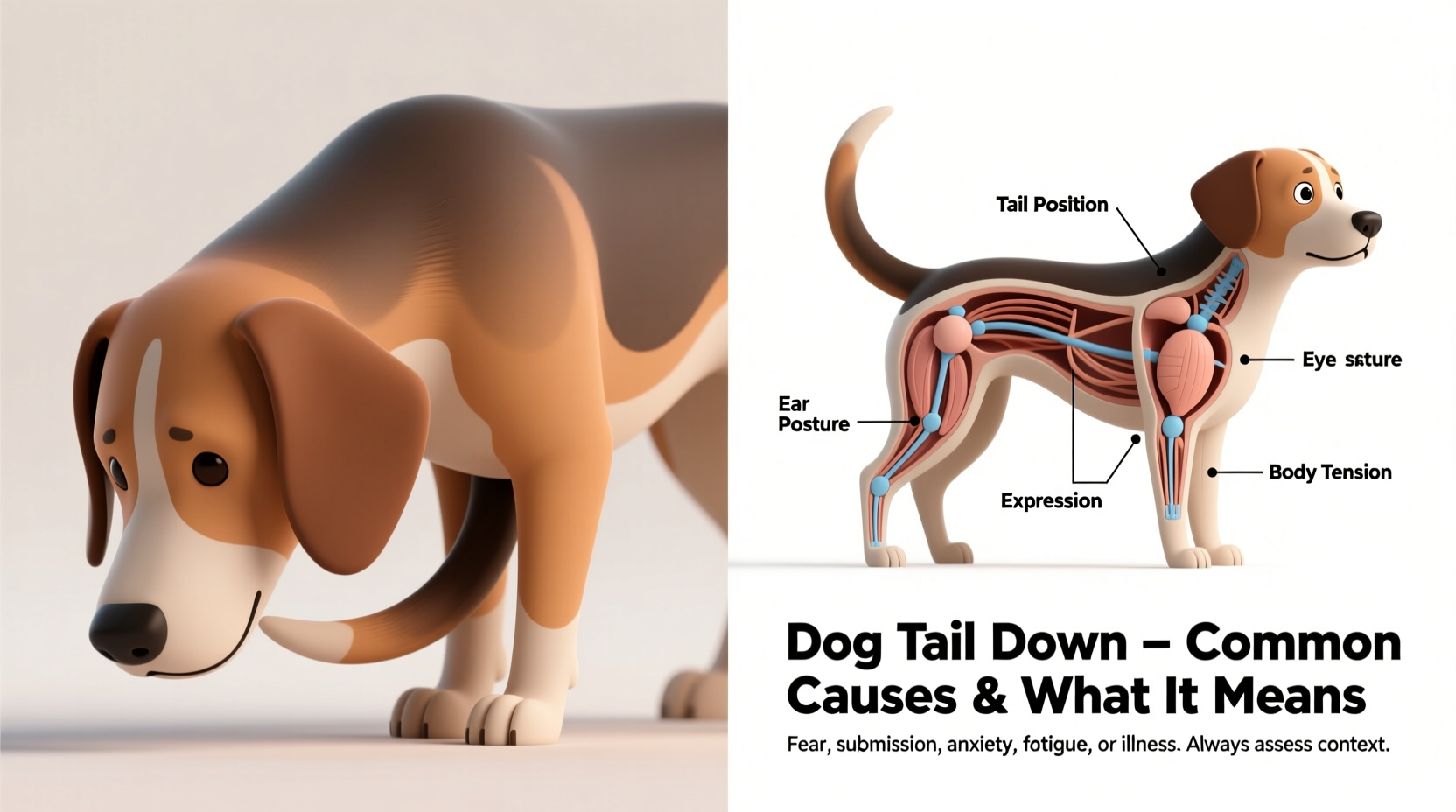
Dogs rely heavily on body language to express emotions. Unlike humans who use words, dogs convey fear, confidence, excitement, or pain through posture, ear position, facial tension, and especially tail carriage. The tail acts like a mood barometer. A high, sweeping wag often signals joy or alertness, while a tail held low or between the legs typically reflects submission, fear, or physical distress.
Veterinarians and animal behaviorists emphasize that context is key. A tail held slightly lower than usual during a thunderstorm may simply indicate anxiety. But if the tail remains completely immobile for days, it could point to injury or neurological problems.
“Tail position is one of the most reliable indicators of a dog’s emotional and physical state. Ignoring subtle changes can delay diagnosis of both behavioral and medical conditions.” — Dr. Laura Simmons, DVM, Certified Animal Behaviorist
Common Emotional and Behavioral Causes
Not all tail-down behaviors stem from physical ailments. Many are rooted in emotional responses. Recognizing these patterns allows owners to address stressors before they escalate into chronic anxiety.
- Fear or anxiety: Dogs tuck their tails when scared—during fireworks, vet visits, or encounters with aggressive animals.
- Submission: In multi-dog households, a lower-ranking dog may hold its tail down around dominant members as a peacekeeping gesture.
- Shame or reprimand: After being scolded (even unintentionally), dogs often lower their tails, flatten ears, and avoid eye contact.
- Sudden environmental change: Moving homes, new people, or loud noises can trigger temporary tail-tucking.
Recognizing Stress Signals Beyond the Tail
A single cue isn’t enough. Look for clusters of signs:
- Whale eye (visible whites of the eyes)
- Lip licking or yawning
- Lowered body posture
- Panting without heat exposure
- Avoidance behavior
Physical Health Issues That Cause a Down Tail
When no obvious stressor exists, a persistently low tail may indicate an underlying medical problem. These require prompt veterinary attention.
Limber Tail Syndrome (Cold Tail)
Also known as \"broken wag,\" this condition affects working and active breeds like Labrador Retrievers and Pointers. It occurs after intense swimming or prolonged crate confinement in cold conditions. The tail becomes flaccid at the base, painful to touch, and may droop entirely.
Tail Injuries
Dogs can fracture or dislocate their tails from accidents—getting stepped on, slammed in doors, or pulled forcefully. Signs include swelling, bleeding, unnatural kinks, or reluctance to sit.
Anal Gland Problems
Impacted or infected anal glands cause significant discomfort. Dogs may scoot, lick excessively under the tail, or hold it tightly down to reduce pressure.
Neurological Disorders
Spinal injuries, intervertebral disc disease (IVDD), or nerve damage can impair tail movement. If accompanied by weakness in the hind legs or incontinence, seek emergency care.
Arthritis and Degenerative Joint Disease
Older dogs may develop stiffness in the tail base due to arthritis, making wagging uncomfortable and leading to a chronically lowered tail.
| Cause | Key Symptoms | Action Required |
|---|---|---|
| Fear/Stress | Tail tucked, ears back, crouched stance | Remove stressor, provide safe space |
| Limber Tail | Sudden limp tail, pain at base | Vet visit, rest, anti-inflammatories |
| Tail Fracture | Swelling, kink, bleeding, yelping | Immediate vet evaluation |
| Anal Gland Issue | Scooting, foul odor, licking | Vet or groomer expression needed |
| Neurological Damage | No tail movement, leg weakness, incontinence | Emergency veterinary care |
Step-by-Step: What to Do When Your Dog’s Tail Is Down
Follow this timeline to assess and respond appropriately:
- Observe the context: Did something frightening happen? Is the environment calm?
- Check for physical symptoms: Inspect the tail for cuts, swelling, or kinks. Gently touch the base to see if your dog flinches.
- Monitor duration: If the tail returns to normal within minutes to hours after a stressful event, it’s likely behavioral.
- Note other behaviors: Is your dog eating, walking normally, and responsive? Loss of appetite or mobility suggests medical concern.
- Contact your veterinarian: If the tail remains down for more than 24 hours, or if pain, swelling, or neurological signs appear, schedule an exam.
Mini Case Study: Max the Rescue Labrador
Max, a 3-year-old mixed-breed rescue, was adopted after spending months in a shelter. His new owner noticed he kept his tail tightly tucked, even at home. Initially assumed to be shyness, the behavior persisted for weeks despite gentle training.
After a vet checkup ruled out injury, a certified dog behaviorist suggested Max’s tail position stemmed from chronic insecurity due to past neglect. Through structured desensitization, positive reinforcement, and creating predictable routines, Max gradually began to carry his tail higher. Within two months, he wagged freely during play. His case highlights how long-term emotional trauma can manifest physically—and how patience and proper support lead to recovery.
Checklist: Assessing a Down Tail
Use this checklist to determine whether your dog needs immediate help:
- ✅ Is the tail wagging at all during relaxed moments?
- ✅ Does your dog show signs of pain when sitting or moving?
- ✅ Are there visible wounds, swelling, or discharge near the tail?
- ✅ Has your dog been exposed to cold water or overexertion recently?
- ✅ Is there difficulty urinating or defecating?
- ✅ Are the hind legs weak or uncoordinated?
- ✅ Has the tail been down for more than 24 hours without improvement?
If you answered “yes” to any of the last four questions, consult a veterinarian promptly.
Frequently Asked Questions
Can a dog’s tail stay down permanently?
Yes, in cases of severe nerve damage, amputation, or chronic pain, a dog may never fully regain tail function. However, many causes—like limber tail or temporary fear—are reversible with time and treatment.
Is a low tail always a sign of fear?
No. While fear is a common cause, medical conditions such as anal gland infections, spinal issues, or tail trauma can also result in a lowered tail. Always consider physical health first if the behavior is sudden or persistent.
Should I be concerned if my dog wags only the tip of its tail?
A stiff, limited wag—especially with a tense body—can signal alertness or caution rather than happiness. Combined with a low tail base, it may indicate anxiety. Observe overall body language before interpreting emotion.
Conclusion: Listen to Your Dog’s Silent Signals
Your dog’s tail speaks volumes—if you know how to listen. A tail held down isn’t just a quirk; it’s a message. Whether it’s whispering fear, crying out in pain, or signaling submission, understanding the root cause empowers you to respond with empathy and precision. Never dismiss persistent changes in tail carriage. Early intervention can prevent suffering, strengthen your bond, and protect your dog’s long-term health.




 浙公网安备
33010002000092号
浙公网安备
33010002000092号 浙B2-20120091-4
Comments
No comments yet. Why don't you start the discussion?