
It’s a familiar sound: your dog suddenly starts whining with no obvious trigger. No one’s knocking at the door, there’s food in the bowl, and you’ve just taken them for a walk. So why the noise? While occasional vocalization is normal, persistent or unexplained whining can signal discomfort, anxiety, or an unmet need. Understanding the root cause is essential—not only for your peace of mind but for your dog’s health and happiness.
Dogs use whining as a form of communication. It’s their way of saying they need something—whether it’s attention, relief from pain, or help coping with stress. Ignoring consistent whining may lead to worsening behavior or overlooked medical issues. This guide breaks down the most common reasons dogs whine without apparent cause and provides actionable steps to address each scenario.
Common Causes of Unexplained Dog Whining
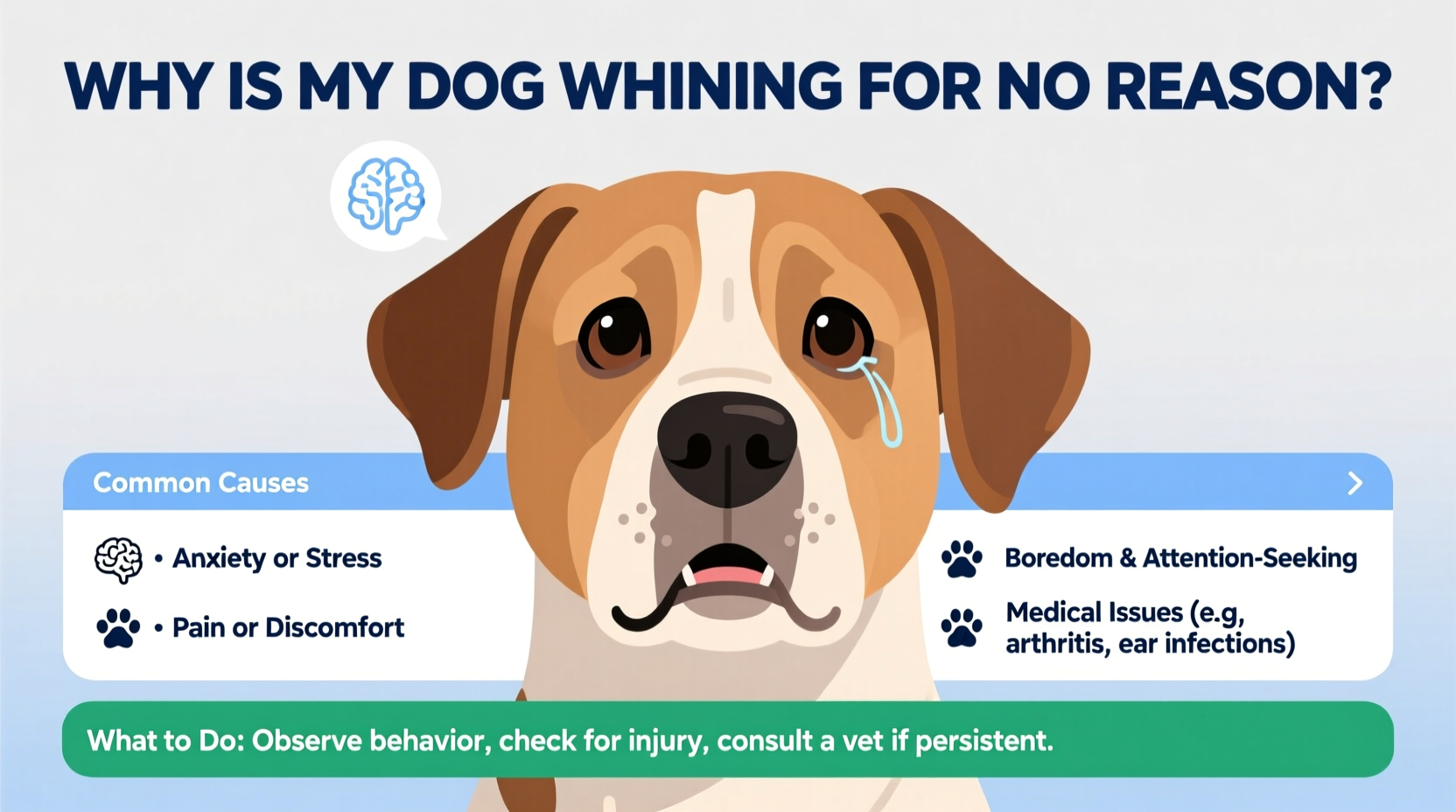
Whining isn’t random. Even when the cause isn’t immediately visible, there’s usually a logical explanation rooted in physical, emotional, or environmental factors.
1. Anxiety and Stress
Separation anxiety is one of the leading causes of excessive whining. Dogs are social animals and may become distressed when left alone. Other triggers include loud noises (thunderstorms, fireworks), changes in routine, or unfamiliar environments.
Anxious dogs often pair whining with pacing, drooling, or destructive behavior. The whine tends to be high-pitched and repetitive, increasing in frequency when the stressor is present.
2. Physical Discomfort or Pain
Dogs can’t verbalize pain like humans. Instead, they communicate through behavior changes—whining being a primary indicator. Common sources of discomfort include arthritis, dental pain, gastrointestinal issues, ear infections, or injuries from overexertion.
Look for accompanying signs such as limping, reluctance to move, loss of appetite, or sensitivity to touch. Older dogs are especially prone to chronic conditions that manifest subtly through vocalizations.
3. Attention-Seeking Behavior
If your dog has learned that whining gets results—such as treats, petting, or access to the couch—they’ll repeat the behavior. This is especially common in households where owners unintentionally reinforce the whining by responding to it.
This type of whining is usually short, sharp, and stops immediately once the dog receives attention. It often occurs at predictable times, like before meals or walks.
4. Cognitive Dysfunction (in Senior Dogs)
Similar to dementia in humans, canine cognitive dysfunction (CCD) affects older dogs and can lead to confusion, disorientation, and nighttime vocalization. A senior dog may whine in the middle of the night, stare at walls, or forget house training.
These behaviors stem from neurological changes and are not willful disobedience. CCD-related whining often occurs during quiet hours when stimuli are low, amplifying the dog’s sense of isolation.
5. Boredom or Lack of Stimulation
Dogs with insufficient mental or physical exercise may whine out of frustration. Breeds with high energy levels—like Border Collies or Siberian Huskies—are especially vulnerable if under-stimulated.
Boredom whining typically happens when the dog is confined or left alone for long periods. It may be accompanied by chewing, digging, or barking.
What to Do: A Step-by-Step Guide
Addressing unexplained whining requires a systematic approach. Jumping to conclusions can lead to mismanagement—especially when medical issues are mistaken for behavioral problems.
- Rule Out Medical Issues First: Schedule a veterinary check-up. Blood tests, joint evaluations, and dental exams can uncover hidden conditions causing discomfort.
- Observe Timing and Triggers: Keep a log for 3–5 days noting when the whining occurs, its duration, and what happens right before and after. This helps identify patterns.
- Assess Environment and Routine: Has there been a recent move, new pet, or change in schedule? These shifts can stress dogs and provoke vocalization.
- Evaluate Attention Patterns: Are you giving in to the whining by offering treats or comfort? If so, you may be reinforcing the behavior.
- Increase Mental and Physical Exercise: Ensure your dog gets daily walks, play sessions, and puzzle toys. A tired dog is less likely to whine from boredom.
- Implement Calm Reinforcement: Reward quiet behavior with treats or affection. Ignore whining until the dog is silent, then provide positive reinforcement.
- Consult a Behaviorist if Needed: For persistent anxiety-related whining, a certified dog behaviorist can design a desensitization program.
Do’s and Don’ts When Responding to Whining
| Action | Recommended? | Reason |
|---|---|---|
| Comfort your dog immediately when they whine | No | Risks reinforcing attention-seeking behavior |
| Check for signs of pain or illness | Yes | Ensures medical needs aren’t overlooked |
| Use a calm command like “quiet” and reward silence | Yes | Teaches alternative behavior |
| Yell or punish the dog for whining | No | Increases anxiety and damages trust |
| Provide interactive toys during alone time | Yes | Reduces boredom and separation distress |
Real-Life Example: Max, the Rescue Terrier
Max, a 4-year-old Jack Russell Terrier, was adopted from a shelter. His new owner noticed he whined frequently at night, especially when left in the bedroom alone. There were no signs of injury, and his appetite was normal. After a vet visit ruled out medical issues, a behavior log revealed the whining always stopped within minutes of playing calming music.
Further observation showed Max had never been crate-trained and seemed anxious about enclosed spaces. His owner began using a covered crate with a soft bed and a pheromone diffuser nearby. Within two weeks, the nighttime whining decreased by 80%. The key was identifying anxiety as the root cause and addressing it with environmental enrichment and gradual desensitization.
“Persistent whining is rarely ‘for no reason.’ It’s a cry for help, whether physical or emotional. Addressing the underlying cause—not just the symptom—is critical.” — Dr. Lena Reyes, DVM, Canine Behavior Specialist
Tips for Preventing Future Whining Episodes
- Establish a consistent daily routine for feeding, walks, and sleep.
- Use puzzle feeders or treat-dispensing toys to keep your dog mentally engaged.
- Practice short departures to reduce separation anxiety—start with 30 seconds and gradually increase time away.
- Introduce calming aids like Adaptil diffusers or anxiety wraps for noise-sensitive dogs.
- Avoid reinforcing whining by waiting for silence before giving attention or opening doors.
Frequently Asked Questions
Why does my dog whine when I’m right there?
Your dog may be seeking reassurance, expressing mild anxiety, or asking for something like food or play. Observe what happens right after the whining—if they get what they want, they’re learning that the behavior works.
Is it normal for older dogs to whine more?
Increased vocalization in senior dogs can be normal due to cognitive decline, hearing loss, or discomfort. However, sudden changes should be evaluated by a vet to rule out medical issues like hypertension or brain tumors.
Can I train my dog to stop whining?
Yes, but success depends on identifying the cause. Training works best for attention-seeking or mild anxiety-related whining. Use positive reinforcement for quiet behavior and avoid punishment, which can worsen anxiety.
Conclusion: Listen to What Your Dog Is Trying to Say
Whining is a form of communication, not a nuisance to be silenced at all costs. When your dog whines “for no reason,” take it as an invitation to investigate deeper. Is there pain you haven’t noticed? Anxiety you can soothe? Boredom you can enrich? Each whine is a clue to your dog’s inner world.
By combining veterinary insight, behavioral awareness, and compassionate training, you can resolve unexplained whining and strengthen your bond. Start today: observe, listen, and respond with care. Your dog will thank you—with silence, and trust.




 浙公网安备
33010002000092号
浙公网安备
33010002000092号 浙B2-20120091-4
Comments
No comments yet. Why don't you start the discussion?