
Doomscrolling—endlessly scrolling through negative news or distressing content online—has become a common nighttime ritual for millions. It starts innocently: checking headlines before bed, responding to one last message, or catching up on social media. But within minutes, hours can vanish into a vortex of alarming updates, viral outrage, and emotionally charged posts. The result? Sleep deprivation, increased anxiety, and a sense of helplessness that lingers into the next day.
The behavior is not simply a lack of willpower. It’s driven by psychological triggers, neurological feedback loops, and modern digital design engineered to keep us engaged. Understanding *why* we fall into this pattern—and more importantly, how to break free—is essential for mental well-being in an always-connected world.
The Psychology Behind Nighttime Doomscrolling
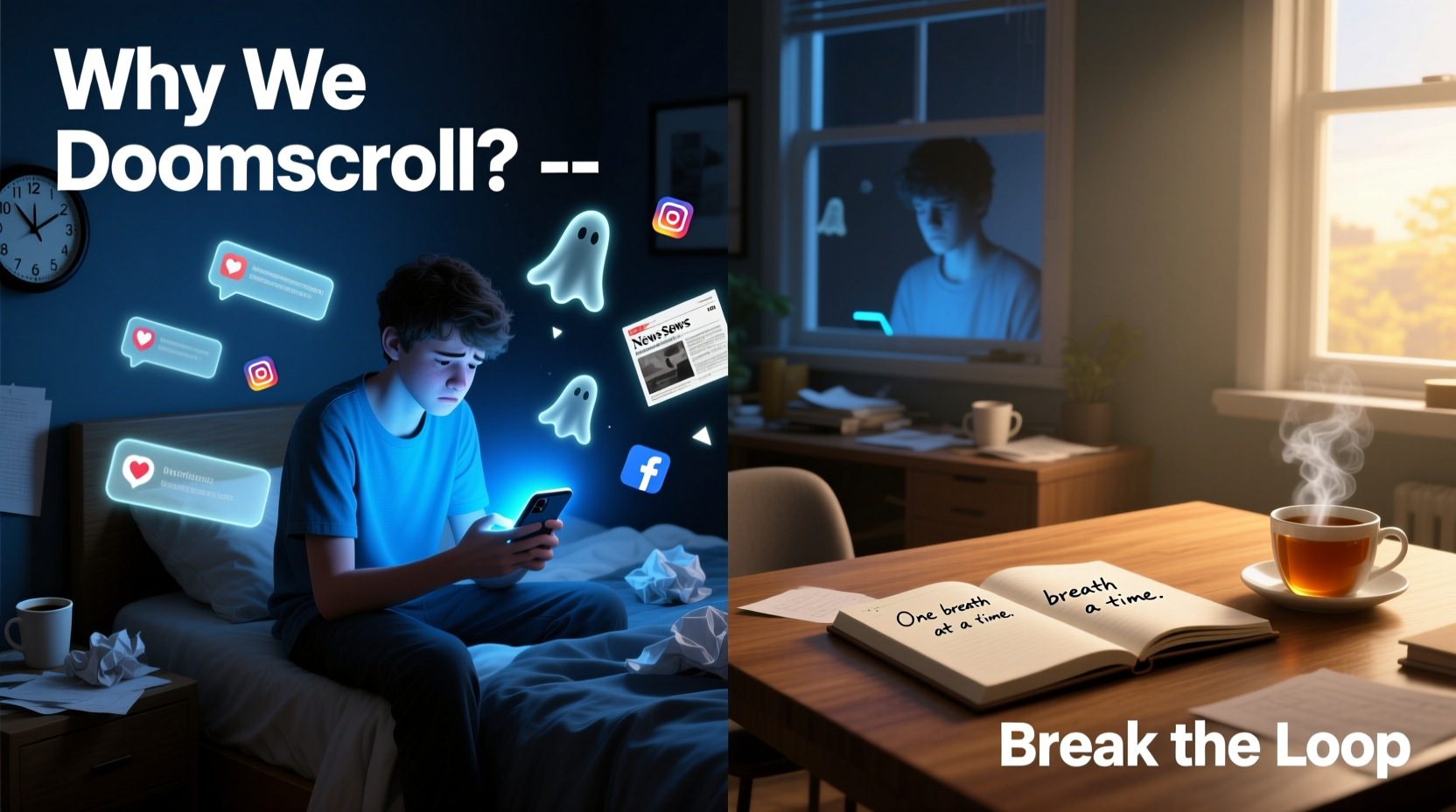
Nighttime creates the perfect storm for doomscrolling. As daily responsibilities wind down, our minds often shift from action to reflection. Without structured tasks, attention becomes unmoored, making us vulnerable to distraction. This cognitive drift, combined with fatigue, reduces self-regulation—the ability to resist impulses. That’s when the phone becomes irresistible.
Our brains are wired to respond to novelty and threat. Negative information triggers a stronger emotional response than neutral or positive content—a phenomenon known as negativity bias. When we see a headline about political unrest, climate disasters, or economic downturns, our amygdala activates, signaling alertness. Even if we don’t consciously want to engage, the brain interprets these stimuli as urgent, pulling us deeper into the feed.
Compounding this is the role of algorithms. Platforms like Twitter (X), Instagram, and TikTok prioritize engagement, often surfacing emotionally charged content because it keeps users scrolling. The more you react—even with frustration—the more similar content appears. Over time, your feed becomes a curated echo chamber of anxiety, reinforcing the habit.
“Doomscrolling isn't just a bad habit—it's a predictable outcome of human psychology meeting persuasive technology.” — Dr. Natalia Pérez-González, Cognitive Behavioral Researcher, Stanford University
The Hidden Costs of Late-Night Scrolling
Beyond wasted time, doomscrolling inflicts tangible harm on mental and physical health. The effects accumulate quietly but significantly:
- Sleep disruption: Blue light from screens suppresses melatonin, delaying sleep onset. Content-induced stress further elevates cortisol, making restful sleep harder to achieve.
- Increased anxiety and depression: A 2023 study published in Computers in Human Behavior found that participants who engaged in evening social media consumption reported higher levels of rumination and depressive symptoms the following day.
- Reduced emotional resilience: Constant exposure to global crises without agency leads to learned helplessness—a feeling that nothing you do matters.
- Impaired focus and productivity: Starting the day already mentally fatigued diminishes concentration, creativity, and decision-making abilities.
Breaking the Loop: A Step-by-Step Guide
Escaping the doomscroll cycle requires intentionality and structure. Willpower alone rarely suffices. Instead, build systems that reduce temptation and increase friction around harmful behaviors. Follow this six-step approach to regain control:
- Identify your trigger points. Keep a simple log for three nights: note the time, location, emotional state, and what prompted you to pick up your phone. Common triggers include boredom, loneliness, unresolved stress, or habit (e.g., “I always check Instagram after brushing my teeth”).
- Create a pre-sleep buffer zone. Designate the last 60 minutes before bed as screen-free. Replace scrolling with low-stimulation activities: reading fiction, journaling, stretching, or listening to calming music.
- Remove access to temptation. Charge your phone outside the bedroom. Use a traditional alarm clock. If you rely on your phone as an alarm, enable Do Not Disturb and grayscale mode (found under Accessibility settings) to make the display less appealing.
- Curate your digital environment. Unfollow accounts that consistently trigger anxiety. Mute keywords like “crisis,” “outrage,” or “breaking news” on social platforms. Subscribe to newsletters or podcasts that deliver balanced, factual summaries instead of real-time feeds.
- Replace the habit with a ritual. Habits persist when they serve a need. If scrolling helps you decompress, try replacing it with guided meditation (apps like Insight Timer offer free sleep meditations). If it fills silence, play ambient sounds or a familiar audiobook.
- Set weekly review checkpoints. Every Sunday evening, reflect: How many nights did I avoid doomscrolling? What worked? What triggered a relapse? Adjust your strategy accordingly.
Do’s and Don’ts of Managing Digital Consumption
| Do | Don’t |
|---|---|
| Check news once a day at a fixed time (e.g., 5 PM) | Scroll news apps first thing in the morning or right before bed |
| Use app timers to limit social media to 30 minutes daily | Allow unlimited notifications from social platforms |
| Practice \"digital sunset\" – turn off non-essential devices by 9 PM | Keep your phone within arm’s reach while sleeping |
| Follow uplifting or educational accounts (e.g., nature, art, science) | Stay subscribed to sources that leave you feeling drained |
A Real Example: Sarah’s Turnaround
Sarah, a 34-year-old project manager in Portland, used to spend 1.5 to 2 hours every night scrolling through Twitter and Reddit. She told herself she was “staying informed,” but admitted she often felt worse afterward—agitated, hopeless, and unable to sleep. Her wake-up time slipped from 6:30 AM to 7:15 AM, and she started dreading Mondays.
After learning about doomscrolling in a wellness workshop, Sarah implemented a simple rule: no phones after 9 PM. She bought a $12 alarm clock and began reading short stories before bed. The first few nights were difficult—she caught herself reaching for her phone instinctively—but by the end of week two, she noticed a shift. She fell asleep faster, woke up clearer-headed, and stopped dreading the news cycle.
“It wasn’t about cutting out news entirely,” she said. “It was about choosing when and how I consumed it. Now I read a summarized newsletter at lunch. I feel informed, not overwhelmed.”
Actionable Tips to Reduce Nighttime Scrolling
FAQ: Common Questions About Doomscrolling
Is doomscrolling a sign of anxiety disorder?
Not necessarily. While occasional doomscrolling is common, frequent and compulsive engagement—especially when it interferes with sleep or daily functioning—can be a symptom of underlying anxiety. If you find it difficult to stop despite negative consequences, consider speaking with a mental health professional.
Can I still stay informed without doomscrolling?
Absolutely. Choose trusted, balanced sources and limit intake to specific times. Subscribe to weekly roundups (like The Week or Axios Brief) instead of live feeds. Being informed doesn’t require constant monitoring—accuracy and context matter more than speed.
What if I work in a field that requires me to monitor breaking news?
Even professionals can set boundaries. Use dedicated tools (e.g., Google Alerts for key topics) rather than open-ended browsing. Define clear off-hours and use communication protocols (e.g., emergency pagers only) to separate urgency from routine updates.
Your Personal Anti-Doomscrolling Checklist
Use this checklist to start building healthier digital habits tonight:
- ☐ Charge phone outside the bedroom
- ☐ Set app limits for social media and news apps
- ☐ Install a blue light filter or enable night mode after 8 PM
- ☐ Choose a non-digital bedtime activity (reading, sketching, tea ritual)
- ☐ Unfollow or mute 5 accounts that consistently upset you
- ☐ Write down tomorrow’s top three priorities before bed—reduces nighttime rumination
- ☐ Test one replacement ritual for three consecutive nights
Conclusion: Reclaim Your Nights, Reclaim Your Mind
Doomscrolling thrives in the quiet hours when our defenses are down and our curiosity is unguarded. But every minute spent absorbed in digital dread is a minute stolen from rest, reflection, and recovery. Breaking the loop isn’t about perfection—it’s about progress. Small, consistent changes compound into lasting transformation.
You don’t need to disconnect entirely. You need to reconnect—with yourself, with presence, with the quiet strength that comes from a well-rested mind. Start tonight. Put the phone down. Pick up a book. Breathe. The world will still be there tomorrow—but you’ll face it with greater clarity, calm, and control.




 浙公网安备
33010002000092号
浙公网安备
33010002000092号 浙B2-20120091-4
Comments
No comments yet. Why don't you start the discussion?