
In an age where news spreads faster than ever, the line between staying informed and falling into compulsive doomscrolling has blurred. A quick check of headlines can spiral into hours of anxiety-inducing content—especially when algorithms prioritize outrage, fear, and conflict. While awareness of global events is important, constant exposure to negative information can erode mental well-being, disrupt sleep, and fuel a sense of helplessness. The challenge isn’t whether to engage with current events, but how to do so mindfully. This article explores the psychological roots of doomscrolling, contrasts it with responsible information consumption, and provides actionable steps to reclaim control over your digital habits.
The Psychology Behind Doomscrolling
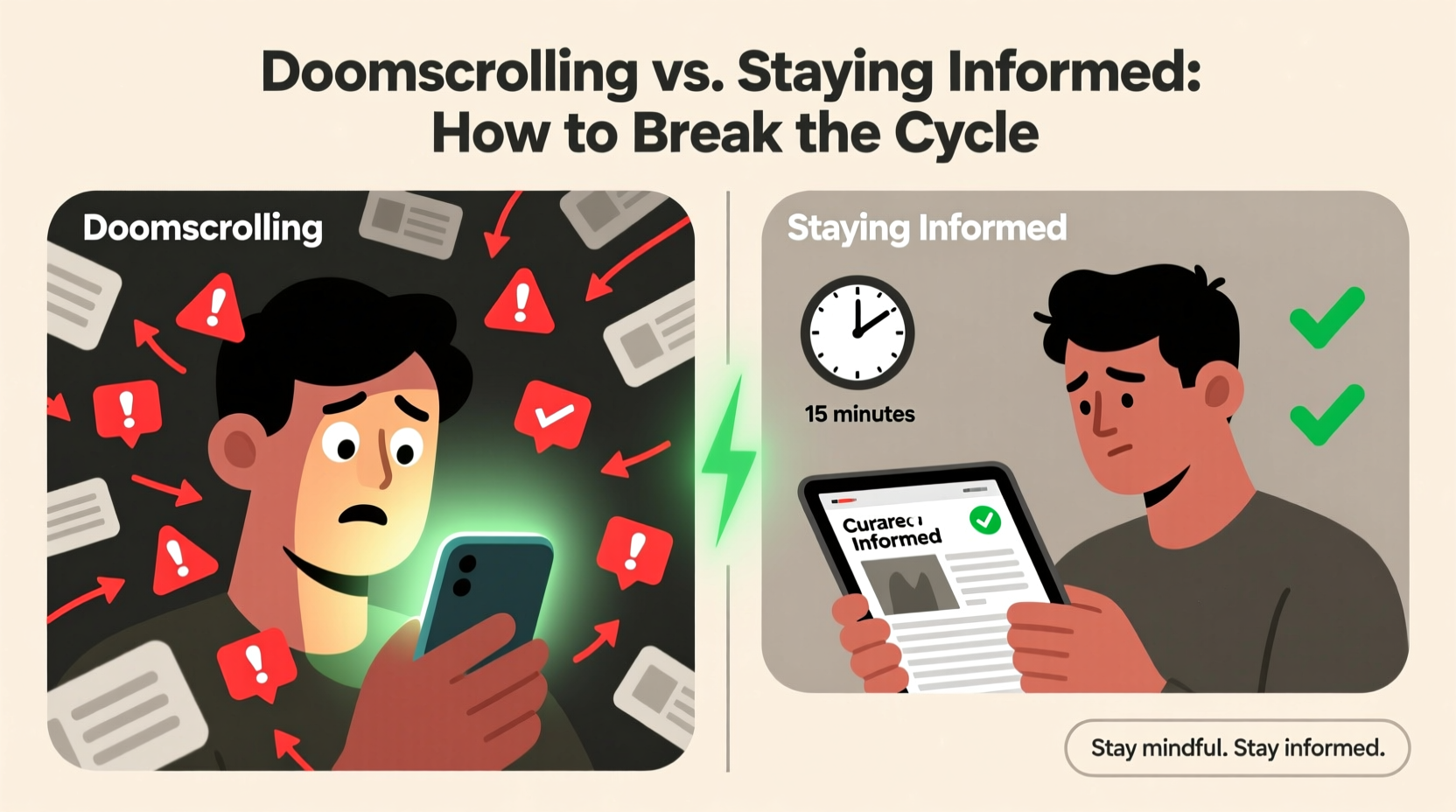
Doomscrolling—consuming large volumes of negative news online, often late at night—is not simply a bad habit. It’s rooted in cognitive and emotional mechanisms hardwired into human behavior. Our brains are wired to pay more attention to threats than positive stimuli, a survival mechanism known as the “negativity bias.” In the digital era, this instinct is exploited by platforms that reward engagement through emotionally charged content.
When we see alarming headlines or distressing updates, our brain releases dopamine and cortisol—the chemicals associated with both reward and stress. This creates a feedback loop: we feel compelled to keep scrolling because each new piece of information offers a fleeting sense of control or preparedness, even if it increases anxiety. Over time, this behavior becomes automatic, especially during periods of uncertainty or personal stress.
“Doomscrolling gives the illusion of being proactive, but it often leads to emotional paralysis rather than empowerment.” — Dr. Lena Patel, Clinical Psychologist and Digital Wellness Researcher
Unlike intentional information-seeking, doomscrolling lacks purpose. It’s passive, unstructured, and rarely results in meaningful action. Instead, it fosters rumination, sleep disruption, and heightened anxiety. Recognizing these patterns is the first step toward breaking free from them.
Staying Informed vs. Doomscrolling: Key Differences
There’s a crucial distinction between seeking reliable information with intention and getting trapped in endless cycles of negative content. Responsible information consumption supports informed decision-making and civic engagement. Doomscrolling, on the other hand, undermines both mental clarity and agency.
| Aspect | Staying Informed | Doomscrolling |
|---|---|---|
| Intent | Seeking knowledge to understand or act | Compulsive need to know “what’s next” |
| Time Spent | Limited, scheduled sessions | Unplanned, often excessive (hours) |
| Emotional Impact | Calmer, more grounded | Anxious, overwhelmed, helpless |
| Sources Used | Trusted, fact-checked outlets | Algorithm-driven feeds, viral posts |
| Outcome | Informed perspective or action | Mental fatigue, no clear resolution |
Understanding these differences allows you to audit your own habits. Ask yourself: Are you reading to learn, or to soothe an underlying anxiety? Is the information helping you make decisions, or leaving you feeling worse?
How to Break the Cycle: A Step-by-Step Guide
Changing ingrained digital behaviors requires structure and consistency. Here’s a realistic, research-backed approach to shift from reactive scrolling to mindful engagement with information.
- Define Your Information Goals
Start by clarifying why you want to stay informed. Is it for work, civic participation, or personal safety? Write down 2–3 specific goals (e.g., “Understand climate policy changes” or “Stay updated on local elections”). This creates purpose and reduces aimless browsing. - Choose Trusted Sources—and Only a Few
Limit your intake to 2–3 reputable news outlets. Avoid relying solely on social media feeds, which prioritize virality over accuracy. Subscribe to newsletters or use RSS feeds to receive curated updates directly. - Schedule News Times
Designate two short windows per day—for example, 8:00 AM and 6:00 PM—for checking updates. Outside these times, disable notifications and avoid news apps. This prevents information from bleeding into every part of your day. - Curate Your Feed Actively
Unfollow or mute accounts that consistently trigger anxiety. Use platform tools to filter out keywords like “crisis,” “outbreak,” or “disaster” if they’re not relevant to your needs. Follow science communicators, solution-focused journalists, or educational pages to rebalance your feed. - Replace Scrolling with Reflective Practices
After consuming news, spend five minutes journaling your thoughts or discussing key points with someone. This shifts you from passive absorption to active processing, reducing emotional overwhelm. - Build a Wind-Down Routine Without Screens
Avoid news consumption at least one hour before bed. Replace it with reading, light stretching, or listening to calming music. Poor sleep exacerbates anxiety and makes you more vulnerable to compulsive scrolling the next day.
Real Example: How Sarah Regained Control
Sarah, a 34-year-old public health worker, found herself spending three to four hours daily scrolling through pandemic-related news and social media debates. Initially driven by professional concern, her habit soon extended into evenings and weekends. She began experiencing insomnia, irritability, and difficulty concentrating at work.
After recognizing the toll it was taking, she implemented a structured plan. She unsubscribed from all real-time news alerts, limited her news intake to a single 20-minute session each morning using a trusted public radio newsletter, and replaced evening scrolling with audiobooks. Within two weeks, her sleep improved, and she reported feeling more focused and less emotionally drained.
“I realized I wasn’t learning anything new after the first few headlines,” she said. “Cutting back didn’t make me less informed—it made me more effective.”
Practical Tools and Habits for Long-Term Balance
Sustaining change requires more than willpower. Incorporating behavioral tools into your environment makes success more likely.
- Use App Timers: Both iOS and Android allow you to set daily limits for social media apps. When the limit is reached, the app locks until the next day.
- Enable Grayscale Mode: Turning your phone screen to black-and-white reduces its visual appeal, making mindless scrolling less enticing.
- Create a “News-Free Zone”: Designate areas like the bedroom or dining table as device-free spaces to reduce temptation.
- Practice the 5-Minute Rule: When you feel the urge to scroll, wait five minutes and do a grounding activity instead—drink water, walk around the room, or write down what you’re feeling.
Checklist: Building a Healthier Information Diet
- ☐ Identify 2–3 trusted news sources
- ☐ Schedule two 15–20 minute news sessions per day
- ☐ Unfollow or mute anxiety-inducing accounts
- ☐ Disable news and social media notifications
- ☐ Install screen-time tracking tools
- ☐ Replace bedtime scrolling with a screen-free routine
- ☐ Journal briefly after news consumption
- ☐ Review your habits weekly and adjust as needed
Frequently Asked Questions
Isn’t it irresponsible to limit my news intake during major events?
No—responsible citizenship doesn’t require constant monitoring. In fact, burnout from overexposure can reduce your capacity to respond meaningfully. Staying informed with intention—through reliable summaries and verified reporting—is more effective than reacting to every developing headline.
What if I miss something important?
Major events will reach you through multiple channels—friends, family, official alerts, or workplace updates. You don’t need to be the first to know; you need to be accurate and thoughtful in your response. Trust that urgent information will find you without requiring constant vigilance.
Can doomscrolling ever be stopped completely?
Like any habitual behavior, the goal isn’t perfection but management. Occasional lapses are normal. What matters is having systems in place to return to balance quickly. Focus on progress, not elimination.
Conclusion: Reclaim Your Attention, Reclaim Your Peace
The digital world will always generate noise. But you have the power to decide what you let in—and how it affects you. Breaking the cycle of doomscrolling isn’t about disengaging from reality; it’s about engaging more wisely. By setting boundaries, curating your sources, and prioritizing mental well-being, you can stay informed without sacrificing your peace.
Information should serve you—not consume you. Start small: pick one strategy from this guide and implement it today. Whether it’s turning off notifications, scheduling a news window, or deleting an app for a weekend, each step moves you closer to a healthier relationship with the digital world.




 浙公网安备
33010002000092号
浙公网安备
33010002000092号 浙B2-20120091-4
Comments
No comments yet. Why don't you start the discussion?