
When temperatures drop and winter winds bite, few outerwear choices carry the prestige and promise of a wool coat. But within that category lies a quiet debate: is a double-sided wool coat truly worth the investment over a traditional single-layer version? The answer isn’t just about price tags or fashion trends—it comes down to construction, performance, and long-term value. Understanding the structural and functional differences reveals why this distinction matters more than many realize.
Understanding the Construction: What Makes a Coat Double-Sided?
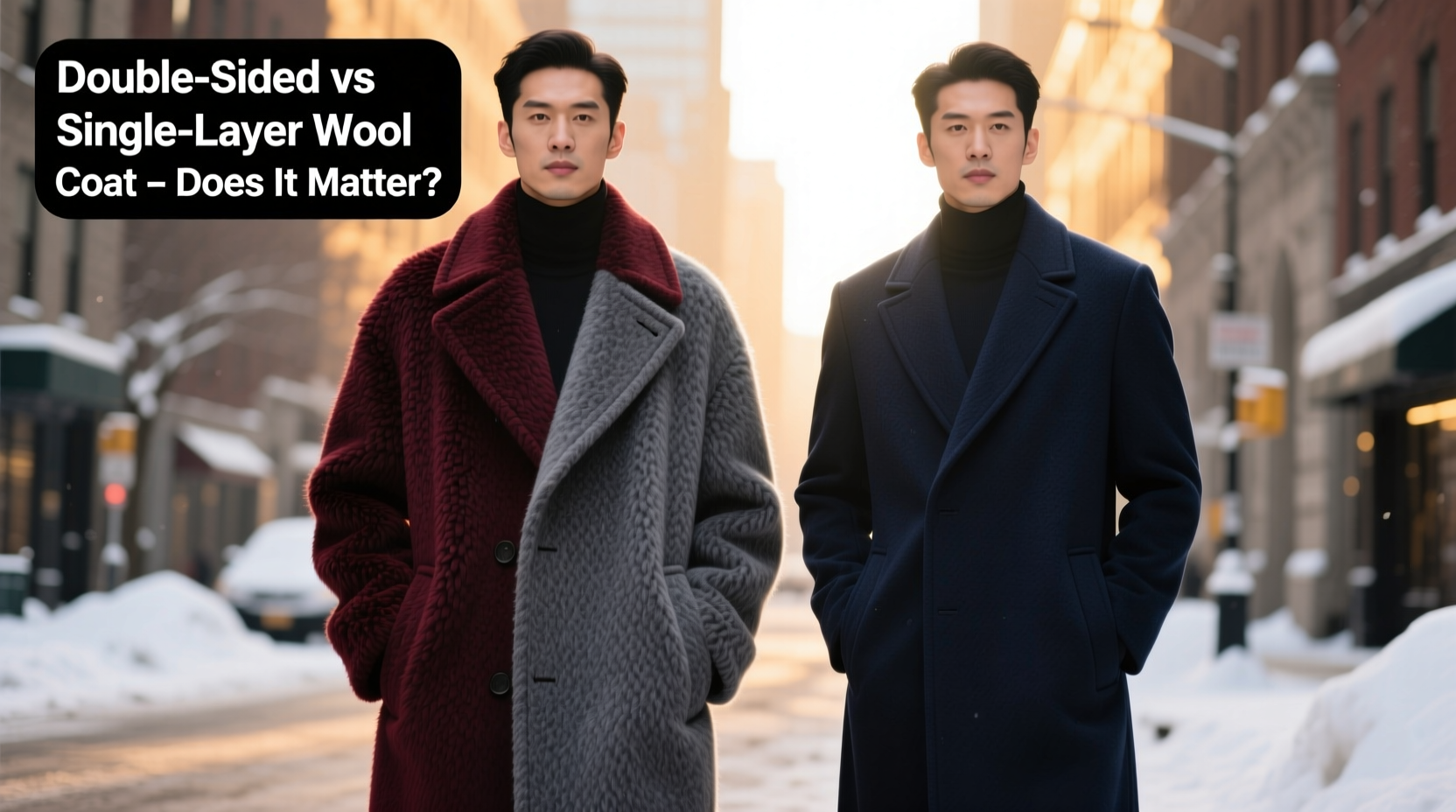
A double-sided wool coat—often referred to as \"reversible\" or \"double-faced\"—is constructed from two layers of high-quality wool fabric bonded together during manufacturing. These layers are typically joined at the edges and seams, creating a seamless interior with no lining required. Because both sides are finished, the coat can be worn either way, offering visual versatility.
In contrast, a single-layer wool coat consists of one outer shell of wool paired with a separate lining—usually made of polyester, viscose, or silk. This lining provides modest insulation but doesn't contribute significantly to thermal performance beyond wind resistance and comfort against the skin.
The absence of a traditional lining in double-sided coats isn't a compromise; it's a design feature. The dual wool layers trap air between them, forming a natural insulating barrier. This structure alone gives double-sided versions a structural advantage in cold climates.
Warmth Comparison: Trapped Air vs Added Lining
Thermal efficiency in clothing relies on trapped air—the less movement, the better the insulation. Double-sided wool coats excel here. The two bonded wool layers create a microclimate of still air between them, acting like a passive thermal buffer. This design reduces convective heat loss, especially in windy conditions.
Single-layer coats depend heavily on their lining and the wearer’s layering system underneath. While they offer decent warmth, much of their performance hinges on what you wear beneath. A thin cotton shirt under a lined wool coat won’t cut it in sub-zero weather, whereas a double-sided coat often requires only a light sweater to remain comfortable.
Additionally, double-faced wool tends to use denser, higher-grade fibers. These materials naturally retain heat better than standard wool blends used in entry-level single-layer coats.
“Double-sided construction isn’t just about aesthetics—it fundamentally changes how heat is retained. The lack of internal seams and linings means fewer cold spots.” — Dr. Lena Moreau, Textile Engineer, Swiss Institute of Fabric Innovation
Style and Aesthetic Impact
Beyond function, appearance plays a crucial role in outerwear selection. Double-sided coats are prized for their clean silhouette. Without a visible lining, there are no hems, facings, or flaps interrupting the drape. This results in a sleeker, more tailored profile that moves fluidly with the body.
The reversible nature also offers subtle styling flexibility. Some models feature contrasting colors or textures on each side, allowing wearers to shift looks without changing garments. Even when both sides are identical, the uninterrupted wool surface maintains a luxurious, minimalist aesthetic.
Single-layer coats, while still stylish, often show collar linings, pocket bindings, and seam allowances. In rainy or humid conditions, moisture can seep through the outer wool and cause the lining to pull or wrinkle, disrupting the coat’s polished look.
Visual Differences at a Glance
| Feature | Double-Sided Wool Coat | Single-Layer Wool Coat |
|---|---|---|
| Silhouette | Smooth, continuous drape | May show lining folds or bulk |
| Reversibility | Yes, fully wearable on both sides | No (lining not designed for exposure) |
| Seam Finish | Hand-stitched, hidden | Machined, often visible |
| Durability Over Time | Less prone to lining tears | Lining may degrade or detach |
| Weight | Heavier due to dual wool layers | Lighter, more packable |
Durability and Longevity: An Investment Perspective
Double-sided wool coats are frequently seen as heirloom pieces. Their construction minimizes weak points—no loose linings, no peeling interlinings, no fraying facings. With proper care, these coats can last decades, aging gracefully rather than deteriorating.
Single-layer coats, while durable, face common failure points. Linings tear at stress areas like armholes or pockets. Over time, repeated dry cleaning can weaken stitching, and moisture exposure may lead to mildew behind the fabric. Once the lining fails, the coat often feels drafty and unbalanced, even if the outer shell remains intact.
Moreover, double-faced wool is typically made from premium fibers like Merino or cashmere blends, chosen for softness and resilience. These materials resist pilling better than lower-grade wools and maintain loft longer, preserving both warmth and appearance.
Real-World Example: Urban Commuter in Montreal
Consider Marie, a professional working in downtown Montreal, where winter averages hover around -10°C (14°F) with frequent wind chills below -20°C (-4°F). For years, she relied on a well-tailored single-layer wool coat with a silk lining. While elegant, she found herself adding thick sweaters and scarves daily, and by mid-January, the lining had begun to detach near the shoulders.
The following winter, she invested in a double-sided camel coat. Though heavier, she noticed immediate differences: less need for bulky layers, no cold drafts at the cuffs or hem, and a consistently sharp appearance even after weeks of daily use. After three seasons, the coat shows minimal wear, while her old lined coat was retired due to internal damage.
Her experience reflects a broader trend: in harsh climates, the structural superiority of double-sided wool translates into real-world comfort and longevity.
Step-by-Step Guide: Choosing the Right Coat for Your Needs
- Assess Your Climate: If you live in a region with prolonged sub-freezing temperatures or strong winds, prioritize insulation and wind resistance—opt for double-sided.
- Evaluate Daily Use: Frequent commuters or outdoor workers benefit from the durability and consistent warmth of double-faced construction.
- Consider Style Preferences: Do you value minimalism and reversibility? Double-sided coats offer cleaner lines and dual-tone options.
- Check Craftsmanship Details: Look for hand-rolled edges, aligned patterns across seams, and even weight distribution.
- Budget Realistically: Double-sided coats are an investment. Expect to pay 1.5 to 3 times more than single-layer equivalents—but factor in lifespan when comparing value.
Frequently Asked Questions
Is a double-sided wool coat warmer than two single coats layered?
Not necessarily in raw temperature rating, but it provides more consistent, draft-free warmth. Layered single coats can create air gaps and bulk, reducing mobility and increasing heat loss through convection. A well-made double-sided coat eliminates these issues with integrated insulation.
Can I wear a double-sided coat in mild winters?
Absolutely. While excellent in extreme cold, many modern double-faced coats use breathable wool blends suitable for transitional seasons. Their elegance makes them ideal for city wear even when extreme warmth isn’t required.
Are double-sided coats harder to clean?
They require careful handling. Most are dry-clean only, and improper cleaning can disrupt the bonded layers. However, because they lack absorbent linings, they’re less prone to holding odors or moisture, reducing cleaning frequency.
Final Thoughts: Beyond the Hype, Focus on Function
The choice between double-sided and single-layer wool coats isn’t merely aesthetic—it’s architectural. One is built like a modern insulated wall; the other, like a painted facade over basic framing. Both serve purposes, but only one is engineered for endurance and thermal intelligence.
If you're dressing for occasional chilly evenings or prioritize lightweight packing, a quality single-layer coat remains a practical option. But if you demand reliability, refined aesthetics, and lasting warmth through years of winter wear, a double-sided wool coat isn’t just a luxury—it’s a logical upgrade.




 浙公网安备
33010002000092号
浙公网安备
33010002000092号 浙B2-20120091-4
Comments
No comments yet. Why don't you start the discussion?