
Cutting boards are a kitchen staple—used daily for chopping vegetables, slicing meat, and preparing meals. Yet, despite their ubiquity, many home cooks overlook a critical decision: whether to use a single-sided or double-sided board. With options ranging from basic plastic slabs to premium reversible hardwood models, the choice impacts hygiene, durability, and efficiency in food prep. Understanding the real differences between single and double-sided cutting boards helps you make an informed decision that aligns with your cooking habits and kitchen space.
The Functional Differences Between Single and Double-Sided Boards
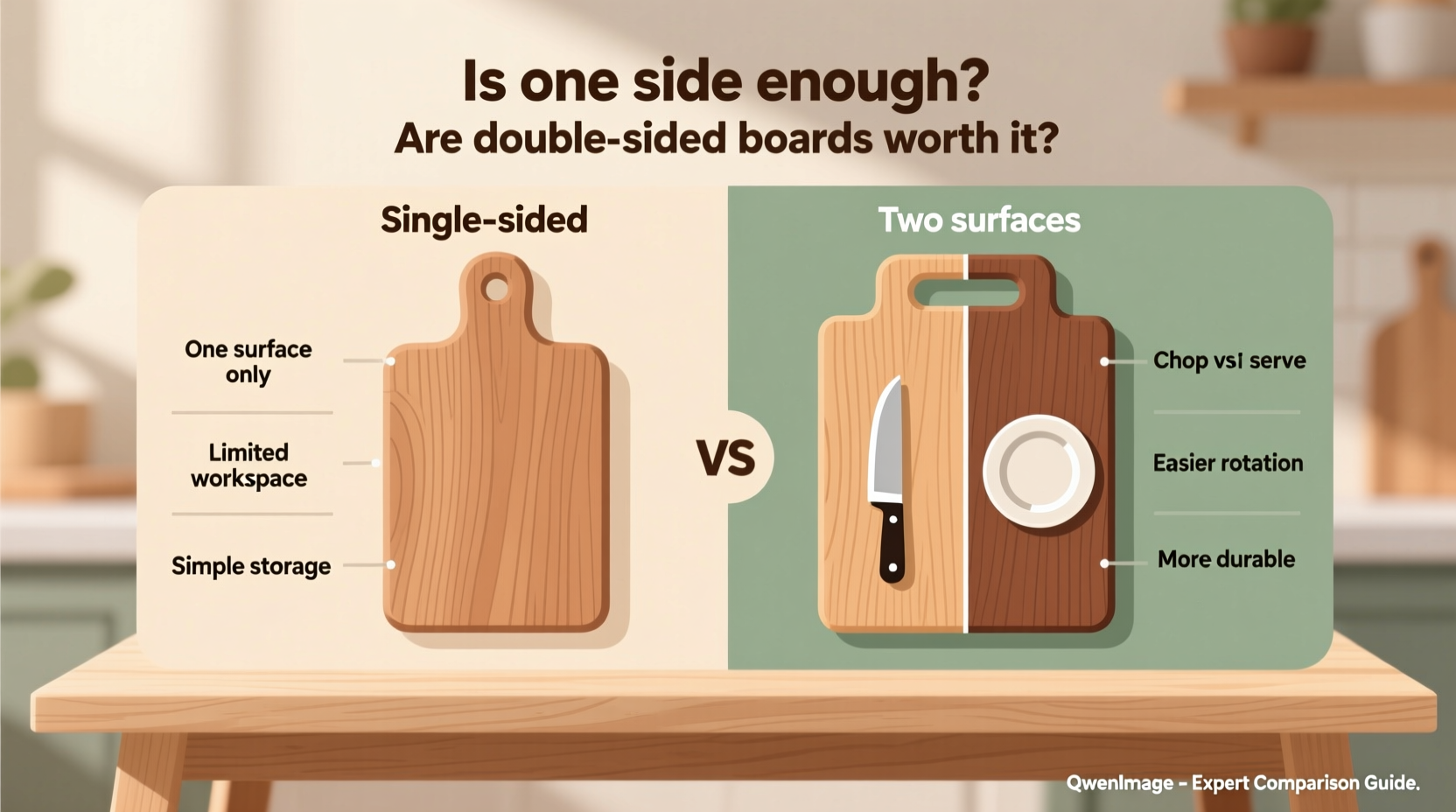
At first glance, the distinction seems simple—one side versus two. But the implications go beyond surface area. A single-sided cutting board typically features one functional chopping surface, often made of wood, bamboo, or plastic. These are straightforward, affordable, and sufficient for light to moderate use. However, they offer no alternate surface once one side becomes stained, scarred, or contaminated.
Double-sided boards, on the other hand, provide two usable surfaces. This design isn't just about doubling the chopping space—it's about versatility. Many double-sided models pair different materials (e.g., wood on one side, juice groove-equipped plastic on the other) or designate sides for specific tasks (raw meat vs. produce). Some high-end versions even include antimicrobial coatings or built-in handles and drip grooves.
The key advantage lies in separation: minimizing cross-contamination while maximizing utility without needing multiple boards cluttering the counter.
Hygiene and Cross-Contamination Concerns
One of the most pressing issues in home kitchens is cross-contamination. The CDC estimates that improper food handling contributes significantly to foodborne illness each year. Using the same surface for raw chicken and salad ingredients without proper sanitizing increases the risk of spreading harmful bacteria like Salmonella or E. coli.
Single-sided boards require rigorous cleaning between uses if you're handling different food types. Even with thorough washing, deep knife scars can harbor bacteria, especially in wooden boards. While wood has natural antibacterial properties, repeated use degrades its effectiveness over time.
Double-sided boards mitigate this by allowing dedicated zones. For example, reserve one side for meats and seafood, the other for plant-based foods. This physical separation reduces reliance on memory and cleaning diligence. It’s not foolproof—both sides still need regular sanitization—but it adds a layer of safety through design.
“Having separate surfaces for different food categories is one of the simplest ways to improve kitchen hygiene. A double-sided board makes that easier to maintain consistently.” — Dr. Lena Reyes, Food Safety Consultant
Material Matters: How Construction Impacts Performance
The value of a double-sided board depends heavily on its construction. Not all are created equal. Some budget models glue two thin plastic sheets together, which can delaminate over time, creating hidden pockets for moisture and microbes. Others use solid wood laminated with a synthetic surface, offering better durability.
High-quality double-sided boards often combine end-grain wood (gentler on knives) with a plastic or composite side designed for raw meat. This hybrid approach gives users the best of both worlds: a knife-friendly surface for delicate prep work and a non-porous, easy-to-sanitize side for messy jobs.
In contrast, single-sided boards made from solid hardwood or dense bamboo can last years with proper care. They’re simpler to maintain but lack flexibility. Once one side is too damaged, flipping isn’t an option—you must replace the entire board or store it improperly face-up.
| Feature | Single-Sided Board | Double-Sided Board |
|---|---|---|
| Lifespan | Moderate; limited by wear on one side | Longer; second side extends usability |
| Hospitality Use | Rarely compliant due to contamination risks | Common in commercial kitchens for zoning |
| Storage Space | Takes same footprint as double-sided | No extra space needed despite dual function |
| Cost | $10–$30 | $30–$90+ depending on materials |
| Cleaning Difficulty | Easier to handle but requires frequent deep clean | Slightly bulkier but allows task-specific maintenance |
Real-World Example: A Busy Home Kitchen
Consider Maria, a working parent who prepares dinner nightly for her family of four. Her old single plastic board worked fine until she started meal prepping on weekends. Chopping onions, garlic, and peppers on the same surface previously used for marinating chicken led to lingering odors and concerns about safety. She upgraded to a double-sided board: one side for raw meats with a juice groove, the other smooth wood for vegetables and bread.
The change improved workflow. She no longer had to wash the board mid-prep. The meat side contained drips, and the wood side stayed pristine. After six months, only one side showed heavy wear—she flipped it over and continued using the fresh surface. When guests asked about her “new” board, she laughed: it was the same one, just reversed.
This case illustrates how double-sided boards extend usability and support safer practices in high-frequency environments.
When a Single Board Is Enough
Not every kitchen needs a double-sided board. For those who cook infrequently, live alone, or have minimal counter space, a well-maintained single board may suffice. If you follow strict cleaning protocols—washing with hot, soapy water after each use, sanitizing weekly with vinegar or dilute bleach, and occasionally sanding wooden boards—you can manage contamination risks effectively.
Additionally, some compact kitchens benefit from simplicity. A large double-sided board might be unwieldy for small sinks or narrow storage areas. In such cases, owning two separate single boards (color-coded for different uses) may be more practical than one bulky reversible model.
Checklist: Choosing the Right Board for Your Needs
- ✅ Assess how often you cook and what types of food you prepare
- ✅ Determine available storage and counter space
- ✅ Decide whether you’ll commit to post-use sanitation routines
- ✅ Consider if you handle raw meat regularly
- ✅ Evaluate budget—higher-end double boards are an investment
- ✅ Look for certifications: FDA-compliant plastics, sustainably sourced wood
- ✅ Test weight and grip—especially important for larger boards
FAQ
Can I flip a single-sided board to extend its life?
Only if it’s made from uniform material and hasn’t been sealed on one side. Most single-sided boards are designed with one active surface. Flipping may expose unfinished layers or compromise structural integrity, especially in laminated bamboo or treated plastic models.
Are double-sided boards dishwasher safe?
It depends on the materials. Plastic and composite sides often tolerate dishwashers, but wood components should never be machine-washed. Heat and prolonged moisture cause warping and cracking. Always check manufacturer guidelines before cleaning.
Do double-sided boards dull knives faster?
Not inherently. Knife wear depends more on material than configuration. Hard plastic or glass surfaces dull blades quickly, regardless of being single or double-sided. Opt for softer, knife-friendly materials like wood or polyethylene if blade preservation matters to you.
Final Verdict: Are Double-Sided Boards Worth It?
For most home cooks, especially those preparing diverse meals or handling raw proteins, double-sided cutting boards offer tangible benefits. They enhance food safety through designated zones, extend product lifespan by providing a backup surface, and streamline prep by reducing wash cycles. While the upfront cost is higher, the long-term value often justifies the price.
That said, a double-sided board isn’t a magic solution. It still demands proper care—regular oiling for wood, prompt drying, and periodic deep cleaning. And if you rarely cook or already manage contamination risks well with multiple single boards, the upgrade may not be essential.
The real question isn’t just about having two sides—it’s about whether your current setup supports safe, efficient cooking. If you find yourself washing the board repeatedly during a single meal or worrying about smells and stains, a double-sided model could be the upgrade you didn’t know you needed.




 浙公网安备
33010002000092号
浙公网安备
33010002000092号 浙B2-20120091-4
Comments
No comments yet. Why don't you start the discussion?