
When the temperature drops, many people reach for extra blankets, assuming that piling on layers will trap more heat and improve warmth. But is this instinct grounded in science, or is it simply a long-held myth? The debate between double versus single layer blankets goes beyond tradition—it touches on principles of thermal insulation, air circulation, and material efficiency. Understanding how blankets work can help you make smarter choices for comfort, energy savings, and even sleep quality.
The Science Behind Heat Retention in Bedding
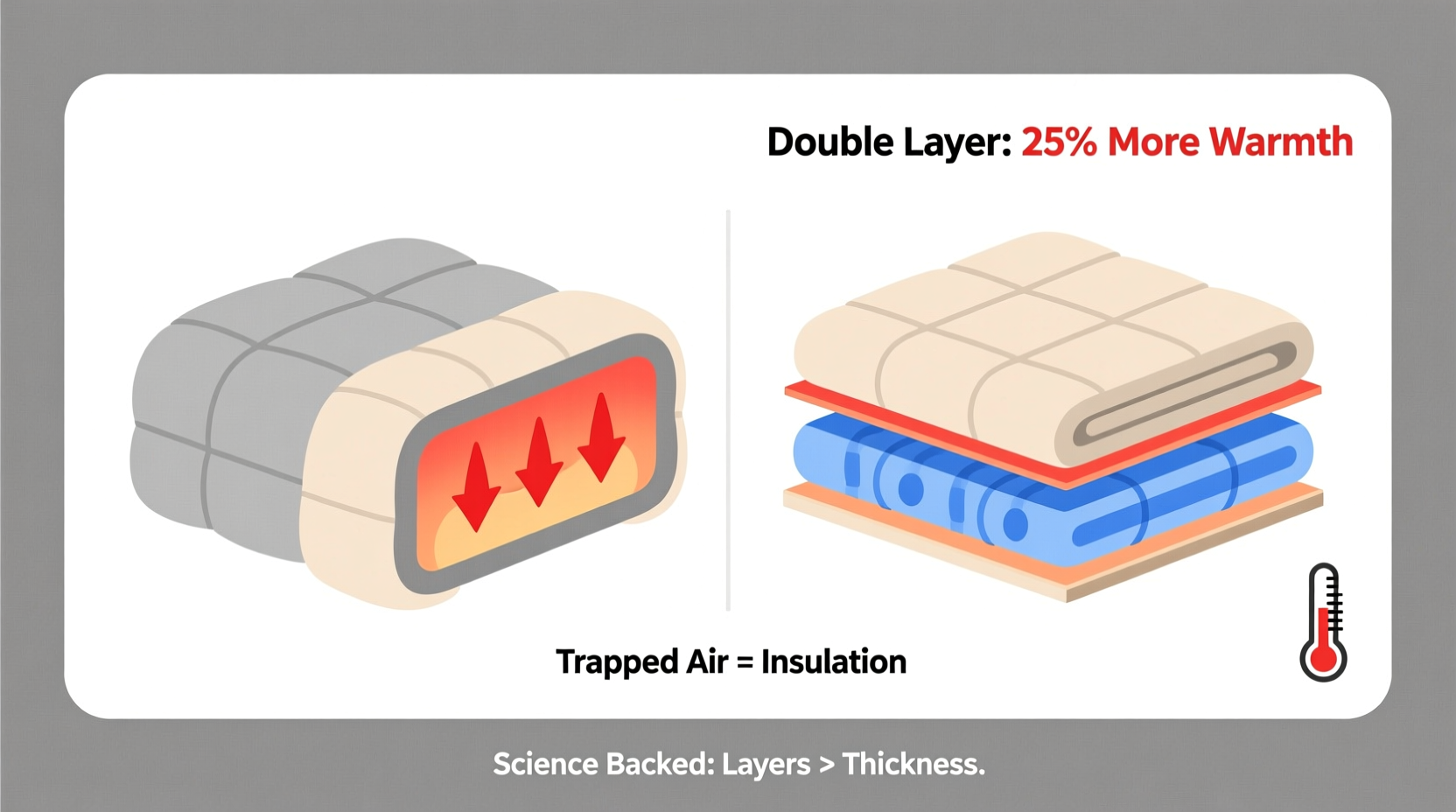
Human bodies constantly lose heat through radiation, convection, evaporation, and conduction. A blanket’s primary function is not to generate heat but to reduce heat loss. It acts as a barrier between your body and the cooler surrounding air. The key to effective insulation lies in trapping a layer of warm air close to the skin—a process known as \"dead air space\" insulation.
Air is one of the best natural insulators because it conducts heat poorly. When a blanket holds still, warm air near your body, it prevents cold air from circulating and drawing heat away. This is why materials like down, wool, and fleece—known for their ability to loft and trap air—are so effective.
So, does adding a second blanket increase this effect? The answer isn't a simple yes or no—it depends on how the layers interact.
Single Layer: Simplicity and Efficiency
A high-quality single blanket made from an insulating material (e.g., wool, microfleece, or down-filled) can be remarkably efficient. Its performance hinges on thickness, fiber density, and breathability. A well-designed single layer minimizes heat escape without adding excess weight or restricting airflow.
In controlled environments, such as laboratory tests measuring thermal resistance (measured in “tog” values), a single thick blanket often performs as well as—or better than—two thin ones stacked together. Why? Because multiple layers can compress each other, reducing the volume of trapped air and diminishing overall insulation.
Double Layer: Strategic Insulation or Overkill?
Stacking two blankets introduces variables that can either enhance or undermine warmth. When done correctly, layering allows for adjustable insulation—you can remove one blanket if you get too warm. This flexibility is especially useful in unpredictable climates or households with differing temperature preferences.
However, doubling up doesn’t automatically double warmth. If the top blanket is heavy, it may compress the bottom one, collapsing its air pockets and reducing its insulating power. For example, placing a dense cotton quilt over a fluffy down blanket can squeeze out the very air that makes down effective.
On the flip side, pairing a lightweight inner blanket (like flannel) with a heavier outer one (such as a wool duvet) can create distinct insulating zones. The first layer wicks moisture and adapts to body heat, while the second blocks external cold—this synergy mimics the layering strategy used in outdoor winter clothing.
“Layering works when each component has a specific role—moisture management, breathability, and wind resistance. Blankets follow the same logic.” — Dr. Lena Patel, Textile Physicist, University of Manchester
Comparing Performance: A Practical Table
| Factor | Single Layer | Double Layer |
|---|---|---|
| Thermal Efficiency | High (if well-insulated) | Variable (depends on combination) |
| Air Trapping Capacity | Consistent | Potentially higher, but risks compression |
| Mobility & Comfort | Better (lighter, less restrictive) | Reduced (heavier, bulkier) |
| Moisture Wicking | Depends on fabric | Can be improved with layered fabrics |
| Adjustability | Low | High (easy to remove one layer) |
| Durability Impact | Even wear | Inner layer may wear faster due to friction |
Real-World Example: The Alpine Cabin Test
In a small study conducted in a Swiss alpine cabin during winter, two participants slept under identical conditions except for bedding. One used a single 12-tog down duvet; the other used a 6-tog cotton blanket layered under a 7-tog wool throw.
Over five nights, internal bed temperatures were monitored using wearable sensors. The results showed that both setups maintained core body temperature effectively. However, the double-layer user reported greater comfort due to the ability to shed the top layer during mild spikes in room temperature. Meanwhile, the single-layer sleeper occasionally felt too warm but had no easy way to adjust.
Interestingly, when the double-layer setup was reversed—wool on the bottom, cotton on top—comfort decreased. Participants noted stiffness and reduced breathability, confirming that layer order matters.
How to Maximize Warmth: A Step-by-Step Guide
Whether you prefer simplicity or customization, follow this sequence to optimize your bedding for warmth without sacrificing comfort:
- Start with a moisture-wicking base layer. Use a lightweight flannel or bamboo sheet set to draw sweat away from the skin.
- Add a mid-weight insulating blanket. Choose materials like wool, down alternative, or polar fleece based on allergies and climate.
- Top with a heavier, breathable outer blanket. Wool or quilted cotton works well here—avoid non-breathable synthetics.
- Ensure layers are loosely draped. Avoid tucking tightly, which compresses fibers and reduces air trapping.
- Use a mattress pad or underblanket. These add bottom-up insulation, preventing heat loss into the bed frame.
- Monitor humidity and room temperature. Ideal bedroom conditions are 16–19°C (60–67°F) with moderate humidity.
Common Myths About Blanket Layers Debunked
- Myth: More layers = exponentially more warmth. Reality: After two layers, returns diminish due to compression and reduced airflow.
- Myth: Thicker always means warmer. Reality: A thin down blanket can outperform a thick polyester one due to superior loft and air retention.
- Myth: Synthetic blankets are inferior. Reality: Modern microfibers mimic down’s properties at lower cost and with easier care.
Frequently Asked Questions
Does layering blankets save energy on heating bills?
Yes. By keeping your body warmer in bed, you may lower your thermostat at night. Each degree reduction in room temperature can save up to 3% on heating costs. Using effective bedding reduces reliance on ambient heat.
Can double layers cause overheating?
Absolutely. Excessive layering, especially with non-breathable fabrics, traps too much heat and moisture. This disrupts sleep by increasing nighttime awakenings and sweating. Opt for adjustable layering instead of permanent stacking.
Is there an ideal number of blanket layers?
For most adults, one well-chosen blanket or two complementary layers are sufficient. Three or more usually lead to discomfort, restricted movement, and diminished insulation due to compaction.
Final Checklist: Choosing Your Ideal Setup
- ☐ Assess your sleeping environment:
- Is your bedroom drafty? Cool? Humid?
- ☐ Evaluate your current blanket:
- Check tog rating, material, age, and signs of flattening.
- ☐ Prioritize breathability:
- Natural fibers like wool, cotton, and bamboo regulate temperature better than plastics.
- ☐ Test layering combinations:
- Try different orders—light on bottom, heavy on top—for optimal results.
- ☐ Monitor sleep quality:
- If you wake up sweaty or shivering, adjust layers accordingly.
Conclusion: Quality Over Quantity
The idea that double layers are inherently warmer than single ones is a myth—when unsupported by proper materials and technique. What truly keeps you warm is not the number of blankets, but how effectively they trap and retain heat. A single high-performance blanket often outperforms stacked, mismatched layers. Yet, strategic layering offers unmatched adaptability for changing conditions.
The key is intentionality: choose materials wisely, understand how they interact, and prioritize breathability and comfort. Whether you go single or double, let science—not habit—guide your decision.




 浙公网安备
33010002000092号
浙公网安备
33010002000092号 浙B2-20120091-4
Comments
No comments yet. Why don't you start the discussion?