
In every kitchen, bathroom, or office space, the humble trash can plays a critical role in maintaining cleanliness and order. But a growing trend—especially in modern homes—is the use of double-bin systems. From sleek under-sink models with dual compartments to countertop units designed for recycling and compost, two bins are increasingly replacing the traditional single can. But does this shift actually improve functionality, or is it just aesthetic overkill? The answer depends on lifestyle, space, waste habits, and long-term maintenance.
The Rise of the Double Trash Can
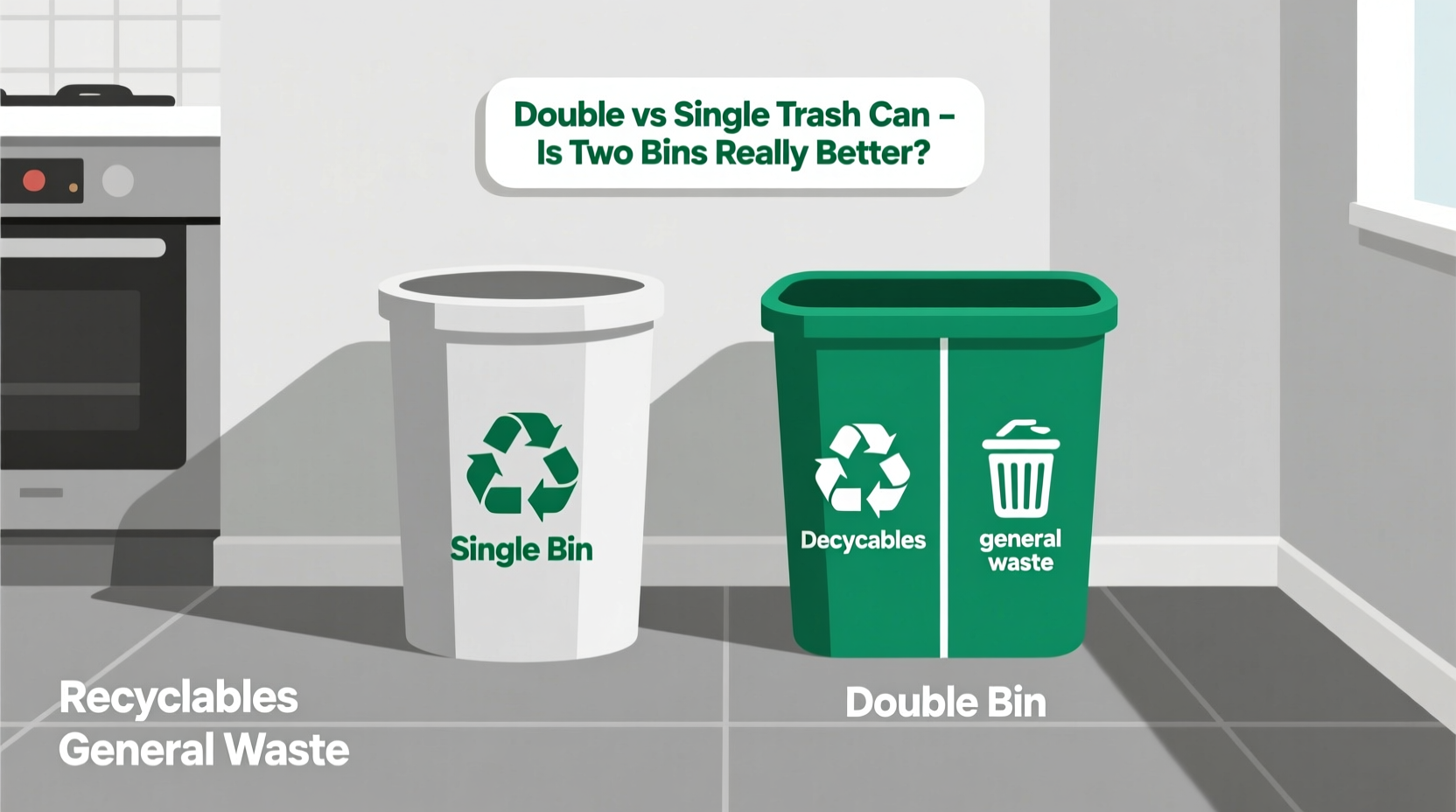
Double trash cans have gained popularity alongside the rise of home recycling and composting. Municipalities across North America and Europe now require households to separate recyclables from general waste, prompting many homeowners to rethink their disposal strategy. At the same time, minimalist design trends favor built-in or hidden waste solutions that keep clutter out of sight—often achieved through dual-compartment units tucked under sinks or inside cabinets.
Manufacturers like SimpleHuman, Brabantia, and iTouchless have capitalized on this demand, offering sensor-activated double bins, pull-out drawer systems, and modular designs that cater to both function and form. These models often feature separate lids, odor control mechanisms, and ergonomic foot pedals for each compartment.
“Households that sort waste at the source see up to 30% higher recycling rates.” — U.S. Environmental Protection Agency (EPA)
Single vs. Double: A Practical Comparison
Choosing between one or two trash cans isn’t just about preference—it’s about workflow, hygiene, and household dynamics. Below is a detailed comparison of key factors:
| Factor | Single Trash Can | Double Trash Can |
|---|---|---|
| Space Efficiency | Takes up less floor or cabinet space | Requires more room; may not fit in tight areas |
| Waste Separation | None unless manually transferred later | Enables immediate sorting (e.g., trash vs. recyclables) |
| Cleaning & Maintenance | Easier to clean and replace liners | More surfaces to wipe; liners must be replaced separately |
| Odor Control | All waste mixed; odors accumulate faster | Potential to isolate smelly waste (e.g., food scraps) in sealed bin |
| Cost | Affordable ($20–$50) | Higher price point ($60–$200+) |
| User Convenience | One-lid operation; simpler for kids or guests | May require learning which bin is for what |
When Two Bins Make Sense
Dual-bin systems shine in specific environments where waste separation is routine. For example:
- Families committed to recycling: Having dedicated bins reduces cross-contamination and makes curbside pickup easier.
- Home cooks or meal preppers: A compost bin paired with a trash can allows immediate disposal of food scraps without walking to an outdoor bin.
- Small apartments with limited storage: An under-sink double pull-out maximizes utility in compact kitchens.
- Offices or shared spaces: Clear separation encourages proper disposal and reduces contamination in recycling streams.
Real Example: The Urban Kitchen Upgrade
Sarah, a graphic designer living in a 700-square-foot Seattle condo, used a single 13-gallon trash can under her sink for years. After adopting a zero-waste lifestyle, she found herself constantly transferring coffee grounds, vegetable peels, and paper towels to a separate compost bucket on her balcony—a messy, inconvenient process. She invested in a stainless steel double pull-out bin: one side for landfill trash, the other for compost. Within weeks, her waste volume dropped by nearly half, and she no longer had to carry scraps across the apartment. “It made sustainable habits effortless,” she said. “Now I don’t even think about sorting—it’s automatic.”
When One Bin Is Enough
Despite the benefits of dual systems, a single trash can remains practical—and sometimes preferable—for many households. Renters, for instance, may lack the space or permission to install custom cabinetry. Others live alone and generate minimal waste, making separation redundant.
Additionally, some users report frustration with double bins due to inconsistent liner sizes, awkward access, or mechanical failure in pedal-operated models. In high-traffic areas like bathrooms or guest powder rooms, simplicity wins. A single, hands-free sensor can is often more hygienic and user-friendly than managing two compartments.
“Not every home needs complexity. Sometimes the best system is the one you’ll actually use.” — Mark Reynolds, Sustainable Living Consultant
Step-by-Step: Choosing the Right Setup for Your Home
Follow this decision-making process to determine whether one or two bins suit your needs:
- Assess your waste output: Track what you throw away for a week. If more than 30% is recyclable or compostable, consider separation.
- Evaluate available space: Measure under sinks, in pantries, or near countertops. Standard double bins require at least 24 inches of width.
- Consider household habits: Do multiple people use the space? Will others comply with sorting?
- Check local waste policies: Some cities offer incentives or fines based on recycling compliance.
- Test a temporary solution: Use two small bins side by side before investing in a built-in model.
- Decide on features: Pedal, sensor, swing-top, or open-top? Choose based on hygiene, ease of use, and durability.
Common Mistakes to Avoid
- Overcomplicating the system: Adding three or more bins indoors can lead to confusion and poor adherence.
- Ignoring odor management: Food waste in indoor compost bins needs frequent emptying or charcoal filters.
- Using mismatched bags: Custom-fit liners for double bins can be expensive and hard to replace.
- Forgetting accessibility: Ensure both compartments are easy to reach, especially for children or elderly users.
FAQ
Can I convert my single bin into a double setup?
Yes—with limitations. You can place two smaller bins side by side in a cabinet or use divider inserts, though these may reduce capacity and complicate bag installation. True dual-bin functionality usually requires a purpose-built unit.
Do double trash cans reduce overall waste?
Indirectly, yes. Studies show that convenient at-source sorting increases recycling and composting participation. Households with visible separation systems tend to be more mindful of consumption and disposal habits.
Are double bins harder to clean?
Slightly. With two compartments, there are more interior surfaces to wipe down. However, many models feature removable buckets and antimicrobial coatings that simplify maintenance. Regular cleaning (every 1–2 weeks) prevents buildup regardless of bin count.
Checklist: Is a Double Trash Can Right for You?
- ✅ I recycle regularly and want to streamline the process
- ✅ I cook frequently and produce compostable food waste
- ✅ I have sufficient cabinet or floor space for a larger unit
- ✅ My household members are willing to participate in sorting
- ✅ I’m ready to invest $80–$150 in a durable, long-term solution
If you checked most of these boxes, a double-bin system could enhance your daily routine. If not, a well-placed single can with a good liner and lid may serve you better.
Conclusion
The choice between a double and single trash can ultimately comes down to lifestyle alignment. Two bins offer clear advantages in waste separation, sustainability, and long-term convenience—but only if they fit your space and habits. A single can remains a reliable, low-maintenance option for those with simpler needs or tighter quarters. There’s no universal rule: the best system is the one that gets used consistently and supports your goals, whether that’s reducing landfill contributions or simply keeping the kitchen tidy.




 浙公网安备
33010002000092号
浙公网安备
33010002000092号 浙B2-20120091-4
Comments
No comments yet. Why don't you start the discussion?