
The legacy of Akira Toriyama’s Dragon Ball franchise continues to inspire passionate debate among fans, particularly when comparing its two major sequels: Dragon Ball GT and Dragon Ball Super. Both series attempt to extend the story beyond the original manga’s conclusion, but they take vastly different approaches in tone, narrative direction, and adherence to established lore. While GT leans into sci-fi spectacle and emotional arcs, Super positions itself as a direct continuation under Toriyama’s supervision. But which one is truly more faithful to the original spirit and continuity of Dragon Ball? The answer isn’t as simple as production credits—it lies in how each sequel respects the world-building, character evolution, and thematic core laid out in the original series.
Narrative Continuity and Creator Involvement
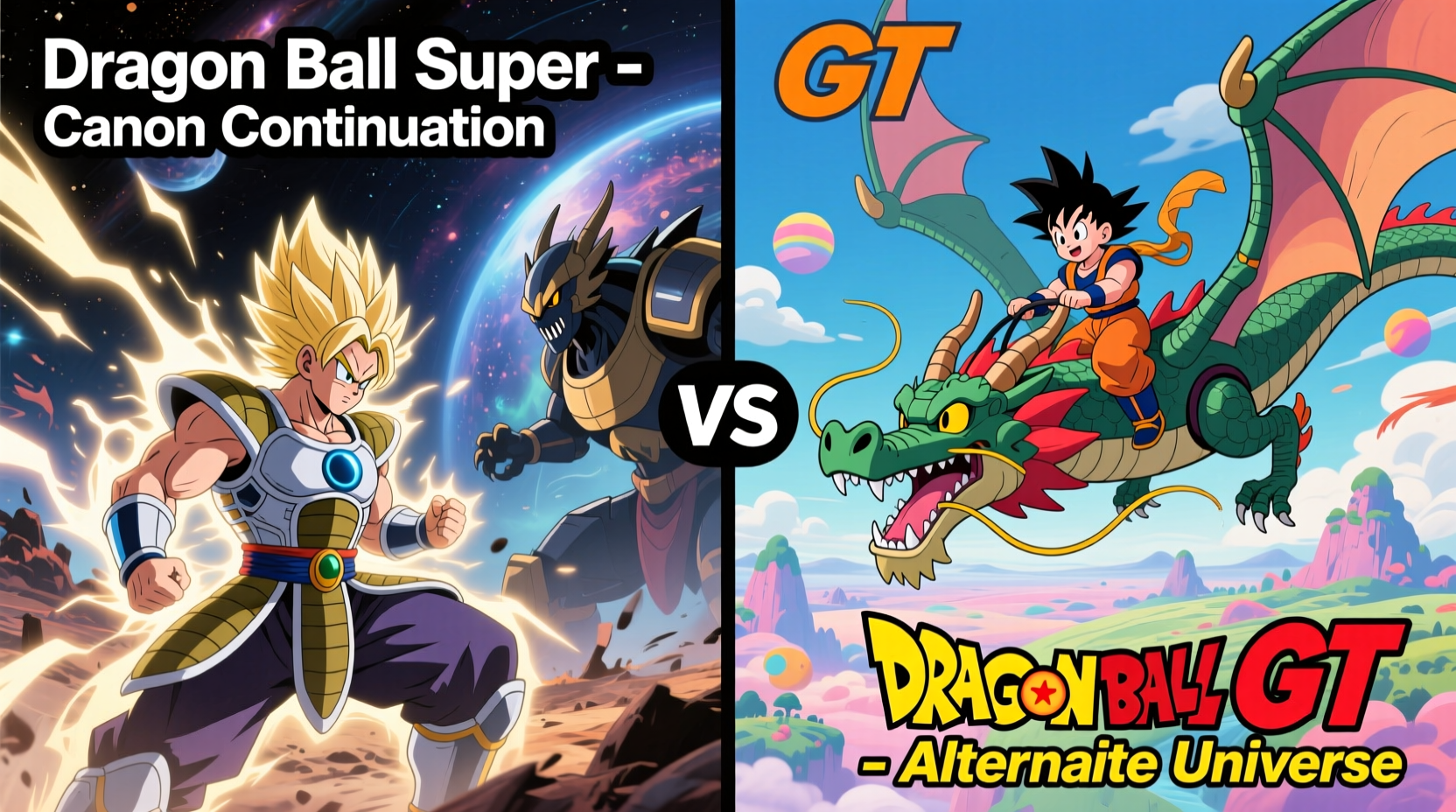
One of the most critical distinctions between Dragon Ball Super and GT is the level of involvement from original creator Akira Toriyama. Dragon Ball GT, which aired from 1996 to 1997, was produced entirely by Toei Animation without Toriyama’s creative input. Although he reportedly approved the initial concept—a space-faring adventure with a child-sized Goku—the story, characters, and power scaling evolved independently. This lack of authorial oversight allowed for bold creative risks, such as introducing the controversial Baby transformation or sending Goku back to childhood via the Black Star Dragon Balls.
In contrast, Dragon Ball Super (2015–2018) was developed with direct consultation from Toriyama. He provided the overarching plot framework, character designs, and key arc concepts, including the Gods of Destruction, the Tournament of Power, and the introduction of characters like Beerus and Whis. This makes Super canon in both narrative and legal terms. However, being \"canon\" doesn't automatically equate to greater faithfulness—especially when long-time fans argue that some of Super’s developments contradict the tone and pacing of the original series.
“While I didn’t write every episode, I wanted Super to feel like a natural extension of the manga—where the battles have weight, and the characters grow without losing who they are.” — Akira Toriyama, Interview with Shueisha Weekly (2016)
Character Development and Consistency
Faithfulness to lore extends beyond plot mechanics—it includes how characters behave, evolve, and interact within the established universe. GT has often been criticized for regressing Goku into a child, stripping him of his maturity and marital status. While this shift enables new dynamics (such as his bond with Pan), it sidelines deeper character growth seen in the original series’ later arcs. Additionally, Vegeta’s arc in GT—particularly his redemption through the “Final Atonement” against Omega Shenron—is emotionally powerful but built on speculative psychology not previously explored in depth.
Dragon Ball Super, on the other hand, attempts to deepen existing relationships. It explores Vegeta’s struggle with pride and fatherhood, gives Bulma a central role in interdimensional science, and develops Gohan’s transition from warrior to scholar before reawakening his potential. These arcs align more closely with the original series’ emphasis on personal identity and responsibility. However, Super also introduces inconsistencies: Goku’s constant pursuit of power sometimes undermines his earlier retirement and family commitments, and the near-constant battle focus risks reducing complex characters to combatants.
Power Scaling and World-Building Logic
No discussion of Dragon Ball lore is complete without addressing power progression. The original Dragon Ball and Z series gradually escalated stakes—from martial arts tournaments to universe-threatening foes—but maintained internal logic. Techniques had limitations, transformations carried consequences, and victories required sacrifice.
GT pushes power levels into cosmic territory with forms like Super Saiyan 4 and threats like Super 17 and Syn Shenron. While visually impressive, these developments often lack grounding. Super Saiyan 4, born from a primal monkey state, diverges significantly from the ki-based transformations established earlier. There’s no clear explanation for why this form wasn’t accessible before, nor how it fits into the spiritual training framework introduced with characters like King Kai.
Super introduces godly energy (God Ki), Ultra Instinct, and multi-universe hierarchies. Though initially jarring, these concepts are integrated with more narrative scaffolding. God Ki is earned through divine mentorship, Ultra Instinct is portrayed as a rare, near-spiritual state of awareness, and the multiverse structure is governed by rules and balance enforced by beings like Zeno. While still fantastical, Super provides pseudo-theological explanations that expand rather than overwrite previous systems.
Comparison of Key Lore Elements
| Lore Aspect | Dragon Ball GT | Dragon Ball Super |
|---|---|---|
| Creator Involvement | Minimal; concept-only approval | Direct; story outlines and designs |
| Canon Status | Non-canon | Official canon |
| Transformation Logic | SSJ4 based on primal state; inconsistent with prior lore | God Ki explained through divine hierarchy |
| Character Arcs | Emotional but sometimes regressive | Expanded roles with mixed consistency |
| Thematic Focus | Adventure, legacy, sacrifice | Battle supremacy, divine order |
| Continuity with Original Ending | Takes place years later; ignores some Z events | Resumes five years post-Buu; honors manga conclusion |
Themes and Tone: What Made Dragon Ball Unique?
Faithfulness isn’t only about facts and timelines—it’s about spirit. The original Dragon Ball blended martial arts, humor, mythology, and coming-of-age storytelling. As the series evolved into Z, it embraced heavier themes: mortality, redemption, and the cost of strength. GT, despite its flaws, captures a sense of melancholy and finality. Its ending—Goku riding off with Shenron, leaving behind a grown-up Pan—echoes the bittersweet closure of legends passing into myth. This resonates with the original series’ roots in Japanese folklore and hero cycles.
Super, while energetic and expansive, often prioritizes tournament arcs and power reveals over introspection. The Tournament of Power, while epic in scale, reduces entire universes to disposable stakes in a battle royale. Characters die en masse only to be revived, diluting the emotional weight that death once carried in the series. In the original saga, Goku’s first death during the Raditz fight was a turning point; in Super, erasure is temporary and frequent. This shift changes the narrative stakes and, by extension, the moral fabric of the world.
“The soul of Dragon Ball was never just about who could punch harder. It was about growth, humility, and knowing when to walk away. That’s what made Goku a hero, not a weapon.” — Dr. Kenji Sato, Pop Culture Analyst, Tokyo University of Culture Studies
Real-World Example: The Legacy of the Buu Saga
Consider the original series’ final arc: the defeat of Majin Buu. After absorbing countless beings and nearly destroying all life, peace is restored not through endless combat, but through compassion. Goku spares Uub, recognizing a spark of good and choosing mentorship over annihilation. This moment encapsulates the series’ ultimate message—strength without wisdom is meaningless.
Dragon Ball Super revisits this idea in the “Granolah the Survivor” arc, where Granolah seeks revenge but is ultimately disarmed by empathy. Yet the resolution is rushed, and the broader narrative quickly returns to combat escalation. Meanwhile, GT’s climax sees Goku defeating Omega Shenron not just with power, but by uniting the wishes of Earth’s people—a callback to the Dragon Balls’ original purpose as tools of hope. Though executed with melodrama, the theme of collective goodwill triumphing over destruction aligns closely with the original’s ethos.
Step-by-Step: How to Evaluate Sequel Faithfulness
Determining which sequel better honors the original lore requires a structured approach. Follow this evaluation framework:
- Check narrative placement: Does the sequel respect the timeline and endpoint of the original manga?
- Assess character behavior: Do characters act in ways consistent with their established personalities and growth?
- Analyze power systems: Are new abilities integrated logically, or do they invalidate past struggles?
- Evaluate thematic coherence: Does the story emphasize growth, morality, and consequence, or reduce conflict to spectacle?
- Review creator involvement: Was the original author meaningfully involved, or is the story an external interpretation?
Applying this method, Super scores higher on structural fidelity, while GT earns points for thematic resonance—even if it lacks official endorsement.
FAQ
Is Dragon Ball GT considered canon?
No, Dragon Ball GT is not part of the official canon. It was created by Toei Animation without Akira Toriyama’s ongoing involvement and has been superseded by Dragon Ball Super in the official timeline.
Why does Dragon Ball Super ignore GT?
Super resumes directly after the original manga’s conclusion, ignoring GT because it was never intended to be a canonical follow-up. Toriyama preferred to explore new directions, such as divine beings and multiverse theory, rather than continue GT’s storyline.
Can GT still be meaningful if it’s not canon?
Absolutely. Canon status doesn’t determine emotional or artistic value. Many fans cherish GT for its heartfelt ending, unique animation style, and exploration of legacy. Like many non-canon works, it offers an alternate vision of what the characters’ futures could have been.
Conclusion: Faithfulness Beyond Canon
When weighing Dragon Ball Super against GT, the verdict depends on how one defines “faithful.” If fidelity means strict adherence to continuity, authorial intent, and canonical integration, then Dragon Ball Super clearly wins. It was crafted with Toriyama’s guidance, respects the manga’s endpoint, and expands the universe with structured rules.
Yet if faithfulness includes honoring the emotional and philosophical core of the original series—themes of growth, sacrifice, and the burden of power—then GT holds its own. Its flawed but sincere attempt to give Goku a mythic farewell, to explore Vegeta’s redemption, and to treat the Dragon Balls as symbols of hope rather than plot devices speaks to the heart of what made Dragon Ball resonate across generations.
In the end, both sequels reflect different interpretations of legacy. Super is the official heir; GT is the nostalgic echo. For fans seeking authenticity, the wisest path may not be choosing one over the other, but understanding what each contributes to the broader tapestry of a legendary series.




 浙公网安备
33010002000092号
浙公网安备
33010002000092号 浙B2-20120091-4
Comments
No comments yet. Why don't you start the discussion?