
The world of anime collectibles has exploded in popularity over the past two decades, transforming from niche hobbies into serious collector markets. Among the most iconic franchises, Dragon Ball Z and Naruto stand out as titans—each with massive global followings, merchandise empires, and passionate fanbases. But when it comes to long-term value retention, which is the better investment: Dragon Ball Z action figures or Naruto collectibles?
This isn’t just a question of nostalgia or fandom—it’s about understanding market dynamics, production trends, scarcity, and cultural staying power. For collectors looking to build a collection that appreciates rather than depreciates, the answer could mean the difference between a shelf full of memories and a portfolio with real financial upside.
Market Longevity and Cultural Impact
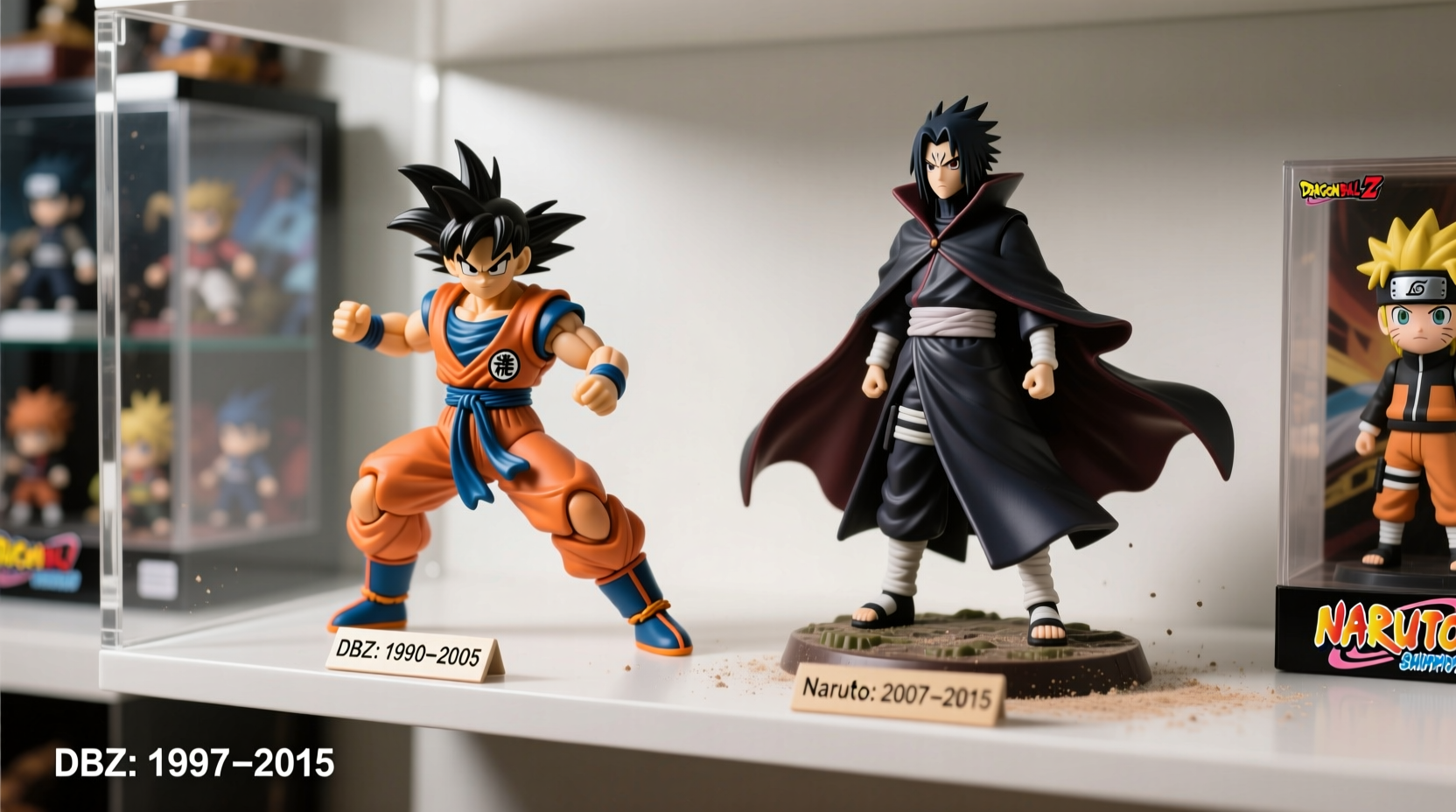
Cultural relevance is one of the strongest predictors of a collectible’s lifespan in value. Both Dragon Ball Z and Naruto have left indelible marks on global pop culture, but their trajectories differ significantly in timing, reach, and generational influence.
Dragon Ball Z debuted in Japan in 1989 and reached Western audiences in the mid-to-late 1990s. Its impact was seismic, especially in North America and Europe, where it helped introduce mainstream audiences to anime. The franchise built a core audience during childhood for millions now in their 30s and 40s—the prime demographic for nostalgic collecting. This aging fanbase often seeks to recapture youth through memorabilia, driving sustained demand.
Naruto, by contrast, gained international prominence in the early 2000s. While equally beloved, its peak popularity came slightly later. As a result, many of its most devoted fans are currently in their 20s. Though passionate, this group may not yet have the disposable income to invest heavily in high-end collectibles, potentially delaying widespread market maturation compared to DBZ.
“Franchises with multi-generational appeal and consistent media presence tend to see the slowest depreciation in collectible value.” — Marcus Lin, Toy Market Analyst at CollectorsEdge Research
Dragon Ball’s broader multimedia presence—including ongoing series like Dragon Ball Super, video games, and movies—keeps the brand alive across generations. Naruto, while still active through Boruto, hasn’t maintained the same momentum in Western markets. This continuous visibility gives DBZ an edge in long-term collectible valuation.
Rarity and Production Volume: The Supply Side
Scarcity drives value. In the collectibles market, limited runs, discontinued lines, and hard-to-find variants command premium prices. Here, Dragon Ball Z action figures generally hold an advantage due to earlier production constraints and less predictable distribution.
In the late '90s and early 2000s, companies like Bandai and Funimation produced DBZ figures under looser licensing agreements and smaller initial print runs. Many sets were region-specific or released in limited quantities at conventions. Over time, these became rare, especially when sealed or in mint condition.
Naruto collectibles, particularly those released from 2005 onward, benefited from more mature global distribution networks. Companies like Tomy and Mezco produced large volumes of figures, plush toys, and boxed sets aimed at mass retail. While this made them more accessible, it also diluted scarcity. High availability means lower demand pressure, which limits price growth.
Moreover, DBZ had fewer competing product lines during its peak, allowing key figure releases to dominate attention. Naruto, meanwhile, faced competition from other popular anime like Bleach and One Piece, spreading collector interest thinner across multiple franchises.
Condition and Packaging: The Collector’s Priority
No matter the franchise, condition is king. A mint-in-box (MIB) action figure can be worth ten times more than the same item loose. However, the way fans treated these items during their original release cycles affects today’s supply of pristine pieces.
DBZ figures were often purchased by younger children who played with them extensively. As a result, finding unopened or gently handled vintage figures is increasingly rare. This scarcity amplifies the value of well-preserved specimens. Sealed boxes from the early 2000s routinely sell for hundreds of dollars, especially if they feature major characters like Frieza, Cell, or Super Saiyan Goku.
Naruto collectibles, arriving slightly later in the era of “collector consciousness,” were more likely to be kept in packaging by older teens and young adults. Still, because so many were produced, even mint-condition figures remain relatively abundant. Unless they’re exclusive convention editions or prototype variants, most Naruto figures haven’t seen dramatic appreciation.
Grading services like Professional Action Figure Grading (PAFG) are beginning to standardize evaluations, much like comic book grading. Early adopters who submit high-grade DBZ figures are seeing returns, while Naruto submissions remain sparse and less lucrative.
Investment Potential Comparison
To understand which franchise offers better long-term value retention, consider the following comparison table highlighting key factors:
| Factor | Dragon Ball Z Action Figures | Naruto Collectibles |
|---|---|---|
| Original Production Volume | Lower (especially pre-2003) | Higher (mass-market focus) |
| Average Resale Value Increase (2000–2024) | 70–200%+ for rare MIB items | 10–50% for most standard figures |
| Market Demand Stability | High and steady | Moderate, with spikes around new releases |
| Exclusive/Variant Availability | Frequent convention exclusives, chase variants | Limited exclusives; mostly repacks |
| Long-Term Franchise Activity | Ongoing (Dragon Ball Super, games) | Slower (Boruto reception mixed) |
| Collector Community Size | Large, global, active | Large but less focused on physical collectibles |
The data suggests that Dragon Ball Z action figures, particularly vintage and limited-edition models, have demonstrated stronger and more consistent appreciation. Naruto collectibles maintain sentimental value but lack the same upward pricing trend outside of ultra-rare pieces.
Real-World Example: The $1,200 Goku Figure
In 2022, a sealed 1999 Bandai Dragon Ball Z \"Super Saiyan 3 Goku\" action figure sold on eBay for $1,200. Originally priced at $7.99, the figure had been stored in a climate-controlled attic for over two decades. Its edges were sharp, the bubble was intact, and the box showed no crushing—a true gem in collector terms.
By contrast, a mint 2007 Naruto Shippuden \"Six Paths Sasuke\" figure, also sealed and from a limited run, recently listed for $85. Despite being newer and technically rarer in production numbers, it failed to attract bids above $60 due to oversupply in secondary markets and weaker demand signals.
This disparity illustrates how brand momentum, audience demographics, and historical context shape value far beyond simple rarity. The DBZ figure wasn’t just rare—it symbolized a cultural moment, owned by a generation willing to pay top dollar to reclaim it.
How to Build a Value-Resistant Collection: Step-by-Step Guide
If you're considering investing in either franchise, follow this proven sequence to maximize long-term returns:
- Research Release Eras: Focus on early 1997–2003 for DBZ and 2005–2010 for Naruto. These represent peak cultural moments with lower production yields.
- Prioritize Mint-in-Box Condition: Never open the packaging unless you intend to display, not resell. Even minor wear reduces value exponentially.
- Target Key Characters: Goku (especially transformations), Vegeta, Frieza, and Cell for DBZ; Naruto, Sasuke, Itachi, and Pain for Naruto. Iconic figures hold better.
- Seek Exclusives: Look for San Diego Comic-Con releases, promotional bundles, or Japanese-only imports. These often appreciate fastest.
- Store Properly: Keep figures away from sunlight, humidity, and temperature swings. Use acid-free boxes and silica gel packs to prevent yellowing and moisture damage.
- Document Ownership: Take photos, keep receipts, and consider third-party grading for high-value items. Provenance increases trust and sale price.
- Monitor Market Trends: Use platforms like eBay Completed Listings, MyFigureCollection.net, and Reddit communities (e.g., r/ActionFigures) to track actual sales, not just asking prices.
Common Pitfalls to Avoid
- Buying reissues as investments: Many modern DBZ and Naruto figures are re-releases with high availability. They rarely appreciate.
- Overpaying at launch: Just because a new figure is hyped doesn’t mean it will hold value. Wait 6–12 months to assess resale patterns.
- Ignoring storage conditions: Heat and light cause plastic degradation and paint rub. A poorly stored “mint” figure is worth far less.
- Chasing fads: Limited-time collaborations (e.g., fast-food promos) may spike briefly but often crash once novelty fades.
Frequently Asked Questions
Do Naruto figures ever become valuable?
Yes, but only under specific conditions: extremely rare prototypes, hand-signed editions, or sealed convention exclusives. Most mass-produced Naruto figures will not appreciate significantly due to oversupply.
Are Dragon Ball Z figures a good long-term investment?
For carefully selected, high-condition pieces from the 1997–2005 era, yes. These have shown consistent 5–10% annual appreciation over the past decade. However, treat it as a passion investment—not a replacement for traditional assets.
Should I buy sealed or loose figures?
If your goal is preservation of value, always choose sealed. Loose figures are for display and enjoyment. Only collectors and museums pay premiums for untouched packaging.
Final Verdict: Which Holds Value Longer?
While both franchises have dedicated followings and produce desirable merchandise, **Dragon Ball Z action figures** demonstrate a clearer path to long-term value retention. Their earlier production window, lower initial output, stronger global branding continuity, and deeper emotional resonance with an affluent collector demographic give them a structural advantage.
Naruto collectibles, though emotionally significant, suffer from higher supply, less aggressive secondary market activity, and weaker ongoing franchise momentum. Unless Boruto revitalizes interest or a major anniversary triggers scarcity-driven demand, they are unlikely to match DBZ’s investment trajectory.
That said, value isn’t purely monetary. For many fans, owning a piece of Naruto’s journey—from Academy dropout to Hokage—is priceless. But if you're evaluating based on return potential, historical performance, and market stability, Dragon Ball Z remains the superior choice.
Take Action Today
Start building your future collection with intention. Audit what you already own. Research upcoming auctions. Connect with seasoned collectors. Whether you’re drawn to the explosive energy of a Kamehameha wave or the quiet intensity of a Sharingan stare, make your next purchase not just a tribute to fandom—but a smart step toward lasting value.




 浙公网安备
33010002000092号
浙公网安备
33010002000092号 浙B2-20120091-4
Comments
No comments yet. Why don't you start the discussion?