
Understanding the difference between dried and fresh herbs is fundamental to mastering everyday cooking. While both enhance flavor, their potency, texture, and culinary applications vary significantly. Many home cooks assume they are interchangeable—leading to bland dishes or overpowering bitterness. The truth is, choosing the right form at the right time can elevate a meal from ordinary to exceptional. This guide breaks down the science, sensory profiles, and practical strategies behind using dried and fresh herbs effectively, with expert-backed storage techniques that preserve flavor and extend shelf life.
Definition & Overview
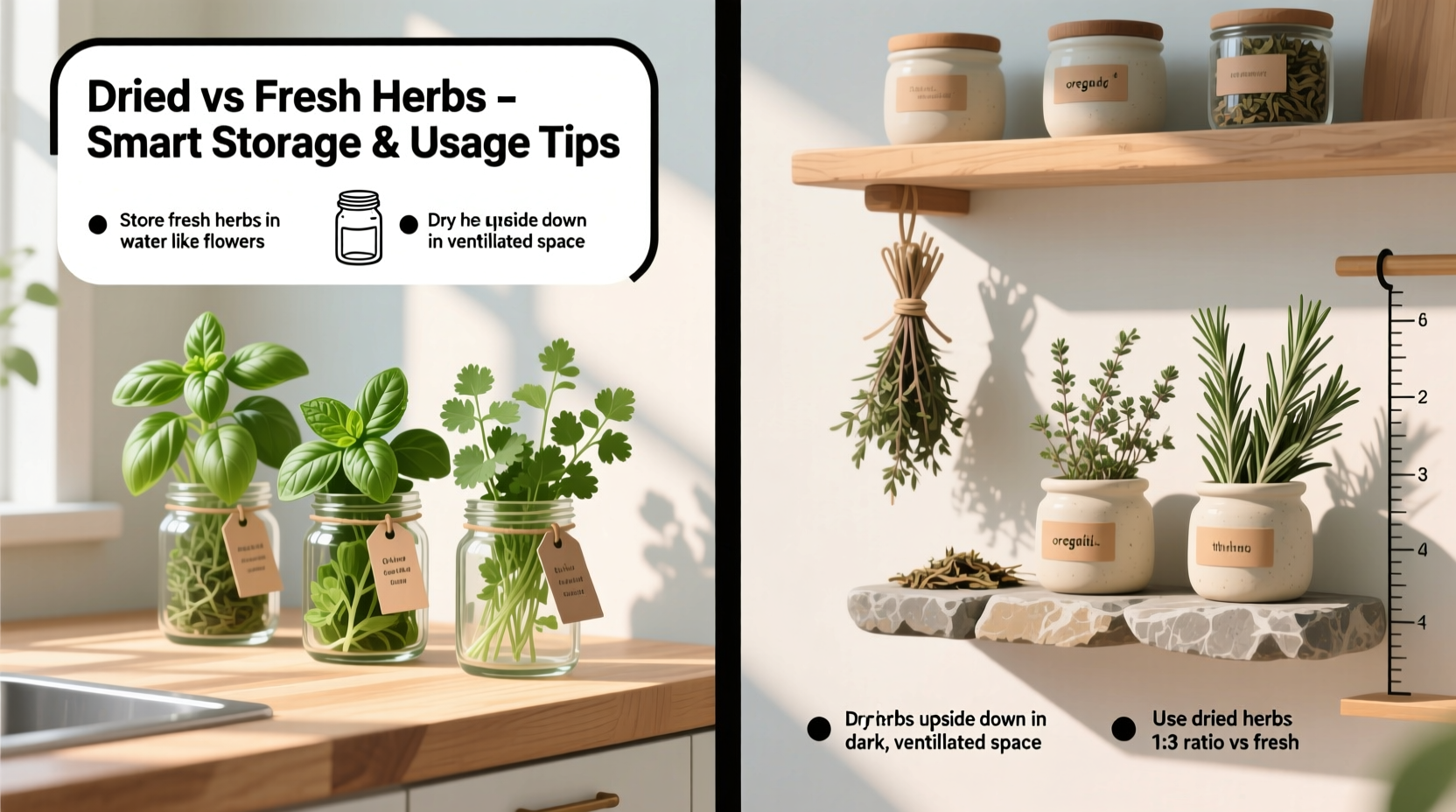
Herbs are aromatic plant parts—typically leaves—used to season food. Unlike spices, which come from roots, seeds, bark, or fruit, herbs originate from the green, leafy portions of plants. Common examples include basil, thyme, rosemary, cilantro, parsley, and oregano. They fall into two primary categories: fresh and dried. Fresh herbs are harvested and used shortly thereafter, retaining moisture, vibrant color, and volatile essential oils. Dried herbs undergo dehydration, either naturally or mechanically, concentrating certain compounds while diminishing others. The drying process fundamentally alters their chemical composition, affecting aroma, taste, and performance in recipes.
The decision to use dried or fresh herbs isn't merely about availability—it's a deliberate choice based on dish type, cooking duration, and desired flavor profile. Historically, drying herbs was a preservation method developed before refrigeration. Today, it remains a practical way to maintain year-round access to seasonal flavors. However, modern kitchens benefit most when both forms are understood and applied correctly.
Key Characteristics
| Characteristic | Fresh Herbs | Dried Herbs |
|---|---|---|
| Flavor Profile | Bright, grassy, floral, sometimes citrusy or peppery | More concentrated, earthier, sometimes musty or bitter if overused |
| Aroma | Volatile, immediate, delicate (easily lost with heat) | Deeper, more resinous; releases slowly during cooking |
| Texture & Form | Moist, tender leaves; often chopped or torn | Crisp, brittle; typically crushed or ground before use |
| Color | Vibrant green or variegated (e.g., purple basil) | Faded green to brownish; loses visual appeal |
| Shelf Life | 3–14 days under proper refrigeration | 1–3 years when stored correctly |
| Culinary Function | Finishing agent, garnish, raw application (salsas, dressings) | Infusion during long cooking (stews, braises, sauces) |
The table illustrates why substitution isn’t always one-to-one. For example, fresh dill delivers a bright, anise-like lift ideal for cold dishes, whereas dried dill becomes muted and slightly hay-like—better suited for pickling brines than tzatziki.
Practical Usage: When to Use Each Form
Using herbs effectively begins with understanding how heat and time affect their chemistry. Volatile oils in fresh herbs—responsible for much of their fragrance—evaporate quickly when exposed to high temperatures. That’s why adding fresh basil to a simmering tomato sauce often results in little more than wilted leaves with minimal impact. Conversely, dried herbs need time and moisture to rehydrate and release their flavor compounds, making them poor choices for uncooked applications like salads or salsas.
Cooking Applications: Dried Herbs
- Long-simmered dishes: Use dried thyme, oregano, or rosemary in soups, stews, and braised meats. Add early in the cooking process to allow full infusion.
- Dry rubs and spice blends: Dried herbs integrate well into rubs for grilled or roasted meats. Example: mix dried sage, thyme, garlic powder, and black pepper for poultry seasoning.
- Baked goods and breads: Dried rosemary or fennel seed work well in focaccia or savory scones where moisture is limited.
- Pickling and preserving: Dried dill, bay leaves, and tarragon hold up better than fresh in vinegar-based solutions.
Cooking Applications: Fresh Herbs
- Finishing touches: Stir chopped fresh parsley, chives, or cilantro into finished dishes just before serving to preserve aroma and color.
- Raw preparations: Essential in chimichurri, pesto, tabbouleh, or herbaceous vinaigrettes where freshness defines the dish.
- Delicate proteins: Pair fresh dill with salmon, mint with lamb, or tarragon with chicken for nuanced, aromatic pairings.
- Cocktails and beverages: Fresh basil in a mojito or mint in juleps adds olfactory complexity unmatched by dried versions.
Pro Tip: When substituting dried for fresh, use one-third the amount. For example, 1 tablespoon fresh = 1 teaspoon dried. This accounts for concentration due to water loss. Reverse this ratio when replacing dried with fresh to avoid overwhelming a dish.
Variants & Types
Not all dried or fresh herbs are created equal. Variations exist within each category based on processing, origin, and cultivar.
Fresh Herb Types
- Tender herbs: Basil, cilantro, dill, parsley, chervil. These have thin stems and delicate leaves, best used within a week. Store wrapped in a damp cloth or standing in water in the fridge.
- Hardy herbs: Rosemary, thyme, oregano, sage. These have woody stems and thicker leaves, lasting longer in the refrigerator—up to two weeks. Can be stored dry in a crisper drawer.
- Leafy greens used as herbs: Mint, shiso, epazote. Often treated like herbs despite being consumed in larger quantities. Require high humidity to prevent wilting.
Dried Herb Forms
- Whole leaf: Leaves dried intact (e.g., whole dried bay leaves). Best for infusions; removed before serving.
- Crumbed: Gently broken leaves (e.g., crumbled oregano). Offers moderate surface area for flavor release.
- Ground/powdered: Finely milled herbs (e.g., ground sage). Dissolves easily but degrades faster due to increased oxidation.
- Freeze-dried: A premium form that preserves more volatile oils through sublimation. Rehydrates quickly and retains closer-to-fresh flavor.
Freeze-dried herbs, though more expensive, offer a middle ground—ideal for chefs seeking convenience without sacrificing too much quality. They’re increasingly available in specialty grocery stores and online retailers.
Comparison with Similar Ingredients
Misunderstandings often arise between herbs and related botanicals. Clarifying these distinctions improves ingredient literacy.
| Comparison | Herbs | Spices | Notes |
|---|---|---|---|
| Source | Leaves of plants | Seeds, bark, roots, fruits | E.g., cinnamon (bark), cumin (seed), turmeric (root) |
| Form Used | Fresh or dried leaves | Almost always dried and ground | Fresh turmeric exists but is rare; most spices are inherently dry |
| Flavor Release | Fresh: immediate; Dried: slow | Requires heat or fat to bloom | Spices benefit from toasting; herbs do not |
Another common confusion is between similar-looking herbs. For instance:
- Parsley vs. Cilantro: Flat-leaf parsley has a clean, mild bitterness; cilantro offers a polarizing citrus-pine note. They are not interchangeable in dishes like salsa verde or gremolata.
- Oregano (Mediterranean vs. Mexican): European oregano is milder and floral; Mexican oregano (a different species) is more pungent, with notes of citrus and licorice—better suited for chili and mole.
- Basil vs. Holy Basil: Sweet basil is sweet and anise-like; holy basil (tulsi) is spicy and clove-forward, used in Thai curries.
“Many cooks reach for dried basil out of habit, but it lacks the vibrancy needed in a Caprese salad. Freshness isn’t a luxury here—it’s the foundation of the dish.” — Chef Elena Martinez, Culinary Instructor, Institute of Artisan Cooking
Smart Storage Techniques
Improper storage is the leading cause of wasted herbs. Up to 30% of household herb purchases are discarded due to spoilage. With proper handling, both fresh and dried herbs can deliver peak performance.
Storing Fresh Herbs
- Sort by type: Tender herbs (cilantro, parsley, dill) benefit from hydration. Trim stems and place in a glass with 1–2 inches of water, cover loosely with a plastic bag, and refrigerate. Change water every two days.
- Woody herbs: Rosemary, thyme, and sage can be stored dry in their original packaging or wrapped in a slightly damp paper towel inside a sealed container.
- Freezing options: Chop tender herbs, mix with olive oil or water, and freeze in ice cube trays. Ideal for soups and sauces. Alternatively, freeze whole sprigs of hardy herbs—crush directly into dishes from frozen.
- Avoid pre-washing: Moisture accelerates decay. Wash only immediately before use.
Storing Dried Herbs
- Use airtight containers: Glass jars with tight seals protect against moisture and light. Avoid clear plastic bags or open bowls.
- Keep away from heat and light: Store in a cool, dark cupboard—not above the stove or near the oven.
- No refrigeration: Cold environments introduce condensation, promoting mold. Exceptions include smoked paprika or blends with salt, which may clump but remain safe.
- Label and date: Most dried herbs retain optimal flavor for 6–12 months. After one year, check aroma—if faint, replace.
Storage Hack: Place a silica gel packet (from supplement bottles) in your dried herb drawer to absorb ambient moisture and prolong shelf life.
Practical Tips & FAQs
Q: Can I substitute dried herbs for fresh in all recipes?
A: No. Dried herbs work best in cooked dishes with sufficient liquid and time. Avoid using them in raw applications like salads, salsas, or garnishes where freshness is critical.
Q: Why does my dried thyme taste dusty?
A: Old or poorly stored dried herbs lose essential oils and oxidize, resulting in a stale, musty flavor. Replace herbs annually for best results, especially if stored in transparent containers.
Q: Is it worth buying organic dried herbs?
A: Yes, particularly for herbs with high surface area like oregano or marjoram. Non-organic dried herbs may carry pesticide residues concentrated during dehydration. Organic certification ensures cleaner sourcing.
Q: Can I revive old dried herbs?
A: Not truly. While toasting dried herbs lightly in a dry pan can briefly awaken aroma, degraded compounds cannot be restored. It’s better to discard and replace.
Q: Which herbs don’t dry well?
A: Basil, chives, cilantro, and dill lose significant flavor and aroma when dried. Freeze them instead for better retention of character.
Q: How do I measure chopped fresh herbs accurately?
A: Loosely pack chopped herbs into a measuring spoon. Don’t press down—this compacts and over-measures. One cup of lightly packed parsley equals approximately 60 grams.
Case Study: Enhancing a Classic Bolognese Sauce
A traditional Bolognese benefits from a layered herb strategy:
- Base layer: Dried oregano and crushed bay leaf added with onions and carrots to build depth during slow simmering.
- Middle layer: Fresh thyme sprigs included with tomatoes and broth, removed before finishing.
- Finish: Chopped fresh parsley stirred in at the end for brightness.
This approach combines the endurance of dried herbs with the aromatic lift of fresh, creating a complex, balanced sauce. Substituting all fresh herbs would result in lost flavor; using only dried would yield a flat, one-dimensional taste.
Summary & Key Takeaways
Mastering the use of dried and fresh herbs transforms cooking from routine to refined. Key principles include:
- Dried herbs are concentrated and best used in long-cooked, moist dishes; add early in the cooking process.
- Fresh herbs shine in raw applications and as finishing elements; add at the end to preserve aroma and color.
- Substitute at a 1:3 ratio—1 tsp dried = 1 tbsp fresh.
- Store fresh herbs by type: hydrated for tender varieties, dry and cool for woody ones.
- Preserve dried herbs in airtight, dark containers away from heat; replace annually.
- Freeze herbs in oil or water for extended usability without flavor loss.
- Understand that not all herbs dry well—basil, cilantro, and chives are better frozen or used fresh.
Next time you reach for the spice rack, pause and ask: Does this dish need depth or brightness? The answer will guide you to the right herb form—and elevate your cooking with intention and precision.




 浙公网安备
33010002000092号
浙公网安备
33010002000092号 浙B2-20120091-4
Comments
No comments yet. Why don't you start the discussion?