
Travel photography has evolved beyond still images. Today, dynamic video footage captures the essence of a journey—wind in your hair, mountain vistas unfolding, or a bustling city street pulsing with life. For beginners eager to document their adventures, two devices stand out: drones and action cameras. Both promise cinematic results, but they serve different purposes, come with distinct learning curves, and vary significantly in practicality. Choosing between them isn’t just about budget—it’s about how you travel, what kind of stories you want to tell, and how much effort you’re willing to invest.
Understanding the Core Differences
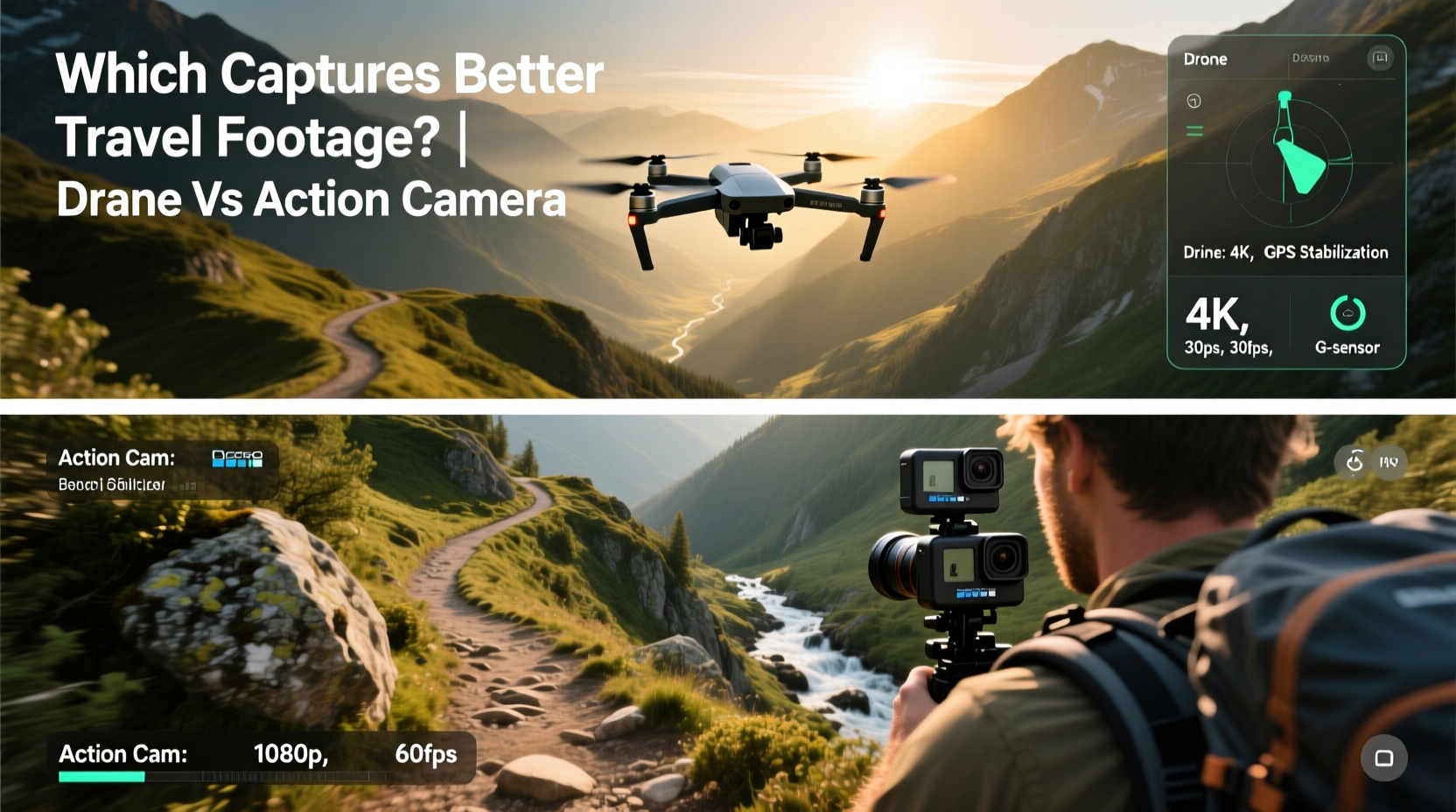
A drone is an aerial vehicle equipped with a camera, capable of capturing sweeping overhead shots and dynamic fly-through sequences. An action camera, like the GoPro HERO series or DJI Osmo Action 4, is a compact, rugged device designed to be mounted on helmets, handlebars, or held in hand for immersive, first-person perspectives.
Their core strengths diverge sharply. Drones excel at scale—capturing landscapes, coastlines, and architectural marvels from unique vantage points impossible to achieve otherwise. Action cameras shine in motion, offering stable, shake-free footage even during intense physical activity like hiking, biking, or snorkeling.
For a beginner, this distinction is critical. A drone adds a new dimension to storytelling but requires airspace awareness, flight practice, and regulatory compliance. An action camera is plug-and-play: turn it on, mount it, and record. No permits, no complex controls—just immediate access to high-quality video.
Image Quality and Stabilization Compared
Both devices now shoot in 4K resolution, often at 60 frames per second, delivering crisp, professional-grade video. However, the context in which that quality is achieved matters.
Drones offer variable focal lengths and adjustable angles, allowing for cinematic pans, reveals, and tracking shots. Their built-in gimbals provide buttery-smooth stabilization, essential when flying at speed or in windy conditions. Top models like the DJI Mini 4 Pro deliver HDR video and advanced color profiles suitable for editing.
Action cameras also feature electronic image stabilization (EIS), with some models combining it with horizon-leveling technology. This means even if you're biking down a rocky trail or kayaking through rapids, the horizon stays level and the footage remains watchable. The trade-off? A fixed wide-angle lens that can distort edges, especially in close-up shots.
| Feature | Drone (e.g., DJI Mini 4 Pro) | Action Camera (e.g., GoPro HERO12) |
|---|---|---|
| Max Video Resolution | 4K at 60fps | 5.3K at 60fps |
| Stabilization | 3-axis mechanical gimbal | HyperSmooth 6.0 + Horizon Lock |
| Lens Flexibility | Zoom and tilt control | Fixed wide-angle (adjustable FOV) |
| Low-Light Performance | Moderate (small sensor) | Better due to larger pixel size |
| Audio Recording | Poor (wind noise dominant) | Good (wind reduction mics) |
While drones capture breathtaking visuals, their audio is often unusable due to propeller noise. Action cameras, by contrast, include directional microphones and wind-noise reduction, making them far superior for recording ambient sounds—waves crashing, market chatter, or your own commentary.
Practicality for Travel: Portability, Setup, and Rules
When you're backpacking through Southeast Asia or road-tripping across Iceland, every ounce counts. Action cameras win hands-down in portability. Most weigh under 150 grams and fit in a pocket. They require no assembly—just charge, power on, and go.
Drones, even compact ones, demand more logistics. You’ll need space for the drone body, controller, spare batteries, and possibly a carrying case. Flying requires setup time: calibrating the compass, waiting for GPS lock, checking no-fly zones. In remote areas, signal interference or lack of GPS can delay or prevent flights altogether.
Then there are regulations. Many countries require drone registration, pilot certification, or restrict flights near airports, national parks, and urban centers. Some destinations—like parts of Greece or Bhutan—ban recreational drones entirely. Violating these rules can lead to fines or confiscation.
“Drones are incredible tools, but they’re not always welcome. Always check local laws before you fly.” — Mark Rivera, Travel Filmmaker & Drone Safety Advocate
Action cameras face no such restrictions. You can use them virtually anywhere without legal concern. This freedom makes them ideal for spontaneous moments—a sudden waterfall discovery, a street festival erupting around you, or a sunset swim.
Learning Curve and Skill Development
Mastering a drone takes time. Beginners often struggle with orientation (knowing which way the drone is facing), overcorrecting controls, or misjudging distance. Crashes, while less common with modern obstacle avoidance, still happen—especially in tight spaces or gusty conditions.
Most drone apps include flight tutorials and safety reminders, but true proficiency comes with hours of practice in open fields before attempting complex shots. Even then, battery life limits each session to 20–30 minutes, compressing your creative window.
Action cameras, by comparison, are nearly foolproof. Mount it, press record, and review playback instantly on the screen. Modern models feature touch interfaces, voice control, and automatic scene detection. Some even edit clips in-camera using AI, creating share-ready videos within minutes.
That said, creativity still matters. Knowing when to switch angles, how to frame movement, and when to stop recording separates good footage from great. But the technical barrier is low—making action cameras the faster route to satisfying results for most beginners.
Step-by-Step: Getting Started with Each Device
- For Drones:
- Research local drone laws for your destination.
- Purchase a beginner-friendly model (e.g., DJI Mini 4 Pro).
- Practice in an open, unpopulated area away from trees and power lines.
- Learn basic maneuvers: takeoff, hover, rotate, and landing.
- Experiment with automated modes like “QuickShots” for cinematic effects.
- Always check weather and battery levels before flying.
- For Action Cameras:
- Charge the battery and insert a high-speed SD card.
- Familiarize yourself with mounting options (chest strap, helmet, selfie stick).
- Select settings: 4K at 30fps for balance of quality and file size.
- Enable HyperSmooth stabilization and Wind Reduction audio mode.
- Start recording and focus on smooth movement—avoid jerky motions.
- Review footage and trim highlights using mobile editing apps.
Real-World Example: Sarah’s Bali Trip
Sarah, a first-time traveler to Bali, wanted to document her two-week adventure. She considered buying a drone but hesitated after reading about strict regulations near temples and rice terraces. Instead, she opted for a GoPro HERO11 Black.
On day one, she mounted it on her bike helmet while cycling through Ubud’s backroads. The footage captured lush greenery, passing motorbikes, and her reactions to sudden turns—all smoothly stabilized. Later, she used a waterproof housing to film herself snorkeling in Nusa Lembongan, capturing vibrant coral and tropical fish.
She did rent a drone for one morning at a coastal cliff with permitted flying zones. The aerial shots of the ocean meeting black sand beaches were stunning—but took three attempts due to wind, and she had to delete half the clips for shakiness. In contrast, 80% of her action camera footage was usable straight out of the camera.
In the end, her final travel video relied mostly on action camera footage, enhanced with one dramatic drone opener. “The drone was cool,” she said, “but my GoPro was with me every step of the way.”
Cost and Value Over Time
Entry-level drones start around $400–$600, including one battery. Spare batteries ($70–$100 each) are highly recommended, as are protective cases and insurance. Some platforms offer “DJI Care Refresh,” which covers accidental damage—but adds $100+ to the initial cost.
Action cameras range from $250 (mid-tier) to $500 (flagship), with accessories like mounts, extra batteries, and housings adding another $100–$150. However, most kits include essential mounts, reducing upfront costs.
Long-term, action cameras are more versatile. They can be used daily—not just on trips—for fitness, pet videos, or home projects. Drones remain niche, primarily for scenic travel content. If you don’t fly regularly, your investment may sit unused.
Checklist: Which Should You Choose?
- ✅ Do you prioritize ease of use and reliability? → Action Camera
- ✅ Are you traveling to places with strict drone laws? → Action Camera
- ✅ Do you want immersive, on-the-ground perspectives? → Action Camera
- ✅ Is your main goal cinematic aerial views of landscapes? → Drone
- ✅ Are you willing to learn flight skills and follow regulations? → Drone
- ✅ Do you have backup time and batteries for short flight windows? → Drone
Frequently Asked Questions
Can I use both a drone and an action camera together?
Absolutely. Many travel creators use both: drones for establishing shots and action cameras for ground-level immersion. Together, they create layered, engaging narratives. Just be mindful of weight and charging logistics while traveling.
Which produces better social media content?
Action cameras tend to perform better on platforms like Instagram Reels or TikTok, where fast-paced, personal, and relatable content thrives. Drones excel on YouTube or portfolios where cinematic beauty and production value are prioritized.
Are mini drones worth it for beginners?
Mini drones under 250g (like the DJI Mini series) are excellent starter options. They avoid registration in many regions, are more affordable, and often include flagship features. However, they still require responsible flying and are not toys.
Final Verdict: What’s Best for Beginners?
For most first-time travel videographers, the action camera is the smarter starting point. It’s simpler, more reliable, legally unencumbered, and consistently delivers usable footage. You’ll spend less time troubleshooting and more time experiencing your journey—while still capturing high-quality video that tells your story authentically.
A drone can elevate your content, but it should be a secondary investment—something you add once you’ve mastered basic videography, understand your shooting style, and are prepared for its operational demands. Rushing into drone ownership often leads to frustration, unused gear, or unintentional rule-breaking.
Start with an action camera. Learn composition, lighting, and editing. Build confidence in your storytelling. Then, if you find yourself craving those sky-high perspectives, invest in a drone with knowledge and intent.




 浙公网安备
33010002000092号
浙公网安备
33010002000092号 浙B2-20120091-4
Comments
No comments yet. Why don't you start the discussion?