
Dry firing—a term every archer should know and fear—is the act of releasing a bowstring without an arrow nocked. While it may seem harmless or even tempting during practice, dry firing can lead to catastrophic consequences for both equipment and safety. Modern compound and recurve bows are precision-engineered systems designed to transfer energy efficiently from string to arrow. When that energy has nowhere to go, it rebounds into the limbs, cams, riser, and string itself, often causing irreversible damage. Understanding the mechanics behind dry firing, recognizing the risks, and knowing how to prevent it are essential for any serious archer.
The Physics Behind Dry Firing
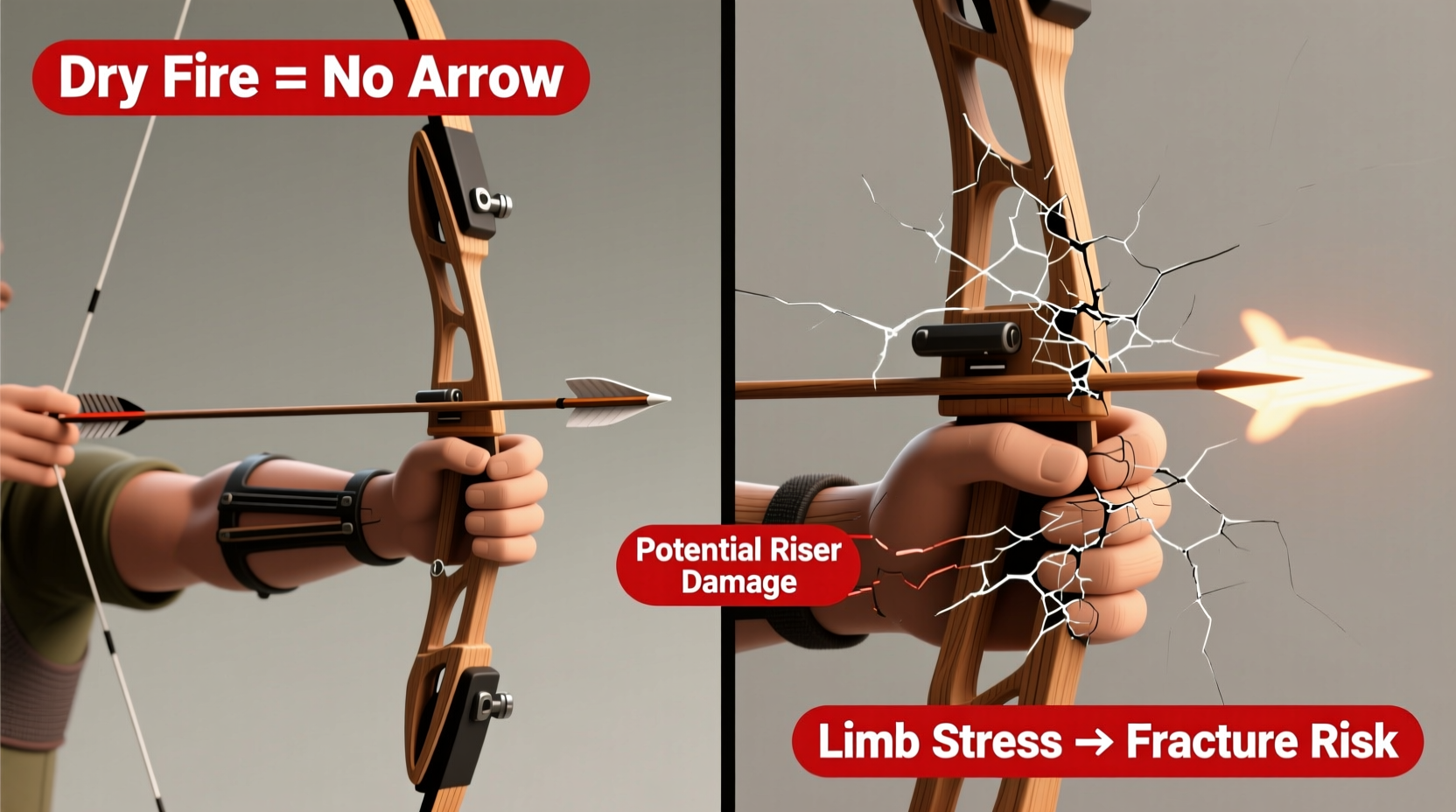
When a bow is drawn, potential energy is stored in the limbs. Upon release, this energy is transferred through the string to the arrow, propelling it forward. In normal operation, approximately 70–85% of that stored energy moves into the arrow as kinetic energy. The remaining energy dissipates as vibration, sound, and heat within the bow.
During a dry fire, there’s no arrow to absorb that energy. As a result, nearly all the stored energy reflects back into the bow structure. This sudden shockwave travels through the limbs at high speed, creating extreme stress on materials already under tension. The absence of resistance means the string accelerates faster than intended, slamming into the limb pockets with tremendous force.
According to Dr. Alan Case, a mechanical engineer specializing in composite materials used in archery gear:
“Dry firing subjects bow limbs to stress levels up to 40% higher than normal shooting. It's like revving a car engine to redline with no transmission engaged—the internal components bear the brunt.”
What Actually Happens When You Dry Fire?
The immediate aftermath of a dry fire might appear uneventful—no explosion, no dramatic crack—but internal damage often occurs silently. Here’s a breakdown of what typically happens:
- Limb Damage: Laminated fiberglass or carbon limbs can delaminate, crack, or warp due to sudden stress concentration.
- String and Cable Failure: Strings experience accelerated wear, fraying, or complete breakage from excessive snap-back.
- Cam System Stress (Compound Bows): Cams can deform, crack, or become misaligned, affecting draw cycle smoothness and accuracy.
- Riser Cracks: Aluminum or magnesium risers may develop microfractures, especially near limb bolts or axle mounts.
- Vibration and Shock: Intense vibrations travel through the entire frame, potentially loosening screws, stabilizers, and sight mounts.
In severe cases, a dry-fired bow may fail catastrophically during subsequent use, sending sharp fragments flying toward the shooter. Even if the bow appears functional post-dry-fire, hidden structural weaknesses can compromise long-term reliability.
Common Causes of Accidental Dry Fires
Most dry fires aren’t intentional. They happen due to distraction, fatigue, or procedural errors. Common scenarios include:
- Distraction During Practice: A momentary lapse while setting up a shot can lead to drawing and releasing without realizing no arrow is nocked.
- Using Worn or Faulty Nocks: Damaged arrow nocks may not seat securely on the string, leading to premature detachment—or giving the illusion of being nocked when they’re not.
- Shooting Without Proper Focus: New archers sometimes mimic the motion of shooting without loading an arrow, especially during dry-run drills.
- Poor Lighting Conditions: At dawn or dusk, it can be difficult to visually confirm whether an arrow is correctly placed.
- Overconfidence: Experienced shooters may skip routine checks, assuming muscle memory will prevent error.
Mini Case Study: The Tournament Near-Miss
At a regional archery competition last season, a seasoned compound shooter began his warm-up routine in dim morning light. Distracted by equipment adjustments, he drew and released twice without an arrow. He noticed something felt “off”—a sharper snap than usual—but continued shooting. Mid-round, his bottom cam shattered mid-draw, forcing him to withdraw. Inspection revealed hairline cracks in both limbs and significant string wear. Though the bow didn’t fully fail during shooting, the cost of repairs exceeded $200. A simple pre-shot check could have prevented the incident entirely.
Do’s and Don’ts: Preventing Dry Fires
| Do | Don’t |
|---|---|
| Always perform a tactile and visual check for a nocked arrow before drawing. | Never practice shooting motions without arrows unless using a dedicated training aid. |
| Use brightly colored nocks or strings to improve visibility. | Ignore unusual sounds or vibrations after a suspected dry fire. |
| Inspect your bow regularly for signs of stress or damage. | Continue shooting a bow after a known or suspected dry fire without professional inspection. |
| Educate new archers about the dangers of dry firing early in training. | Assume modern bows are “dry-fire-proof” without verifying manufacturer claims. |
Are Some Bows Safe From Dry Firing?
A growing number of entry-level compound bows are marketed as “dry-fire protected” or “forgiving.” These models incorporate reinforced limbs, specially engineered strings, and resilient cam designs to withstand limited accidental dry fires. However, “protected” does not mean “immune.”
As stated by Bear Archery’s product engineering team:
“No bow is completely immune to the physics of energy redirection. Dry-fire protection extends durability under rare accidents but should never encourage risky behavior.”
Even bows with such features require regular inspection after any dry fire event. Recurve and traditional bows generally lack these reinforcements, making them far more vulnerable.
Step-by-Step Guide: What to Do After a Suspected Dry Fire
If you suspect you’ve dry fired your bow—even once—follow this protocol to minimize risk:
- Stop Shooting Immediately: Cease all use of the bow to prevent further stress.
- Visually Inspect Components: Check limbs for cracks, warping, or separation of layers. Look at the string for fraying or broken strands.
- Check Cam Alignment (Compound): Ensure cams rotate evenly and aren’t cracked or chipped.
- Feel for Vibration: If you resume shooting later, pay attention to abnormal noise or hand shock.
- Consult a Professional: Take the bow to a certified archery technician for pressure testing and evaluation.
- Replace Damaged Parts: Never attempt to shoot a compromised bow. Replace strings, cables, or limbs as needed.
Frequently Asked Questions
Can one dry fire ruin a bow?
It depends on the bow and circumstances. High-performance compound bows can suffer critical damage from a single dry fire. Some beginner-friendly models tolerate one incident, but repeated dry firing will eventually cause failure. There is no safe threshold—always treat dry firing as a serious event.
Is it okay to dry fire a bow to test sound or feel?
No. Never intentionally dry fire a bow. The risks far outweigh any perceived benefit. Use proper tuning tools and chronographs instead to evaluate performance.
How much does it cost to repair a dry-fired bow?
Repairs vary widely. String replacement: $30–$70. Limb replacement: $80–$200 per limb. Cam replacement: $100–$250. In some cases, total damage exceeds the value of the bow, necessitating full replacement.
Conclusion
Dry firing is one of the most preventable yet damaging mistakes in archery. Whether you're a beginner or a tournament veteran, respecting the power stored in a drawn bow is non-negotiable. A split-second oversight can lead to hundreds of dollars in repairs—or worse, injury. By adopting strict pre-shot routines, understanding your equipment’s limits, and responding appropriately to accidents, you protect not only your investment but also your safety and longevity in the sport.




 浙公网安备
33010002000092号
浙公网安备
33010002000092号 浙B2-20120091-4
Comments
No comments yet. Why don't you start the discussion?