
For many people, dry shampoo and texture spray are staples in their hair care routines—but confusion often arises about what each one actually does. Both come in aerosol cans, both promise volume and freshness, and both are applied to dry hair. Yet, they serve fundamentally different purposes. Misusing them can lead to flat, greasy strands or an overly stiff, unnatural finish. Understanding the distinction isn’t just about maximizing product performance—it’s about protecting your hair’s health while achieving your desired look.
Dry shampoo absorbs excess oil at the roots, extends time between washes, and refreshes hair that’s lost its lift. Texture spray, on the other hand, adds grit, grip, and body to fine or slippery hair, making it ideal for creating tousled styles, holding updos, or enhancing natural waves. When used correctly—and at the right moment—each product becomes a powerful ally. Used interchangeably? You might end up with residue buildup, weighed-down strands, or a style that won’t hold.
What Dry Shampoo Does (And What It Doesn’t)
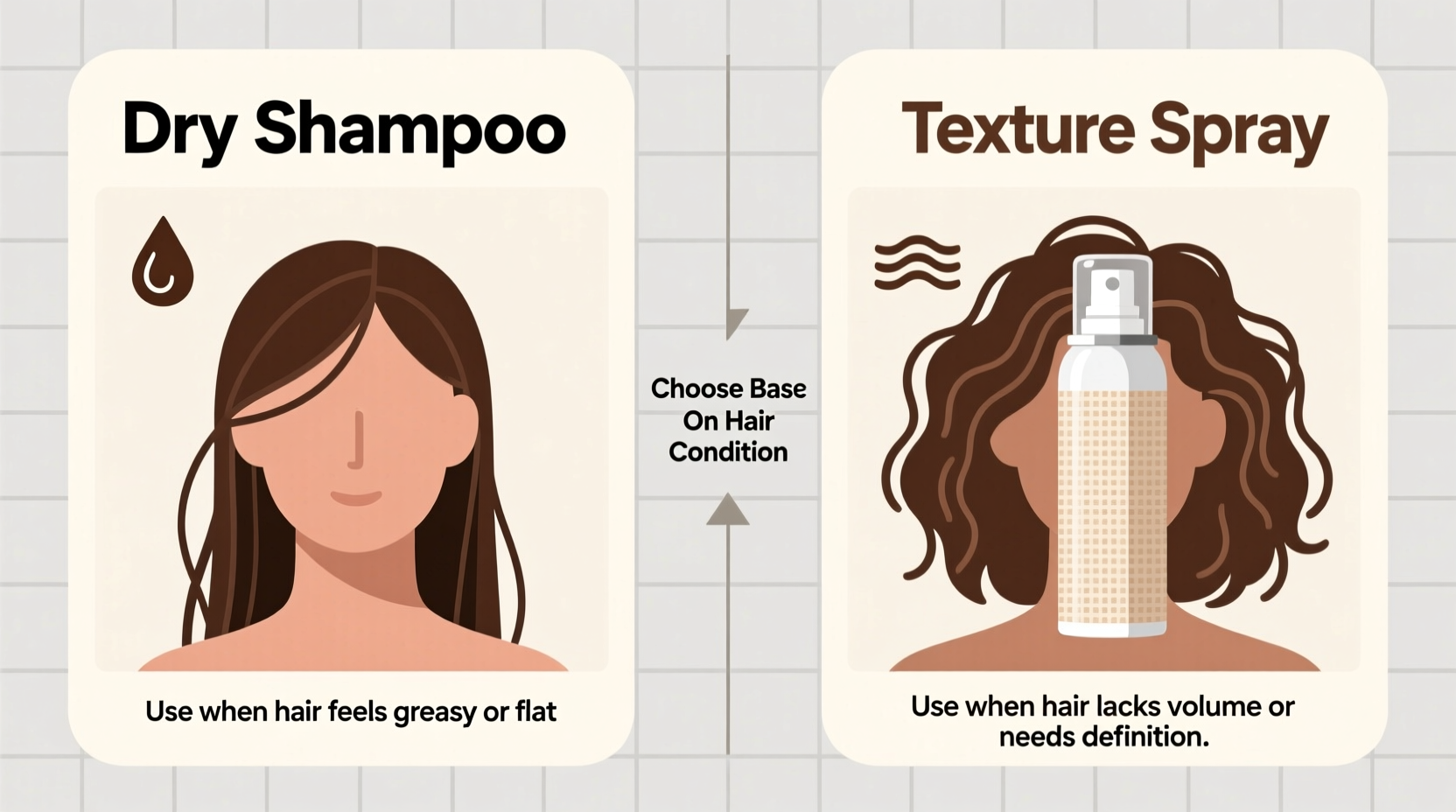
Dry shampoo is designed to absorb sebum—the natural oil produced by your scalp. Over time, this oil migrates down the hair shaft, causing roots to appear greasy and limp. Instead of washing daily—which can strip moisture and disrupt the scalp’s balance—dry shampoo offers a quick fix. Most formulas contain starch-based or silica-based powders that bind to oil, giving hair renewed volume and a clean scent.
The best time to use dry shampoo is before you start to feel visibly oily, not after. Applying it preemptively—say, the night before a second-day hairstyle—can prolong freshness. Hold the can 8–10 inches from the scalp, focus on the roots, and let it sit for 30 seconds before massaging it in. This allows the formula to fully absorb oil without leaving a chalky residue.
Despite its popularity, dry shampoo is not a substitute for regular cleansing. It masks oil but doesn’t remove dirt, sweat, or environmental pollutants. Overuse can clog hair follicles and contribute to scalp irritation or even hair thinning over time. Dermatologists warn that relying solely on dry shampoo beyond two consecutive days increases the risk of scalp issues.
“Dry shampoo is excellent for extending wash cycles, but it should never replace shampoo. Think of it like blotting paper for your face—it helps manage shine, but you still need to cleanse.” — Dr. Lindsey Thomas, Board-Certified Trichologist
How Texture Spray Works Differently
Texture spray is a styling product first and foremost. Its purpose is to alter the physical behavior of your hair—adding friction, thickness, and memory—so it holds shape more easily. Unlike dry shampoo, it doesn’t target oil. Instead, it contains polymers, sea salt, or texturizing agents that coat the hair shaft, creating a “lived-in” effect similar to beach waves or bedhead.
Texture sprays excel when you're aiming for undone styles: messy buns, braids, half-up looks, or natural curls. They work especially well on fine or straight hair that tends to slip out of pins or fall flat. The result is subtle volume and improved grip—without the stiffness of hairspray.
Application matters. Mist lightly through mid-lengths and ends, avoiding direct saturation at the roots unless you want added grit for root-lifting. Scrunch gently with your hands to encourage wave formation. Some formulas include UV filters or heat protectants, making them multifunctional for daytime wear.
Because texture sprays deposit film-forming ingredients, buildup can occur with frequent use. Clarifying shampoo once a week helps maintain hair integrity and prevents dullness. Avoid layering multiple texturizing products unless you’re prepared for potential flaking or crunchiness.
Dry Shampoo vs Texture Spray: A Direct Comparison
| Feature | Dry Shampoo | Texture Spray |
|---|---|---|
| Primary Purpose | Absorb oil, refresh roots | Add volume, grip, and texture |
| Best Applied To | Scalp and roots | Mid-lengths and ends |
| When to Use | Before hair gets greasy, post-workout, second/third-day hair | Before styling, for updos, wavy finishes, or extra hold |
| Key Ingredients | Starch, silica, alcohol (in some) | Polymers, sea salt, PVP, conditioning agents |
| Wash-Out Required? | Yes, eventually—to prevent buildup | Yes, especially after heavy use |
| Can Replace Shampoo? | No | No |
Real-Life Scenarios: Choosing the Right Product
Understanding theory is one thing—applying it in daily life is another. Here’s how two different people used these products effectively based on their needs.
Case Study: Emma, Office Worker with Fine, Straight Hair
Emma washes her hair every other day but noticed her roots flattening by noon. She started using dry shampoo every morning before work—spraying at the crown and temples, then brushing through. This extended her wash cycle to every three days without looking oily. On weekends, when she wanted loose waves for brunch, she swapped to a sea salt-based texture spray. After towel-drying damp hair, she sprayed and scrunched, letting it air-dry. The result: soft, touchable volume without sacrificing scalp health.
Case Study: Jordan, Gym Enthusiast with Thick, Wavy Hair
Jordan hits the gym daily and avoids washing hair too often to preserve natural oils. After workouts, his roots felt sweaty and heavy. He began using dry shampoo post-shower—on dry hair—to absorb residual moisture and prevent odor. On days he styled his hair into a top knot, he added a light mist of texture spray to the lengths for grip. This prevented slipping and added a polished edge. By separating functions—dry shampoo for hygiene, texture spray for style—he maintained both comfort and appearance.
Step-by-Step Guide: How to Use Each Product Correctly
Using Dry Shampoo the Right Way
- Shake the can well—this ensures active ingredients are evenly dispersed.
- Section hair to expose the roots, especially at the crown and part line.
- Spray 8–10 inches from scalp, focusing on oily zones. Use short bursts—3–5 seconds per section.
- Wait 30 seconds to allow absorption. Do not rub immediately.
- Massage gently with fingertips or a boar bristle brush to distribute and remove residue.
- Style as usual. If adding heat, do so after application.
Using Texture Spray for Maximum Effect
- Start with dry or towel-dried hair—damp hair enhances wave formation with salt-based sprays.
- Shake the bottle thoroughly to mix suspended particles.
- Mist evenly from mid-lengths to ends. Avoid oversaturating.
- Scrunch or twist sections with your hands to encourage texture.
- Let air-dry or diffuse on low heat for a softer finish.
- Finish with fingers, not a brush, to preserve the undone look.
“The biggest mistake I see? People using texture spray like dry shampoo. You’ll get grit, yes—but not cleanliness. Know your goal before you pick up the bottle.” — Marlon Reed, Celebrity Stylist
Checklist: Are You Using the Right Product?
- ✅ Is your scalp oily or sweaty? → Choose dry shampoo.
- ✅ Do you want to refresh hair between washes? → Choose dry shampoo.
- ✅ Are you creating a braid, bun, or updo? → Add texture spray for hold.
- ✅ Is your hair too smooth or slippery to style? → Use texture spray.
- ✅ Want beachy waves or lived-in volume? → Texture spray is ideal.
- ✅ Hair feels heavy or flat at the roots? → Try dry shampoo first.
- ✅ Planning to use heat tools afterward? → Apply dry shampoo first, then texture if needed.
Frequently Asked Questions
Can I use dry shampoo and texture spray on the same day?
Yes, but strategically. Apply dry shampoo first to clean the roots, then follow with texture spray on the lengths for styling. Avoid spraying texture product directly onto the scalp unless formulated for it, as buildup may occur.
Will dry shampoo damage my hair if used too often?
Overuse can lead to scalp clogging, reduced hair elasticity, and even follicle stress. Limit continuous use to two days, then cleanse thoroughly. Those with sensitive scalps or dandruff should be especially cautious.
Is there a product that does both?
Some hybrid formulas claim dual functionality, but they tend to compromise on effectiveness. A true dry shampoo prioritizes oil absorption; a true texture spray focuses on hold and body. For best results, use specialized products separately.
Final Thoughts: Match the Product to Your Goal
The choice between dry shampoo and texture spray shouldn’t be arbitrary. It should depend on what your hair needs in that moment: cleanliness or character. Dry shampoo solves a hygiene and maintenance challenge. Texture spray answers a styling need. Confusing the two leads to frustrated routines and subpar results.
By learning to identify your hair’s signals—oiliness versus lack of hold—you gain precision in your routine. Combine that awareness with proper technique, and you’ll extend time between washes without sacrificing style, all while keeping your scalp and strands healthy.




 浙公网安备
33010002000092号
浙公网安备
33010002000092号 浙B2-20120091-4
Comments
No comments yet. Why don't you start the discussion?