
Choosing between dry thyme and fresh can significantly alter the outcome of a dish. While both originate from the same herb—Thymus vulgaris—their form impacts flavor intensity, aroma, texture, and culinary application. For home cooks aiming to elevate soups, stews, roasted meats, or sauces, understanding when and how to use each type is essential. The decision isn’t merely about availability; it’s about maximizing depth, balance, and authenticity in flavor. This guide breaks down the science, sensory profiles, and practical strategies behind using dried versus fresh thyme, empowering you to make informed choices in everyday cooking.
Definition & Overview
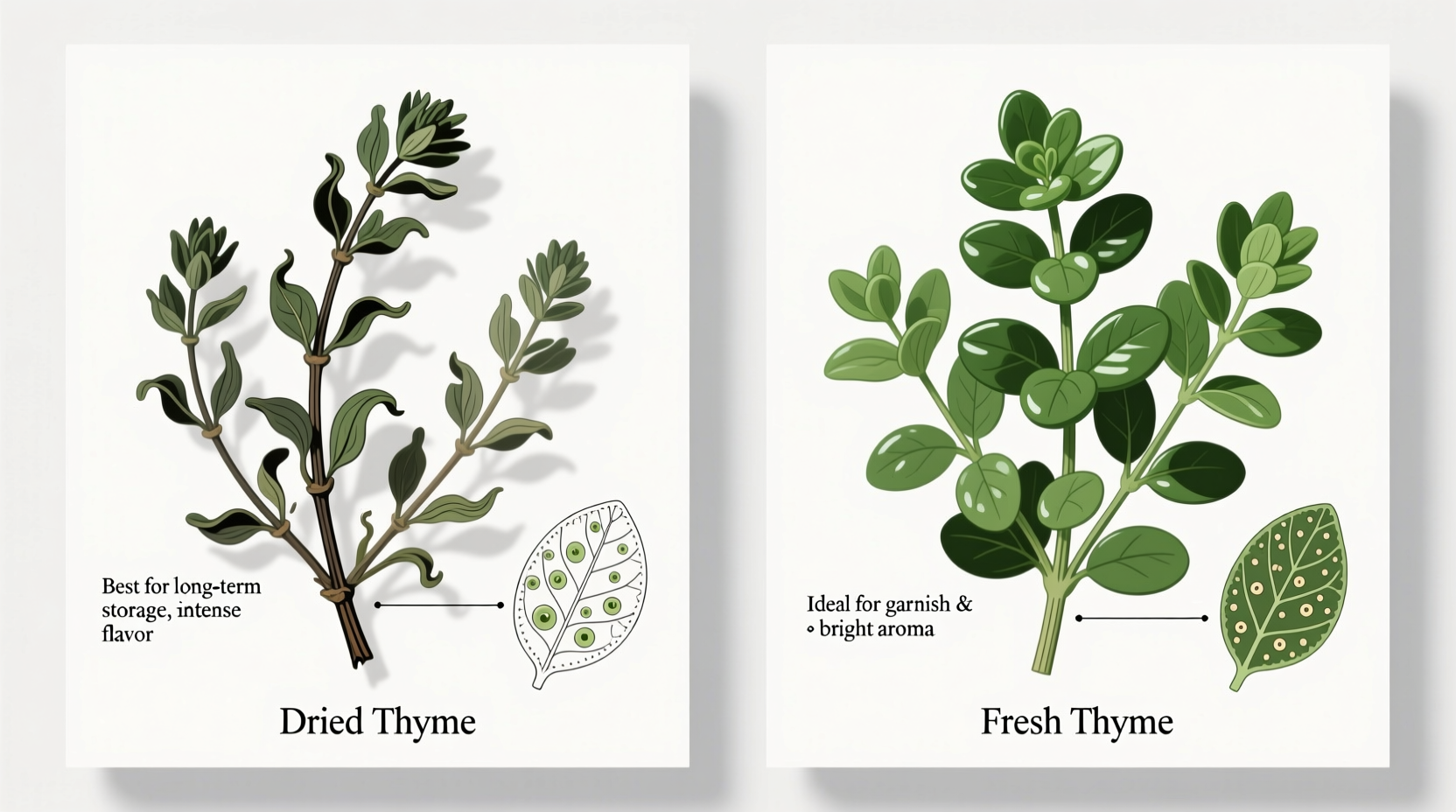
Thyme is a perennial herb belonging to the mint family (Lamiaceae), native to the Mediterranean region. Known for its small, oval leaves and woody stems, thyme has been used for centuries in both culinary and medicinal contexts. Its essential oils—particularly thymol and carvacrol—contribute to its antiseptic properties and distinctive earthy-pungent flavor.
In modern kitchens, thyme appears primarily in two forms: fresh (whole sprigs or stripped leaves) and dried (crushed or ground leaves). Both are widely accessible, but their processing methods create divergent chemical compositions that affect potency, longevity, and integration into dishes.
Fresh thyme consists of live-cut sprigs with intact volatile oils, offering bright, floral notes alongside subtle citrus and mint undertones. Dried thyme undergoes dehydration, which concentrates certain compounds while diminishing others, resulting in a more robust, camphorous character with less aromatic complexity.
Key Characteristics
| Characteristic | Fresh Thyme | Dried Thyme |
|---|---|---|
| Flavor Profile | Bright, herbal, slightly floral with lemony-mint nuances | Earthy, pungent, more concentrated with hints of wood and camphor |
| Aroma | Vibrant, fragrant, citrus-forward when crushed | Deep, resinous, less volatile scent |
| Texture/Form | Whole sprigs or tender leaves; fibrous stems | Crumbled or powdered leaves; brittle consistency |
| Shelf Life | 7–14 days refrigerated; up to 3 weeks if frozen | 1–3 years when stored properly in airtight container |
| Culinary Function | Adds aromatic lift; ideal for finishing or slow infusion | Builds foundational flavor; better for long-cooked dishes |
| Heat Stability | Loses nuance at high heat; best added late or early in simmering | Withstands prolonged cooking; flavor deepens over time |
Practical Usage: How to Use Each Form in Cooking
The choice between dry and fresh thyme should be guided by cooking method, desired flavor trajectory, and dish structure. Neither is inherently superior—each excels under specific conditions.
Using Fresh Thyme
Fresh thyme shines in applications where delicate aromatics matter. Because its essential oils are volatile, they dissipate quickly under high heat or extended cooking. To preserve its brightness:
- Add whole sprigs early in braises or stocks so flavors infuse gradually, then remove before serving.
- Strip leaves just before use and sprinkle over roasted vegetables during the last 10 minutes of cooking.
- Incorporate finely chopped fresh thyme into compound butters, vinaigrettes, or marinades for poultry and seafood.
- Use as a garnish on finished dishes like creamy risottos, lentil salads, or goat cheese tarts.
For example, when preparing a pan-seared chicken breast with white wine sauce, adding a few stripped fresh thyme leaves during the final reduction preserves their perfume without scorching.
Using Dried Thyme
Dried thyme performs best when integrated into dishes requiring long development times. Dehydration increases the concentration of non-volatile phenolic compounds like thymol, enhancing bitterness and depth. It works well:
- In spice rubs for grilled meats or roasted root vegetables.
- As part of bouquet garni in soups, stews, and tomato-based sauces.
- Mixed into dry blends such as herbes de Provence, poultry seasoning, or homemade curry powders.
- When rehydrated slightly in warm liquid before use to \"wake up\" dormant flavors.
In a classic beef bourguignon, dried thyme complements the slow melding of wine, mushrooms, and meat, contributing a steady backbone that doesn’t fade over hours of simmering.
Pro Tip: If substituting one form for another, use this ratio: 1 teaspoon dried thyme ≈ 1 tablespoon fresh thyme leaves. Adjust based on freshness and recipe demands. Always taste and recalibrate—especially when switching forms mid-recipe.
Variants & Types of Thyme
While common garden thyme (Thymus vulgaris) dominates Western cuisine, several cultivars offer nuanced alternatives. Understanding these variants helps refine your selection regardless of form.
English Thyme (Common Thyme)
The standard variety used in most recipes. Offers balanced earthiness with mild lemon tones. Available fresh year-round and commonly sold dried.
Lemon Thyme (Thymus citriodorus)
Features pronounced citrus notes due to higher citral content. Excellent in fish dishes, fruit salsas, or infused oils. Best used fresh, though dried versions retain some zest.
French Thyme
Slightly more floral and less sharp than English thyme. Often found in fine dining kitchens. Prefers fresh use in sauces and vegetable preparations.
Winter Thyme
Hardier and more pungent, often dried for winter storage. Has a stronger, almost medicinal edge—ideal for hearty meat dishes.
Marjoram-Thyme Hybrids
Softer, sweeter profile; sometimes labeled “wild thyme.” Used interchangeably in rustic Mediterranean cooking.
When purchasing dried thyme, check labels carefully—some blends contain fillers or older stock with diminished potency. Pure, dark green-to-grayish powder indicates quality. Fresh thyme should have firm stems, no wilting, and release fragrance when lightly rubbed.
Comparison with Similar Ingredients
Thyme is often confused with other herbs due to overlapping uses or regional naming. Clarifying distinctions ensures accurate substitution and avoids flavor clashes.
| Ingredient | How It Differs from Thyme | Substitution Advice |
|---|---|---|
| Oregano | Bolder, spicier, with peppery heat; dominant in Italian-American cuisine | Use half the amount of oregano if replacing thyme; not ideal in delicate dishes |
| Marjoram | Sweeter, milder cousin of oregano; sometimes called \"sweet thyme\" | Can replace fresh thyme in egg dishes or light sauces, but lacks earthy depth |
| Rosemary | Pine-like intensity; overpowering in large quantities | Only substitute in robust dishes; use ¼ tsp rosemary per tsp thyme |
| Savory (Summer/Winter) | Peppery yet delicate; traditional in bean dishes and stuffings | Nearly direct substitute, especially in legume-based meals |
Unlike thyme, which integrates seamlessly into complex layers, rosemary and oregano tend to dominate. Thyme's versatility lies in its ability to support rather than lead—a background note that enhances without announcing itself.
Practical Tips & FAQs
Can I substitute dried thyme for fresh in all recipes?
Yes, but with caveats. Dried thyme lacks the bright top notes of fresh, so it won't deliver the same aromatic finish. In long-cooked dishes like chili or casseroles, the substitution works well using the 1:3 ratio (dried:fresh). For raw applications like dressings or garnishes, avoid dried thyme—it may leave an unpleasant gritty texture and stale aftertaste.
Does freezing fresh thyme ruin its flavor?
No—freezing actually preserves much of its essence. Strip leaves from stems, place in ice cube trays, cover with olive oil or water, and freeze. These cubes can be dropped directly into soups or sautés. While texture changes upon thawing, flavor remains largely intact.
How do I store fresh thyme to extend shelf life?
Wrap loosely in a slightly damp paper towel and place in a breathable produce bag in the refrigerator crisper drawer. Alternatively, stand sprigs upright in a glass with an inch of water, like flowers, and cover loosely with a plastic bag. Change water every two days.
What dishes absolutely require fresh thyme?
Fresh thyme is critical in dishes where subtlety defines success: custards, herb-infused creams, seafood poaching liquids, and fresh herb butters. In French cuisine, beurre blanc relies on fresh thyme for aromatic balance—dried would introduce off-notes.
Is organic dried thyme worth the extra cost?
Often, yes. Non-organic dried herbs may be fumigated or irradiated, reducing essential oil content. Organic certification typically correlates with better sourcing, later harvest, and gentler drying processes—all preserving flavor integrity.
Why does my dried thyme taste dusty or flat?
Old or poorly stored dried thyme loses volatile oils over time. Exposure to light, air, or moisture accelerates degradation. Replace dried herbs every 12–18 months for optimal performance. Test potency by rubbing a pinch between fingers—if little aroma emerges, discard it.
Storage Checklist:
- Store dried thyme in an airtight glass jar away from stove, sink, or sunlight.
- Label jars with purchase date; aim to use within 18 months.
- Keep fresh thyme unwashed until use to prevent mold.
- Never store fresh herbs near ethylene-producing fruits (apples, bananas).
“Thyme is the quiet architect of flavor. It doesn’t shout, but remove it, and everything collapses.” — Chef Elena Moretti, Culinary Instructor, Institut Paul Bocuse
Summary & Key Takeaways
Dry thyme and fresh thyme are not interchangeable without adjustment. Their differences stem from post-harvest treatment, which alters chemical composition, aroma release, and culinary behavior. Recognizing these distinctions allows for smarter, more precise seasoning.
Fresh thyme delivers vibrant, nuanced aromatics best preserved in shorter-cooking or finishing applications. It enhances dishes where fragrance plays a leading role—delicate proteins, sauces, and raw preparations. Handle gently, store correctly, and use within days for peak impact.
Dried thyme offers stability, longevity, and resilience under heat. It builds foundational flavor in slow-simmered dishes, dry rubs, and preserved preparations. Though less complex, its concentrated earthiness anchors bold recipes where subtlety takes a backseat.
The key is intentionality: choose fresh when aroma and delicacy matter, dried when endurance and economy are priorities. Mastering this balance elevates everyday cooking from guesswork to craft.
Take Action Today: Next time you reach for thyme, pause and ask: Is this dish built on depth or brightness? Let that answer guide your choice between dry and fresh—and taste the difference precision makes.




 浙公网安备
33010002000092号
浙公网安备
33010002000092号 浙B2-20120091-4
Comments
No comments yet. Why don't you start the discussion?