
Choosing between dry and fresh oregano can subtly—or dramatically—alter the outcome of a dish. While both forms originate from the same aromatic herb, their chemical composition, potency, and culinary applications differ in ways that matter to cooks who value control over flavor. Understanding these distinctions empowers home chefs to make informed decisions, whether building a slow-simmered tomato sauce or garnishing a vibrant summer salad. The choice isn't merely about availability; it's about intentionality in seasoning.
Definition & Overview
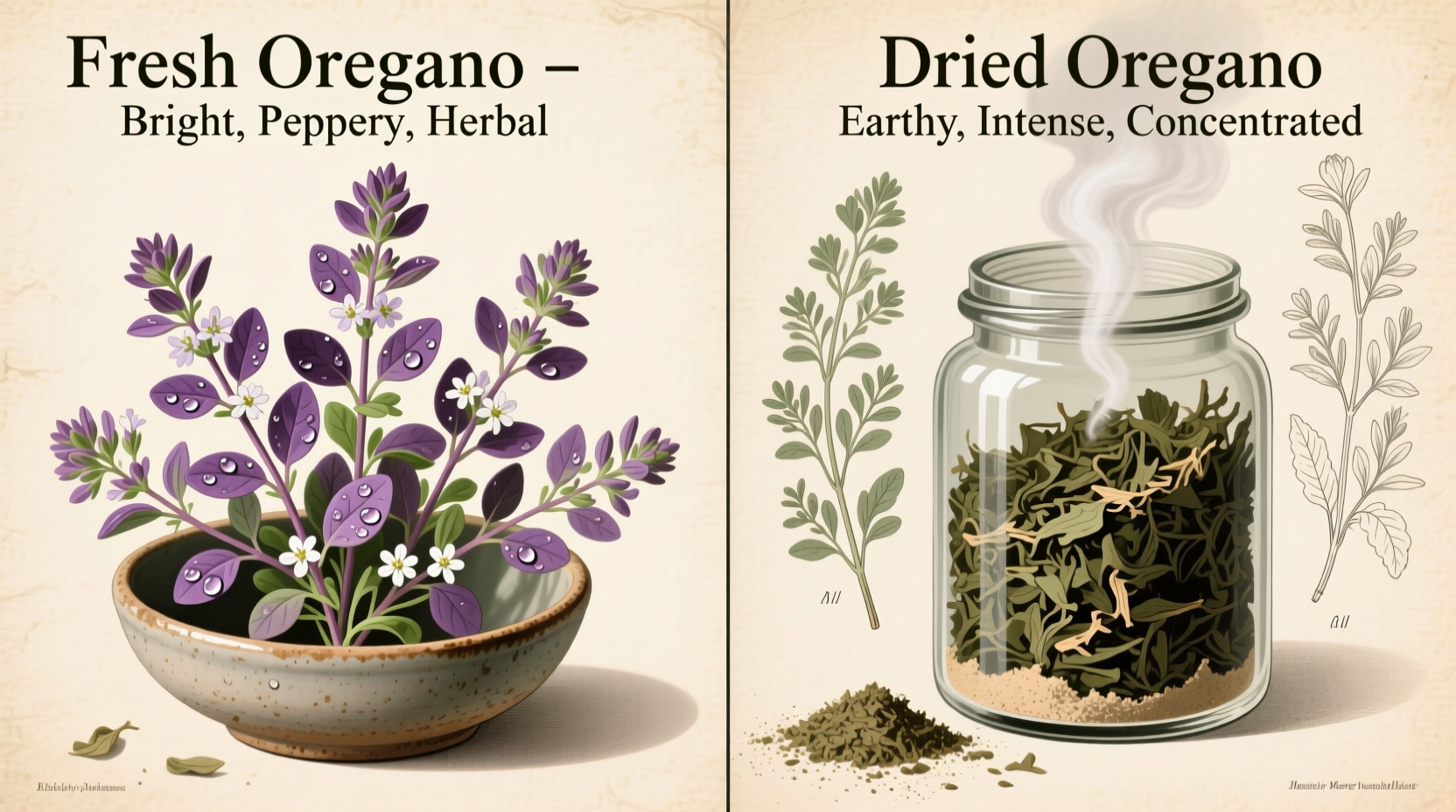
Oregano (Origanum vulgare) is a perennial herb in the mint family, native to the Mediterranean region. Revered for its pungent, slightly bitter, and earthy profile with hints of camphor and pepper, oregano plays a foundational role in Italian, Greek, Mexican, and Middle Eastern cuisines. It grows as a leafy green plant with small purple or white flowers and thrives in warm, dry climates. In culinary use, oregano appears primarily in two forms: fresh (whole leaves, often chopped) and dried (crushed or whole dried leaves). Despite their shared botanical origin, dehydration fundamentally transforms oregano’s volatile compounds, resulting in divergent sensory experiences.
Fresh oregano retains higher levels of essential oils like carvacrol and thymol, which contribute to its bright, sharp aroma. Drying concentrates certain phenolic compounds while diminishing others, altering both intensity and balance. As a result, neither form is universally superior—each excels in specific contexts based on texture, timing, and desired flavor arc within a recipe.
Key Characteristics
| Characteristic | Fresh Oregano | Dried Oregano |
|---|---|---|
| Flavor Profile | Bright, grassy, mildly peppery with floral undertones | Deeper, more concentrated, earthy with pronounced bitterness and warmth |
| Aroma | Green, herbal, slightly citrusy when crushed | Woody, mustier, with stronger medicinal notes |
| Color | Deep green to olive | Olive-brown to gray-green |
| Texture | Tender, juicy leaves; easily bruised | Crisp, brittle, crumbles under pressure |
| Heat Stability | Loses aroma quickly under prolonged heat | Withstands long cooking; flavor infuses gradually |
| Shelf Life | 3–7 days refrigerated | 1–3 years if stored properly |
| Culinary Function | Finishing agent, raw application, light infusion | Base seasoning, slow-cooked dishes, spice blends |
Practical Usage
The decision between dry and fresh oregano hinges on how and when the herb interacts with heat, oil, and other ingredients. Each form serves distinct roles in layering flavor.
When to Use Dried Oregano
Dried oregano shines in dishes requiring extended cooking times. Its dehydrated state allows it to rehydrate slowly in liquids, releasing flavor gradually into sauces, stews, braises, and marinades. Because volatile oils are partially preserved during drying (and further released through heat), dried oregano integrates deeply into oil-based mediums.
For example, in a classic Neapolitan tomato sauce, adding ½ teaspoon of crushed dried oregano at the beginning of a 45-minute simmer ensures even distribution and melding with garlic, onions, and tomatoes. The herb becomes part of the sauce’s backbone rather than a surface accent.
Dried oregano also performs well in dry rubs for meats and vegetables. Combined with paprika, cumin, salt, and black pepper, it adheres effectively to surfaces and develops complexity during roasting or grilling. In pizza seasoning blends, dried oregano contributes structure and longevity—essential for shelf-stable mixes.
Pro Tip: Bloom dried oregano in hot oil before adding liquids. Heat 1–2 teaspoons of olive oil, add ½ tsp dried oregano, and stir for 30 seconds. This process activates trapped essential oils, enhancing depth and reducing perceived bitterness.
When to Use Fresh Oregano
Fresh oregano delivers a livelier, more nuanced presence best suited to dishes where brightness matters. It should be added late in cooking or used raw to preserve its delicate top notes. Chopped fresh leaves work beautifully in Greek salads, salsas, vinaigrettes, grilled fish marinades, and lamb dishes.
In a traditional Greek horiatiki salad, torn fresh oregano leaves are scattered over tomatoes, cucumbers, red onion, and feta just before serving. The herb imparts an aromatic lift without overwhelming the crisp textures. Similarly, blending fresh oregano into chimichurri or salsa verde introduces a Mediterranean-Mexican hybrid character that dried herbs cannot replicate.
Fresh oregano also pairs exceptionally well with citrus, garlic, and extra virgin olive oil. A simple dressing of lemon juice, minced garlic, chopped oregano, salt, and oil enhances roasted vegetables or grilled octopus. Since heat diminishes its fragrance rapidly, always add fresh oregano in the final minutes of cooking—or directly at the table.
Conversion Ratios
Substituting one form for another requires adjustment due to concentration differences. As a general rule:
- 1 tablespoon fresh oregano ≈ 1 teaspoon dried oregano
- Dried oregano is approximately three times more potent by volume
This ratio assumes standard air-dried oregano—not freeze-dried or flash-dehydrated versions, which may retain more volatile compounds. Always taste and adjust incrementally when substituting.
Variants & Types
While Origanum vulgare is the most common species, several cultivars and related varieties exist, each influencing flavor and optimal use:
Greek Oregano (Origanum heracleoticum)
Often considered the gold standard, this subspecies has a robust, savory profile with high carvacrol content. Most commercial dried oregano labeled “Mediterranean” originates from this type. Ideal for tomato sauces, meat dishes, and spice blends.
Italian Oregano (Origanum x majoricum)
A hybrid between sweet marjoram and oregano, offering a milder, sweeter taste. Commonly grown fresh and used in delicate pasta dishes or vegetable sautés where aggressive bitterness is undesirable.
Mexican Oregano (Lippia graveolens)
Not a true oregano but widely used in Latin American cooking. It has a more citrusy, licorice-like flavor with strong notes of citrus and clove. Best used dried and added early in cooking—particularly in moles, chili, and bean dishes. Not interchangeable with Mediterranean oregano in most applications.
Sweet Marjoram (Origanum majorana)
Often confused with oregano, marjoram is softer, sweeter, and less pungent. Sometimes blended with oregano in dried mixes to round out harshness. Use fresh marjoram in poultry stuffings or soups where subtlety is key.
| Type | Form Typically Used | Best For |
|---|---|---|
| Greek Oregano | Dried or fresh | Tomato sauces, grilled meats, pizza, Greek cuisine |
| Italian Oregano | Fresh | Pasta primavera, light sautés, herb butter |
| Mexican Oregano | Dried only | Chili, tacos, mole, beans, salsas |
| Sweet Marjoram | Fresh or dried blend | Poultry, stuffing, soups, lamb |
Comparison with Similar Ingredients
Oregano is frequently mistaken for or substituted with other herbs, sometimes successfully—but often at the cost of authenticity.
Oregano vs. Marjoram
Though closely related, marjoram lacks the assertive bite of oregano. Where oregano dominates, marjoram complements. In French fines herbes, marjoram may appear, but oregano does not. Substitution is possible in a 1:1 ratio only when seeking mildness; otherwise, expect diminished impact.
Oregano vs. Thyme
Thyme shares earthiness but offers more subtle lemon-pine notes. It integrates seamlessly into long-cooked dishes like oregano but doesn’t provide the same peppery punch. In Italian seasoning blends, both are present—but thyme adds background complexity while oregano leads.
Oregano vs. Basil
Basil is sweet, floral, and highly perishable—opposite in temperament to oregano. While both feature in Mediterranean cooking, they serve different phases: basil for freshness (e.g., caprese), oregano for depth (e.g., ragù). Combining them balances sweetness and bite, as seen in many southern Italian recipes.
- Rule of thumb: If a dish relies on herbal brightness without heat, choose basil. If structure and resilience under cooking are needed, reach for oregano.
Practical Tips & FAQs
How do I store fresh oregano?
Wrap fresh sprigs in a slightly damp paper towel and place in a sealed container in the refrigerator crisper drawer. Alternatively, stand stems in a glass with an inch of water, cover loosely with a plastic bag, and change water every two days. Properly stored, fresh oregano lasts up to one week.
Can I freeze fresh oregano?
Yes. Chop leaves and freeze in ice cube trays filled with water or olive oil. These cubes can be dropped directly into soups, stews, or sauces. Note: texture will degrade, so avoid using thawed cubes in raw applications.
Does dried oregano expire?
It doesn’t spoil, but it loses potency. After 6 months, dried oregano begins to fade; after 18–24 months, much of its aroma is gone. To test freshness, crush a pinch between fingers and smell. If the scent is faint or musty, replace it.
What dishes absolutely require dried oregano?
Slow-cooked tomato sauces, dry rubs for barbecue, homemade Italian seasoning blends, and fermented sausages benefit from the deep, stable flavor of dried oregano. Its ability to withstand time and temperature makes it irreplaceable in these contexts.
What dishes demand fresh oregano?
Raw preparations such as salads, dressings, compound butters, and garnishes rely on the vibrancy of fresh oregano. Grilled seafood with a finishing sprinkle, yogurt-based dips, or flatbreads brushed with oil and topped with fresh leaves all showcase its aromatic finesse.
Is there a vegetarian alternative to oregano?
No direct substitute replicates oregano’s unique profile. However, a blend of marjoram, thyme, and a pinch of summer savory can mimic its savory depth in plant-based dishes. For raw uses, a touch of lemon zest can simulate the brightness lost when omitting fresh oregano.
\"Oregano is the anchor of rustic Mediterranean cooking. But you have to know which version you're wielding—a whisper or a shout.\" — Chef Elena Márquez, author of The Flavors of the Hills
Summary & Key Takeaways
Dry and fresh oregano are not interchangeable equivalents—they are distinct tools in the cook’s arsenal. Recognizing their differences enhances precision and elevates everyday cooking.
- Dried oregano offers concentrated, heat-stable flavor ideal for long-cooked dishes, spice blends, and marinades.
- Fresh oregano provides aromatic brightness best preserved in raw or lightly cooked applications.
- The standard substitution ratio is 1 tablespoon fresh = 1 teaspoon dried, but adjustments should be guided by taste.
- Greek, Italian, and Mexican oregano differ botanically and flavor-wise—choose based on cuisine and desired profile.
- Store dried oregano in a cool, dark place; keep fresh oregano refrigerated and hydrated.
- Bloom dried oregano in oil to maximize flavor release; add fresh oregano at the end of cooking.
Final Thought: Great seasoning isn’t about quantity—it’s about timing and form. Mastering the dry-fresh distinction in oregano sets the foundation for deeper understanding of all herbs. Next time you reach for the jar or the bunch, pause and ask: Does this dish need depth or dazzle? The answer will guide you.




 浙公网安备
33010002000092号
浙公网安备
33010002000092号 浙B2-20120091-4
Comments
No comments yet. Why don't you start the discussion?