
Kitchen counters are supposed to be functional, clean, and dry. Yet, after washing dishes by hand, many people face the same frustrating reality: a damp, slippery surface that feels more like a swamp than a workspace. Water pools around the sink, utensils leave puddles, and towels get soaked within minutes. The solution seems obvious—use a drying aid. But which one works better? A drying mat or a sink caddy? While both promise to keep your countertop dry, they function very differently and suit distinct kitchen layouts and routines.
Choosing between them isn’t just about personal preference—it’s about understanding how each handles water, saves space, supports workflow, and holds up over time. This article breaks down the strengths and weaknesses of drying mats and sink caddies, backed by real usage insights and expert observations, so you can finally reclaim your countertop from perpetual dampness.
How Water Accumulates Around the Sink
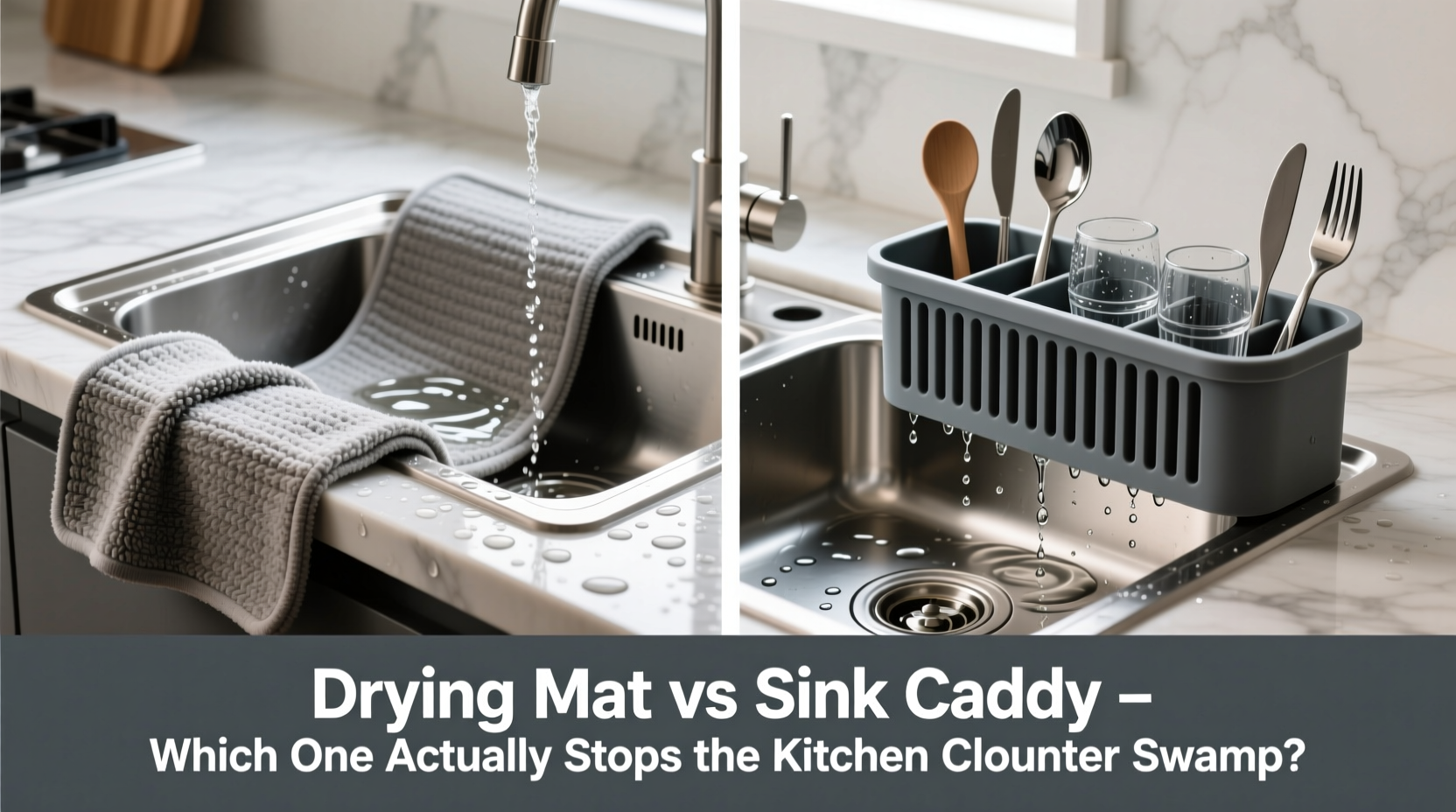
Before comparing solutions, it’s important to understand the root cause of the “kitchen counter swamp.” When washing dishes, water clings to plates, bowls, glasses, and cutlery. After rinsing, users typically place these items directly on the counter or towel to air-dry. Without proper drainage, that moisture spreads across the surface, especially on non-porous materials like laminate or stainless steel.
Over time, standing water can damage countertops, promote mold growth near seams, and create slipping hazards. It also forces constant wiping, increasing laundry loads and daily effort. A true solution doesn’t just absorb water—it manages it efficiently through design, material, and placement.
Drying Mats: Absorption vs. Drainage
Drying mats are flat, often silicone or microfiber-based pads placed beside the sink to catch drips. They’re popular for their low profile, ease of cleaning, and minimalist look. Most modern versions feature ridged surfaces to elevate dishes slightly and channels to guide water toward the edges.
Silicone mats dominate the market due to their non-slip grip, heat resistance, and ability to fold for storage. Microfiber mats offer superior absorption but require frequent laundering and may harbor bacteria if not dried properly.
The main advantage of drying mats is their simplicity. They fit into tight spaces, don’t alter sink functionality, and are easy to rinse or wipe down. However, they have limitations. Even high-performance mats can only hold so much water before overflowing. Once saturated, they become breeding grounds for mildew unless removed and dried thoroughly.
“While drying mats are convenient, they’re essentially temporary sponges. If not maintained, they contribute to the moisture problem they’re meant to solve.” — Lena Patel, Kitchen Ergonomics Consultant
Sink Caddies: Elevation and Drainage by Design
Sink caddies take a different approach. Instead of sitting on the counter, they straddle the sink basin, lifting dishes above the countertop. Most models are made of rust-resistant metal or coated wire with rubberized feet to protect sink edges. Some include separate compartments for cutlery, scrubbers, or soap bottles.
Because dishes rest inside the caddy, water drains directly back into the sink rather than onto the counter. This eliminates lateral spread entirely. Many caddies also allow airflow from all sides, speeding up drying times significantly.
For kitchens with limited counter space, sink caddies are transformative. They free up adjacent areas for prep work, reduce clutter, and integrate seamlessly with ongoing dishwashing. Unlike mats, they don’t retain water—they shed it.
However, sink caddies aren’t universally ideal. Larger pots and pans may not fit inside standard models. Users with deep double-basin sinks might find caddies unstable or awkwardly positioned. And while most are dishwasher-safe, food debris can accumulate in crevices if not rinsed promptly.
Real-World Example: The Brooklyn Apartment Test
In a 500-square-foot Brooklyn apartment with a single small sink and zero counter space, resident Maya Chen struggled with daily water buildup. Her previous silicone drying mat required hourly wringing and still left streaks on her laminate counter. After switching to an adjustable sink caddy, she reported immediate improvement.
“I can now wash, dry, and prep meals without moving dishes around,” she said. “The water goes right back into the sink instead of creeping toward my toaster. It’s been six months, and I haven’t had a single mold spot since.”
This case highlights a key insight: when counter space is at a premium, elevation beats absorption every time.
Comparison Table: Drying Mat vs Sink Caddy
| Feature | Drying Mat | Sink Caddy |
|---|---|---|
| Water Management | Absorbs and contains surface water | Directs water back into sink |
| Space Efficiency | Takes up counter space | Frees up counter space |
| Drying Speed | Moderate (limited airflow) | Fast (elevated, multi-directional airflow) |
| Maintenance | Requires regular drying and washing | Easy rinse; minimal residue buildup |
| Best For | Large counters, infrequent hand-washing | Small kitchens, frequent dish use |
Which One Actually Stops the Swamp?
The answer depends on your kitchen dynamics. If you have ample counter space, wash dishes occasionally, and prefer a sleek, low-profile setup, a high-quality drying mat may suffice. Look for models with perforated surfaces, anti-microbial coatings, and quick-dry materials.
But if you regularly hand-wash dishes, cook frequently, or have a compact kitchen, a sink caddy is objectively better at preventing countertop saturation. By containing water at its source and eliminating contact with the counter, it addresses the root issue rather than managing symptoms.
No drying mat can match the hydrological efficiency of a well-designed sink caddy. Water simply has nowhere else to go but back where it belongs—in the drain.
Actionable Checklist: Choosing Your Solution
- Measure your counter space next to the sink—is it consistently cluttered?
- Count how many dishes you hand-dry daily—more than five suggests a caddy may help.
- Check sink depth and width—ensure a caddy will fit securely without wobbling.
- Assess drying habits—are you diligent about emptying and cleaning mats?
- Test both options temporarily—rent or borrow before committing.
Frequently Asked Questions
Can I use a drying mat inside a sink caddy?
Generally unnecessary and counterproductive. The point of a caddy is to let water drip freely into the sink. Adding a mat inside defeats that purpose and creates a trapped moisture zone.
Do sink caddies damage porcelain sinks?
Not if designed properly. Most quality caddies have soft, non-scratch feet made of silicone or rubber. Always check product specs and avoid sliding the caddy across the sink surface.
Are drying mats hygienic long-term?
They can be—if cleaned weekly and fully dried between uses. However, studies show that damp microfiber and fabric mats can harbor coliform bacteria within days if left wet. Silicone is safer but still requires wiping.
Final Recommendation: Solve the Problem, Not Just the Symptom
If your goal is a truly dry, functional kitchen counter, prioritize systems that prevent water migration rather than contain it after the fact. Drying mats offer convenience but operate reactively. Sink caddies provide proactive water management by design.
For most households, especially those with busy kitchens or limited space, the sink caddy is the superior choice. It reduces maintenance, improves hygiene, and maximizes usable area. That said, hybrid approaches exist—some users keep a small drying mat further from the sink for delicate items while relying on a caddy for bulk drying.




 浙公网安备
33010002000092号
浙公网安备
33010002000092号 浙B2-20120091-4
Comments
No comments yet. Why don't you start the discussion?