
For over two decades, the DSLR (Digital Single-Lens Reflex) camera dominated photography—especially among enthusiasts and professionals. Its optical viewfinder, robust build, and extensive lens ecosystem made it the go-to choice for anyone serious about image quality. But in the last ten years, mirrorless cameras have surged in popularity, offering compact designs, faster autofocus, and cutting-edge video capabilities. Now, many beginners are asking: Is the DSLR officially dead?
The short answer is no—but it’s complicated. While DSLRs aren’t completely obsolete, their relevance, especially for new photographers, has sharply declined. To understand why, we need to compare both systems on key factors like cost, usability, performance, and future support.
How DSLRs and Mirrorless Cameras Work
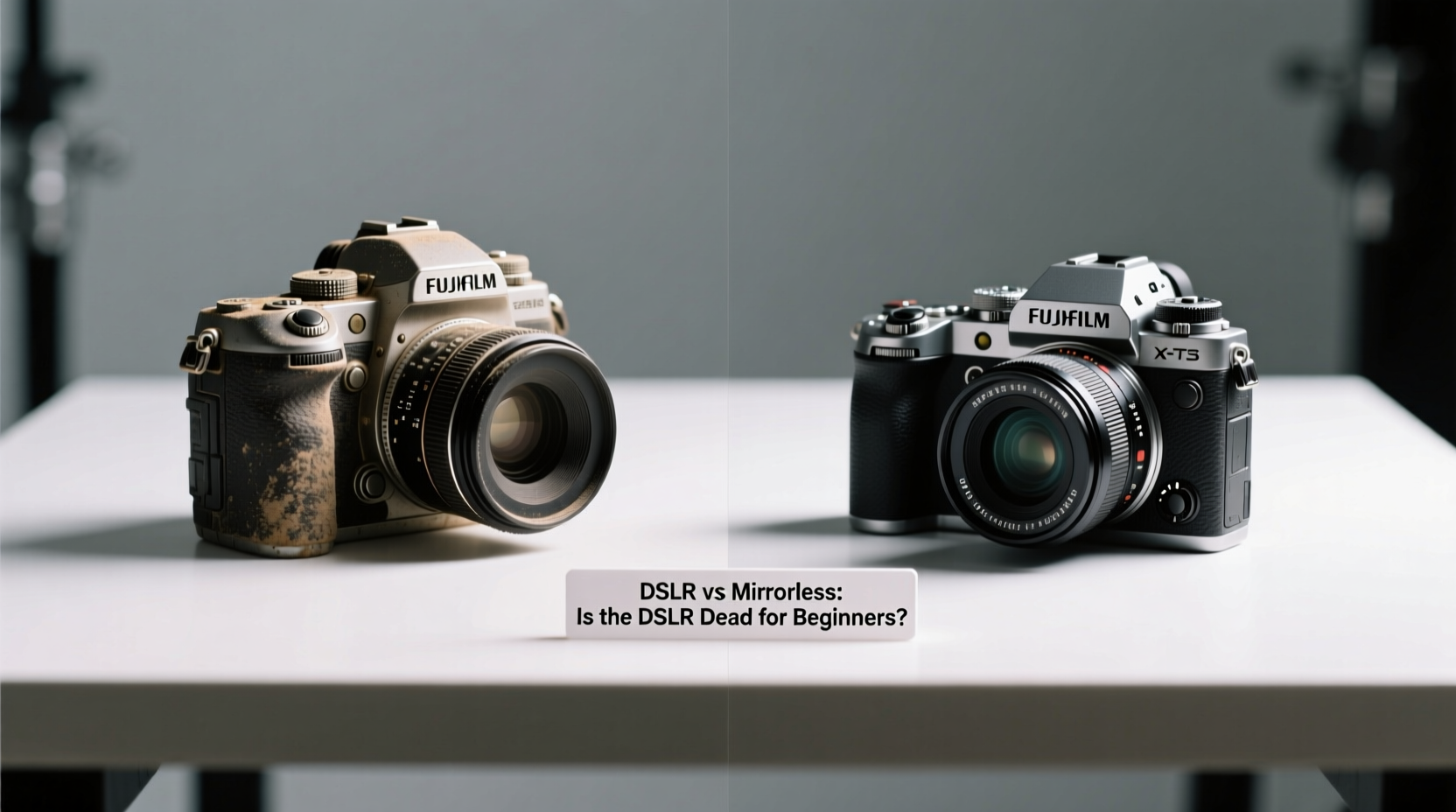
The fundamental difference between DSLRs and mirrorless cameras lies in their internal design. A DSLR uses a mirror mechanism that reflects light from the lens up into an optical viewfinder. When you press the shutter, the mirror flips up, allowing light to hit the sensor and capture the image. This system provides a real-time, through-the-lens optical view of the scene.
Mirrorless cameras, as the name suggests, eliminate the mirror. Light passes directly from the lens to the image sensor, which then sends a live preview to an electronic viewfinder (EVF) or the rear LCD screen. This simplifies the internal structure, making mirrorless bodies smaller and lighter.
This shift may seem technical, but it impacts everything from autofocus speed to battery life and handling. For beginners, understanding these mechanics helps clarify why mirrorless systems now dominate the market.
Performance Comparison: Autofocus, Speed, and Video
One of the most significant advantages of modern mirrorless cameras is their autofocus performance. Most high-end models use phase-detection pixels across the entire sensor, enabling fast, accurate subject tracking—even for moving eyes, animals, or vehicles. Canon’s R3, Sony’s A7 series, and Nikon’s Z lineup all offer AI-powered subject recognition that outperforms even flagship DSLRs.
DSLRs rely on a separate autofocus module beneath the mirror, limiting coverage and responsiveness. While excellent for static portraits or landscapes, they struggle with erratic motion or low-light tracking compared to their mirrorless counterparts.
In terms of burst shooting, mirrorless cameras often win due to their lack of mechanical mirror movement. Shooting at 15–30 frames per second with continuous autofocus is now standard on mid-range mirrorless bodies. DSLRs typically max out around 7–10 fps, constrained by mirror slap and shutter mechanics.
Video capabilities further tilt the balance. Mirrorless cameras support 4K, 6K, and even 8K recording with advanced codecs, log profiles, and stabilization. Many DSLRs either lack 4K entirely or offer cropped, low-bitrate footage. For beginners interested in hybrid photo-video work—a growing trend—mirrorless is clearly superior.
Lens Ecosystem and Compatibility
DSLRs benefit from decades of lens development. Canon EF and Nikon F mounts boast hundreds of lenses—from budget primes to exotic telephotos. Third-party manufacturers like Sigma, Tamron, and Tokina also offer extensive DSLR-compatible optics.
However, major manufacturers are now focusing their innovation on mirrorless systems. Canon’s RF mount, Nikon’s Z, and Sony’s E-mount receive new lenses regularly, including ultra-fast primes and stabilized zooms designed specifically for mirrorless advantages like shorter flange distance and digital communication.
While DSLR lenses can be adapted to mirrorless bodies via adapters, the reverse isn't true. This creates a one-way path: once you go mirrorless, returning to DSLR becomes impractical. For beginners building a long-term kit, investing in a growing ecosystem makes more sense than supporting a declining one.
“Lens roadmaps tell the real story. Companies aren’t launching new DSLR glass—they’re pouring resources into mirrorless. That’s where the future is.” — David Kim, Imaging Analyst at PhotoTech Insights
Size, Weight, and Portability
Beginners often prioritize portability. Carrying a large DSLR with multiple lenses can be intimidating and physically taxing, especially during travel or street photography. Mirrorless cameras are generally smaller and lighter, encouraging users to take them out more frequently.
A lightweight mirrorless body like the Sony a6100 or Fujifilm X-S10 pairs well with pancake lenses, creating a pocketable setup. Even full-frame models like the Canon EOS R8 or Nikon Z5 are significantly more compact than their DSLR equivalents.
Smaller size doesn’t mean lower durability. Many mirrorless cameras feature weather-sealed magnesium alloy bodies, ensuring resilience in rain or dust. The combination of ruggedness and portability makes mirrorless ideal for learners who want to shoot in diverse environments without gear fatigue.
Price and Value for Beginners
Historically, DSLRs offered better value for entry-level buyers. Models like the Canon Rebel T7 or Nikon D3500 delivered solid image quality at affordable prices. However, as production winds down, discounts on older DSLRs might seem appealing—but come with trade-offs.
You could buy a used Canon 80D for $600, but you’d miss out on features now standard on sub-$800 mirrorless options: touchscreen autofocus, eye-tracking, 4K video, in-body stabilization, and silent shooting. The Canon EOS R50 or Sony a6100 at similar price points offer far more functionality for learning and growth.
Additionally, resale value favors mirrorless. As demand drops for DSLRs, their depreciation accelerates. Investing in a modern mirrorless system ensures better long-term return if you upgrade later.
| Feature | DSLR (e.g., Nikon D7500) | Mirrorless (e.g., Nikon Z50) |
|---|---|---|
| Autofocus Coverage | Partial phase-detect (limited area) | Full-sensor coverage with eye/face detect |
| Max Burst Speed | 8 fps | 11 fps (with AF/AE) |
| Video Resolution | 4K with crop | 4K full-width, uncropped |
| Viewfinder Type | Optical (real-time, no lag) | Electronic (live exposure preview) |
| Weight (body only) | 640g | 395g |
| Battery Life | 950 shots | 320 shots (CIPA) |
Note: While DSLRs generally offer longer battery life due to optical viewfinders using less power, real-world usage often involves frequent LCD use, narrowing this gap.
Learning Curve and User Experience
For beginners, ease of use matters. Mirrorless cameras provide several learning aids absent in DSLRs:
- Exposure Preview: Electronic viewfinders show the actual brightness, contrast, and white balance before capture, helping users understand settings instantly.
- Touchscreen Controls: Tap-to-focus, swipe-through menus, and touch shutter make interaction intuitive, especially for smartphone users.
- Guided Menus: Brands like Canon and Olympus include beginner-friendly interfaces explaining settings in plain language.
DSLRs require more trial and error. You adjust aperture or ISO, take a shot, review the image, then tweak again. With mirrorless, you see the effect of changes in real time, accelerating the learning process.
Mini Case Study: Sarah’s First Camera Journey
Sarah, a college student starting photography, considered buying a used Nikon D5600. It was cheap, had good reviews, and used existing lenses her uncle owned. But after testing a Nikon Z30 at a local store, she noticed immediate differences. The flip screen helped her frame selfies for Instagram. The eye autofocus locked onto her dog effortlessly. And seeing her exposure change as she adjusted settings demystified manual mode.
She bought the Z30, spent six months mastering basics, then upgraded to a Z50 with a prime lens. Within a year, she was shooting events for friends. “If I’d started with the DSLR,” she said, “I think I would’ve given up. The mirrorless just made everything click faster.”
Are DSLRs Dead? Not Quite—But They’re on Life Support
Nikon officially ended DSLR development in 2023, stating future innovations would focus solely on the Z-mount mirrorless line. Canon hasn’t made a new DSLR since 2020 and now labels its remaining DSLRs as “legacy” products. Only Pentax continues active DSLR updates, catering to a niche audience.
That doesn’t mean DSLRs are unusable. Millions still function perfectly. Their optical viewfinders remain preferable in bright sunlight, and battery life is unmatched. Some photographers still favor the tactile feel and button layout of DSLRs. But for beginners entering the market today, choosing a DSLR means opting for outdated technology with limited future support.
Think of it like buying a DVD player in 2024. It works, but you won’t get access to streaming-quality content or software updates. Similarly, DSLRs won’t receive firmware improvements, new lenses, or compatibility with emerging accessories.
Checklist: Choosing Your First Camera in 2024
- ✅ Prioritize mirrorless unless you have specific needs (e.g., sports with legacy lenses).
- ✅ Look for models with eye autofocus and real-time tracking.
- ✅ Ensure the brand has a growing lens lineup (Canon RF, Sony E, Nikon Z).
- ✅ Choose a camera with a flip-out screen for vlogging or self-framing.
- ✅ Test the ergonomics—does it feel comfortable in your hands?
- ✅ Consider kit bundles with two lenses (e.g., 16-50mm + 50-200mm) for versatility.
- ✅ Verify video specs if you plan to post online or create reels.
Frequently Asked Questions
Can I use my old DSLR lenses on a mirrorless camera?
Yes, in most cases. Canon, Nikon, and others sell official adapters (like the EF-EOS R adapter) that maintain autofocus and aperture control. Third-party options exist too, though they may lack full functionality. Note: Adapters add bulk and cost.
Is optical viewfinder better than electronic?
Each has pros. Optical viewfinders (DSLRs) offer zero lag and natural color. Electronic viewfinders (mirrorless) show exposure preview, focus peaking, histograms, and magnification—tools that help beginners learn faster. In low light, EVFs brighten the scene; in bright sun, some can appear dim. Modern EVFs have largely closed the quality gap.
Will DSLRs become worthless?
No, but their value will continue to drop. Used DSLRs may become budget tools for schools, hobbyists, or filmmakers needing specific characteristics (e.g., global shutter in older sensors). However, repair services and parts may dwindle over time, reducing long-term viability.
Final Verdict: What Should Beginners Do?
The DSLR era has effectively ended for new adopters. While these cameras were revolutionary in their time, they no longer represent the best starting point for learning photography. Mirrorless systems offer superior autofocus, real-time feedback, compact designs, and a clear path for growth—all critical for beginners navigating a steep learning curve.
Choosing a DSLR today means accepting limitations in video, speed, and future compatibility. Unless you're inheriting lenses or working under tight budget constraints with access to used gear, there's little reason to start with a DSLR in 2024.
Manufacturers, retailers, and educators are aligning around mirrorless. Online tutorials, YouTube reviews, and camera courses now assume mirrorless workflows. By starting with a modern system, beginners integrate seamlessly into this ecosystem, gaining access to community knowledge, accessories, and evolving tools.




 浙公网安备
33010002000092号
浙公网安备
33010002000092号 浙B2-20120091-4
Comments
No comments yet. Why don't you start the discussion?