
For over two decades, the DSLR reigned supreme as the go-to camera for photographers at every level. Its optical viewfinder, long battery life, and rugged reliability made it a favorite from hobbyists to professionals. But since the rise of mirrorless technology around 2010, the landscape has shifted dramatically. By 2025, the question isn’t whether mirrorless cameras are catching up—it’s whether DSLRs still have a place at all.
This isn’t just about megapixels or autofocus speed. It’s about understanding what kind of photographer you are—or want to become—and choosing a system that supports your growth. For beginners stepping into photography today, the decision between DSLR and mirrorless can feel overwhelming. Let’s cut through the noise with real insights, practical comparisons, and forward-looking analysis.
The Core Difference: How They Work
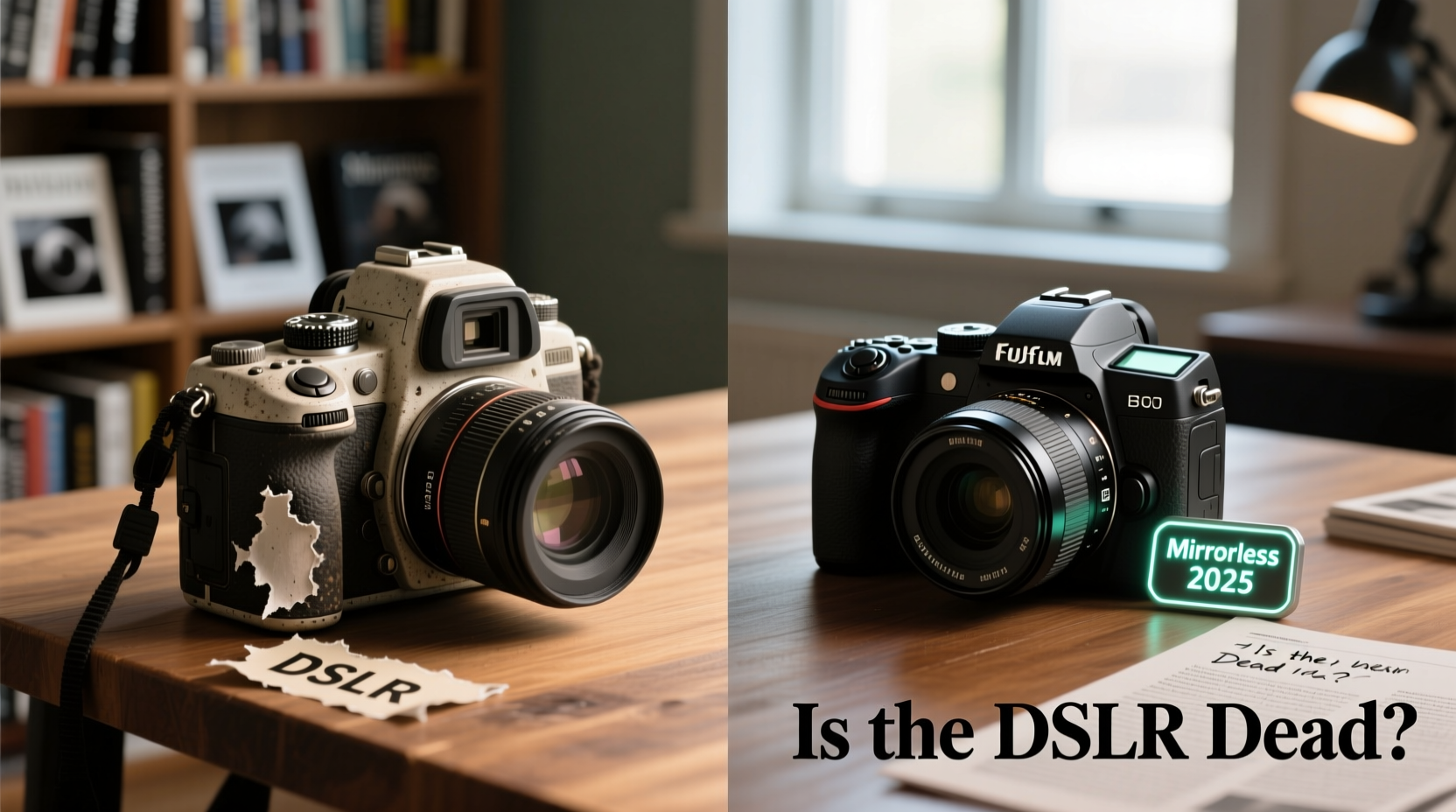
The fundamental distinction lies in their internal design. A DSLR (Digital Single-Lens Reflex) uses a mirror mechanism to reflect light from the lens up into an optical viewfinder. When you press the shutter, the mirror flips up, allowing light to hit the sensor and capture the image. This gives you a direct, real-time optical view of the scene—no lag, no processing delay.
Mirrorless cameras, on the other hand, eliminate the mirror entirely. Light passes directly from the lens to the image sensor, which then sends a digital preview to an electronic viewfinder (EVF) or the rear screen. There’s no mechanical flip; instead, everything is processed electronically in real time.
This shift may sound minor, but it enables a cascade of technological advantages: smaller bodies, faster autofocus systems, better video performance, and more compact lenses. The trade-off? Battery life and, historically, viewfinder quality—though both have improved drastically by 2025.
Why Mirrorless Has Taken the Lead
By 2025, nearly every major camera manufacturer has either discontinued or significantly scaled back their DSLR lines. Canon stopped producing new DSLRs after the EOS-1D X Mark III. Nikon’s last consumer DSLR was the D7500, and even their pro-grade D6 has seen limited updates. Pentax remains a holdout, but its market share is niche.
In contrast, Sony, Fujifilm, OM System, Panasonic, and Canon’s own RF-mount lineup dominate new releases. These systems offer features that were once science fiction:
- Real-time eye tracking that locks onto humans, animals, and even birds mid-flight.
- In-body image stabilization (IBIS) that compensates for shaky hands across multiple axes.
- 4K and 6K video recording with professional-grade color profiles and log formats.
- Compact form factors without sacrificing grip or durability.
These aren’t just incremental upgrades—they represent a new philosophy of photography centered on responsiveness, adaptability, and hybrid shooting (photo + video).
DSLRs Aren’t Dead—But Their Role Has Changed
Saying the DSLR is “dead” oversimplifies reality. While no longer the focus of innovation, DSLRs remain viable tools, especially for specific users. Here’s who still benefits from them in 2025:
- Budget-conscious beginners who can buy high-quality used DSLRs (like the Canon EOS 80D or Nikon D750) at steep discounts.
- Photographers in remote areas where battery access is limited—DSLRs typically last 800–1200 shots per charge versus 300–500 for most mirrorless models.
- Learners who prefer optical clarity—some find the optical viewfinder easier to use when mastering manual settings like aperture and shutter speed.
- Owners of legacy lens collections—if you’ve invested in EF or F-mount glass, switching systems means starting over or using adapters (which can limit functionality).
“DSLRs are like manual transmission cars—they teach you how photography works under the hood.” — David Lin, Photography Educator and Workshop Leader
That said, learning fundamentals doesn’t require clinging to outdated tech. Many mirrorless cameras now include “simulation modes” that mimic optical viewfinders or disable autofocus aids, offering a balanced path between tradition and modernity.
Comparison: DSLR vs Mirrorless in 2025
| Feature | DSLR (e.g., Canon 90D) | Mirrorless (e.g., Sony a6700) |
|---|---|---|
| Viewfinder Type | Optical (real-time, no lag) | Electronic (live exposure preview, zoom assist) |
| Battery Life | ~1,300 shots per charge | ~500 shots per charge |
| Autofocus Performance | Phase-detect via dedicated sensor (good for stills) | On-sensor phase detect + AI tracking (excellent for motion) |
| Size & Weight | Larger, heavier body | Up to 30% smaller/lighter |
| Video Capabilities | 1080p/4K with crop; limited focusing | Uncropped 4K, 10-bit color, active stabilization |
| Lens Ecosystem | Mature, wide third-party support | Rapidly expanding; some brands lead (Sony, Canon RF) |
| Price (New Body) | $900–$1,200 (limited availability) | $1,000–$1,400 (with ongoing R&D investment) |
The table reveals a clear trend: while DSLRs still win in battery life and familiarity, mirrorless systems outperform across nearly every creative metric. And because manufacturers continue refining mirrorless tech, these gaps will only widen.
What Beginners Should Consider Before Buying
Choosing your first camera shouldn’t be about chasing specs. It should align with how you plan to use it. Ask yourself:
- Will I shoot mostly photos, videos, or both? Mirrorless excels at hybrid use.
- Do I need long battery life in the field? DSLRs still lead here.
- Am I likely to upgrade lenses later? Mirrorless systems have stronger future-proofing.
- Is size/weight important? Travel and street photographers benefit from compact builds.
- How much am I willing to spend overall? Entry-level mirrorless kits start around $700, competitive with used DSLRs.
Checklist: Choosing Your First Camera System
- ✅ Define your primary use case (portrait, landscape, vlogging, etc.)
- ✅ Set a realistic budget (body + lens + accessories)
- ✅ Research available lenses in the ecosystem
- ✅ Test the ergonomics—does it feel comfortable in your hands?
- ✅ Check for second-hand availability and resale value
- ✅ Ensure software compatibility (e.g., RAW file support in editing apps)
- ✅ Verify customer support and warranty options
Real Example: Sarah’s Journey from DSLR to Mirrorless
Sarah bought a Nikon D3500 in 2020 to document her travels. She loved its simplicity and battery life but struggled with low-light autofocus and wanted to start making short films. In 2023, she traded up to a Fujifilm X-S20. The change was transformative.
“The electronic viewfinder showed me exactly how my shot would look—even in tricky lighting,” she said. “And the film simulations saved hours in editing. I shot my first wedding video six months later using the same camera. My old DSLR couldn’t have handled that.”
Her experience reflects a broader shift: as content creation becomes multidimensional, photographers need tools that adapt quickly. Mirrorless systems, designed from the ground up for digital workflows, meet that demand.
Expert Insight: Where Camera Tech Is Headed
According to Dr. Lena Cho, imaging analyst at TechVisual Research, “By 2027, we’ll see AI-integrated sensors that adjust exposure and focus based on subject intent—not just movement. That level of intelligence requires full digital control, which only mirrorless architectures provide.”
“The future of photography isn’t just sharper images—it’s smarter ones.” — Dr. Lena Cho, Imaging Technology Analyst
This means features like predictive framing, automatic tagging, and adaptive noise reduction are already being tested in lab prototypes. None of this is feasible with the mechanical constraints of a mirror box.
Frequently Asked Questions
Can I use my old DSLR lenses on a mirrorless camera?
Yes—with an adapter. Most major brands offer official adapters (e.g., Canon EF-EOS R, Nikon FTZ). Third-party options exist too, though they may reduce autofocus performance or lack weather sealing. Note: adapted lenses often retain full functionality, but not always.
Is a mirrorless camera harder to learn than a DSLR?
Not inherently. Some beginners find the electronic viewfinder disorienting at first, especially if it lags or darkens in low light. However, modern EVFs refresh at 120Hz and display real-time histograms, focus peaking, and exposure simulation—tools that actually accelerate learning. With practice, most users adapt within a week.
Are DSLRs going to become worthless?
No. Like film cameras, DSLRs will transition into legacy status. They’ll remain functional, repairable (for a time), and valuable to collectors or educators. Used prices may stabilize for popular models like the Nikon D810 or Canon 5D Mark IV. But don’t expect firmware updates or new accessories.
Step-by-Step Guide: Transitioning from DSLR to Mirrorless
If you’re considering the switch—or starting fresh—follow this timeline:
- Week 1: Rent or borrow a mirrorless camera to test handling and EVF experience.
- Week 2: Compare sample images and videos from both types online—focus on dynamic range and autofocus accuracy.
- Week 3: Identify compatible lenses. Can you adapt existing glass? What new primes or zooms fit your needs?
- Week 4: Set a budget and explore certified pre-owned programs (B&H, KEH, Adorama).
- Month 2: Purchase your chosen system and spend one month shooting in manual mode to build confidence.
- Month 3: Explore video capabilities and post-processing workflows—many mirrorless files benefit from color grading.
This gradual approach minimizes buyer’s remorse and ensures you’re investing in a system, not just a gadget.
Conclusion: Making the Right Choice for You
The DSLR isn’t dead overnight—but its era of dominance has ended. For beginners in 2025, mirrorless is the logical starting point. It offers superior autofocus, better video, lighter gear, and a roadmap for future growth. While DSLRs still serve specific niches, they no longer represent the cutting edge.
Ultimately, the best camera is the one you enjoy using consistently. Whether you choose a tried-and-true DSLR for its tactile feedback or embrace mirrorless for its intelligent design, what matters is that you keep creating. Photography evolves, and so should your tools.




 浙公网安备
33010002000092号
浙公网安备
33010002000092号 浙B2-20120091-4
Comments
No comments yet. Why don't you start the discussion?