
In an era defined by hyperconnectivity, artificial intelligence, and endless scrolling, a quiet rebellion is unfolding. A growing number of young adults—particularly members of Generation Z—are abandoning their sleek, powerful smartphones in favor of something that feels almost archaic: the flip phone. These so-called \"dumbphones,\" stripped of apps, social media, and constant notifications, are experiencing a surprising resurgence. This isn’t nostalgia—it’s a deliberate shift toward digital minimalism, mental clarity, and reclaiming time. The movement signals a broader cultural reckoning with the costs of always-on technology.
The Digital Burnout Behind the Flip Phone Revival
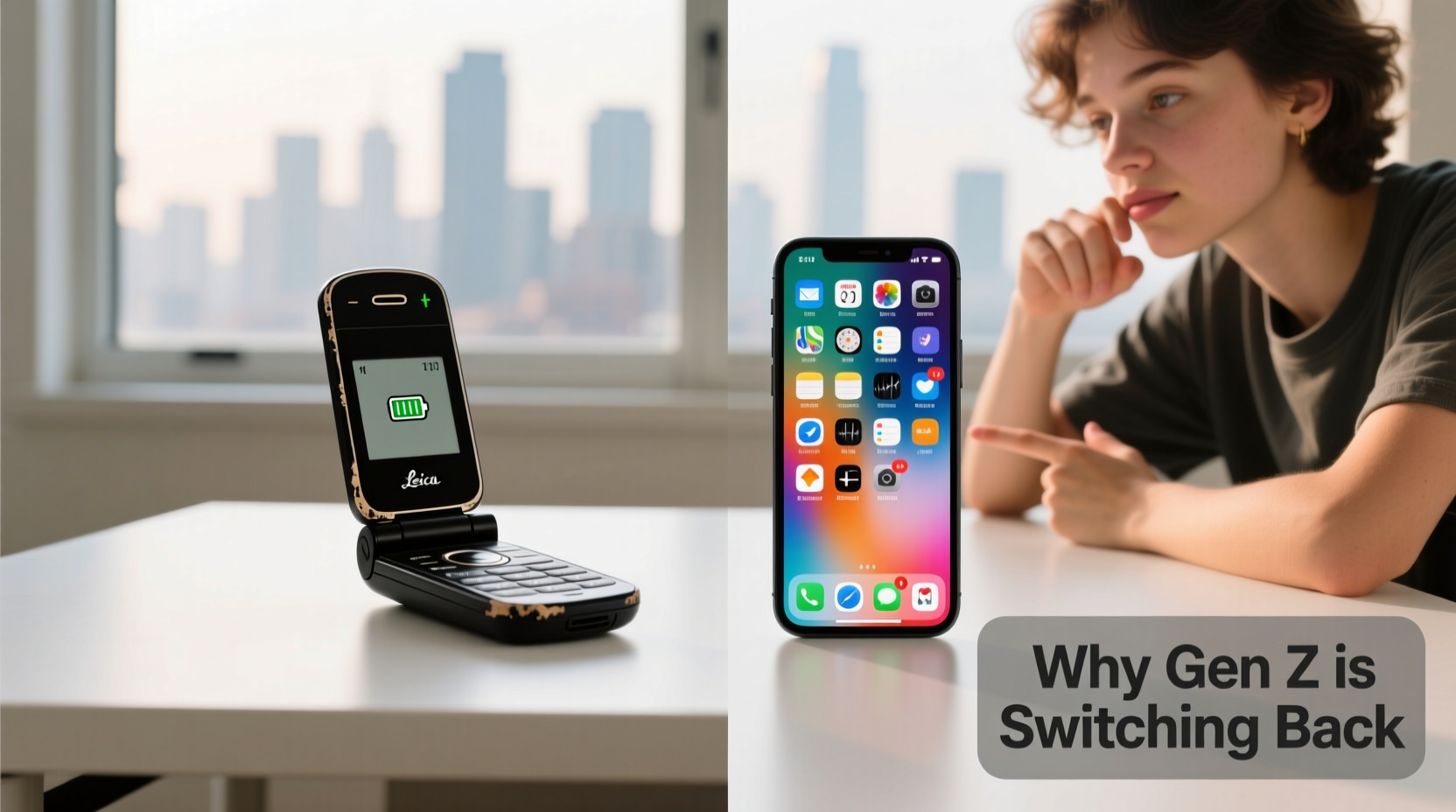
For years, smartphones have been marketed as tools of empowerment—connecting us instantly to information, people, and opportunities. But for many under 30, the reality has become one of distraction, anxiety, and burnout. Constant pings from social media, work emails, and news alerts fracture attention spans and erode mental well-being. Studies show that the average person checks their phone over 100 times a day, often without conscious intent. For Gen Z, raised on screens since childhood, this has led to a unique form of fatigue: digital exhaustion.
Enter the dumbphone. With no internet browser (or a very limited one), no app store, and no push notifications, these devices offer a radical alternative: simplicity. They allow users to make calls, send texts, set alarms, and sometimes take basic photos—all essential functions—without the psychological weight of infinite content. The flip mechanism itself acts as a physical boundary: close it, and the device is off-limits.
“Smartphones were supposed to make us more efficient, but they’ve made us perpetually distracted. The dumbphone is a tool of reclamation.” — Dr. Lena Torres, Cognitive Psychologist and Author of *Digital Minimalism in the Attention Economy*
Dumbphone vs Smartphone: A Feature-by-Feature Breakdown
To understand the appeal, it helps to compare what each device offers—and at what cost. The table below outlines key differences between modern smartphones and contemporary dumbphones.
| Feature | Smartphone | Dumbphone / Flip Phone |
|---|---|---|
| Internet Access | Full browsing, streaming, downloads | Limited or none (some support WAP) |
| Social Media | Native apps for Instagram, TikTok, X, etc. | Not accessible |
| Battery Life | 12–24 hours with moderate use | 7–14 days on average |
| Notifications | Constant alerts from multiple sources | Calls and texts only |
| Multitasking | Dozens of apps running simultaneously | Single-function focus |
| Mental Load | High—constant decision fatigue | Low—clear boundaries |
| Cost (Device + Data) | $600–$1,500 + $60–$100/month | $50–$200 + $10–$30/month |
| Durability | Fragile screens, frequent upgrades | Sturdy build, longer lifespan |
The trade-off is clear: give up convenience and entertainment, gain peace of mind and presence. For many young people, that equation is finally tipping in favor of disconnection.
Gen Z’s Quest for Authenticity and Mental Wellness
Unlike previous generations, Gen Z came of age during peak social media saturation. Platforms like Instagram, Snapchat, and TikTok shaped their self-image, relationships, and sense of belonging. But research increasingly links heavy social media use to higher rates of anxiety, depression, and body image issues—especially among teens and young adults.
By stepping away from smartphones, many in this generation are actively resisting the performative culture of online life. Without the ability to document every moment, they report feeling more authentic in their interactions. Conversations become deeper. Eye contact returns. Boredom—once avoided at all costs—is now welcomed as a space for reflection and creativity.
A 2023 Pew Research study found that 42% of Gen Z respondents felt their phone use was “excessive,” and 29% had taken steps to reduce screen time in the past year. Among those who switched to a dumbphone, 68% reported improved sleep, 57% said they felt less anxious, and 45% noted stronger real-world relationships.
Mini Case Study: Maya’s Switch to a Flip Phone
Maya, a 22-year-old college senior from Portland, used to spend four to six hours daily on her smartphone—mostly on TikTok, Instagram, and messaging apps. She noticed she’d check her phone within minutes of waking up, scroll during lectures, and even text while walking across campus. After a panic attack triggered by academic stress and social comparison, she decided to try a Motorola Razr flip phone.
At first, the transition was jarring. She missed instant access to maps, music, and group chats. But within three weeks, she began noticing changes: she fell asleep faster, read more books, and started journaling again. Her grades improved, and she joined a hiking club—something she’d previously dismissed as “too offline.”
“I didn’t realize how much energy I was spending managing my digital presence,” she said. “Now, I feel like I’m living my life instead of documenting it.”
How to Make the Switch: A Step-by-Step Guide
Transitioning from a smartphone to a dumbphone isn’t just about buying a new device—it’s a lifestyle adjustment. Here’s a practical roadmap for making the change smoothly.
- Assess Your Needs: List the functions you actually rely on daily. Is it calling? Texting? Music? GPS? This helps identify whether a dumbphone can meet your core needs.
- Choose the Right Device: Modern flip phones like the Motorola Razr+ (2023), Light Phone II, or Nokia 2720 offer upgraded features such as 4G, basic cameras, and minimalist apps. Decide how “dumb” you want to go.
- Prepare Contacts and Backups: Export your contacts to a SIM card or cloud service. Save important numbers in the phone’s memory. Inform close friends and family of your switch.
- Set Up Alternative Tools: Use a dedicated MP3 player for music, a physical planner for scheduling, and a tablet or laptop for occasional web browsing.
- Adjust Communication Habits: Let people know you won’t be responding instantly. Establish expectations—e.g., “I check messages twice a day.”
- Test-Drive for Two Weeks: Start with a weekend trial. Carry both phones if needed. Observe how your mood, focus, and habits shift.
- Commit or Reassess: After testing, decide whether to fully commit. If certain needs aren’t met, consider hybrid solutions like using a smartphone in grayscale mode or enabling Focus modes.
Checklist: Is a Dumbphone Right for You?
- ✅ I frequently feel overwhelmed by notifications
- ✅ I want to reduce screen time and improve sleep
- ✅ I value face-to-face conversations over digital ones
- ✅ I don’t rely on mobile banking or navigation apps daily
- ✅ I’m willing to carry separate devices for music or camera
- ✅ I can tolerate delayed responses to messages
- ✅ I’m seeking greater focus at work or school
If most of these apply, a dumbphone could be a transformative choice.
Common Misconceptions About Dumbphones
Despite their growing popularity, dumbphones are often misunderstood. Some assume they’re only for older adults or luddites. Others believe they’re unsafe because they lack emergency features or GPS. In reality, many modern flip phones include SOS buttons, location sharing, and compatibility with emergency services.
Another myth is that dumbphones isolate users. On the contrary, many users report becoming more socially engaged. Without the crutch of a screen, they initiate conversations, attend events, and participate in group activities more readily.
Finally, some worry about professional drawbacks—how will they get work emails or join Zoom calls? The answer lies in separation of tools: use a laptop or desktop for work tasks, and keep the phone purely for communication. This boundary can actually boost productivity by reducing context-switching.
FAQ: Your Dumbphone Questions Answered
Can I still use WhatsApp or other messaging apps on a dumbphone?
Most traditional dumbphones do not support apps like WhatsApp. However, newer models such as the Light Phone II offer minimalist versions of messaging services via SMS or Wi-Fi. True digital minimalists often choose to move conversations to email or voice calls instead.
What about emergencies or getting directions?
While dumbphones lack real-time GPS navigation, most users plan routes in advance using a computer or shared device. For emergencies, all flip phones connect to emergency services, and many include built-in location tracking. Carrying a small printed map or using a wearable GPS device can supplement needs.
Won’t I miss out on important updates or events?
This concern often diminishes after the switch. Most critical updates—job offers, family news, event reminders—come through calls or texts, which dumbphones handle perfectly. Social updates tend to be less urgent than they appear. Many users find they stay better informed by checking news intentionally, rather than reacting to algorithmic feeds.
The Future of Phones: A Balanced Tech Diet
The dumbphone trend isn’t about rejecting technology—it’s about choosing it more wisely. As AI and augmented reality accelerate, the need for intentional tech use will only grow. Gen Z’s return to flip phones may be the first wave of a larger movement toward “tech hygiene”: setting boundaries, curating tools, and prioritizing human experience over digital noise.
Some companies are responding. Apple’s Screen Time, Android’s Digital Wellbeing, and third-party apps like Freedom and Moment help users monitor usage. But built-in tools often fall short when willpower is tested. A dumbphone removes the temptation entirely—making it one of the most effective digital detox tools available.
In the future, we may see more hybrid lifestyles: a flip phone for personal use, a tablet for media, and a computer for work. The goal isn’t to eliminate technology, but to align it with our values—presence, productivity, and peace.
“The best technology serves silently. When it becomes the center of our attention, it’s no longer serving us.” — Tristan Harris, Co-Founder of the Center for Humane Technology
Conclusion: Reclaim Your Attention, One Flip at a Time
The rise of the dumbphone among Gen Z is more than a quirky trend—it’s a quiet revolution against digital overload. By choosing simpler devices, young people are voting with their wallets and their time for a life of greater focus, authenticity, and emotional balance. They’re proving that progress doesn’t always mean more features, faster speeds, or smarter algorithms. Sometimes, progress means closing the flip, putting the phone down, and looking up.
If you’ve ever felt trapped by your smartphone, consider this: freedom might come in a compact, clamshell design. You don’t have to go full analog, but even a partial step toward simplicity can yield profound results. Your attention is your most valuable resource. Who—or what—deserves it?




 浙公网安备
33010002000092号
浙公网安备
33010002000092号 浙B2-20120091-4
Comments
No comments yet. Why don't you start the discussion?