
For individuals with fine hair, choosing the right styling tool isn’t just about convenience—it’s about protection, volume, and longevity. Fine hair is often more fragile, prone to breakage, and easily weighed down. Two of the most talked-about tools in recent years are the Dyson Airwrap and the Revlon One Step Volumizer. Both promise salon-quality results at home, but when it comes to fine hair, their performance diverges significantly. Understanding how each works, their heat impact, styling versatility, and long-term effects can help you make a smarter investment.
Understanding the Needs of Fine Hair
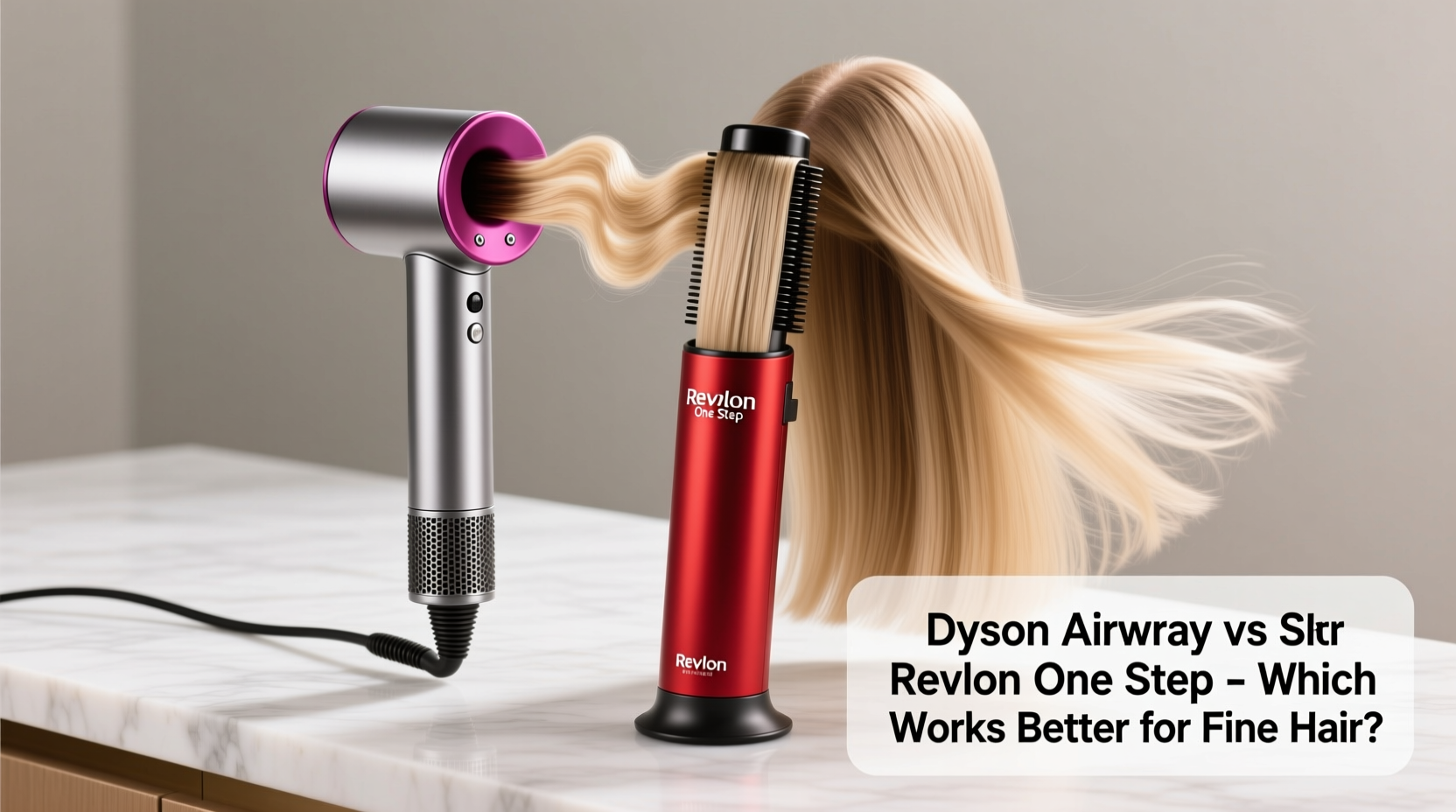
Fine hair refers to the diameter of individual strands, not thickness or density. It’s typically delicate, lacks natural volume, and can be easily damaged by excessive heat or mechanical stress. The ideal styling tool for fine hair should enhance body without compromising integrity. It needs to offer controlled heat settings, gentle airflow, and techniques that lift roots while smoothing ends—without frying or flattening.
Overheating is a major concern. Excessive temperatures can degrade keratin, leading to split ends and thinning over time. Tools that rely on high heat without intelligent temperature control pose a greater risk. Equally important is ease of use; fine hair often requires precision to avoid creating limp, lifeless styles.
How the Dyson Airwrap Works for Fine Hair
The Dyson Airwrap uses Coanda airflow technology—a principle where air flows along a surface to attract and wrap hair around the barrel without extreme heat. This reduces direct contact with hot surfaces, minimizing thermal stress. With magnetic attachments including 1.2” and 1.6” barrels, a smoothing brush, and a volumizing round brush, it offers full styling flexibility.
For fine hair, the key benefit lies in its ability to create volume at the root while curling or smoothing mid-lengths and ends. The round brush attachment lifts hair from the scalp during drying, giving instant body. The lower heat settings (ranging from 135°C to 210°C) are adjustable and monitored by sensors that regulate temperature up to 40 times per second, preventing sudden spikes.
Users with fine, straight hair often report bouncy curls that last two days without stiffness—an impressive result considering traditional curling irons can leave fine hair looking stringy or limp. The Airwrap’s negative ion emission also helps reduce frizz, enhancing shine without weighing hair down.
“With fine hair, the goal is structure without strain. The Dyson Airwrap excels because it styles with air as much as heat—reducing damage while building volume.” — Dr. Lena Park, Trichologist & Hair Care Scientist
How the Revlon One Step Volumizer Works for Fine Hair
The Revlon One Step combines a round brush and dryer into a single, affordable device. It features ceramic coating and ionic technology, promising smooth blowouts with reduced frizz. With multiple heat/speed settings, it heats quickly and dries hair faster than conventional dryers.
For fine hair, the appeal is immediate: sleekness, volume, and speed. When used correctly, it can deliver a polished, salon-like finish in under 20 minutes. The large barrel size lifts roots effectively, especially when paired with tension from brushing upward. However, the trade-off is higher direct heat exposure. Unlike the Airwrap, the Revlon tool relies on continuous contact between hot bristles and hair shafts.
This increases the risk of overheating, particularly if users linger too long on one section. Many stylists caution against repeated passes, which can cause brittleness in fine strands. Additionally, the bulkier design makes it harder to maneuver close to the scalp, sometimes resulting in flat roots despite efforts to lift.
Still, for those seeking a quick daily blowout without investing in advanced tech, the Revlon One Step remains a popular choice—especially given its fraction-of-the-cost pricing compared to the Dyson.
Direct Comparison: Dyson Airwrap vs Revlon One Step
| Feature | Dyson Airwrap | Revlon One Step |
|---|---|---|
| Price | $599–$650 | $50–$70 |
| Heat Technology | Intelligent heat control with sensors; max 210°C | Fixed heating elements; up to 210°C, no real-time regulation |
| Airflow System | Coanda effect wraps hair with air | Concentrated hot air through bristles |
| Versatility | Curls, waves, smooth, volume (multiple attachments) | Primarily blowout/smooth; limited curling ability |
| Weight & Ergonomics | Lightweight, balanced design | Heavier, front-loaded, can cause wrist fatigue |
| Safety for Fine Hair | Lower risk due to reduced contact and smart controls | Moderate to high risk if misused; potential for heat damage |
| Drying Efficiency | Effective but slower; best on towel-dried hair | Faster drying; strong motor but less precise |
Real-World Performance: A Mini Case Study
Emily, a 32-year-old graphic designer with shoulder-length, fine, straight hair, tested both tools over six weeks. Her goal was consistent volume and soft curls that lasted through her workday without flatness or frizz.
Weeks 1–2: She started with the Revlon One Step. Results were impressive initially—smooth, shiny hair with noticeable root lift. However, by day three, she noticed increased flyaways and slight dryness at the ends. After five consecutive days of use, her hair felt thinner and lacked resilience.
Weeks 3–6: Switching to the Dyson Airwrap, Emily used the pre-styling routine: towel-dried hair, applied mousse and heat protectant, then used the volumizing brush to dry roots first. She finished with 1.2” barrels for loose curls. The process took longer—about 35 minutes—but the results lasted longer. Her curls held for two full days with minimal touch-up, and her hair felt stronger, shinier, and less stressed.
Verdict: While the Revlon delivered speed and affordability, the Dyson provided superior long-term health and styling consistency for her fine hair type.
Step-by-Step Guide to Styling Fine Hair Safely
Regardless of which tool you choose, technique matters. Follow this sequence to protect fine hair while maximizing results:
- Start with damp, not wet, hair: Towel-dry thoroughly or use a microfiber towel to reduce moisture. Excess water increases styling time and heat exposure.
- Apply heat protectant evenly: Focus on mid-lengths to ends—the most vulnerable areas. Use a lightweight formula to avoid weighing hair down.
- Section hair properly: Divide into 4–6 sections using clips. Work from the bottom up to maintain tension and control.
- Use lowest effective heat setting: For fine hair, never exceed medium heat. Let the tool do the work—don’t rush with high temps.
- Limit pass count: One or two passes per section maximum. Repeated exposure leads to cumulative damage.
- Cool shot finish: Seal the cuticle with cool air to lock in shape and add shine.
- Wait before touching: Allow curls or volume to set for 5–10 minutes before running fingers through.
Checklist: Choosing the Right Tool for Your Fine Hair
- ✅ Does it offer adjustable heat settings below 180°C?
- ✅ Does it minimize direct contact with hot surfaces?
- ✅ Can it create volume at the roots without flattening?
- ✅ Is it lightweight and easy to maneuver?
- ✅ Does it include ionic or anti-frizz technology?
- ✅ Have user reviews specifically praised results on fine hair?
- ✅ Does it come with a warranty and reliable customer support?
FAQ: Common Questions About Styling Fine Hair
Can I use the Dyson Airwrap every day on fine hair?
Yes, but moderation is key. Daily use is possible if you stick to lower heat settings, always use heat protection, and allow hair to rest occasionally. The Airwrap’s intelligent controls make it safer than most tools for frequent use, but even gentle heat adds up over time.
Is the Revlon One Step damaging for fine hair?
It can be, especially with improper use. The risk comes from prolonged contact, high heat, and repetitive brushing. To reduce damage, use only on medium heat, avoid going over the same section more than twice, and always apply a protective serum beforehand.
Which tool gives longer-lasting curls on fine hair?
The Dyson Airwrap consistently outperforms the Revlon One Step in curl retention. Its combination of controlled heat, airflow wrapping, and proper tension creates curls that hold shape for 24–48 hours. The Revlon can create soft bends, but they tend to drop within 8–12 hours, especially in humid conditions.
Final Verdict: Which Tool Wins for Fine Hair?
When evaluating pure performance on fine hair, the Dyson Airwrap emerges as the superior tool. Its innovative airflow technology, precision attachments, and safety-focused engineering make it ideal for achieving volume, curls, and smoothness without sacrificing hair health. While expensive, its long-term benefits—reduced breakage, lasting styles, and multi-functionality—justify the investment for regular users.
The Revlon One Step, meanwhile, serves a different need: budget-friendly, fast blowouts for occasional use. It can work well for fine hair if handled carefully, but demands more skill and restraint. Overuse or incorrect technique can lead to visible damage over time.
If your priority is maintaining the strength and appearance of fine hair while enjoying versatile styling, the Dyson Airwrap is worth the cost. If you're on a tight budget and only style weekly, the Revlon offers a capable entry point—just treat it with caution.
“Tools don’t define your hair’s health—how you use them does. But when technology reduces risk while improving results, that’s progress.” — Marcus Reed, Celebrity Stylist & Educator
Take Action Today
Your hair reflects your care routine. Whether you choose the Dyson Airwrap or the Revlon One Step, commit to protective practices: use heat defense, avoid over-styling, and listen to your hair’s signals. Try a side-by-side test if possible—style one side with each tool and compare results after 12 hours. See what truly works for your texture.
Investing in your hair isn’t just about products—it’s about informed choices. Share your experience, ask questions, and help others navigate the world of at-home styling with confidence.




 浙公网安备
33010002000092号
浙公网安备
33010002000092号 浙B2-20120091-4
Comments
No comments yet. Why don't you start the discussion?