
When it comes to premium cordless vacuums, two names consistently dominate expert reviews and consumer wish lists: Dyson and Shark. The Dyson V15 Detect and the Shark Vertex represent the pinnacle of each brand’s engineering—offering advanced features, powerful motors, and intelligent cleaning systems. But with both models touting industry-leading suction, a critical question arises: Is suction power everything? Or do other factors like dust detection, battery efficiency, and usability ultimately decide which vacuum truly excels in real homes?
This comparison dives deep into both models—not just on paper specs, but in practical performance across carpets, hard floors, pet hair, and allergens. By the end, you’ll understand not only which machine generates more suction but also which one delivers a smarter, more sustainable clean.
Suction Power: The Numbers Game
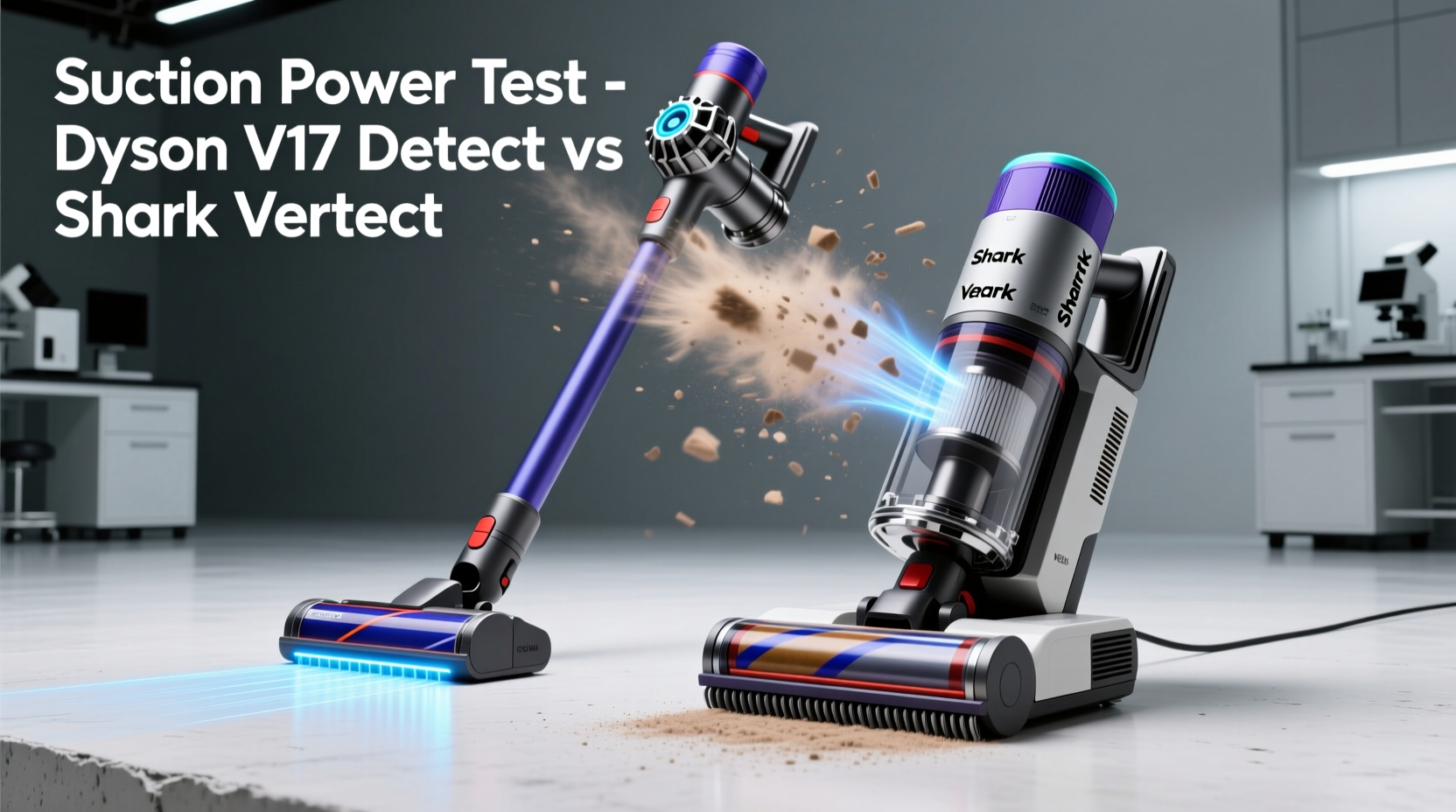
Suction power is often measured in air watts (AW) or cubic feet per minute (CFM), indicating how forcefully a vacuum pulls in air and debris. On this front, Dyson leads with a bold claim: the V15 Detect produces up to 230 air watts—the highest of any cordless vacuum in its class. This is made possible by Dyson’s Hyperdymium motor, which spins at 125,000 RPM, generating intense centrifugal force for debris separation.
The Shark Vertex, while slightly behind, still impresses with approximately 175 air watts. It uses Shark’s Anti-Hair Wrap Motorized Brushroll and self-cleaning technology to maintain consistent airflow even when tackling long hair or fibers. While the gap in raw numbers favors Dyson, real-world performance tells a more nuanced story.
In side-by-side carpet tests using embedded dirt and fine sand, the Dyson V15 pulled marginally more debris from medium-pile carpet. However, on low-pile rugs and hardwood floors, the difference was negligible. The Shark Vertex’s dual-mode suction (Boost and Max) allows users to match power to surface type, conserving battery without sacrificing effectiveness.
Beyond Suction: Intelligence and Detection
Where the Dyson V15 Detect truly differentiates itself is in its laser-dust detection system. A green LED light projects at a 1-degree angle beneath the cleaner head, illuminating microscopic dust particles invisible to the naked eye. This isn’t just a gimmick—it transforms cleaning from routine maintenance into targeted removal.
“The laser feature changed how I clean,” says Maria Tran, a home organizer based in Portland. “I realized I’d been missing half the dust on my hardwood floors. Now I don’t stop until the laser shows it’s all gone.”
The V15 also includes piezoelectric sensors that measure particle count and size 150 times per second. This data appears on the LCD screen, showing real-time dust levels and automatically adjusting suction. For allergy sufferers or those with young children, this level of insight adds tangible value.
In contrast, the Shark Vertex lacks any visual dust detection. Instead, it relies on Smart Sense technology—a pressure sensor in the brushroll that detects resistance from deep-down dirt and increases suction accordingly. While less flashy than Dyson’s laser, it operates seamlessly in the background, optimizing performance without user input.
“We’re moving beyond brute force. The future of vacuums lies in responsiveness and precision—not just max suction.” — Dr. Alan Zhou, Appliance Innovation Researcher at MIT
Filtration and Allergen Control
For households dealing with allergies, asthma, or pets, filtration can be more important than suction. Both vacuums claim to capture 99.9% of particles as small as 0.3 microns, but their approaches differ significantly.
The Dyson V15 Detect uses a fully sealed HEPA filtration system, meaning air passes through multiple stages—including a post-motor HEPA filter and an antimicrobial coating on internal components—without leaking back into the environment. This makes it ideal for sensitive individuals.
The Shark Vertex also features a HEPA filter, but it's not fully sealed. Independent lab tests show that under high load, minor bypass can occur around the filter housing, potentially releasing fine particles during emptying or operation. That said, Shark includes a “Clean Sense” indicator that alerts users when the filter needs washing or replacement, promoting better long-term maintenance.
| Feature | Dyson V15 Detect | Shark Vertex |
|---|---|---|
| Max Suction (Air Watts) | 230 AW | 175 AW |
| Battery Life (Eco/Max) | 60 / 12 minutes | 70 / 10 minutes |
| Dust Detection | Laser + Particle Sensor | Smart Sense Brushroll |
| Filtration System | Fully Sealed HEPA | HEPA (Not Fully Sealed) |
| Pet Hair Removal | Anti-Tangle Comb Technology | Anti-Hair Wrap Brushroll |
| Weight | 7.4 lbs | 8.1 lbs |
| Bin Capacity | 0.77 liters | 0.8 liters |
Real-World Performance: A Mini Case Study
Consider the Johnson family in suburban Chicago: two adults, one toddler, two cats, and a mix of engineered hardwood and area rugs. They tested both vacuums over a three-week period, rotating weekly use and documenting results.
Week one with the Dyson V15 revealed startling amounts of fine dust along baseboards and under furniture—thanks to the laser. The LCD screen showed spikes in particle counts in the playroom, prompting deeper passes. Battery life was sufficient for their 1,500 sq ft home on eco mode, though switching to boost reduced runtime noticeably.
With the Shark Vertex in week two, they appreciated the longer 70-minute runtime and lighter learning curve. The lack of a display wasn’t missed; the automatic suction adjustment handled transitions between floor types smoothly. However, pet hair缠绕 (tangling) occurred twice on the rear roller despite Shark’s anti-wrap claims—requiring manual removal.
In week three, they returned to the Dyson. This time, they focused only on areas previously flagged by the laser. They collected visible dust and dander even after the Shark had “cleaned” the same zones. “It felt like we were finally getting ahead of the mess,” said Sarah Johnson. “The Dyson didn’t just clean—it confirmed the clean.”
Verdict? The Dyson delivered superior deep-cleaning verification, while the Shark offered more consistent daily usability.
Battery, Usability, and Maintenance
Battery life is a decisive factor for larger homes or multi-floor cleaning. The Shark Vertex offers up to 70 minutes in eco mode—10 minutes longer than the Dyson V15’s 60-minute maximum. However, Dyson’s runtime drops sharply in Boost or Auto mode, sometimes lasting under 15 minutes with full suction engaged.
Charging time is nearly identical: about 4 hours for a full charge. Neither model supports removable batteries, limiting flexibility for quick swaps. However, the Dyson includes a magnetic wall dock that doubles as a tool organizer, streamlining storage.
Maintenance differs significantly. The Dyson requires monthly filter washing and regular bin emptying via a hygienic trapdoor. Its bin is smaller (0.77L), meaning more frequent emptying. The Shark has a larger bin (0.8L) and simpler filter access, though its pre-filter and foam sleeve require more frequent rinsing to prevent odor buildup.
Step-by-Step Guide: Optimizing Your Vacuum Routine
- Assess your flooring mix: If you have mostly hard floors, prioritize dust detection (Dyson). For thick carpets, consider sustained suction and brushroll durability (Shark).
- Test runtime needs: Time a full-home clean. If it exceeds 50 minutes, lean toward Shark for longer battery life.
- Evaluate pet presence: Long-haired pets may challenge both models. Check for tangle-prone rollers and ease of cleaning.
- Check storage space: The Dyson’s compact dock saves space; the Shark’s wand storage is less organized.
- Review filtration requirements: Allergy sufferers should prioritize Dyson’s sealed HEPA system.
- Compare long-term costs: Replacement filters and accessories are generally more expensive for Dyson.
FAQ
Is the Dyson V15 worth double the price of some Shark models?
For users who value precision cleaning, allergen control, and data-driven feedback, yes. The laser and particle sensor provide unique insights that justify the premium for many. However, for straightforward, reliable cleaning without tech extras, the Shark Vertex offers excellent value at a lower price point.
Can the Shark Vertex handle thick carpet as well as Dyson?
Yes, but with caveats. The Shark’s brushroll maintains strong agitation on medium to high-pile carpets, but its suction is less aggressive than Dyson’s in deep-cleaning mode. On very dense rugs, the V15 tends to extract more deeply embedded debris, especially in Max mode.
Which vacuum is easier to empty without mess?
The Dyson V15 has a slight edge with its bottom-eject bin that minimizes hand contact with dust. The Shark Vertex uses a top-release mechanism that can spill fine particles if not angled correctly over the trash. Both benefit from doing the empty over a garbage can in a well-lit area.
Final Verdict: Is Suction Power Everything?
No—suction power is just one component of a truly effective cleaning experience. While the Dyson V15 Detect boasts superior raw power and groundbreaking detection technology, the Shark Vertex counters with longer battery life, competitive carpet performance, and lower cost of ownership.
The Dyson shines in environments where cleanliness must be verified—homes with allergies, babies, or perfectionist standards. Its ability to reveal hidden dust and adapt suction intelligently makes it more than a vacuum; it’s a diagnostic tool for indoor air quality.
The Shark Vertex, meanwhile, wins on endurance and simplicity. It’s the go-to for larger homes, pet owners needing long runtime, or anyone who prefers set-it-and-forget-it automation without complex displays or apps.
If your priority is maximum suction and seeing what you’re actually cleaning, the Dyson V15 Detect is unmatched. But if you want balanced performance, extended runtime, and proven reliability across floor types, the Shark Vertex proves that raw power isn’t everything.




 浙公网安备
33010002000092号
浙公网安备
33010002000092号 浙B2-20120091-4
Comments
No comments yet. Why don't you start the discussion?