
The photography world is buzzing with a new question: can wearable tech like the e02 smart glasses genuinely replace professional cameras? With advancements in AI-powered optics and discreet design, devices like the e02—developed by companies such as XREAL (formerly Nreal)—are being marketed as tools for hands-free visual capture. But are photographers actually abandoning DSLRs and mirrorless systems for eyewear that doubles as a camera? The answer isn’t simple. While some creators are experimenting with smart glasses for candid storytelling, most professionals still rely on traditional gear for critical work. This article dives into the realities behind the trend, comparing technical specs, creative flexibility, and practical use cases.
Understanding the e02 Smart Glasses
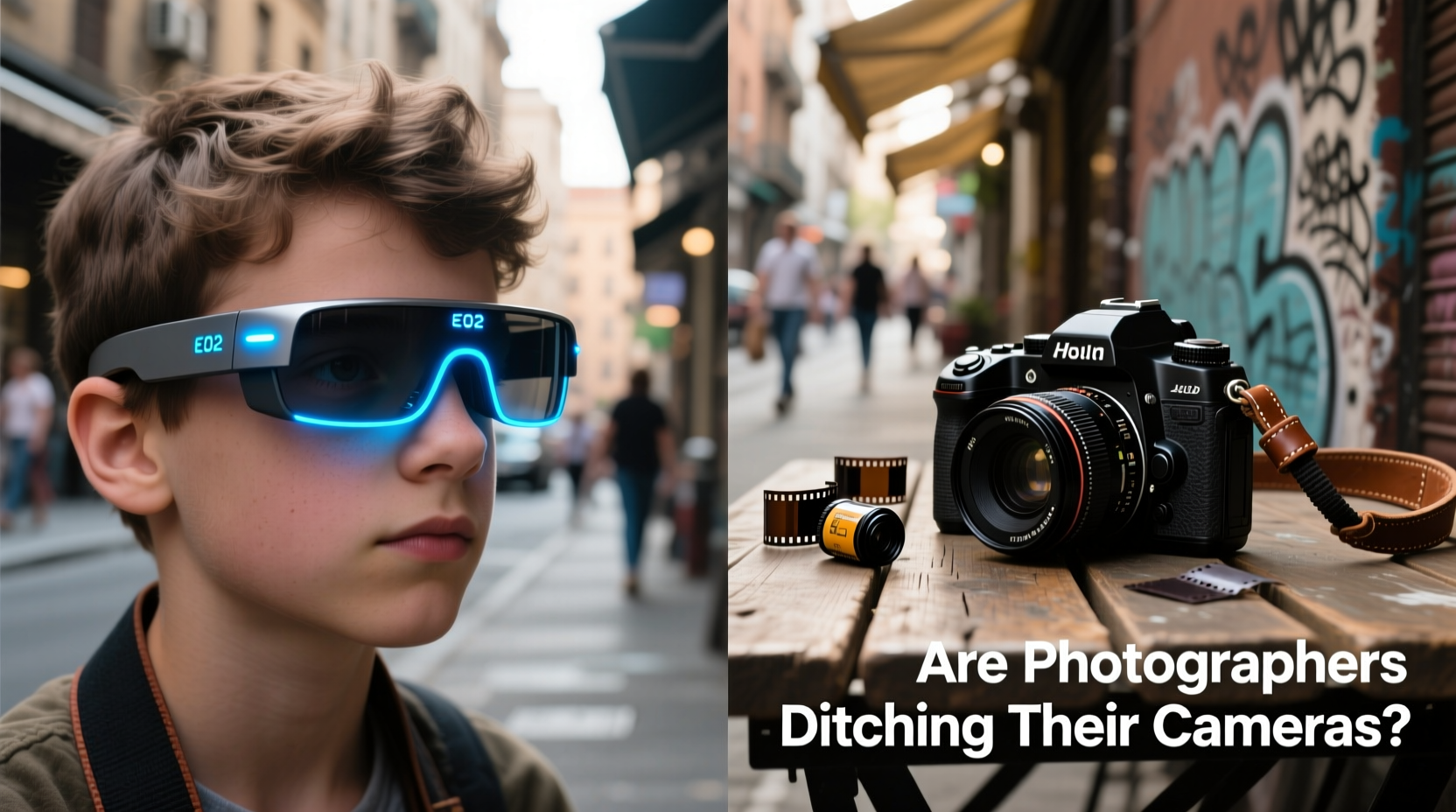
The e02 smart glasses represent a leap in wearable imaging technology. Designed primarily for augmented reality (AR) experiences, they integrate dual 5-megapixel cameras capable of recording 1080p video and capturing stills. Their standout feature is seamless integration with smartphones via USB-C, allowing users to record what they see in real time—ideal for vlogging, field documentation, or immersive journalism. The glasses are lightweight, unobtrusive, and support spatial audio, enhancing the authenticity of first-person narratives.
However, they aren’t built for high-resolution photography. There’s no optical zoom, limited dynamic range, and fixed aperture settings. Image stabilization is digital, not mechanical, which introduces artifacts in motion-heavy scenarios. These limitations place them outside the realm of studio, landscape, or sports photography where precision matters.
Camera Systems: Still the Gold Standard
Digital cameras—especially full-frame mirrorless models from Sony, Canon, and Nikon—remain unmatched in image fidelity. They offer interchangeable lenses, RAW file output, advanced autofocus systems, and customizable manual controls. A typical professional camera shoots at 20–60 megapixels, supports 4K or even 8K video, and performs exceptionally in low light thanks to large sensors and wide apertures.
Unlike smart glasses, cameras allow deliberate composition. Photographers control depth of field, shutter speed, and white balance with tactile dials and responsive interfaces. This level of creative agency is essential for portraiture, product photography, and fine art—genres where intentionality defines success.
“Photography isn’t just about capturing moments—it’s about shaping them. No wearable today gives you that control.” — Lena Torres, Award-Winning Photojournalist
Side-by-Side Comparison: e02 vs Mirrorless Camera
| Feature | e02 Smart Glasses | Professional Mirrorless (e.g., Sony A7 IV) |
|---|---|---|
| Sensor Size | 1/4-inch CMOS | Full-frame (35.6 x 23.8 mm) |
| Resolution | 1080p video / 5MP photos | 4K video / 33MP photos |
| Lens Flexibility | Fixed focal length | Interchangeable lenses |
| Low-Light Performance | Poor; noisy in dim conditions | Excellent; high ISO sensitivity |
| Battery Life | ~1.5 hours continuous recording | ~2.5 hours with spare batteries |
| Use Case Fit | Vlogs, AR apps, quick clips | Studio, events, wildlife, editorial |
Real-World Adoption: Who’s Actually Switching?
A growing number of travel bloggers and urban explorers are adopting e02 smart glasses—not as replacements, but as supplements. For instance, freelance documentarian Marcus Lin used the e02 during a week-long street food tour in Bangkok. He wore the glasses while navigating crowded markets, capturing authentic reactions without raising a camera. “It let me be present,” he said. “People didn’t pose or look away. I got raw, unfiltered moments you’d miss with a DSLR.”
Still, when it came time to shoot hero images for his client, Marcus switched to his Sony A7R V. The final deliverables required high-resolution stills with shallow depth of field—something the e02 couldn’t achieve. His workflow now combines both: smart glasses for background footage and candid audio, and a mirrorless camera for polished visuals.
This hybrid approach reflects broader industry trends. According to a 2024 survey by Imaging Insights, only 7% of professional photographers have fully replaced their primary camera with smart glasses. However, 38% use wearables occasionally for behind-the-scenes content or safety-critical environments like construction zones or medical facilities.
Practical Guide: When to Use Each Tool
Choosing between the e02 and a traditional camera depends on your goals. Here’s a step-by-step decision framework:
- Define your objective: Are you telling a story from a personal perspective, or delivering commercial-grade imagery?
- Evaluate lighting conditions: Low-light or high-contrast scenes favor cameras with large sensors.
- Assess mobility needs: If you’re hiking, biking, or moving through tight spaces, smart glasses offer hands-free operation.
- Consider audience expectations: Editorial clients expect high-res files; social media audiences may value immediacy over polish.
- Test both tools: Run a side-by-side trial in your typical shooting environment before committing.
Checklist: Is the e02 Right for Your Workflow?
- ✅ Need discreet, first-person video capture?
- ✅ Prioritizing mobility over resolution?
- ✅ Working in fast-paced or interactive environments?
- ✅ Comfortable editing lower-quality footage?
- ✅ Using smartphone-based post-production tools?
- ❌ Require RAW files or professional color grading?
- ❌ Shooting in variable or challenging lighting?
- ❌ Delivering print or large-format displays?
If most checked items are positive, the e02 could enhance your process. If negatives dominate, stick with a dedicated camera system.
FAQ: Common Questions About e02 vs Cameras
Can the e02 replace my DSLR for travel photography?
Not entirely. While the e02 excels at capturing immersive video logs and spontaneous moments, it lacks the resolution, zoom, and dynamic range needed for detailed landscapes or portraits. Use it alongside your DSLR for complementary content.
Are smart glasses allowed in museums or public spaces?
Policies vary widely. Some institutions ban all recording devices, including wearables. Always check local rules and respect privacy norms. The discreet nature of smart glasses can make them feel intrusive, even when permitted.
Do e02 glasses support external microphones?
No. Audio is captured through built-in mics, limiting sound quality in noisy environments. For professional audio, pair the glasses with a separate recorder and sync footage in post.
Conclusion: Evolution, Not Replacement
The idea that photographers are ditching cameras for e02 smart glasses is more headline hype than reality. What’s actually happening is an evolution in how visual stories are told. Smart glasses introduce a new perspective—one that’s intimate, immediate, and human-centered. But they don’t replicate the precision, power, and creative control of dedicated photographic equipment.
The future belongs to adaptable creators who leverage both tools: using cameras for crafted imagery and smart glasses for authentic, in-the-moment documentation. Rather than choosing one over the other, the smartest photographers are learning when each tool shines—and how to combine them for richer, more layered storytelling.




 浙公网安备
33010002000092号
浙公网安备
33010002000092号 浙B2-20120091-4
Comments
No comments yet. Why don't you start the discussion?