
Crocheting isn’t just for blankets and scarves—your four-legged friend deserves handmade love too. With a few basic stitches and some soft yarn, you can create engaging, safe, and durable toys that keep your dog entertained while showcasing your growing skills. Best of all, these beginner-friendly crochet dog toy patterns use simple techniques, require minimal materials, and offer instant gratification. Whether you're new to crocheting or looking for a quick weekend project, these designs are both practical and enjoyable.
Why Crochet Dog Toys Are Perfect for Beginners
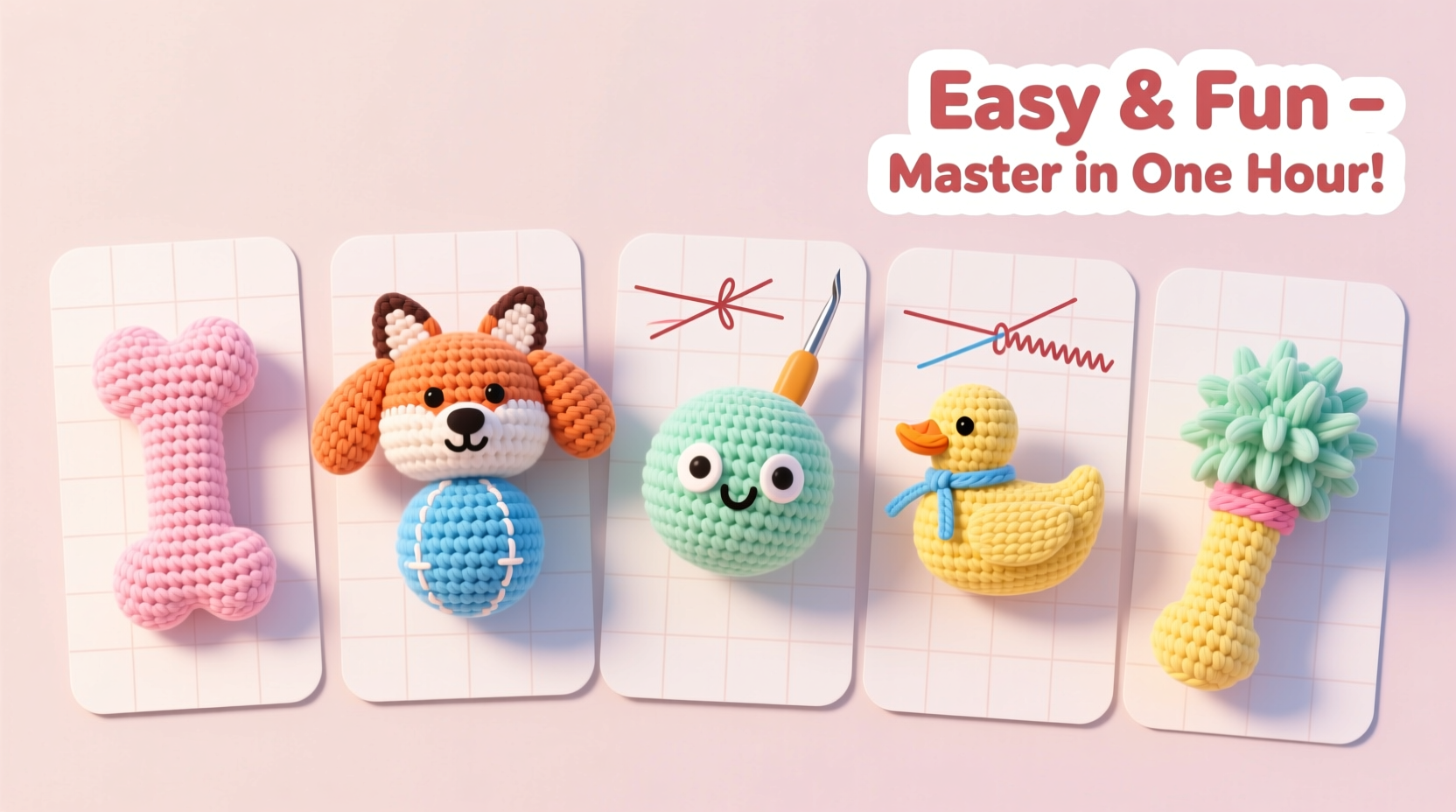
Many new crocheters hesitate when choosing their first projects, worried about complexity or wasted effort. Dog toys eliminate those concerns. They don’t need to be perfectly symmetrical or fashionably precise—dogs appreciate texture, movement, and squeakiness, not perfection. This freedom allows beginners to practice foundational stitches like the single crochet, chain, and slip stitch without pressure.
Additionally, most dog toy patterns are worked in the round, minimizing seaming and advanced shaping. Projects finish quickly, often in under an hour, providing immediate satisfaction and motivation to continue learning. Plus, seeing your pet enjoy something you made adds emotional value that few crafts can match.
Essential Supplies and Safety Tips
Before diving into patterns, gather the right tools. The last thing you want is your pup ingesting unsafe materials. Stick to non-toxic, tightly woven components that can withstand enthusiastic chewing—at least moderately.
- Size H/5.0mm crochet hook (ideal for worsted weight yarn)
- Worsted weight 100% acrylic yarn (avoid wool if your dog tends to unravel fibers)
- Stitch markers (helpful for tracking rounds)
- Darning needle (for weaving in ends securely)
- Plastic bottle caps or jingle bells (optional, for noise-making elements)
- Toy stuffing (polyester fiberfill or cut-up fabric strips)
“Always prioritize safety over aesthetics. Secure all ends tightly, avoid small detachable parts, and supervise playtime.” — Rachel Nguyen, Pet Craft Safety Advocate
Never use buttons, beads, or loose ribbons. Even sturdy dogs can pull things apart, and swallowed pieces pose choking hazards. If you include sound elements like bells, encase them completely within layers of stitching or use sealed plastic caps from water bottles, which rattle when squeezed.
Step-by-Step: The Classic Crochet Bone Toy
The bone shape is timeless, ergonomic for fetching, and surprisingly simple to make. This pattern uses basic increases and decreases to form the rounded ends and narrow middle.
- Chain 6, join with a slip stitch to form a ring.
- Round 1: Work 2 single crochet (sc) in each chain (12 sc total).
- Round 2: *2 sc in next stitch, 1 sc in next*; repeat around (18 sc).
- Rounds 3–5: Sc in each stitch around (18 sc per round).
- Round 6: *2 sc in next stitch, 1 sc in next 2*; repeat around (24 sc).
- Rounds 7–9: Sc in each stitch (24 sc).
- Round 10: *Sc in next 2, decrease over next 2 stitches*; repeat around (18 sc).
- Rounds 11–12: Sc in each stitch (18 sc).
- Fasten off, leaving a long tail. Use darning needle to close opening, then stuff firmly.
- Sew ends closed neatly. Weave in all tails securely.
For extra durability, double up the yarn or add a second layer by crocheting a slightly larger outer shell and sewing it around the stuffed inner piece.
Three More Fun & Easy Patterns to Try
Variety keeps both you and your dog engaged. Rotate toys weekly to maintain novelty and prevent boredom.
1. The Tug Rope (Single-Strand Braid)
Create three equal lengths of twisted yarn (about 2 feet each). Braid them tightly and knot both ends. Then, single crochet over the braided core for grip and reinforcement. This chew-resistant design satisfies strong pullers and doubles as a teeth-cleaning tool.
2. The Squeaky Ball (with Bottle Cap)
Start with a magic ring. Increase gradually to form a sphere, incorporating a clean, dry plastic bottle cap inside before closing. The cap makes a crinkly sound when squeezed. Aim for a final diameter of 2.5–3 inches—large enough not to swallow, small enough to toss.
3. The Simple Donut Ring
Work in continuous rounds starting from a center ring. After forming a flat circle, stop increasing and work even rounds until the piece begins to curve upward. Join edges seamlessly or sew together. This flexible ring floats well and is ideal for water-loving dogs.
| Pattern | Difficulty | Avg. Time | Best For |
|---|---|---|---|
| Bone Toy | Easy | 45 min | Fetch lovers |
| Tug Rope | Easy-Moderate | 60 min | Strong chewers |
| Squeaky Ball | Easy | 30 min | Dogs who love noise |
| Donut Ring | Easy | 40 min | Waterplay or tugging |
Checklist: Before You Let Your Dog Play
- ✅ All yarn ends are woven in and secured with knots
- ✅ No loose parts or frayed edges
- ✅ Toy has been lightly washed and dried to check integrity
- ✅ You’ve inspected for weak seams or thin walls
- ✅ You’ll supervise initial play sessions
Real Example: How Mia Started Small and Built Confidence
Mia had never held a crochet hook before January. By March, she’d made her first dog toy—a lopsided bone for her terrier mix, Buddy. “I followed a free online tutorial but messed up the stuffing,” she recalls. “It looked like a deflated football.” But Buddy went wild for it. That moment sparked Mia’s passion. She joined a local crafting group, refined her tension, and now hosts monthly “Paws & Yarn” workshops where pet owners make toys together. Her biggest lesson? “Dogs don’t care about gauge. They care about love stitched in.”
Frequently Asked Questions
Can I use cotton yarn for dog toys?
Cotton is softer and less stretchy than acrylic, making it more prone to breaking under aggressive chewing. While fine for light-play dogs, acrylic or blends with nylon are stronger and more resilient. If using cotton, reinforce seams and avoid thin strands.
How do I know if my dog likes the toy?
Watch for sustained interest: carrying it around, shaking it, or bringing it to you for play. Avoid toys that are immediately shredded in under a minute unless used under direct supervision. Rotate toys every few days to renew excitement.
Are crocheted toys safe for heavy chewers?
Handmade toys are generally best for moderate chewers. For power chewers, consider crocheting over a sturdy base (like a rubber ring) or treat them as supervised play items only. Never leave a dog unattended with any handcrafted toy.
Final Thoughts and Next Steps
Crocheting dog toys is more than a craft—it’s a gesture of affection that strengthens the bond between you and your pet. These beginner patterns prove that simplicity doesn’t mean lack of impact. Each loop and stitch contributes to safer, more joyful playtime. As your confidence grows, experiment with colors, textures, and shapes. Add gentle loops for easier grabbing or try textured stitches like the popcorn or bobble for added tactile appeal.
Most importantly, celebrate progress over perfection. A slightly uneven seam means nothing when your dog wags its tail with glee. Start with one pattern this week. Finish it. Watch your dog’s reaction. Then make another.




 浙公网安备
33010002000092号
浙公网安备
33010002000092号 浙B2-20120091-4
Comments
No comments yet. Why don't you start the discussion?