
Jacks is more than just a nostalgic game from the past—it’s a dynamic, engaging activity that helps children develop hand-eye coordination, fine motor skills, and concentration. With its simple rules and minimal equipment, jacks offers endless fun for kids ages 5 and up. Whether you're a parent, teacher, or caregiver, teaching jacks can be both rewarding and surprisingly easy when broken down into manageable steps. This guide walks you through everything you need to know to introduce kids to jacks in a way that’s educational, enjoyable, and full of laughter.
Why Teaching Kids to Play Jacks Matters
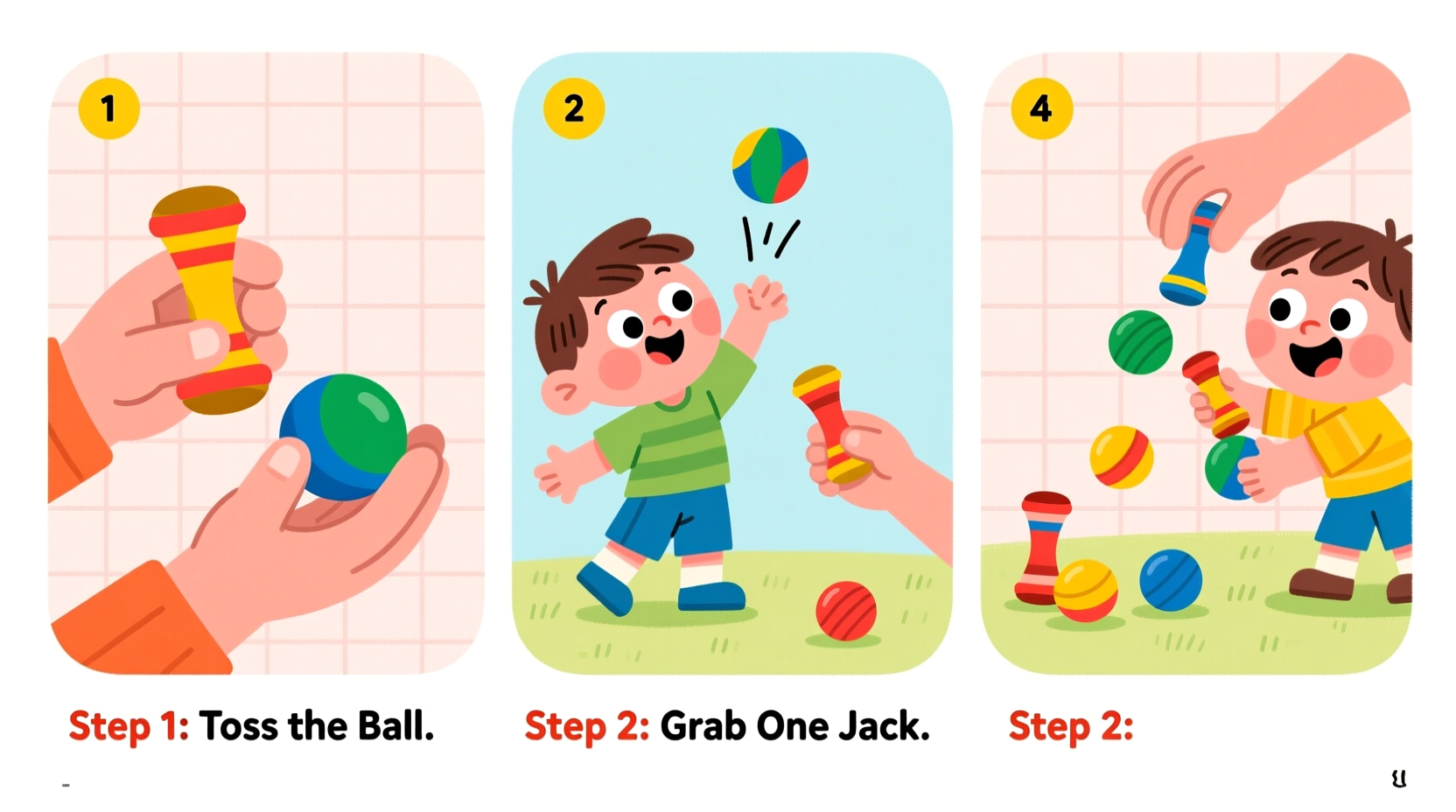
Before diving into the mechanics, it's worth understanding why this classic game still holds value today. In an age dominated by screens, jacks provides a tactile, screen-free experience that stimulates physical and cognitive development. The quick movements required to pick up metal pieces while catching a bouncing ball enhance neural connections related to timing and spatial awareness.
According to pediatric occupational therapists, games like jacks support bilateral coordination—the ability to use both hands together efficiently—and improve dexterity critical for writing and daily tasks. As Dr. Lena Peterson, a child development specialist, explains:
“Simple physical games like jacks activate multiple areas of the brain simultaneously. They’re not just play—they’re developmental tools in disguise.” — Dr. Lena Peterson, Pediatric Development Expert
What You’ll Need to Get Started
One of the best things about jacks is that it requires very few supplies. Here’s what you’ll need:
- A set of jacks: Typically includes ten small metal star-shaped pieces (though some sets have six).
- A bouncy rubber ball: Preferably one that fits comfortably in a child’s palm and rebounds predictably.
- A flat, hard surface: A wooden floor, tile, or concrete patio works best. Carpet absorbs too much bounce.
- Patience and encouragement: Especially during early attempts!
Step-by-Step Guide to Learning Jacks
Teaching jacks should feel like a progression, not a race. Break the process into stages so kids build confidence with each success. Follow this timeline over several short sessions (10–15 minutes each) to keep energy high and frustration low.
- Master the bounce: Start by having the child practice bouncing the ball once and catching it without doing anything else. Focus on consistent height and clean catches.
- Add the scoop: Once comfortable, introduce picking up one jack *after* the ball is caught. No rush—just grab one piece after securing the catch.
- Combine actions: Now try bouncing the ball, picking up one jack mid-air, then catching the ball—all in one motion. Begin slowly.
- Increase quantity: Gradually work up to picking up two, three, or more jacks at once as skill improves.
- Introduce basic levels: Move into standard gameplay sequences like “Onesies,” “Twosies,” etc., where players must collect specific numbers per turn.
It’s normal for young learners to drop the ball or miss jacks frequently. Celebrate effort, not perfection. Use phrases like, “Great try!” or “You were so close that time!” to maintain motivation.
Common Challenges and How to Overcome Them
Kids may face predictable hurdles when learning jacks. Recognizing these early allows you to adapt your teaching approach.
| Challenge | Why It Happens | Solution |
|---|---|---|
| Ball bounces unpredictably | Uneven surface or improper grip | Switch to a smoother floor; show how to hold the ball between fingertips, not palm |
| Can’t pick up jacks fast enough | Underdeveloped fine motor control | Practice finger isolation exercises (e.g., pinching clothespins) off-game |
| Loses interest quickly | Task feels too hard or repetitive | Turn it into a game: “Can you beat your record?” or add silly sound effects |
| Frustration after repeated failure | High expectations or comparison to others | Break steps into micro-tasks; praise persistence over outcome |
Mini Case Study: Emma Learns Jacks at Age 6
Emma, a first-grader with average coordination, struggled at first when her after-school program introduced jacks. She dropped the ball constantly and couldn’t scoop even one jack before the bounce. Her counselor, Mr. Diaz, adjusted the method: instead of starting with real jacks, he used large foam cubes and a slow-rebound ball. For two weeks, Emma practiced the sequence—bounce, grab, catch—on this modified setup. Within three weeks, she transitioned to real equipment and mastered “Onesies” and “Twosies.” Today, she teaches new kids in the group. The key? Scaffolding difficulty to match her pace.
Fun Variations to Keep Kids Engaged
Once the basics are down, spice things up with creative twists that make practice exciting:
- Color Challenge: Assign point values to different colored jacks. Kids aim for high scores based on color combos.
- Story Mode: Create a narrative—e.g., “You’re a dragon collecting treasure!”—where each level unlocks part of a story.
- Speed Round: Set a timer for 60 seconds and see how many jacks they can safely collect with clean bounces.
- Team Tag Jacks: Two players alternate turns; if one fails, the next gets bonus points for completing the same round.
Do’s and Don’ts of Teaching Jacks
| Do | Don't |
|---|---|
| Start on a smooth, non-distracting surface | Begin on thick carpet or outdoors with wind interference |
| Use verbal cues like “Bounce… grab… catch!” | Overload instructions with complex terminology |
| Celebrate small wins (“You picked up two jacks! That’s progress!”) | Compare them to older or more skilled players |
| Keep sessions under 15 minutes for beginners | Push through fatigue or frustration |
| Play alongside them to model technique | Take over or do it for them repeatedly |
FAQ: Common Questions About Teaching Kids Jacks
At what age can kids start learning jacks?
Most children can begin around age 5 or 6, once they’ve developed basic hand-eye coordination and can follow multi-step directions. Younger kids might enjoy simplified versions using larger objects and softer balls.
My child keeps dropping the ball—how can I help?
Focus first on mastering the bounce-and-catch without any jacks involved. Then, separate the motions: bounce, catch, then pick up a jack. Gradually merge the actions. Also, check the ball size—too big or too small makes control harder.
Are there safety concerns with playing jacks?
The main risk is tripping over scattered jacks or stepping on them. Always play in a clear area and supervise younger children. Avoid letting kids put jacks in their mouths due to choking hazards.
Final Tips Checklist
Before you begin your next session, review this quick checklist to ensure success:
- ✅ Choose a flat, hard surface (wood, tile, pavement)
- ✅ Use a properly sized rubber ball (about 1.5 inches in diameter)
- ✅ Start with just one jack to build confidence
- ✅ Break the bounce-grab-catch motion into separate steps at first
- ✅ Keep sessions short and positive
- ✅ Introduce fun variations once basics are learned
- ✅ Store jacks in a small pouch to avoid loss
Conclusion: Let the Bouncing Begin
Teaching kids to play jacks isn’t about creating champions—it’s about sparking joy, building foundational skills, and sharing a timeless tradition. With patience, structure, and a playful mindset, any adult can guide a child through this delightful game. The rhythmic bounce of the ball, the clink of metal stars, the proud smile after a successful round—these are the moments that turn simple play into lasting memories.




 浙公网安备
33010002000092号
浙公网安备
33010002000092号 浙B2-20120091-4
Comments
No comments yet. Why don't you start the discussion?