
Bag pendants are more than just decorative accents—they’re personal statements that elevate your accessories with charm, identity, and flair. Whether it’s a minimalist charm, a bold logo tag, or a sentimental keepsake, attaching it securely to your handbag chain ensures both style and peace of mind. Yet many people struggle with flimsy attachments, mismatched hardware, or fear of damaging delicate chains. The good news? With the right tools and techniques, you can fasten a pendant safely and stylishly in minutes—no professional help required.
This guide walks you through reliable, tested methods for connecting pendants to various types of chains, from stainless steel to plated links and leather straps with metal connectors. You’ll learn which tools work best, how to avoid common mistakes, and how to maintain durability over time.
Understanding Chain Types and Pendant Compatibility
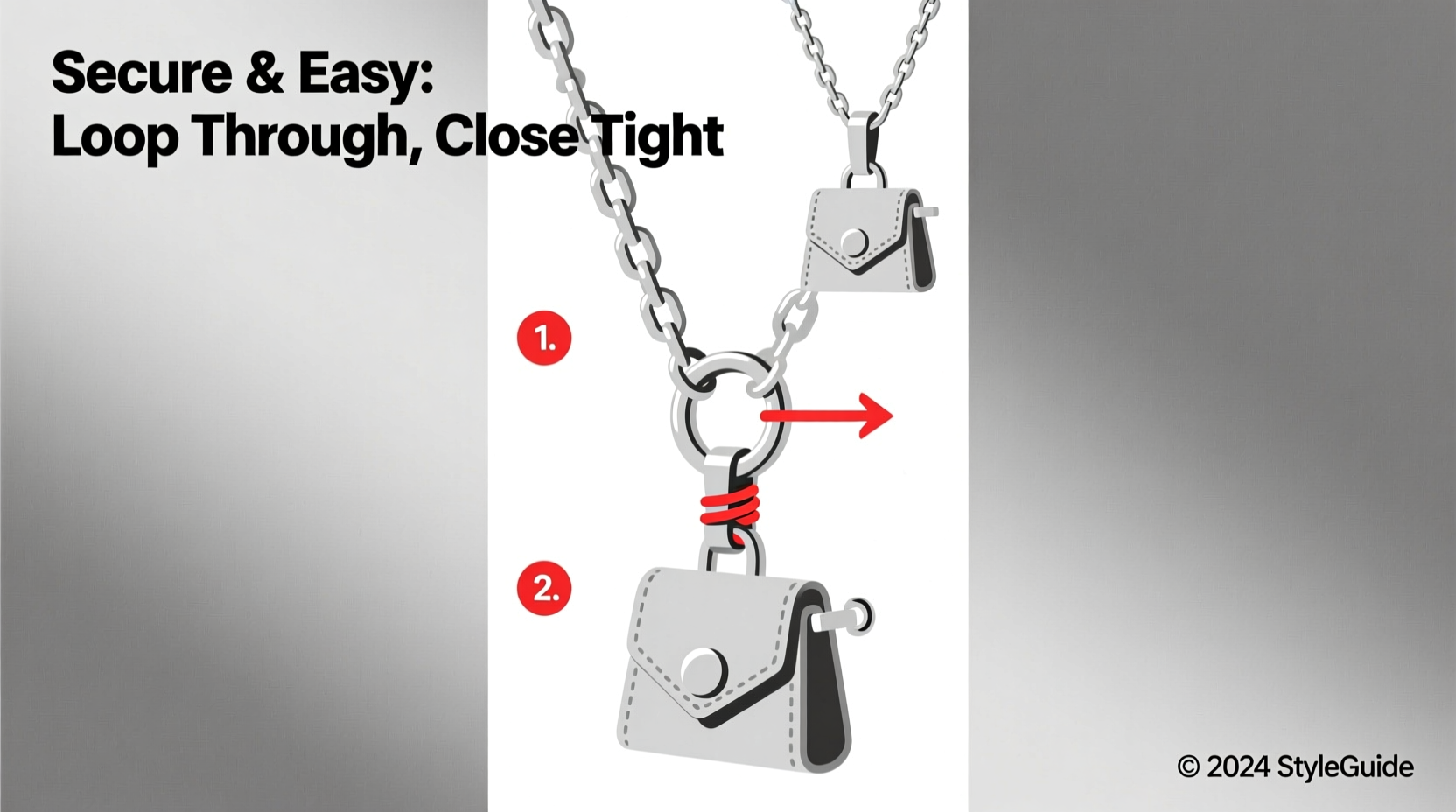
Not all chains are created equal. The method you choose depends on the material, thickness, and construction of your bag’s chain. Common types include:
- Stainless Steel Chains: Durable and corrosion-resistant, ideal for permanent or semi-permanent attachments.
- Brass or Alloy Chains: Often plated; softer and more prone to bending, so gentler attachment methods are recommended.
- Leather Straps with Metal Connectors: These have built-in rings or loops where pendants can be easily added.
- Fold-over or Toggle Clasps: Found on crossbody bags, these allow quick access for adding charms via jump rings.
Pendants also vary in design. Some come with pre-attached loops or bails (the small connector at the top), while others may require modification. Always check whether the pendant has an opening large enough to fit over the chain or if it needs a separate connector.
Step-by-Step Guide: Securely Attaching a Pendant to Any Chain
Follow this five-step process to ensure your pendant stays put without damaging your bag’s hardware.
- Inspect the Chain and Pendant
Check for weak links, sharp edges, or signs of wear. Ensure the pendant’s loop or bail is sturdy and wide enough to accommodate your chosen attachment method. - Gather Your Tools
You’ll need:- Jump rings or split rings (3–5mm size)
- Chain-nose or round-nose pliers
- Micro lobster clasp (optional, for frequent swapping)
- Small screwdriver (if working with fold-over clasps)
- Select the Attachment Point
Choose a central link near the shoulder drop for visibility and balance. Avoid attaching directly to moving parts like hinges or zippers. - Open the Jump Ring
Hold the ring with two pairs of pliers. Twist one side sideways—do not pull apart, as this distorts the shape. Slide the pendant onto the ring, then hook the ring through the chosen chain link. - Close and Secure
Twist the ends back into alignment and press gently until fully closed. Give the pendant a light tug to test stability.
This method works across nearly all chain types and allows for future removal without damage.
Alternative Methods for Different Needs
Depending on how often you change pendants or the design of your bag, alternative attachment styles may suit better.
| Method | Best For | Pros | Cons |
|---|---|---|---|
| Jump Rings | Daily wear, permanent styling | Inexpensive, discreet, durable | Requires pliers; not ideal for frequent changes |
| Split Rings | Heavier pendants, keyring-style use | High security, resists accidental opening | Larger profile; less elegant |
| Micro Lobster Clasps | Rotating charms, seasonal swaps | Easy on/off, sleek finish | Slightly higher cost; smaller latch can wear over time |
| Spring Ring Clips | Delicate chains, lightweight tags | Minimal force needed; gentle on links | Less secure under heavy strain |
For those who love rotating seasonal pendants, investing in a set of micro lobster-clipped charms lets you switch styles in seconds—perfect for holidays, birthdays, or mood-based accessorizing.
Expert Insight: Durability Meets Design
“Many customers ruin beautiful chains by forcing open jump rings incorrectly. A proper twist—not pull—preserves the integrity of both the ring and the chain.” — Lena Torres, Jewelry Designer & Accessory Consultant
Torres emphasizes that most failures occur due to improper handling rather than poor materials. She recommends using nylon-jaw pliers when working with plated or delicate chains to prevent scratching. “Even a tiny nick can accelerate tarnishing,” she adds.
Mini Case Study: Revamping a Classic Tote
Sophie, a marketing executive in Chicago, owns a black leather tote with a gold-toned chain strap. While functional, she found it too plain for client meetings. She purchased a custom initial pendant but hesitated to attach it, fearing damage.
After researching secure methods, she opted for a 4mm gold-filled jump ring and used chain-nose pliers to attach the pendant mid-chain. The result was subtle yet personalized. Over six months of daily use, the pendant remained secure, and no wear appeared on the chain. Sophie now rotates pendants seasonally using a second jump ring, creating fresh looks without compromising durability.
Essential Checklist Before You Begin
- ✔ Confirm pendant has a loop or bail
- ✔ Match metal tones (e.g., gold pendant with gold chain)
- ✔ Choose appropriate ring size (3–5mm typical)
- ✔ Use proper pliers—avoid household tools that may slip
- ✔ Test attachment strength before regular use
- ✔ Clean chain and pendant before assembly to remove residue
Common Mistakes to Avoid
Even simple tasks can go wrong without attention to detail. Here are frequent errors and how to prevent them:
- Prying Jump Rings Open: Pulling them apart weakens the metal and creates gaps. Always twist open laterally.
- Using Oversized Rings: Large connectors look bulky and can snag on clothing or furniture.
- Ignoring Weight Limits: Heavy pendants strain thin chains. If the charm feels substantial, reinforce with a split ring or limit wear to sturdier bags.
- Mixing Metals: Silver pendant on a gold chain can look mismatched unless intentionally styled. When in doubt, match finishes.
FAQ
Can I attach a pendant without tools?
Yes, if your chain has an open clasp or large link, you can thread a pendant with a built-in loop directly on. However, for long-term security, basic tools like pliers significantly improve reliability.
Will attaching a pendant void my bag’s warranty?
Most manufacturers do not cover accessory modifications under warranty. However, non-invasive attachments (like jump rings on existing links) typically don’t constitute structural alteration and are unlikely to cause issues unless damage occurs during installation.
How do I clean a pendant once it’s attached?
Clean gently with a soft cloth and mild soap solution. Avoid submerging the connection point. For metal care, use a polishing cloth specific to the metal type (e.g., silver or gold) and dry thoroughly.
Conclusion: Personalize with Confidence
Attaching a pendant to your bag chain isn’t just about decoration—it’s about ownership, expression, and attention to detail. With the right approach, you can enhance your favorite accessory safely and stylishly, turning a functional item into a signature piece. Whether you prefer timeless elegance or playful rotation, the methods outlined here ensure your pendant stays secure through daily commutes, weekend outings, and everything in between.




 浙公网安备
33010002000092号
浙公网安备
33010002000092号 浙B2-20120091-4
Comments
No comments yet. Why don't you start the discussion?