
Daniel Wellington watches are known for their minimalist design and timeless elegance. A key feature that enhances their versatility is the interchangeable strap system. Whether you're switching from a leather band for a formal event or a NATO strap for a weekend adventure, changing the strap is simple—once you know how. With the right tools and technique, you can safely swap straps at home without damaging your timepiece. This guide walks you through secure, reliable methods to do it yourself with confidence.
Why Changing Your Watch Strap Matters
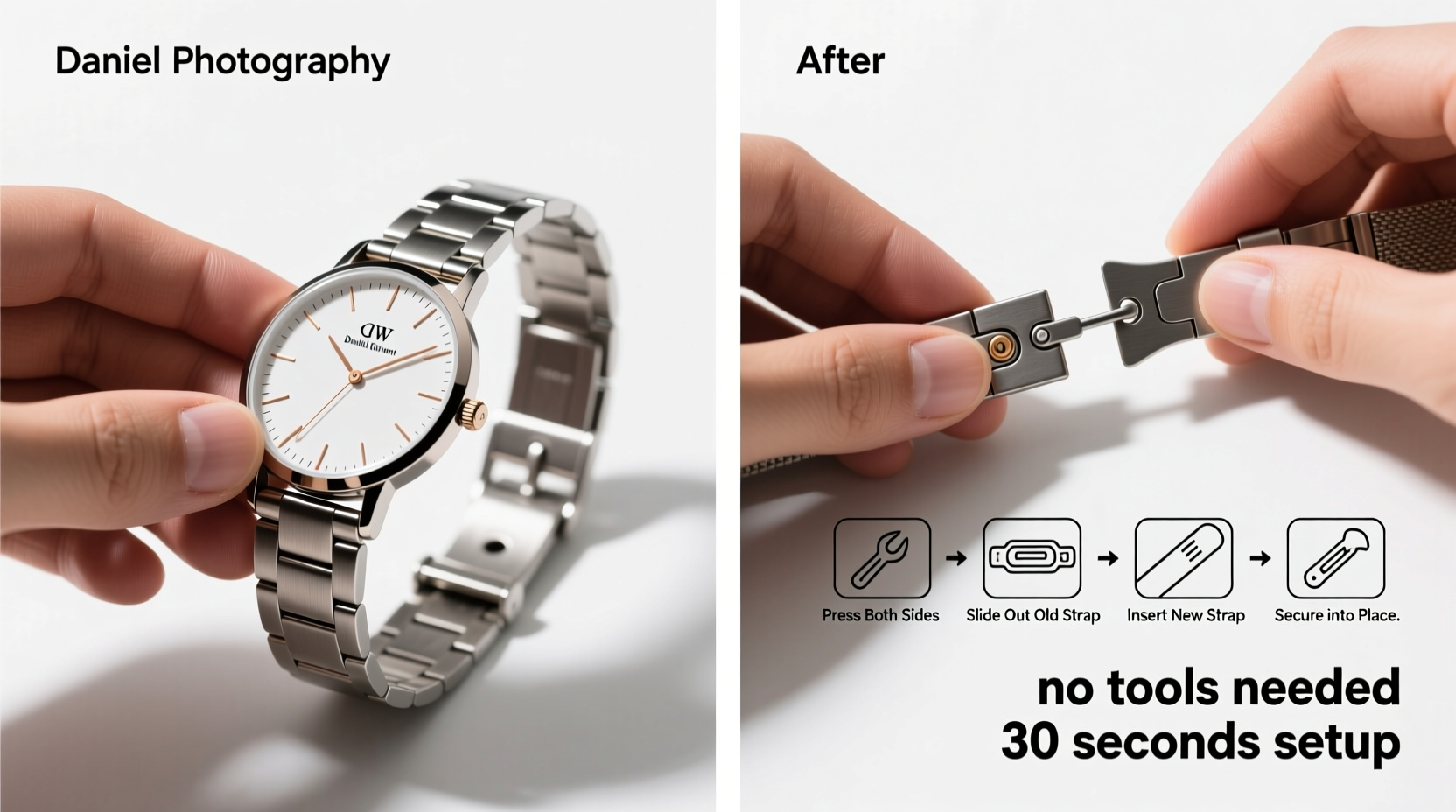
The ability to change your watch strap isn’t just about style—it’s about functionality and longevity. Wearing the same strap daily leads to wear, sweat buildup, and material fatigue. Rotating between multiple straps extends the life of each one and allows you to match your watch to your outfit, occasion, or mood. Daniel Wellington designs its watches with spring bars, making them compatible with any 18mm or 20mm strap (depending on model), giving you endless customization options.
“Interchangeable straps transform a single watch into multiple accessories. It’s one of the smartest ways to maximize value and personalization.” — Lena Torres, Watch Stylist & Accessory Consultant
Tools You’ll Need for a Safe Strap Change
While it’s possible to change a strap using improvised tools like paperclips or fingernails, doing so risks scratching the case or damaging the spring bars. For a secure and scratch-free process, use proper tools:
- Spring bar removal tool – Specifically designed to push out spring bars without slipping.
- Small flathead screwdriver (backup option) – Only if you’re careful and have no other choice.
- Clean microfiber cloth – To place the watch on and prevent surface scratches.
- New strap with correct lug width – Confirm whether your DW uses 18mm or 20mm (common sizes: Classic Petite 16mm, others typically 18mm or 20mm).
Step-by-Step Guide to Removing the Old Strap
Follow this sequence to remove the existing strap safely and efficiently:
- Place the watch on a microfiber cloth, dial-side down, to protect the glass.
- Locate the spring bar—the small metal rod connecting the strap to the watch lugs.
- Insert the forked ends of the spring bar tool under the end of the spring bar, near the watch case.
- Gently push inward to compress the spring bar into the lug. As it retracts, the strap end will loosen.
- Slide the strap away from the watch once the spring bar is fully compressed.
- Repeat on the other side to completely remove the old strap.
Once both sides are detached, set the old strap aside and inspect the spring bars. If they appear bent or corroded, consider replacing them with high-quality stainless steel ones.
Installing the New Strap: Secure Fit Every Time
Attaching the new strap is the reverse of removal, but alignment matters. Misaligned spring bars can lead to uneven tension and premature disconnection.
- Align one end of the new strap with a watch lug. Insert one end of the spring bar into the lug hole.
- Compress the other end of the spring bar slightly using your fingers or the tool, then slide it into the opposite lug.
- Ensure the spring bar clicks securely into place in both lugs. Gently tug the strap to test stability.
- Repeat for the second strap end.
- Check symmetry: The strap should sit flush and centered on the watch.
Do’s and Don’ts When Changing Your DW Strap
| Do’s | Don’ts |
|---|---|
| Use a dedicated spring bar tool | Use sharp objects like knives or scissors |
| Work on a soft, clean surface | Change straps on hard or uneven surfaces |
| Verify lug width before buying new straps | Force a strap that doesn’t fit snugly |
| Inspect spring bars for wear | Reuse damaged or rusty spring bars |
| Store extra straps in a dry place | Leave straps exposed to moisture or direct sunlight |
Real Example: How Sarah Refreshed Her Watch for a Wedding
Sarah owned a Daniel Wellington Classic Sheffield with a black leather strap. While stylish, she felt it was too casual for her sister’s wedding. She purchased a genuine DW Milanese mesh strap online and followed the steps above. Using a $10 spring bar tool she bought from Amazon, she changed the strap in under five minutes. The metallic silver band complemented her suit perfectly, and the magnetic closure made it easy to put on alone. “I got three compliments on my watch,” she said. “And I didn’t need to visit a jeweler or spend extra.”
This example shows how a simple DIY change can elevate your look while saving time and money.
Frequently Asked Questions
Can I change a Daniel Wellington strap without a tool?
Yes, but not recommended. Some people use a small flathead screwdriver or even a paperclip, but these increase the risk of slipping and scratching the case. A proper spring bar tool costs under $10 and ensures precision and safety.
How tight should the strap feel after installation?
The strap should be secure with no lateral movement, but not so tight that it stresses the lugs. A gentle wiggle is normal; excessive play means the spring bar isn’t fully seated.
Are all Daniel Wellington straps interchangeable?
Most are, as long as the lug width matches. Older models may vary—check your watch’s specifications. For example, the Petrol and Iconic Link models often use 20mm, while Petite models use 16mm or 18mm.
Expert Tips for Long-Term Strap Care
Changing your strap regularly isn’t just about aesthetics—it helps preserve both the watch and the bands. Here’s how to maintain your collection:
- Rotate straps weekly to prevent material fatigue, especially with leather.
- Clean leather straps monthly with a damp cloth and leather conditioner.
- Rinse NATO straps with water after heavy sweating and air-dry flat.
- Store extra straps in fabric pouches to avoid dust and tangling.
- Avoid wearing leather straps in rain or pools—water causes cracking and discoloration.
“People overlook strap maintenance, but a worn-out band ruins even the finest watch. Treat your straps like clothing—rotate, clean, and store properly.” — Marcus Lin, Horology Technician & Watch Repair Specialist
Conclusion: Take Control of Your Style
Changing your Daniel Wellington watch strap at home is not only easy—it’s empowering. With minimal tools and a few minutes, you can refresh your entire look, extend the life of your timepiece, and enjoy the full potential of your investment. Whether you're prepping for a special occasion or simply want a change of pace, mastering this skill puts customization at your fingertips.




 浙公网安备
33010002000092号
浙公网安备
33010002000092号 浙B2-20120091-4
Comments
No comments yet. Why don't you start the discussion?