
Potato soup is one of the most comforting dishes in home cooking—creamy, hearty, and deeply satisfying. When prepared in a crock pot, it becomes even more accessible, requiring minimal effort while delivering maximum flavor. The slow-cooking process allows potatoes to break down naturally, creating a velvety texture without over-reliance on heavy cream or constant stirring. This method is ideal for busy households, meal preppers, or anyone seeking a warm, nourishing meal with little active time. Whether served on a cold winter evening or as part of a Sunday dinner spread, crock pot potato soup offers both simplicity and sophistication when executed properly.
The appeal of this recipe lies not only in its ease but also in its adaptability. It can be customized with bacon, cheese, vegetables, or herbs to suit personal preferences or dietary needs. With pantry-friendly ingredients and forgiving proportions, it's a dish that welcomes experimentation. Understanding how each ingredient contributes to flavor, texture, and consistency ensures consistent results every time. Below is a comprehensive guide to crafting an excellent batch of crock pot potato soup—from ingredient selection to serving variations and storage tips.
Definition & Overview
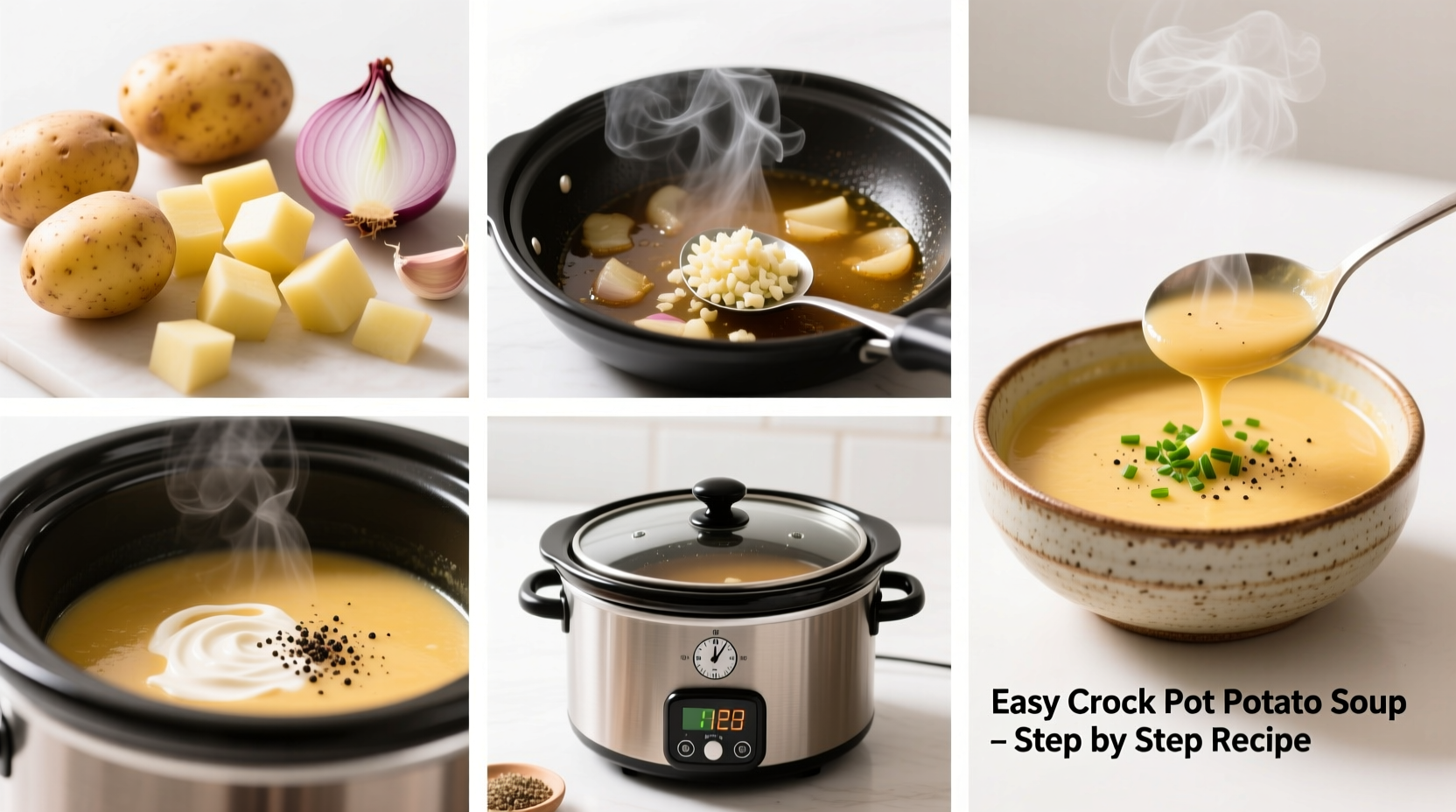
Crock pot potato soup is a slow-cooked stew-like dish primarily composed of potatoes, broth, aromatics, and dairy (or dairy alternatives), designed to develop deep flavor through prolonged, gentle heating. Unlike stovetop versions that require monitoring and frequent stirring, the slow cooker automates much of the process, allowing flavors to meld and starches to release gradually into the liquid base. The result is a thick, creamy soup that feels indulgent yet can be made with wholesome, accessible ingredients.
This soup falls under the category of rustic comfort food, rooted in European peasant traditions where root vegetables were preserved and simmered into sustaining meals. Modern American interpretations often include cheddar cheese, crispy bacon, green onions, and sour cream as toppings, elevating the dish from humble origins to a centerpiece entrée. Its versatility makes it suitable for weeknight dinners, holiday buffets, or freezer-friendly batch cooking.
The foundation of any good crock pot potato soup is the balance between starch, fat, salt, and umami. Russet or Yukon Gold potatoes provide the necessary starch content to thicken the soup naturally. Aromatics like onion, garlic, and celery build complexity, while chicken or vegetable broth adds depth. Dairy—typically half-and-half, heavy cream, or whole milk—contributes richness, though non-dairy substitutes like cashew cream or coconut milk can achieve similar effects. Herbs such as thyme or rosemary enhance aroma without overpowering the earthy sweetness of the potatoes.
Key Characteristics
| Characteristic | Description |
|---|---|
| Flavor Profile | Earthy, savory, slightly sweet from potatoes; enhanced by umami from broth and optional bacon or cheese. |
| Aroma | Warm, herbal (from thyme or bay leaf), with buttery and roasted notes if bacon is added. |
| Texture | Creamy and smooth with soft chunks of potato; can be blended partially or fully depending on preference. |
| Color | Creamy pale yellow to golden beige, darkened slightly by sautéed onions or bacon bits. |
| Heat Level | Mild; can be spiced with black pepper, cayenne, or smoked paprika for subtle warmth. |
| Culinary Function | Main-course soup, side dish, or meal prep staple; pairs well with crusty bread or salad. |
| Shelf Life | 3–4 days refrigerated; up to 3 months frozen (without dairy) or 2 months (with dairy). |
Practical Usage: How to Make Crock Pot Potato Soup Step by Step
Creating a flavorful, well-textured crock pot potato soup involves careful layering of ingredients and attention to timing. While the slow cooker does most of the work, a few preparatory steps ensure optimal results.
- Prepare Ingredients: Peel and dice 2 pounds of russet or Yukon Gold potatoes into ½-inch cubes. Finely chop 1 medium yellow onion, 2 celery stalks, and 2 cloves of garlic. Measure out 4 cups of low-sodium chicken or vegetable broth, 1 cup of diced cooked bacon (optional), 1 teaspoon of dried thyme, 1 bay leaf, salt, and freshly ground black pepper.
- Sauté Aromatics (Optional but Recommended): For deeper flavor, heat 2 tablespoons of butter or olive oil in a skillet over medium heat. Sauté onions and celery until translucent (about 5 minutes). Add garlic and cook for 30 seconds more. Transfer to the slow cooker. Skipping this step yields a milder flavor but saves time.
- Add to Slow Cooker: Place sautéed aromatics (or raw, if skipping step 2) into a 6-quart slow cooker. Add diced potatoes, broth, thyme, bay leaf, 1 teaspoon salt, and ½ teaspoon black pepper. Stir gently to combine.
- Cook: Cover and cook on LOW for 6–7 hours or HIGH for 3–4 hours, until potatoes are very tender when pierced with a fork.
- Thicken and Creamify: Remove the bay leaf. Use a potato masher to partially mash the potatoes directly in the pot for a rustic texture, or blend 2–3 cups of soup in a blender and return to the pot for silkier results. Stir in 1 cup of half-and-half, heavy cream, or whole milk. Heat on HIGH for 20–30 minutes to warm through (do not boil).
- Season and Finish: Taste and adjust seasoning with additional salt, pepper, or a splash of Worcestershire sauce for umami. Stir in 1 cup of shredded sharp cheddar cheese (optional) until melted.
- Serve: Ladle into bowls and top with chopped green onions, extra bacon, sour cream, shredded cheese, or fresh parsley.
Pro Tip: To prevent curdling, always warm dairy products slightly before adding them to hot soup. Pour cold cream into a bowl, then ladle in a small amount of hot soup to temper it. Mix well, then stir back into the main pot.
Variants & Types
Crock pot potato soup can be adapted into several distinct styles based on regional influences, dietary preferences, or seasonal availability. Each variant maintains the core structure but introduces unique elements.
- Loaded Baked Potato Soup: Inspired by the classic side dish, this version includes generous amounts of bacon, cheddar cheese, green onions, and sour cream stirred in at the end or used as toppings. Often finished with a drizzle of ranch dressing.
- Vegetarian/Vegan Potato Soup: Uses vegetable broth and replaces dairy with unsweetened almond milk, oat milk, or blended silken tofu. Nutritional yeast can mimic cheesy flavor. Top with roasted chickpeas for crunch.
- Ham and Potato Soup: Incorporates leftover holiday ham, adding smoky-savory depth. Especially popular after Easter or Christmas meals.
- Dairy-Free Creamy Version: Achieves creaminess using pureed cauliflower or white beans blended into the base. Maintains thickness without lactose.
- Spicy Southwest Potato Soup: Adds diced green chiles, cumin, chili powder, and topped with crushed tortilla chips and avocado.
- Herbed Potato Leek Soup: Substitutes leeks for onions and emphasizes fresh dill, chives, or tarragon. More delicate and aromatic than standard versions.
| Variation | Best For | Key Ingredient Change |
|---|---|---|
| Loaded Baked Potato | Comfort food lovers, family dinners | Bacon, cheddar, sour cream |
| Vegetarian | Plant-based diets | Vegetable broth, no meat |
| Ham & Potato | Leftover utilization, holiday meals | Cubed cooked ham |
| Dairy-Free | Lactose intolerance, clean eating | Blended cauliflower or beans |
| Southwest Style | Spice enthusiasts, Tex-Mex themes | Green chiles, cumin, chili powder |
Comparison with Similar Ingredients/Dishes
Potato soup is sometimes confused with other creamy soups or starchy dishes. Understanding distinctions helps in proper preparation and expectation setting.
- Potato Soup vs. Mashed Potatoes: Both rely on starchy potatoes, but mashed potatoes are solid-side dishes with higher butter/fat ratios and are manually mashed. Soup has a liquid base and is meant to be spoonable.
- Potato Soup vs. Chowder: While potato soup can resemble chowder, true chowder includes cream, roux or flour for thickening, and often contains seafood (e.g., clam chowder). Potato soup typically skips the roux and focuses solely on potato breakdown.
- Crock Pot vs. Stovetop Potato Soup: Slow cooker versions develop deeper flavor over time with less risk of scorching. Stovetop versions allow quicker reduction and browning but require more supervision.
- Pureed vs. Chunky Styles: Pureed soups are smooth and elegant, often restaurant-style. Chunky versions retain visible potato pieces and feel more homestyle.
Practical Tips & FAQs
Can I make crock pot potato soup without dairy?
Yes. Substitute dairy with unsweetened plant-based milks like oat, soy, or cashew milk. For creaminess, blend ½ cup of cooked white beans or steamed cauliflower into the soup before adding liquid.
Why did my soup turn out watery?
Undercooking or using waxy potatoes (like red or new potatoes) can inhibit starch release. Extend cooking time or add a slurry: mix 1 tablespoon cornstarch with 2 tablespoons cold water, stir into simmering soup, and cook 10 minutes.
How do I store leftovers safely?
Cool soup within 2 hours of cooking. Store in airtight containers in the refrigerator for up to 4 days. Freeze in portion-sized containers for up to 3 months (best without dairy).
Can I use frozen potatoes?
Frozen diced potatoes are acceptable in a pinch, but they may become mushy faster. Add them during the last 2–3 hours on LOW to avoid disintegration.
What’s the best potato variety for this soup?
Russets are ideal due to high starch content, which thickens the soup naturally. Yukon Golds offer a buttery flavor and hold shape slightly better, making them great for semi-chunky textures.
How can I boost protein content?
Add shredded rotisserie chicken, crumbled sausage, or white beans. These integrate seamlessly without altering the soup’s character.
Is it safe to leave the crock pot unattended?
Modern slow cookers are designed for long-term use. Ensure the unit is on a level surface, away from flammable materials, and filled between ½ and ¾ capacity. Never leave it on while traveling or sleeping unless specified by the manufacturer.
Expert Insight: “The magic of crock pot potato soup isn’t just convenience—it’s time. Allowing potatoes to break down slowly releases their natural pectin and starch, creating a luxurious mouthfeel without artificial thickeners.” — Chef Elena Martinez, Culinary Instructor, New England Institute of Food Arts
Summary & Key Takeaways
Crock pot potato soup is a prime example of how minimal effort can yield exceptional culinary results. By leveraging the slow cooker’s ability to extract flavor and soften ingredients evenly, home cooks can produce a restaurant-quality soup with little hands-on time. The key lies in selecting the right potatoes, building layers of flavor through aromatics, and finishing with care to preserve texture and temperature-sensitive ingredients like dairy.
Customization options make this dish highly adaptable: from vegan renditions using plant-based creams to loaded versions featuring bacon and cheddar, there’s a variation for every palate. Leftovers reheat well and freeze efficiently, making it an excellent candidate for weekly meal planning. With proper storage and reheating techniques, the soup retains its integrity across multiple servings.
Understanding common pitfalls—such as curdled cream, watery consistency, or bland seasoning—empowers cooks to troubleshoot confidently. Simple fixes like tempering dairy, using starch slurries, or enhancing umami with Worcestershire or miso paste elevate the final product significantly.
In essence, mastering crock pot potato soup is about embracing simplicity without sacrificing quality. It’s a foundational recipe that teaches patience, balance, and the value of slow transformation in cooking. Once perfected, it becomes a trusted go-to—a warm, dependable presence in any kitchen season after season.
Try this recipe this week and discover how effortless, delicious, and satisfying homemade potato soup can be—all with the help of your slow cooker.




 浙公网安备
33010002000092号
浙公网安备
33010002000092号 浙B2-20120091-4
Comments
No comments yet. Why don't you start the discussion?