
If you've recently noticed that your Chrome browser defaults to Yahoo when you type into the address bar, you're not alone. Many users report this change after installing new software or updating their system—often without realizing it. While Yahoo offers a functional search experience, most Chrome users prefer Google for its speed, accuracy, and integration with other Google services. The good news is that switching back is simple and takes less than a minute. This guide walks you through every step clearly and thoroughly, so you can restore Google as your default search engine across all your devices.
Why Did My Chrome Search Engine Change to Yahoo?
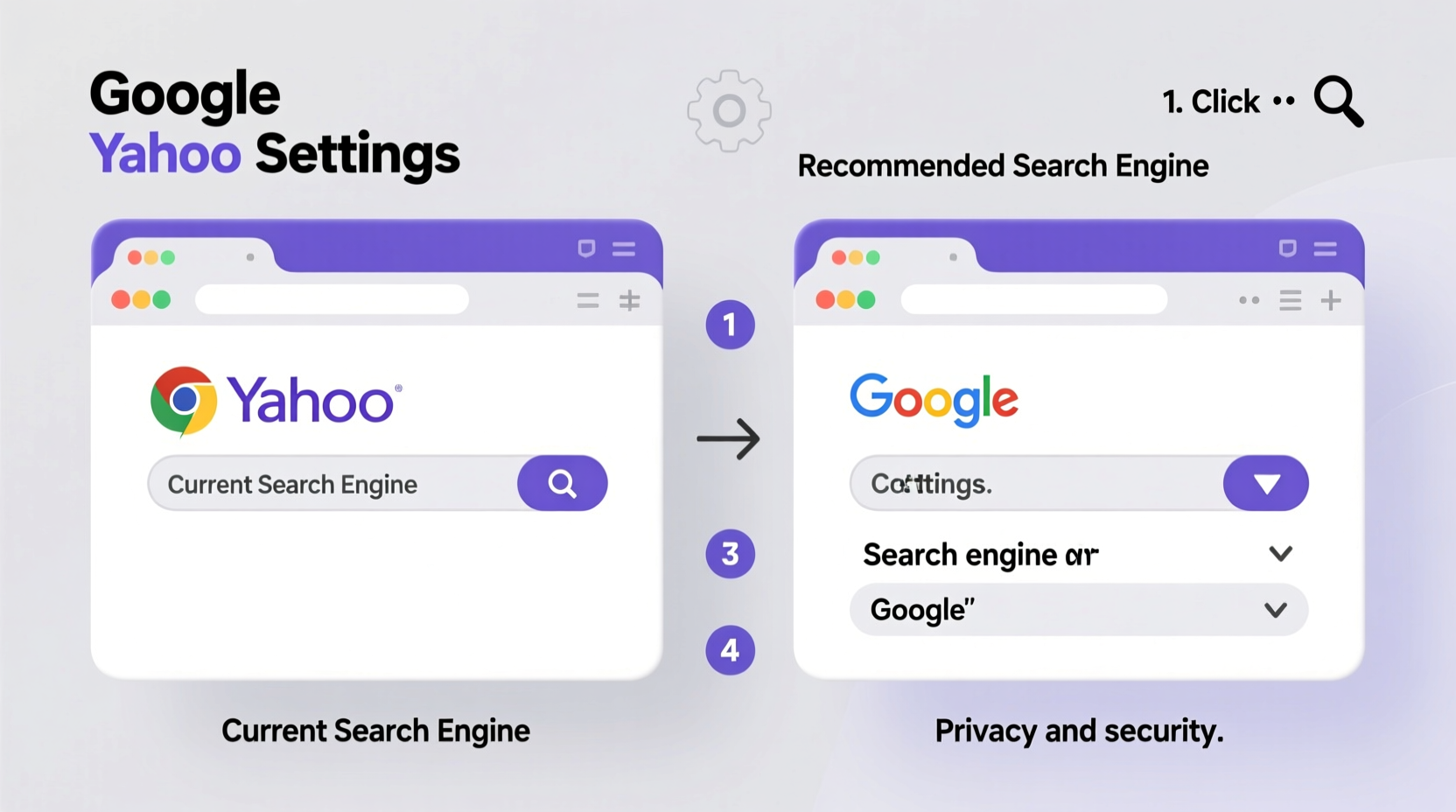
It’s common for Chrome’s default search engine to shift unexpectedly. This usually happens due to third-party software installations, browser extensions, or bundled toolbars that modify browser settings during setup. Some applications—particularly freeware downloads—include clauses in their installation agreements that allow them to change your homepage or default search provider. In many cases, users unknowingly agree to these changes by clicking “Next” too quickly.
Yahoo has also partnered with certain software distributors to set itself as the default in exchange for placement. While not inherently malicious, this practice can be frustrating for users who rely on Google's search functionality and expect consistency across sessions.
“Browser hijacking isn't always harmful, but it undermines user control. Restoring your preferred search engine is a basic digital hygiene step.” — David Lin, Senior Browser Security Analyst at WebTrust Labs
Step-by-Step: How to Switch from Yahoo to Google on Desktop
Changing your default search engine in Chrome on a Windows or Mac computer is straightforward. Follow these steps carefully:
- Open Google Chrome on your desktop.
- Click the three vertical dots in the top-right corner to open the menu.
- Select Settings from the dropdown list.
- Scroll down and click on Search engine in the left-hand menu.
- Under “Search engine used in the address bar,” click the dropdown next to “Manage search engines.”
- Locate Google in the list (it should already be there).
- Hover over Google and click the three-dot menu that appears, then select Make default.
Once completed, any future searches typed directly into the address bar will use Google instead of Yahoo. You can verify the change by typing a query like “weather today” and confirming the results page URL begins with https://www.google.com/search.
https://www.google.com/search?q={searchTerms} as the URL.
Switching on Android and iPhone Devices
The process varies slightly depending on your mobile operating system, but both are equally simple.
For Android Users
- Open the Chrome app on your phone.
- Tap the three-dot menu in the upper-right corner.
- Go to Settings.
- Select Search engine.
- Choose Google from the list of available options.
After selection, all searches from the address bar will route through Google immediately.
For iPhone (iOS) Users
- Launch the Chrome app on your iPhone.
- Tap the three-dot menu in the bottom-right corner (on iPad, it may appear in the top-right).
- Navigate to Settings.
- Select Search Engine.
- Pick Google as your preferred option.
Note: Unlike Safari, Chrome on iOS allows full customization of search engines, including Google, Yahoo, Bing, DuckDuckGo, and others.
Checklist: Secure Your Chrome Settings Long-Term
Preventing unwanted changes in the future requires proactive habits. Use this checklist to lock in your preferences:
- ✅ Confirm Google is set as the default search engine monthly.
- ✅ Review installed extensions regularly; remove unfamiliar ones.
- ✅ Avoid downloading software from untrusted sources.
- ✅ During software installation, choose “Custom Install” and uncheck optional offers.
- ✅ Keep Chrome updated to the latest version for security patches.
- ✅ Reset Chrome settings if search behavior changes unexpectedly.
Common Issues and Troubleshooting
Sometimes, even after setting Google as the default, Yahoo may reappear. Here’s how to diagnose and fix recurring problems:
| Issue | Possible Cause | Solution |
|---|---|---|
| Yahoo returns after reboot | Malicious extension or hijacker | Remove suspicious extensions via chrome://extensions |
| Google not listed in search engines | Removed manually or blocked | Add Google manually using correct URL format |
| Changes don’t save | Permissions issue or profile corruption | Create a new Chrome profile or repair admin rights |
| Search redirects to Yahoo site | DNS hijacking or router malware | Reset router settings and scan network devices |
Mini Case Study: Recovering Control After a Software Update
Sarah, a freelance writer from Portland, updated her PDF converter software last month. Shortly after, she noticed her Chrome searches were redirecting to Yahoo—even though she had never changed her settings. Frustrated by irrelevant results and extra ads, she followed the steps outlined above. She discovered an unknown extension labeled “WebHelper” that was not only changing her search engine but injecting sponsored links into results. After removing the extension and resetting her search engine to Google, her browsing returned to normal. Sarah now reviews every installation screen and avoids “Quick Install” options.
Frequently Asked Questions
Will switching back to Google affect my bookmarks or history?
No. Changing your default search engine only affects where queries from the address bar are sent. Your bookmarks, browsing history, passwords, and autofill data remain untouched.
Can I still search Yahoo if I make Google the default?
Absolutely. Even with Google set as the default, you can still visit yahoo.com directly and use its search box. Additionally, Chrome remembers alternative search engines—you can type “yahoo.com” in the address bar, press Tab, and search Yahoo directly when needed.
Is Yahoo dangerous to use as a search engine?
Yahoo itself is not dangerous. However, unexpected changes often stem from low-quality installers or adware that could compromise privacy or inject tracking scripts. For security and performance, sticking with trusted defaults like Google is generally recommended.
Conclusion: Take Back Control of Your Browsing Experience
Your browser should work the way you want it to—not according to the preferences of third-party software vendors. Switching your Chrome search engine from Yahoo to Google is a quick, painless process that restores efficiency, relevance, and familiarity to your daily searches. More importantly, understanding how and why such changes occur empowers you to maintain long-term control over your digital environment. Now that you know how to make the switch—and how to prevent future surprises—you can browse with confidence, speed, and precision.




 浙公网安备
33010002000092号
浙公网安备
33010002000092号 浙B2-20120091-4
Comments
No comments yet. Why don't you start the discussion?