
There are few breakfasts—or snacks—as universally comforting as a warm slice of cinnamon toast. Crisp on the outside, tender within, and fragrant with sweet spice, it requires no special equipment, no rare ingredients, and barely any time. Whether you're feeding children before school, satisfying a mid-afternoon craving, or crafting a nostalgic treat after dinner, cinnamon toast delivers maximum flavor and satisfaction with minimal effort. This humble dish, rooted in Depression-era frugality, has endured because it transforms basic bread and pantry spices into something that feels indulgent. With just three core ingredients—bread, butter, and cinnamon-sugar—it’s a kitchen essential every home cook should master.
Definition & Overview
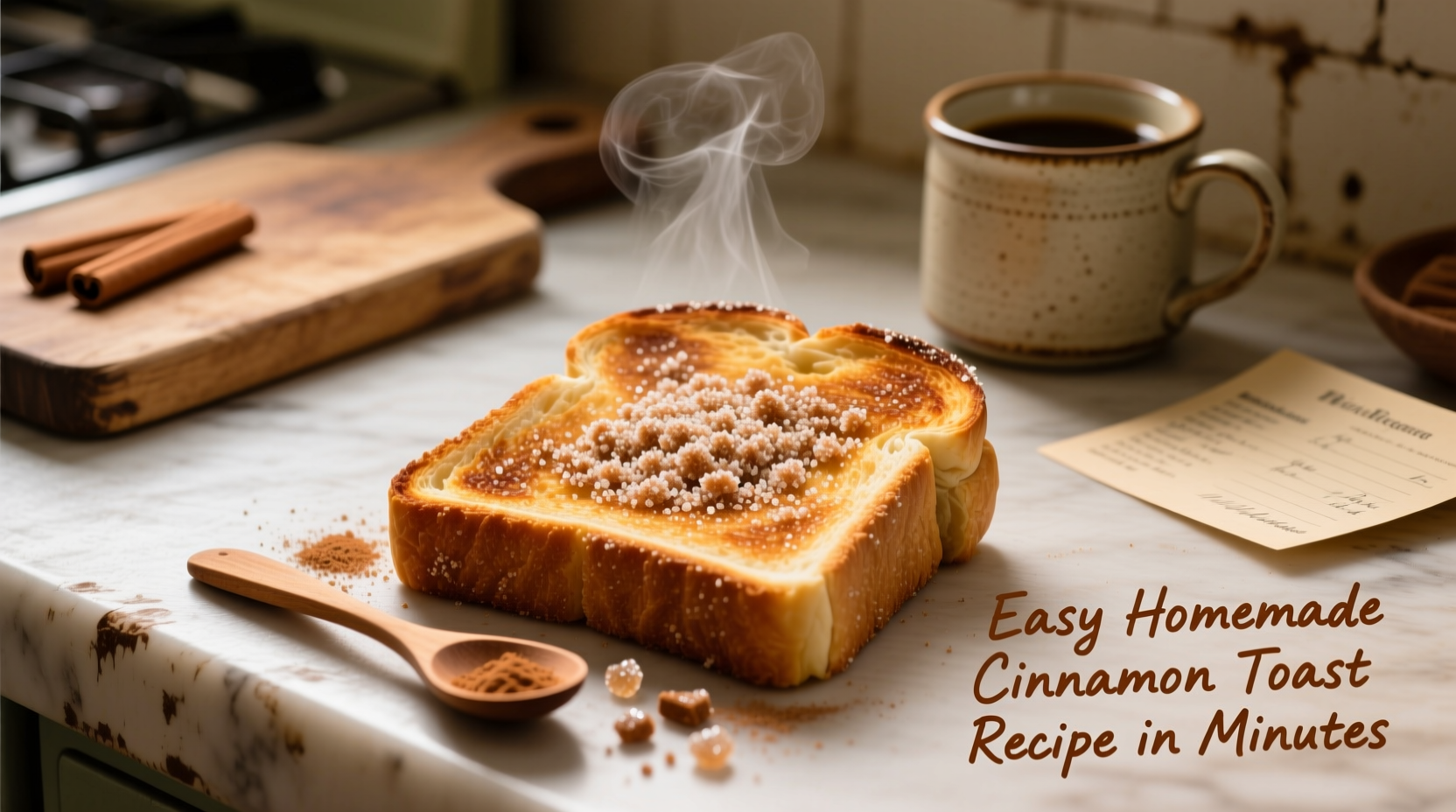
Cinnamon toast is a simple baked or toasted preparation made by coating sliced bread with butter and a mixture of sugar and ground cinnamon, then heating it until golden and crisp. It belongs to the category of “stovetop desserts” or “quick baked goods,” though it straddles the line between breakfast, dessert, and snack. Its origins trace back to early 20th-century American home cooking, when families relied on inexpensive ingredients like white bread, butter, and spices to stretch meals. The combination of fat (butter), sweetness (sugar), and aromatic warmth (cinnamon) creates a sensory experience far greater than the sum of its parts.
Unlike more complex pastries, cinnamon toast doesn’t require yeast, proofing, or laminated dough. It’s not French toast, which involves eggs and milk; nor is it cinnamon swirl bread, a yeasted loaf baked with filling. Instead, it’s a surface treatment—a culinary shortcut that mimics the richness of baked cinnamon rolls without the hours of labor. Today, it remains a staple in households across North America and beyond, often passed down through generations via handwritten notes or verbal instruction. Its simplicity makes it accessible to novice cooks, while its adaptability allows experienced bakers to elevate it with gourmet touches.
Key Characteristics
| Attribute | Description |
|---|---|
| Flavor Profile | Sweet, warm, slightly spicy, with rich buttery undertones. |
| Aroma | Fragrant with toasted sugar and volatile oils from cinnamon; evokes comfort and nostalgia. |
| Texture | Crisp exterior, soft interior when lightly toasted; can become fully crisp if baked longer. |
| Color | Golden brown to deep amber, depending on heat and duration. |
| Heat Level | Non-spicy; warmth refers to aromatic sensation from cinnamaldehyde in cinnamon. |
| Culinary Function | Breakfast item, snack, dessert base, or palate cleanser. |
| Shelf Life | Best served immediately; loses crispness within 30–60 minutes. |
Practical Usage: How to Make Cinnamon Toast
The foundation of excellent cinnamon toast lies in technique—not ingredient complexity. While variations exist, the most reliable method uses direct heat to melt butter into bread, allowing the cinnamon-sugar mixture to adhere and caramelize slightly. Two primary methods dominate home kitchens: toaster oven/baking and stovetop.
Method 1: Toaster Oven or Conventional Oven (Recommended)
- Preheat your toaster oven or conventional oven to 350°F (175°C).
- Spread softened unsalted butter evenly over one or both sides of a slice of bread. Use about 1 tablespoon per slice.
- In a small bowl, mix 1–2 teaspoons of granulated sugar with ½–1 teaspoon of ground cinnamon. Sprinkle generously over the buttered surface.
- Place the bread on a baking sheet or rack and toast for 5–7 minutes, watching closely. Flip halfway through for even browning if desired.
- Remove when edges are golden and the sugar has melted slightly into a glaze-like finish.
Method 2: Stovetop Skillet Method
- Heat a nonstick or cast-iron skillet over medium-low heat.
- Butter one side of bread and place it butter-side down in the pan.
- Mix cinnamon and sugar, then sprinkle over the exposed top surface.
- Butter the top layer lightly (optional, enhances browning), then flip carefully after 2–3 minutes, once the bottom is golden.
- Cook second side for another 2 minutes until crisp and fragrant.
Pro Tip: For deeper flavor, use dark brown sugar instead of white. Its molasses content adds complexity and promotes better caramelization. A pinch of sea salt in the cinnamon-sugar blend also balances sweetness and elevates the overall taste.
Choosing the Right Bread
Bread selection significantly impacts texture and absorption. Ideal candidates include:
- Sourdough: Holds structure well, offers tangy contrast to sweetness.
- Whole wheat: Nutty flavor, denser crumb—best when lightly toasted first.
- White sandwich bread: Classic choice; soft, porous, and readily available.
- Brioche: Rich and eggy—creates a decadent version akin to dessert.
- Challah: Similar to brioche but slightly less buttery; excellent for holiday-style treats.
Thicker slices (¾ inch) allow for better butter penetration without disintegration. Avoid ultra-thin or pre-sliced \"diet\" breads, which burn easily and lack structural integrity.
Variants & Types
While traditional cinnamon toast relies on granulated sugar and ground cinnamon, numerous adaptations reflect regional preferences, dietary needs, and creative experimentation.
Classic vs. Gourmet Variants
| Variant | Ingredients | Best Used For |
|---|---|---|
| Classic Pantry Style | Bread, butter, white sugar, ground cinnamon | Quick breakfasts, children's snacks |
| Brown Sugar Glaze | Brown sugar, butter, cinnamon, splash of cream | Dessert-style serving, fall/winter menus |
| Vegan Version | Plant-based butter, coconut sugar, cinnamon | Plant-based diets, dairy-free households |
| Spiced Chai-Inspired | Cinnamon, cardamom, ginger, cloves, black tea-infused milk wash | Gourmet brunches, spiced beverage pairings |
| Caramelized Crust | Double-layer sugar application, broiler finish | Dinner party appetizers, plated desserts |
| Overnight French Toast Base | Egg, milk, vanilla, cinnamon-sugar coating post-bake | Brunch spreads, holiday mornings |
One notable variation popular in diner-style cooking involves dipping bread in an egg batter first—essentially making a hybrid of French toast and cinnamon toast—then coating with cinnamon sugar before baking. This yields a richer, custard-like interior with a crunchy spiced crust.
Comparison with Similar Ingredients & Dishes
Cinnamon toast is often confused with other cinnamon-laced bread products. Understanding the distinctions ensures proper technique and expectation management.
| Dish | How It Differs from Cinnamon Toast |
|---|---|
| Cinnamon Rolls | Yeast-raised dough rolled with filling, baked, then glazed. Requires hours of prep and rising. Far more complex. |
| Cinnamon Swirl Bread | A loaf bread with cinnamon-sugar swirled inside during shaping. Sliced and toasted later. Not a finished product. |
| French Toast | Dipped in egg-milk mixture, fried. May include cinnamon but lacks dry spice coating. Softer texture. |
| Cinnamon Sugar Donuts | Deep-fried dough coated in cinnamon sugar. Higher fat content, different cooking method. |
| Snickerdoodle Cookies | Baked cookie with same spice profile but structured dough base. Chewy rather than crisp. |
Unlike these items, cinnamon toast is defined by its immediacy and simplicity. It does not involve leavening agents, frying oil, or lengthy procedures. It is, fundamentally, a finishing technique applied to existing bread.
Practical Tips & FAQs
Can I make cinnamon toast without butter?
Yes, though results will differ. Margarine works as a substitute, but may leave an artificial aftertaste. Vegan butter performs well, especially brands designed for baking. In emergencies, a light brushing of olive oil or coconut oil can work—but avoid strongly flavored oils. Note that butter contributes both flavor and browning capability due to its milk solids.
Is there a low-sugar version?
Absolutely. Reduce sugar to ½ teaspoon and blend with erythritol or monk fruit sweetener for reduced glycemic impact. Alternatively, dust with pure cinnamon only—this provides warmth without sweetness and suits health-conscious diets. Some nutritionists recommend pairing plain cinnamon toast with Greek yogurt or nut butter for balanced macronutrients.
Why did my cinnamon toast burn?
Two common causes: too high heat or uneven sugar distribution. Cinnamon contains fine particles that scorch faster than bread browns. Always use medium or medium-low heat. If using a broiler for glazing, watch continuously—sugar can blacken in under 30 seconds.
Can I prepare cinnamon toast ahead of time?
Not effectively. Once cooled, it loses crispness and develops a stale, waxy texture from re-solidified sugar. However, you can pre-mix cinnamon-sugar in a shaker jar and store it indefinitely in a cool, dark place. Assemble and cook only when ready to serve.
What’s the best cinnamon to use?
True cinnamon (Cinnamomum verum), also called Ceylon cinnamon, is milder and more floral. Cassia cinnamon (common in supermarkets) is stronger, hotter, and contains higher levels of coumarin, which can be harmful in excess. For daily consumption, many chefs prefer blending both: 70% Ceylon for safety, 30% Cassia for punch.
Can I freeze cinnamon toast?
Freezing cooked cinnamon toast is not recommended due to moisture absorption and sogginess upon thawing. However, unbaked assembled slices (buttered and sugared) can be frozen on a tray, then stored in bags for up to one month. Bake directly from frozen, adding 2–3 minutes to cook time.
Storage Tip: Keep raw cinnamon-sugar mix in an airtight container for up to six months. Label clearly—many spice blends look similar in jars. Store away from stove to prevent humidity exposure.
“Cinnamon toast is the gateway drug to baking. It teaches heat control, flavor balance, and timing—all without intimidation.” — Chef Elena Torres, Culinary Instructor at Pacific Heights Cooking School
Advanced Applications & Professional Techniques
Professional kitchens sometimes reinterpret cinnamon toast as part of upscale brunch offerings. One Michelin-recognized café in Portland serves “Deconstructed Cinnamon Toast”: a warm disc of brioche foam, a quenelle of spiced crème fraîche, and a shard of caramelized tuile dusted with cinnamon. Others plate it alongside poached pears or apple compote for autumnal menus.
A restaurant-grade enhancement involves brushing finished toast with warmed apricot jam and passing it briefly under the broiler. This creates a glossy, sticky sheen reminiscent of Danish pastry glaze. Another pro move: infusing the butter. Melt butter with a cinnamon stick and a strip of orange zest, strain, then spread. The result is subtler and more aromatic than powdered spice alone.
Summary & Key Takeaways
Cinnamon toast is more than a retro breakfast—it’s a masterclass in efficient, flavorful cooking. Built on three essentials—bread, butter, and cinnamon-sugar—it exemplifies how minimal ingredients, properly handled, yield exceptional results. Baking or toasting slowly at moderate heat ensures even browning and prevents burning. Choosing quality bread improves texture, while refined techniques like infused butter or brown sugar glazes elevate the dish for special occasions.
It differs fundamentally from cinnamon rolls, swirl breads, and fried pastries by virtue of its immediacy and lack of leavening. Adaptations accommodate vegan, low-sugar, and gourmet preferences without sacrificing core identity. Storage is straightforward: keep spices dry and assemble only before serving.
Ultimately, cinnamon toast endures because it satisfies deeply human cravings—warmth, sweetness, comfort—with honesty and speed. It requires no justification, no elaborate presentation, and no apology. When done right, it delivers joy in under ten minutes.
Final Thought: Keep a jar of pre-mixed cinnamon-sugar on your counter. Whenever hunger strikes and options seem slim, grab a slice of bread, some butter, and let the oven do the rest. You’ll never need to wonder what’s for breakfast again.




 浙公网安备
33010002000092号
浙公网安备
33010002000092号 浙B2-20120091-4
Comments
No comments yet. Why don't you start the discussion?