
Commercial tomato paste often contains preservatives, added salt, or citric acid, and rarely delivers the depth of flavor achievable with homemade versions. Yet many home cooks assume that reducing tomatoes into a concentrated paste is time-consuming or technically difficult. In reality, with a simple technique rooted in evaporation and patience, anyone can produce high-quality tomato paste using just ripe tomatoes, minimal equipment, and basic kitchen skills. This guide reveals a practical, scalable method to make tomato paste at home—preserving summer’s peak harvest or transforming surplus tomatoes into a pantry staple that elevates sauces, stews, soups, and marinades year-round.
Definition & Overview
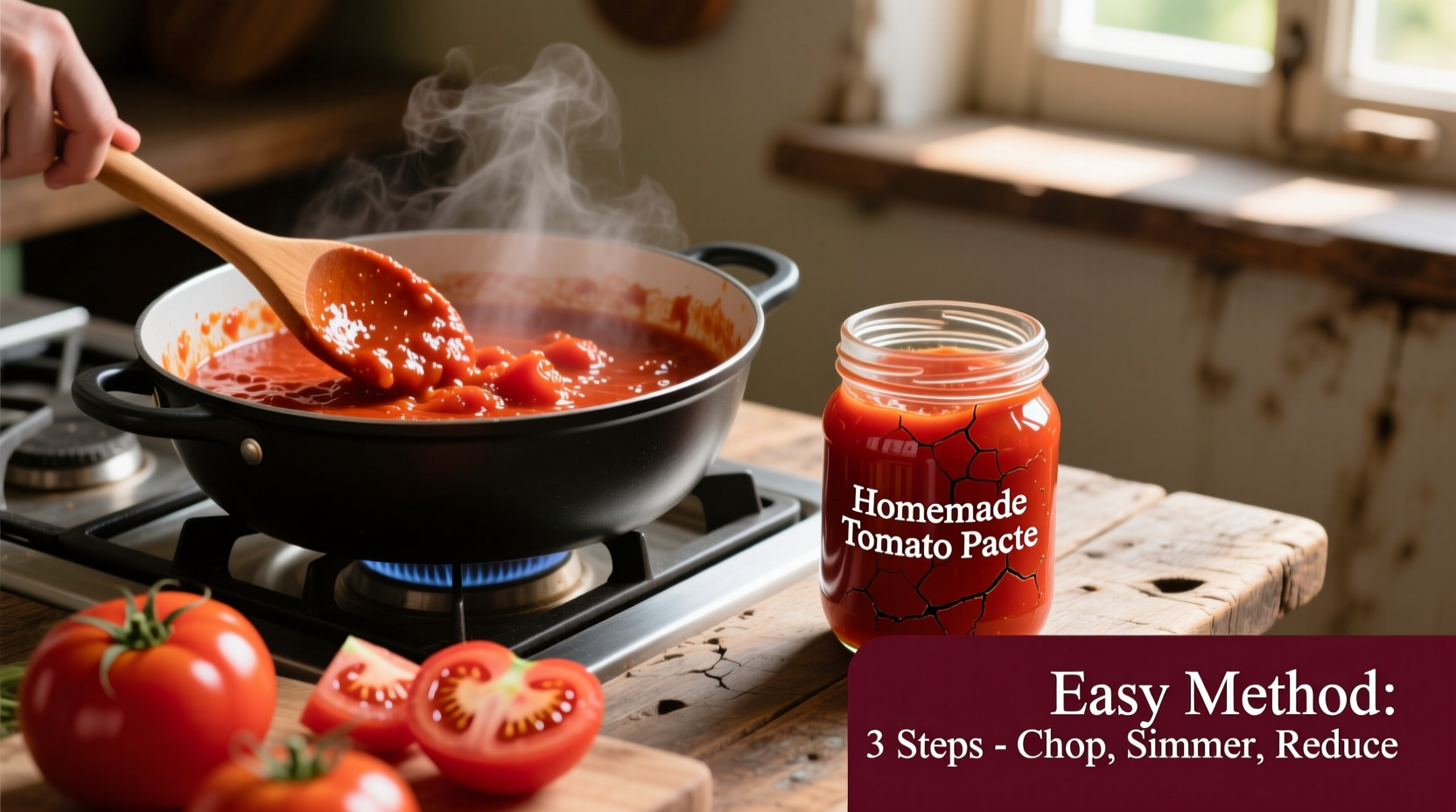
Tomato paste is a thick, concentrated puree made from cooked-down tomatoes, stripped of seeds and skins, then reduced until intensely flavorful. Unlike canned or jarred alternatives, which are often over-processed or contain stabilizers, homemade tomato paste captures the essence of sun-ripened fruit in its most potent form. The process mimics traditional Mediterranean preservation methods used in Italy, Greece, Turkey, and North Africa, where tomatoes are slowly roasted or sun-dried into dense blocks or thick layers known as *tomato concentrate*, *sun-dried paste*, or *tomato leather*.
The key principle behind all forms of tomato paste is water removal. Fresh tomatoes are roughly 94% water; by evaporating much of this moisture, natural sugars and acids become concentrated, resulting in a savory-sweet umami-rich base ingredient. When done correctly, homemade paste develops complex caramelized notes absent in store-bought versions. It functions not merely as a thickener but as a foundational flavor builder—akin to soy sauce, fish sauce, or miso in other global cuisines.
Key Characteristics
| Attribute | Description |
|---|---|
| Flavor Profile | Deeply savory, slightly sweet, with bright acidity balanced by roasted undertones when reduced slowly. |
| Aroma | Rich, cooked tomato scent with hints of sun-warmed earth and caramelization. |
| Color | Bright red initially, deepening to rust-orange or brick-red upon full reduction. |
| Texture | Smooth, dense, and spreadable—similar to peanut butter when fully cooled. |
| Culinary Function | Flavor enhancer, color booster, body builder in sauces, soups, braises, rubs, and dips. |
| Shelf Life (Homemade) | Up to 6 weeks refrigerated; up to 12 months frozen; indefinitely if oil-sealed or dehydrated. |
Practical Usage: How to Use Homemade Tomato Paste
Because it lacks fillers and preservatives, homemade tomato paste integrates seamlessly into any dish requiring depth without dilution. A small amount goes far—typically one teaspoon equals about two tablespoons of canned paste due to higher concentration.
Everyday Cooking Applications
- Add 1–2 teaspoons to scrambled eggs or frittatas for color and savoriness.
- Stir into lentil soup, chili, or vegetable stew during the last 20 minutes of cooking.
- Mix with olive oil, garlic, and herbs to create a quick pizza or flatbread base.
- Blend into meatloaf, burger patties, or meatballs to enhance moisture and taste.
- Whisk into vinaigrettes or mayonnaise for sandwiches and dips.
Professional-Style Techniques
In restaurant kitchens, chefs use tomato paste as a flavor catalyst. They typically \"cook out\" the paste—sautéing it in fat before adding liquids—to deepen its sweetness and eliminate raw edges. Replicate this at home:
- Heat 1–2 tablespoons of olive oil or butter in a pan over medium heat.
- Add 1–3 teaspoons of your homemade paste.
- Stir continuously for 2–4 minutes until the color darkens slightly and the aroma intensifies.
- Proceed with onions, garlic, stock, or tomatoes—the foundation of a superior sauce.
This step, called “blooming,” transforms the paste from a passive additive into an active flavor layer. It prevents flatness and builds complexity in dishes like ragù, ratatouille, or shakshuka.
Pro Tip: Freeze homemade paste in ice cube trays (1 tablespoon per cube). Once solid, transfer cubes to a labeled freezer bag. Thaw only what you need—ideal for single servings or recipe scaling.
Variants & Types of Homemade Tomato Paste
While all tomato pastes originate from reduced tomatoes, their final form depends on processing method, drying level, and regional tradition. Understanding these variations allows customization based on storage goals and culinary use.
1. Wet-Reduced Paste (Refrigerator/Frozen)
The most common homemade version. Tomatoes are simmered down into a thick slurry, packed into jars or molds, and stored cold or frozen. Retains maximum freshness and ease of use. Ideal for weekly cooking needs.
2. Oven-Dried Concentrate (Semi-Dehydrated)
After initial reduction, the paste is spread thinly on parchment-lined trays and dried in a low oven (175°F / 80°C) for 4–6 hours. Resulting sheets can be broken into shards and rehydrated or ground into powder. Offers longer shelf life and space-efficient storage.
3. Sun-Dried Leather (Traditional Air-Dried)
Used historically in southern Italy (*strattu*) and Tunisia (*tchermoula*), this involves spreading paste under direct sunlight for several days, covered with mesh to deter insects. Fully desiccated, it forms a pliable sheet that lasts years when sealed in oil. Requires dry, hot climate conditions.
4. Powdered Tomato Paste
Made by grinding fully dehydrated paste into fine dust. Dissolves instantly in liquids. Excellent for seasoning dry rubs, spice blends, or instant soups. One teaspoon powder ≈ one teaspoon wet paste.
| Type | Best For | Storage Duration | Effort Level |
|---|---|---|---|
| Wet-Reduced | Daily cooking, sauces, soups | 6 weeks fridge, 12 months freezer | Low |
| Oven-Dried | Pantry backup, camping, gifting | 6–12 months (airtight) | Medium |
| Sun-Dried Leather | Long-term preservation, heritage methods | Years (in oil) | High (climate-dependent) |
| Powdered | Seasoning mixes, instant use | 18+ months | Medium-High |
Comparison with Similar Ingredients
Tomato paste is frequently confused with related tomato products, but each serves distinct roles in the kitchen.
| Ingredient | Water Content | Concentration Level | Primary Use |
|---|---|---|---|
| Fresh Tomatoes | ~94% | Base ingredient | Salads, salsas, roasting |
| Canned Diced/Stewed Tomatoes | ~88–90% | Lightly processed | Cooking bases, chilis, curries |
| Tomato Sauce | ~85% | Moderately reduced | Pasta, soups, braises |
| Tomato Paste (Homemade) | ~50–60% | Highly concentrated | Flavor amplification, coloring |
| Tomato Powder | ~5–8% | Fully dehydrated | Dry applications, seasoning |
Unlike ketchup or tomato jam, which include sugar, vinegar, and spices, authentic tomato paste contains only tomatoes (and optionally sea salt). Its purpose is not to stand alone but to enrich other ingredients through synergy.
Step-by-Step: Easy Method for Making Tomato Paste at Home
This streamlined approach yields 1 cup of finished paste from approximately 2 pounds of ripe tomatoes. Designed for accessibility, it uses standard kitchen tools and requires no special equipment beyond a pot, blender, and fine sieve or food mill.
Ingredients & Tools
- 2 lbs (900g) ripe red tomatoes (Roma, San Marzano, or Amish Paste preferred)
- Optional: 1 tsp sea salt (enhances flavor, aids preservation)
- Large saucepan or Dutch oven
- Blender or immersion blender
- Fine-mesh strainer, chinois, or food mill
- Wooden spoon
- Baking sheet (if oven-finishing)
- Parchment paper
Instructions
- Prep Tomatoes: Rinse and core tomatoes. Score an “X” on the bottom of each. Blanch in boiling water for 60 seconds, then plunge into ice water. Peel off skins easily. Cut in half and gently squeeze out seeds over a bowl (reserve juice for stocks).
- Chop & Simmer: Dice peeled, deseeded tomatoes. Place in heavy-bottomed pot. Bring to a gentle boil over medium-high heat, then reduce to low. Simmer uncovered for 1 hour, stirring occasionally to prevent scorching. Liquid will begin to separate and reduce.
- Puree & Strain: After 60 minutes, tomatoes should be soft and pulpy. Use an immersion blender directly in the pot, or transfer in batches to a countertop blender. Blend until smooth. Pass through a fine-mesh strainer or food mill to remove remaining seed fragments and fibrous bits. Return liquid to clean pot.
- Reduce to Paste: Cook over low heat for another 45–75 minutes, stirring every 10–15 minutes. As water evaporates, mixture thickens dramatically. When a wooden spoon drawn across the bottom leaves a clear trail that doesn’t immediately fill in, it’s ready. Final yield: ~1 cup.
- Optional Oven Finish: For deeper color and extended shelf life, spread paste ¼-inch thick on parchment-lined tray. Dry in oven at 200°F (95°C) with door slightly ajar for 2–4 hours until pliable but not brittle. Cool completely before storing.
- Store: Transfer to glass jar, press plastic wrap directly onto surface, seal, and refrigerate. Or freeze in portioned cubes. If sealing in oil (for long-term storage), cover chilled paste with ½ inch of extra-virgin olive oil, tap jar to remove air bubbles, and cap tightly.
Yield Note: Expect significant volume loss—roughly 6 cups of fresh tomatoes yield 1 cup of paste. Scale accordingly based on availability.
Practical Tips & FAQs
Can I use overripe or bruised tomatoes?
Yes, as long as they’re mold-free and not fermented. Overripe tomatoes are actually ideal—they’re softer, juicier, and more aromatic. Just trim damaged areas before use.
Do I need to add lemon juice or citric acid?
No. Unlike canned goods processed in boiling-water baths, homemade paste stored in the refrigerator or freezer does not require acidification. However, if pressure-canning for shelf stability, follow USDA guidelines strictly.
Why did my paste darken or taste bitter?
Over-reduction or high heat causes caramelization to tip into burning. Always reduce on low heat and stir frequently near the end. Use a wide, shallow pan to increase surface area and speed evaporation safely.
How do I substitute homemade paste for canned?
Use a 1:2 ratio—1 teaspoon homemade paste ≈ 1 tablespoon canned. Taste as you go; homemade is stronger and purer.
Is it safe to store at room temperature?
Only if fully dehydrated and sealed in oil (like Italian *conserva*). Otherwise, refrigeration or freezing is required to prevent spoilage.
What tomatoes work best?
Meaty, low-moisture varieties such as Roma, San Marzano, Opalka, or Big Boy. Avoid watery beefsteaks unless you have time for extended reduction.
Can I make it without peeling or seeding?
You can, but the result will be grainier and less refined. Skins contribute toughness, and seeds add bitterness during long cooking. For premium texture, peel and seed.
How do I know when it’s done?
Perform the “spoon test”: Dip a cold metal spoon into the paste. Let cool briefly. It should coat the back evenly and resist dripping. When tilted, it moves slowly, like cold honey.
“The secret to great tomato paste isn’t speed—it’s surrender. You’re not fighting the clock; you’re coaxing flavor out of water.” — Chef Marco Esposito, Culinary Instructor, Naples School of Cuisine
Summary & Key Takeaways
Homemade tomato paste is not only achievable for home cooks—it’s preferable to commercial options in both flavor and purity. By selecting quality tomatoes, removing excess water through controlled reduction, and storing properly, you create a versatile ingredient that enhances countless dishes. The process demands attention but not expertise, and scales easily whether you have five pounds or fifty.
Key advantages include:
- No artificial preservatives, thickeners, or added sugars.
- Superior flavor depth from slow caramelization.
- Customizable consistency and salt levels.
- Reduction of food waste by using surplus or imperfect tomatoes.
- Multiple storage formats—from frozen cubes to oil-preserved leathers.
Whether you live in a temperate apartment or a sun-drenched farmhouse, the ability to preserve summer’s tomato bounty into a compact, powerful paste empowers seasonal cooking throughout the year. Start small—make one batch—and experience how a humble ingredient, treated with care, becomes a cornerstone of culinary excellence.
Try this method at the height of tomato season—and taste the difference pure concentration makes.




 浙公网安备
33010002000092号
浙公网安备
33010002000092号 浙B2-20120091-4
Comments
No comments yet. Why don't you start the discussion?