
Peeling an onion may seem like a simple kitchen task, but anyone who’s struggled with clinging papery layers or slippery fingers knows it can be surprisingly frustrating. Whether you're prepping for a soup, salad, or sauté, efficiently removing the outer skin without wasting edible flesh is essential for both time and ingredient conservation. The key lies not in brute force, but in understanding the onion’s structure and applying targeted techniques that make peeling fast, clean, and nearly tear-free. This guide delivers professional methods used by chefs and home cooks alike, backed by food science and practical experience, to help you master this foundational culinary skill.
Definition & Overview
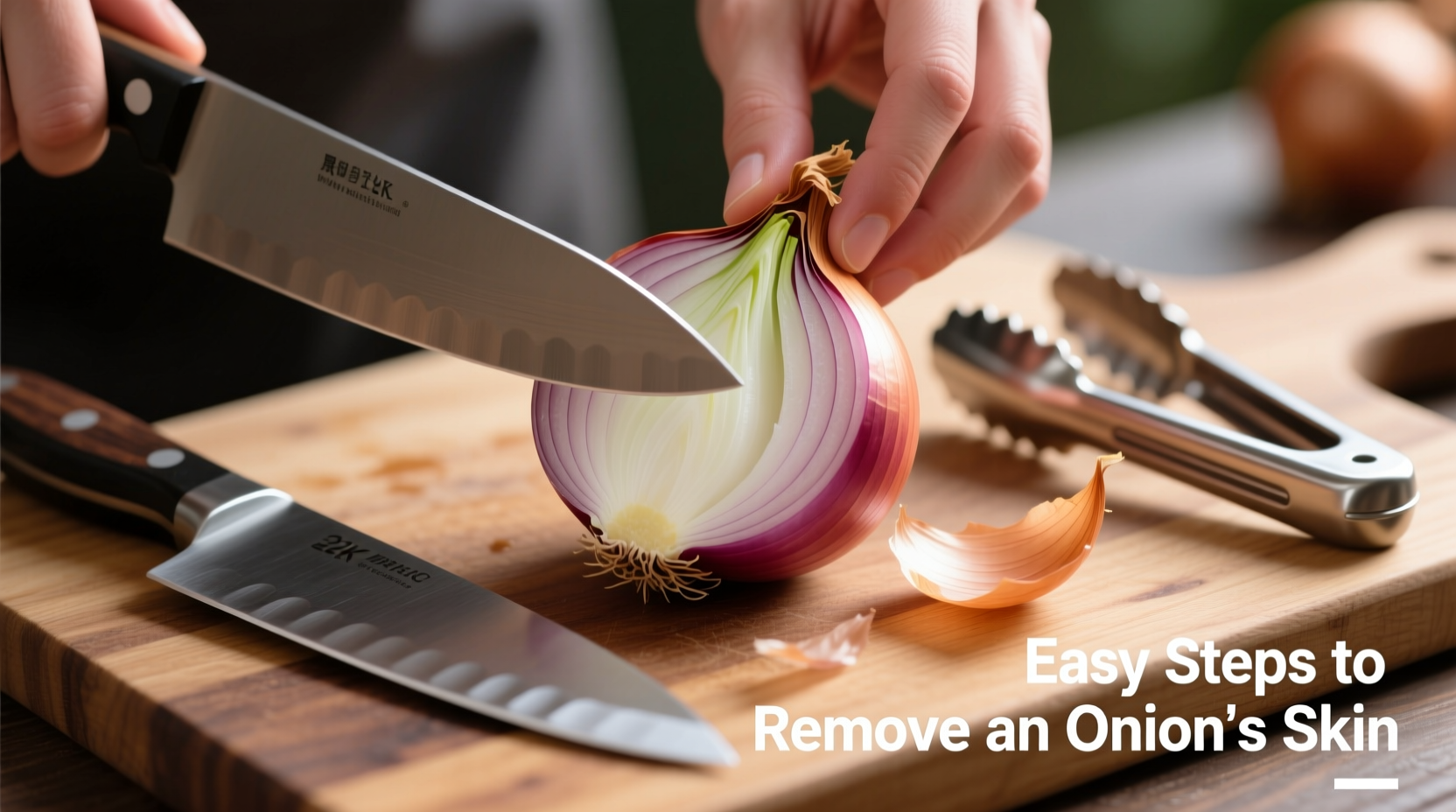
An onion (Allium cepa) is a biennial vegetable belonging to the Amaryllidaceae family, widely cultivated and consumed for its layered bulb, which grows underground. The edible portion consists of fleshy concentric scales enclosed within one or more thin, dry, protective outer layers commonly referred to as the \"skin\" or \"peel.\" These outer layers are typically brown, red, or white depending on the variety and serve to protect the moisture-rich interior from pests, dehydration, and physical damage during growth and storage.
In cooking, the skin must be removed before use because it is fibrous, inedible, and can impart bitterness if left on during preparation. While the process seems straightforward, improper technique can lead to wasted onion, inconsistent cuts, or increased exposure to sulfur compounds that cause eye irritation. Mastering the art of peeling ensures cleaner prep work, better texture in dishes, and improved efficiency in the kitchen.
Key Characteristics of Onion Skin
The outer skin of an onion plays a critical biological role and possesses distinct physical properties:
| Characteristic | Description |
|---|---|
| Texture | Dry, papery, brittle when fresh; becomes more adhesive when damp |
| Color | Brown (yellow onions), red-purple (red onions), translucent white (white onions) |
| Thickness | Thin—usually less than 0.1 mm—but tightly adhered to the first fleshy layer |
| Adhesion | Sticks firmly to the outermost edible layer due to natural pectins and moisture |
| Culinary Function | Protective barrier only; never consumed |
| Shelf Life (onion with skin) | Up to 3 months in cool, dry storage; peeled onions last 7–10 days refrigerated |
Understanding these traits explains why certain peeling methods work better than others. Moisture, temperature, and mechanical separation all influence how easily the skin releases from the bulb.
Practical Usage: Step-by-Step Methods to Remove Onion Skin
There are several reliable techniques for removing onion skin, each suited to different contexts—from quick home cooking to large-scale prep. The best method depends on the number of onions, desired speed, available tools, and sensitivity to odor or tears.
Method 1: The Knife-and-Pinch Technique (Standard Home Method)
This is the most common and accessible approach, ideal for one or two onions.
- Lay the onion on a cutting board and slice off the root end (the hairy base), taking care not to cut deeply into the bulb.
- Cut off the stem end (top), removing about ½ inch to expose the core layers.
- Place the flat-cut side down. Using a chef’s knife, carefully halve the onion through the root center.
- Peel back the outer skin starting from the cut edge. It should lift easily.
- Use your fingers to gently pull the skin away from each half, assisted by light pressure from the knife tip if needed.
- Rinse briefly under cold water if residue remains, then proceed with chopping or slicing.
This method works because cutting both ends breaks the structural tension of the layers, allowing the skin to release more freely. It requires minimal tools and gives precise control.
Pro Tip: Work near running water or under a vent hood to reduce airborne sulfur compounds that irritate eyes. Alternatively, chill the onion for 15 minutes before peeling—cold reduces volatile gas release.
Method 2: The Shake-in-a-Jar Technique (Bulk Peeling)
When preparing multiple onions—such as for soups, sauces, or pickling—this method saves significant time.
- Blanch onions in boiling water for exactly 30–45 seconds.
- Immediately transfer them to an ice bath for 1 minute to stop cooking.
- Drain and pat dry lightly.
- Place 3–4 onions inside a rigid plastic or glass jar with a wide mouth (e.g., a half-gallon mason jar).
- Seal the lid tightly and shake vigorously for 10–15 seconds.
- Open the jar—the skins will have separated and can be lifted off effortlessly.
This technique leverages thermal shock: the rapid expansion and contraction between hot and cold water create micro-separations between the skin and the flesh. Shaking completes the detachment mechanically. Ideal for yellow or red storage onions, though less effective with smaller pearl or boiler varieties.
Method 3: Microwave Loosening (Emergency Speed-Peel)
For urgent prep when no other method is feasible, microwaving offers a surprising shortcut.
- Score the bottom of the onion with an “X” using a paring knife.
- Place it in the microwave and heat on high for 20–30 seconds.
- Allow to cool slightly (about 30 seconds) to avoid burns.
- Starting at the cut end, peel the skin upward—it should come off in large sheets.
The microwave heats internal moisture, causing slight steam pressure that lifts the skin. Use this sparingly, as overheating can begin to cook the onion, altering texture and flavor.
Method 4: Underwater Peeling (Tear-Free Option)
To completely eliminate eye irritation, peel the onion submerged in a bowl of cold water.
- Fill a large bowl with cold water.
- Submerge the whole onion and trim both ends underwater.
- Begin peeling from the stem end while still submerged.
- The skin will separate cleanly, and sulfur compounds dissolve in water instead of rising into the air.
While effective, this method can make the onion slightly waterlogged if left too long. Best for immediate cooking applications where texture isn’t critical, such as stews or blended soups.
Variants & Types: How Onion Variety Affects Peeling
Not all onions behave the same way when peeled. Their size, moisture content, and skin thickness vary significantly across types, influencing which removal method works best.
| Onion Type | Skin Characteristics | Recommended Peeling Method |
|---|---|---|
| Yellow (Brown) Onion | Thick, multi-layered skin; strong adhesion | Blanch-and-shake or standard knife method |
| Red Onion | Slightly thinner skin, vivid color, moderate stickiness | Knife-and-pinch or microwave-assisted |
| White Onion | Thin, delicate skin; prone to tearing | Gentle knife method or underwater peeling |
| Pearl/Boiler Onions | Very small, tight skin-to-flesh bond | Blanch only (no shaking); use a toothpick to assist |
| Green Onions (Scallions) | Minimal skin, mainly at white base | Trim roots and peel lower 1–2 inches if fibrous |
Storage conditions also affect peeling ease. Older onions tend to have drier, looser skins, while freshly harvested or humid-stored ones cling more tightly. Always inspect before choosing a method.
Comparison with Similar Ingredients
Onions are often confused with related alliums, some of which require different handling. Understanding distinctions prevents misuse and ensures proper preparation.
| Ingredient | Similarity to Onion | Key Difference in Skin/Peeling |
|---|---|---|
| Shallot | Same genus; layered bulb | Skin is thinner and more fragile; often comes in clusters requiring separation first |
| Garlic | Close relative; clove structure | Each clove has individual skin; best removed by pressing or soaking in warm water |
| Leek | Allium family member | No true outer skin; instead, has tough outer leaves removed rather than peeled |
| Chives | Edible green allium | No peeling required; stems are fully edible |
Mistaking garlic cloves for baby onions or leeks for green onions can lead to incorrect prep. Always identify the ingredient correctly before beginning.
Practical Tips & FAQs
Why do onions make me cry when I peel them?
When cells are ruptured during peeling or cutting, enzymes convert sulfoxides into sulfenic acid, which forms a volatile gas called syn-propanethial-S-oxide. This gas reacts with moisture in your eyes to create mild sulfuric acid, triggering tears. To minimize this, chill the onion beforehand, use sharp tools to reduce cell damage, or work in a well-ventilated area.
Can I eat onion skin?
No. While onion skins contain high levels of quercetin (an antioxidant), they are indigestible and may harbor dirt, pesticides, or microbial contaminants. They are strictly for composting or extraction in controlled settings—not human consumption.
How do restaurants peel onions so fast?
Professional kitchens often use industrial blanching lines or steam tunnels for bulk prep. For smaller batches, chefs rely on precision knife skills and consistent workflow. Many also keep onions refrigerated until use to reduce tear-inducing volatiles.
Is there a tool specifically for peeling onions?
Yes, though not widely adopted. Devices like the \"Onion Peeler Machine\" exist for commercial use, employing rotating brushes or steam. At home, silicone gloves can improve grip on slippery skins, but manual methods remain most practical.
Can I freeze onions to make peeling easier?
Freezing is not recommended for peeling alone. It damages cell structure, leading to mushy texture upon thawing. However, brief chilling (not freezing) in the refrigerator for 15–30 minutes improves comfort and reduces gassing.
What’s the best way to store peeled onions?
Store in an airtight container in the refrigerator for up to 10 days. Exposure to air accelerates spoilage and odor transfer. For longer storage, chop and freeze in portions—frozen onions last up to 6 months but are best used in cooked dishes.
Expert Insight: “In my 20 years as a line cook, I’ve found that consistency beats speed. Take two extra seconds to properly trim the ends, and the skin will come off twice as fast.” — Chef Elena Torres, former sous chef at Bistro Marlowe
Summary & Key Takeaways
Removing an onion’s skin efficiently hinges on understanding its anatomy and leveraging smart, tested techniques. The outer layer exists solely for protection and must be discarded before cooking. Different methods suit different needs: the knife-and-pinch technique for precision, the shake-in-a-jar method for volume, microwave loosening for urgency, and underwater peeling for comfort.
- Always start by trimming both ends of the onion to break structural tension.
- Use thermal shock (blanching and chilling) to loosen stubborn skins in bulk.
- Choose the right method based on onion type—yellow, red, white, or pearl.
- Minimize tears by working cold, sharp, and ventilated.
- Never consume the skin, despite its antioxidant content.
- Store peeled onions properly to maximize freshness and prevent contamination.
Mastering this fundamental skill streamlines every recipe that begins with “one medium onion, diced.” With practice, peeling becomes second nature—a quiet, efficient step in the rhythm of cooking. Try each method once, note what works best in your kitchen, and refine your routine. The difference between a frustrating start and a seamless prep lies not in talent, but in technique.
Next time you reach for an onion, pause and apply one new peeling strategy. Notice how much faster and cleaner your prep becomes. Share your favorite tip with fellow cooks—sometimes the smallest tricks make the biggest impact.




 浙公网安备
33010002000092号
浙公网安备
33010002000092号 浙B2-20120091-4
Comments
No comments yet. Why don't you start the discussion?