
In a world where social media is woven into daily communication, entertainment, and even work, completely removing apps from your phone often feels unrealistic. Yet excessive screen time can disrupt sleep, reduce productivity, and affect mental well-being. The good news? You don’t need to delete your favorite platforms to regain control. With thoughtful adjustments and intentional habits, you can significantly reduce screen time while still staying connected.
The goal isn't digital deprivation—it's digital balance. By making small but strategic changes to how you interact with your devices, you can reclaim hours each week, improve focus, and feel more present in your offline life.
Redefine Your Relationship with Notifications
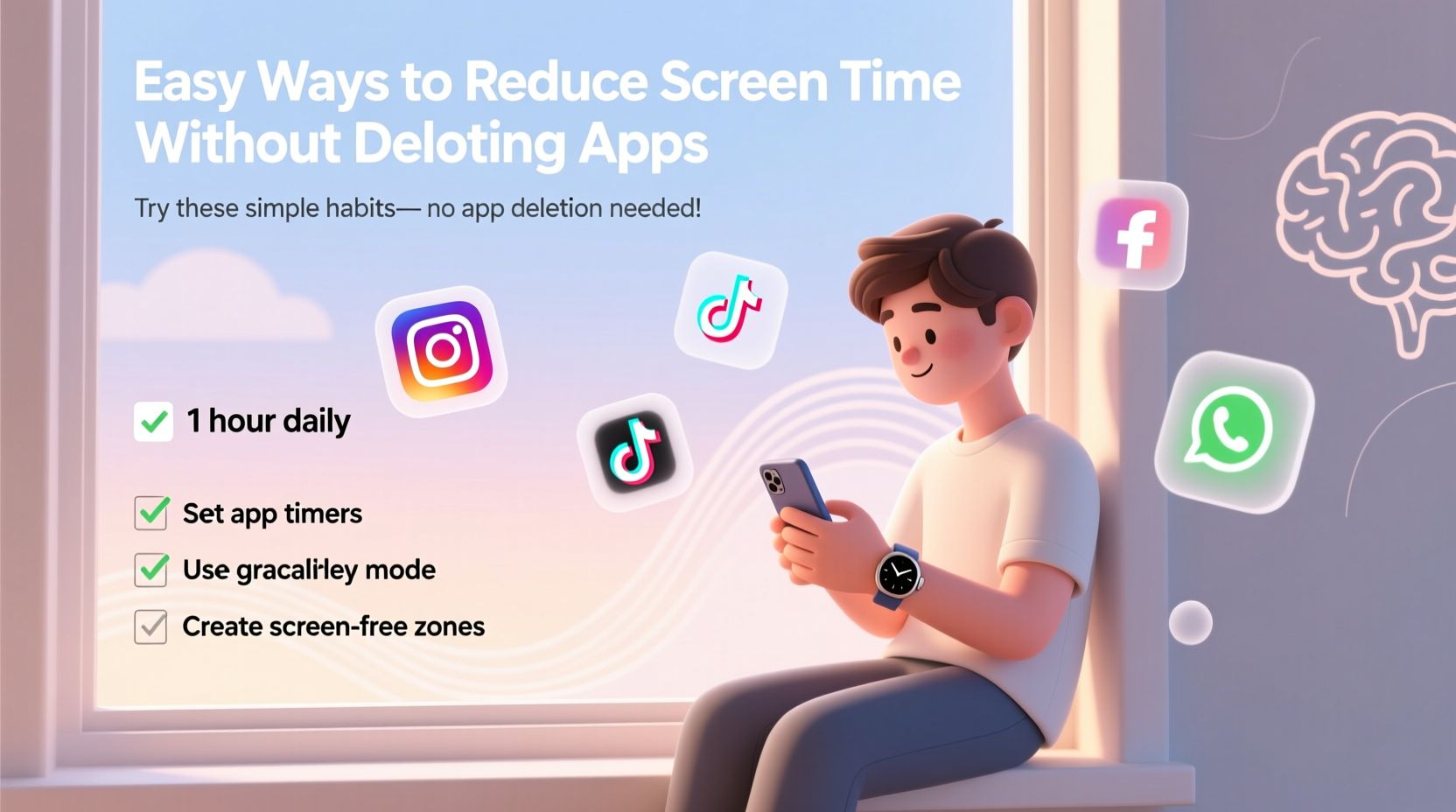
Notifications are designed to pull your attention back to apps the moment they sense inactivity. Each buzz or pop-up triggers a dopamine response, reinforcing compulsive checking. But not all alerts deserve equal priority. Taking control of notifications is one of the fastest ways to reduce mindless scrolling.
Start by auditing which apps are allowed to send you alerts. Go to your phone’s settings and disable notifications for everything except essential communications—like direct messages from close contacts or calendar reminders. Turn off likes, comments, and “someone mentioned you” prompts. These are rarely urgent and often serve only to keep you engaged.
Consider switching to manual check-ins. Instead of reacting to every alert, schedule two or three times per day to review your social feeds. This transforms passive consumption into intentional engagement.
Create Physical and Digital Boundaries
Where you keep your phone—and when you allow yourself to use it—has a profound impact on usage patterns. Behavioral psychology shows that increasing friction between desire and action reduces impulsive behavior. Simple environmental tweaks can make a big difference.
- Charge your phone outside the bedroom at night.
- Use a traditional alarm clock instead of your phone.
- Keep your device in a bag or drawer during meals and conversations.
- Designate one room in your home as a “no-phone zone,” such as the dining area or living room.
On the software side, leverage built-in tools like Screen Time (iOS) or Digital Wellbeing (Android). Set daily app limits for social media. When you hit your cap, the app will prompt you to stop—or require a passcode to continue. This pause creates space for reflection: Do I really want to spend more time here right now?
“Small barriers create awareness. And awareness is the first step toward change.” — Dr. Lena Torres, Cognitive Psychologist specializing in digital behavior
Optimize App Layout and Accessibility
Your phone’s home screen layout shapes your habits. If Instagram, TikTok, and X (formerly Twitter) are front and center, you’re more likely to open them out of habit than need. Rearranging your interface can subtly shift your behavior over time.
Move social media apps to a secondary screen, ideally inside a folder labeled something neutral like “Utilities” or “Online.” Out of sight, out of mind. Replace your home screen with apps that support your goals: a notes app, a meditation guide, a fitness tracker, or your calendar.
Additionally, remove apps from the dock or bottom bar—prime real estate reserved for most-used functions. Swap them with tools you want to use more, like a reading app or journal.
| Current Setup | Better Alternative |
|---|---|
| Social apps on home screen & dock | Social apps buried in folder on second screen |
| Live icons with animations | Static icons; grayscale display enabled |
| Unlimited access | Daily time limits set via system tools |
| All notifications enabled | Only DMs and mentions allowed |
You can also enable grayscale mode on your phone. A black-and-white display may seem minor, but it reduces visual appeal. Colorful feeds lose their vibrancy, making them less stimulating and less addictive.
Adopt a Scheduled Social Media Routine
Most people scroll without purpose—opening an app “just to check” and emerging 30 minutes later with no clear memory of what they saw. Replacing random browsing with scheduled sessions introduces structure and accountability.
Try this four-step timeline over seven days to build a healthier rhythm:
- Day 1–2: Track current usage using your phone’s native dashboard. Note peak times and average duration.
- Day 3: Choose two 15-minute windows for social media—e.g., 12:30 PM and 7:00 PM. Stick to them strictly.
- Day 4–5: Reduce to one 10-minute session midday. Use a timer.
- Day 6–7: Evaluate mood, focus, and energy. Adjust timing based on what supports your routine.
This method doesn’t eliminate access; it makes it deliberate. Over time, you’ll notice you get the same value—staying informed, connecting with friends—in far less time.
Replace Scrolling with Substitutes That Satisfy the Same Need
People don’t crave social media for the apps themselves—they crave connection, novelty, distraction, or entertainment. The key to lasting change is replacing the behavior with alternatives that fulfill the same psychological function.
For example:
- If you scroll to unwind, try a 10-minute guided breathing exercise or a short walk outside.
- If you check updates for social belonging, schedule a weekly call with a friend instead.
- If boredom drives your usage, keep a paperback book, sketchpad, or podcast queue ready.
- If you seek inspiration, subscribe to a curated newsletter or save interesting articles to read later.
“We don’t break habits by willpower alone. We break them by substitution.” — James Lang, author of *Digital Minimalism: Choosing a Focused Life in a Noisy World*
A mini case study illustrates this well: Sarah, a 29-year-old graphic designer, realized she spent over two hours daily on Instagram, mostly during breaks. She wasn’t posting much—just consuming design trends and lifestyle content. After identifying her core needs (creative inspiration and mental reset), she replaced 80% of her scrolling with a curated Pinterest board she reviewed once daily and started listening to design podcasts during lunch. Within three weeks, her screen time dropped by 70%, and she reported feeling more creatively energized.
Essential Checklist: 7 Actions to Reduce Screen Time Today
Implement these steps immediately to begin building better habits:
- Turn off non-essential notifications for all social apps.
- Set a daily time limit (e.g., 30 minutes total) using built-in phone tools.
- Move social media apps to a hidden folder on the second screen.
- Enable grayscale mode during evening hours.
- Schedule two fixed times per day to check social platforms.
- Charge your phone outside the bedroom overnight.
- Identify one substitute activity (e.g., reading, stretching) to do instead of scrolling.
Frequently Asked Questions
Won’t I miss important updates if I limit my social media time?
Most critical updates—personal messages, event invites, job opportunities—reach you through direct channels like texts, emails, or calls. Social media feeds are filled with noise; meaningful information is usually shared through direct interaction. By focusing on DMs and setting up alerts only for those, you won’t miss what matters.
What if my job requires me to be on social media?
If your role involves content creation, community management, or marketing, apply the same principles within professional boundaries. Use dedicated work profiles, set strict time blocks for platform tasks, and avoid mixing personal browsing with professional use. Consider browser-based access instead of mobile apps to create separation.
How long does it take to see results from reducing screen time?
Many people report improved sleep and concentration within 3–5 days. After two weeks, reduced anxiety and increased free time become noticeable. Lasting change typically takes 21–30 days of consistent practice. Track your progress weekly to stay motivated.
Final Thoughts: Small Shifts, Big Impact
Reducing screen time isn’t about going cold turkey or rejecting technology. It’s about reclaiming agency over your attention—one intentional choice at a time. The methods outlined here don’t demand perfection. They offer flexibility, sustainability, and real-world applicability.
You don’t have to delete your accounts to live differently. You just have to redesign your environment, reframe your habits, and reconnect with what truly enriches your life beyond the screen.




 浙公网安备
33010002000092号
浙公网安备
33010002000092号 浙B2-20120091-4
Comments
No comments yet. Why don't you start the discussion?