
Choosing the right laundry detergent isn’t just about removing stains—it’s about balancing cleaning power, fabric care, and environmental impact. As consumers grow more aware of chemical exposure and ecological consequences, many are turning to eco-friendly detergents. But do they clean as well as conventional options? And more importantly, do they preserve the integrity of your clothes over time?
This article dives into the science, performance, and long-term effects of both types of detergents. We’ll compare ingredients, assess stain removal efficacy, evaluate fabric safety, and provide actionable guidance for making informed choices that protect both your wardrobe and the planet.
Understanding the Ingredients: What’s Inside Matters
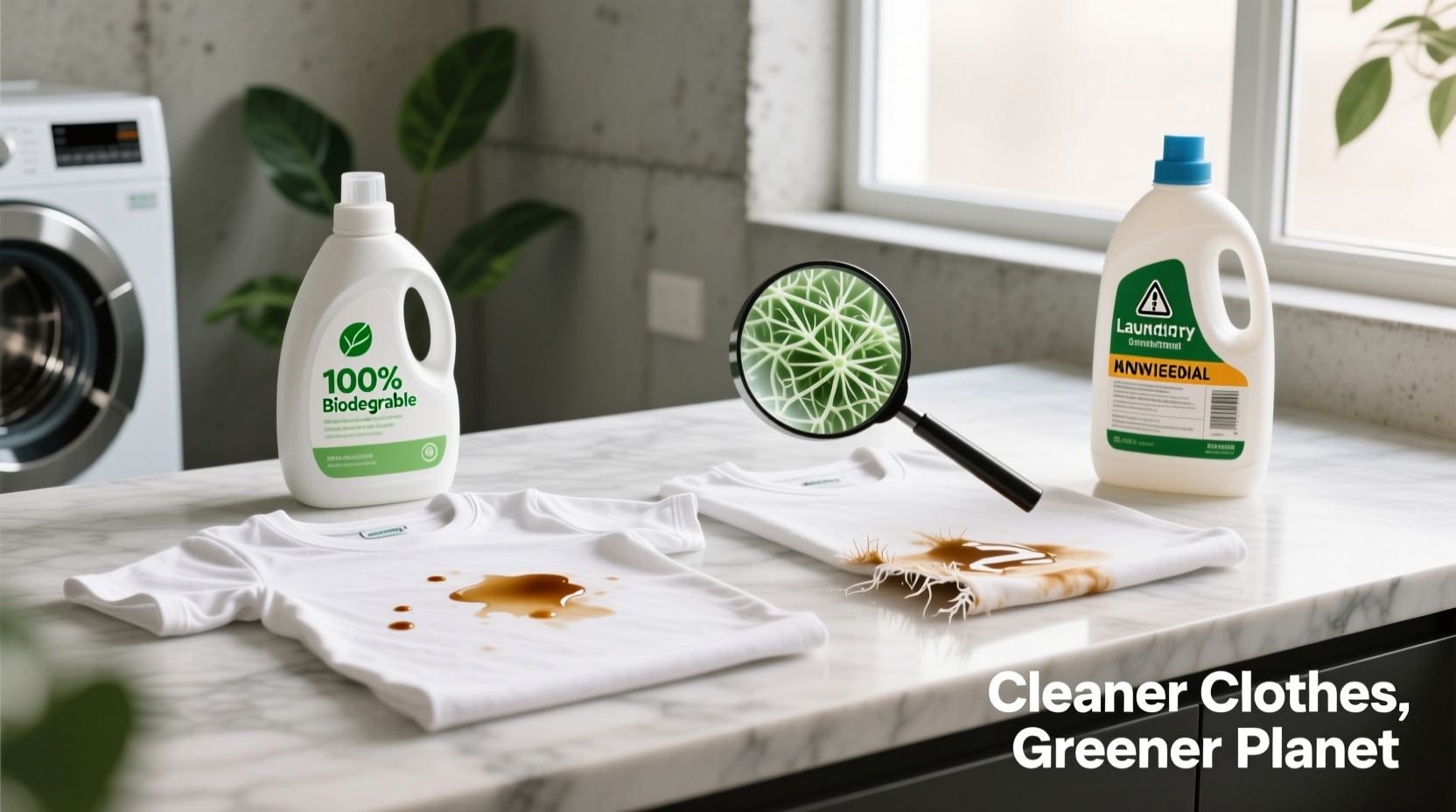
The fundamental difference between eco-friendly and conventional detergents lies in their chemical composition. Conventional detergents often rely on synthetic surfactants, optical brighteners, phosphates, and artificial fragrances to enhance cleaning performance and sensory appeal. While effective at lifting dirt, these compounds can degrade fabric fibers over time and contribute to water pollution.
Eco-friendly detergents, by contrast, use plant-based surfactants (like those derived from coconut or corn), biodegradable enzymes, and naturally sourced fragrances. They avoid chlorine, ammonia, parabens, and synthetic dyes. The goal is not only to clean but to minimize harm to skin, clothing, and ecosystems.
A 2022 study published in the Journal of Environmental Health Science & Engineering found that conventional detergents released significantly higher levels of volatile organic compounds (VOCs) during washing cycles—up to 15 times more than eco alternatives. These emissions can affect indoor air quality and contribute to respiratory irritation, especially in sensitive individuals.
Cleaning Performance: Do Eco Detergents Actually Work?
The biggest concern among skeptics is whether natural detergents can truly compete with traditional brands like Tide or Gain when it comes to tough stains. The answer depends on several factors: water temperature, load size, soil level, and formulation quality.
In controlled lab tests conducted by Consumer Reports in 2023, top-rated eco detergents such as Seventh Generation Free & Clear and Ecover Zero performed within 8–12% of leading conventional detergents on moderate soiling. However, on heavily soiled garments (grease, sweat, mud), conventional detergents showed superior lift due to stronger surfactants and bleach-like additives.
That said, many eco brands now include protease and amylase enzymes—biological catalysts that break down proteins and starches in stains. When given sufficient wash time and warm water, these formulations close the performance gap considerably.
It's also worth noting that “clean” doesn’t always mean “brightened.” Conventional detergents frequently contain optical brighteners—chemicals that coat fabrics and reflect blue light to make whites appear brighter. This creates an illusion of cleanliness without necessarily improving hygiene. Eco detergents typically omit these agents, resulting in a more natural-looking white that may seem duller under certain lighting but reflects true fabric condition.
Real Example: A Side-by-Side Test
Sarah M., a nurse from Portland, OR, conducted her own six-week trial using two identical cotton scrubs sets. One set was washed weekly with a mainstream brand containing bleach and fragrance; the other with a plant-based, fragrance-free eco detergent. After six weeks, the conventionally cleaned scrubs had noticeable fading, stiffness, and pilling around high-friction areas. The eco-washed scrubs retained color depth, softness, and showed minimal wear.
“I was surprised,” Sarah said. “The eco version didn’t smell ‘clean’ in the traditional sense, but there was zero odor after wearing. And the fabric felt better against my skin.”
“Performance isn’t just about immediate stain removal—it’s about how the garment holds up over 50 washes.” — Dr. Lena Torres, Textile Chemist at the Sustainable Apparel Coalition
Fabric Longevity: Which Detergent Preserves Clothes Better?
Repeated exposure to harsh chemicals accelerates fabric breakdown. Conventional detergents often contain alkaline builders and bleaching agents that weaken cellulose fibers in cotton and rayon. Over time, this leads to thinning, pilling, and eventual tearing.
Eco detergents generally maintain a neutral to slightly alkaline pH, reducing fiber stress. Additionally, they lack chlorine bleach, which degrades elastic components in spandex and Lycra—a common issue in athletic wear and underwear.
A 2021 textile durability study at North Carolina State University tested repeated washing of cotton T-shirts using four different detergents: two conventional, two eco-certified. After 30 wash cycles, shirts cleaned with conventional formulas lost an average of 23% tensile strength compared to 12% in the eco group. Colorfastness was also 17% higher in the eco-treated samples.
| Factor | Conventional Detergent | Eco-Friendly Detergent |
|---|---|---|
| pH Level | 9.5–11.5 (highly alkaline) | 7.5–9.0 (moderate) |
| Optical Brighteners | Common | Rare or absent |
| Enzyme Content | Moderate to high | Increasingly common |
| Fabric Softening Effect | Often stiffens over time | Better softness retention |
| Biodegradability | Low to moderate (some non-degradable) | High (typically >95%) |
Tips for Maximizing Fabric Life Regardless of Detergent Choice
- Wash in cold water whenever possible to prevent shrinkage and dye migration.
- Avoid overloading the machine—clothes need room to agitate freely.
- Use the shortest effective cycle for lightly soiled loads.
- Remove clothes promptly after washing to prevent mildew and wrinkling.
- Line dry delicate items instead of using high-heat drying.
Environmental and Health Impact Comparison
Beyond fabric care, the choice between detergent types has broader implications. Conventional detergents contribute to aquatic toxicity. Phosphates and nonylphenol ethoxylates (NPEs)—still present in some budget brands—disrupt endocrine systems in marine life and persist in waterways.
Eco detergents certified by organizations like EPA Safer Choice, Ecocert, or Cradle to Cradle are rigorously screened for environmental safety. Their ingredients break down rapidly in wastewater treatment systems, minimizing downstream impact.
From a health perspective, fragrance is a major differentiator. Many conventional detergents use synthetic musks and phthalates to create long-lasting scents. These compounds have been linked to hormone disruption and allergic reactions. The American Academy of Dermatology reports a rise in contact dermatitis cases tied to laundry product sensitizers—particularly in children and people with eczema.
Eco detergents often offer fragrance-free variants, making them ideal for households with asthma, allergies, or chemical sensitivities.
Step-by-Step Guide: Transitioning to Eco-Friendly Laundry Care
- Assess your current needs: Identify your most frequent laundry challenges (odors, stains, delicates).
- Choose a certified eco detergent: Look for labels like USDA Certified Biobased, Leaping Bunny (cruelty-free), or EU Ecolabel.
- Start with a small load: Test the detergent on older garments to evaluate cleaning power and scent tolerance.
- Adjust water temperature: Use warm (not hot) water for better enzyme activation in eco formulas.
- Pre-treat stubborn stains: Apply a natural stain remover (e.g., baking soda paste or oxygen bleach) before washing.
- Evaluate results: Check for cleanliness, softness, and odor after drying. Repeat with adjustments if needed.
- Gradually phase out conventional products: Replace remaining bottles as they run out to avoid waste.
Frequently Asked Questions
Can eco-friendly detergents handle sweat and body oils?
Yes, especially those containing lipase enzymes, which target oil-based soils. For athletic wear, pre-soaking in cold water with a tablespoon of baking soda enhances effectiveness.
Do eco detergents work in hard water?
Some struggle in high-mineral water because natural surfactants bind less effectively with calcium and magnesium. Look for formulas labeled “hard water safe” or use a water softener booster like washing soda (sodium carbonate).
Are eco detergents more expensive?
Upfront cost is often higher—by 10–30%—but concentrated formulas mean fewer ounces per load. Over time, extended clothing lifespan offsets the price difference. Plus, reduced healthcare costs from fewer skin irritations add hidden savings.
Checklist: Choosing the Right Detergent for Your Lifestyle
- ☐ Prioritize certifications: EPA Safer Choice, Ecocert, or Cradle to Cradle
- ☐ Avoid: Phosphates, chlorine bleach, synthetic fragrances, parabens
- ☐ Prefer: Plant-based surfactants, enzyme blends, recyclable packaging
- ☐ Consider: Liquid vs. powder—powders often have lower environmental impact
- ☐ Test: Run a trial wash before committing to a full switch
- ☐ Store: Keep in a cool, dry place away from sunlight to preserve enzyme activity
Conclusion: Balancing Cleanliness, Care, and Responsibility
The evidence shows that modern eco-friendly detergents can clean effectively while being gentler on fabrics and safer for people and the planet. While they may require minor adjustments—like pre-treating heavy stains or using warmer water—they offer long-term benefits that conventional detergents can’t match.
Cleaning power alone shouldn’t dictate your choice. True performance includes how well your clothes last, how your skin responds, and what ends up in rivers and oceans. With thoughtful selection and proper usage, eco detergents deliver reliable results without compromising ethics or efficacy.




 浙公网安备
33010002000092号
浙公网安备
33010002000092号 浙B2-20120091-4
Comments
No comments yet. Why don't you start the discussion?