
Calisthenics is one of the most accessible and efficient forms of physical training. It requires no equipment, can be done anywhere, and scales perfectly from beginner to elite fitness levels. Whether you're just starting your fitness journey or looking to refine your strength and control, a well-structured calisthenics routine builds functional muscle, improves coordination, and enhances overall athleticism.
The beauty of calisthenics lies in its simplicity and adaptability. Exercises like push-ups, squats, planks, and pull-ups use your body weight as resistance, engaging multiple muscle groups simultaneously. With consistent practice and smart progression, you can develop impressive upper-body strength, core stability, and lower-body power—all without stepping into a gym.
Why Calisthenics Works for Everyone
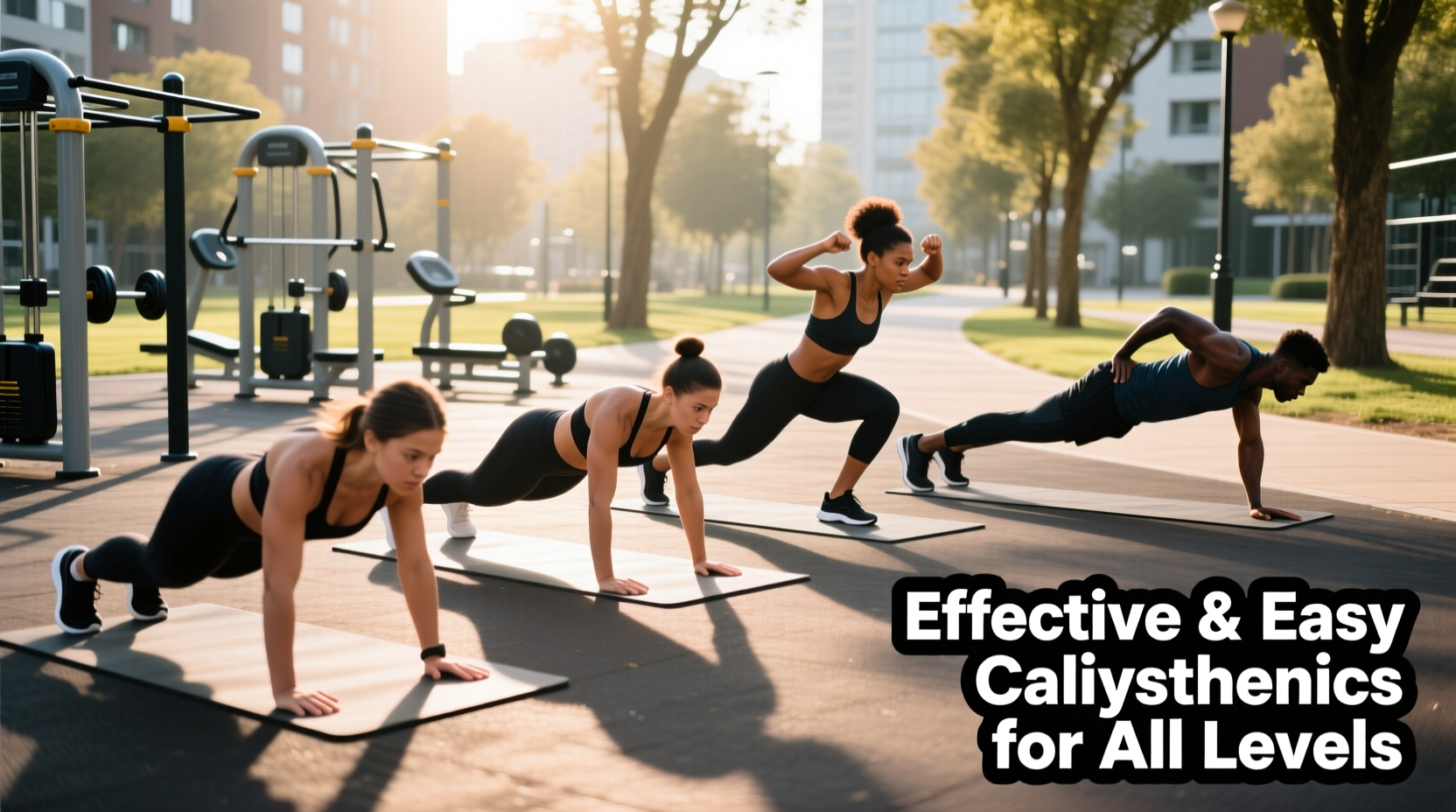
Unlike weightlifting, which often demands specialized equipment and technical knowledge, calisthenics meets you where you are. A beginner can start with wall push-ups and progress to full push-ups, then eventually to handstand push-ups. The same principle applies across movements: progression is built into the system.
Research supports the effectiveness of bodyweight training for building muscular endurance and hypertrophy when performed with proper volume and intensity. According to the American Council on Exercise (ACE), \"Bodyweight exercises can elicit comparable strength gains to resistance training when programmed progressively and consistently.\"
“Calisthenics teaches you to master your own body. That control translates into real-world strength and injury resilience.” — James Grage, Fitness Educator and Co-founder of BODYPARTS
Beginner Calisthenics Plan: Building the Foundation
If you’re new to calisthenics, focus on form, consistency, and building baseline strength. This 3-day-per-week plan emphasizes full-body engagement and joint stability.
Weekly Schedule
- Monday: Full Body A
- Wednesday: Full Body B
- Saturday: Active Recovery & Mobility
Workout A
- Warm-up (5 min): Arm circles, leg swings, torso twists
- Wall Push-ups – 3 sets x 10 reps
- Assisted Squats (hold onto a chair) – 3 x 12
- Incline Plank (hands on bench) – 3 x 20 seconds
- Glute Bridges – 3 x 15
- Standing Rows (use a table edge) – 3 x 10
Workout B
- Warm-up (5 min)
- Knee Push-ups – 3 x 8
- Bodyweight Squats – 3 x 10
- Seated Leg Lifts – 3 x 12
- Side-Lying Clamshells – 3 x 10 per side
- Standing Calf Raises – 3 x 15
Intermediate Calisthenics Routine: Strength and Control
Once you can perform 15+ knee push-ups, 20+ bodyweight squats, and hold a plank for 60 seconds, it’s time to increase intensity. This phase introduces unilateral work, tempo variations, and compound movements.
4-Day Split Plan
| Day | Focus | Key Exercises |
|---|---|---|
| Monday | Push & Core | Push-ups, Pike Push-ups, Plank Variations |
| Tuesday | Pull & Legs | Inverted Rows, Jump Squats, Lunges |
| Thursday | Upper Strength | Diamond Push-ups, Negative Pull-ups, Dips (on chairs) |
| Saturday | Full Body Circuit | AMRAP: 10 Push-ups, 15 Squats, 20 Mountain Climbers |
Sample Circuit (Saturday)
Complete as many rounds as possible (AMRAP) in 15 minutes:
- Push-ups – 10 reps
- Bodyweight Squats – 15 reps
- Mountain Climbers – 20 reps
- Plank – 30 seconds
Progression Strategy
- Add 1–2 reps per set weekly
- Shorten rest periods (from 60s to 45s)
- Incorporate pauses (e.g., 2-second bottom push-up hold)
Advanced Calisthenics Training: Power and Mastery
At the advanced level, the goal shifts from building strength to achieving movement mastery—think pull-ups, dips, muscle-ups, and handstands. Training becomes more skill-based, requiring precision and control.
Weekly Structure
- Day 1: Vertical Push & Core – Handstand practice, Pike Push-ups, L-sit progressions
- Day 2: Horizontal Pull – Weighted Pull-ups, Front Lever Progressions, Inverted Rows
- Day 3: Lower Body & Plyo – Pistol Squats, Jump Lunges, Single-Leg Glute Bridges
- Day 4: Skill Day – Muscle-up attempts, Free-standing Handstand, Planche Lean Holds
Sample Advanced Workout (Pull Focus)
- Warm-up: Scapular shrugs, dead hangs – 3 x 30 sec
- Negative Pull-ups – 4 x 5 (5-second descent)
- Front Lever Raises (tuck) – 3 x 6
- Wide-Grip Pull-ups – 4 x 8
- Hanging Leg Raises – 4 x 12
Essential Tips for Long-Term Success
Regardless of your level, these principles ensure steady progress and injury prevention.
Checklist: Calisthenics Success Essentials
- ✅ Warm up properly before each session
- ✅ Prioritize form over speed or reps
- ✅ Train at least 3 days per week consistently
- ✅ Track your reps, sets, and progress weekly
- ✅ Incorporate active recovery or stretching on off-days
- ✅ Sleep 7–8 hours nightly for optimal recovery
One common mistake is skipping foundational work in favor of flashy moves like muscle-ups or handstands. Mastering the basics ensures longevity and reduces risk of shoulder or wrist injuries.
Mini Case Study: From Couch to Pull-up Bar
Mark, a 34-year-old office worker, started calisthenics with zero upper-body strength. He began with wall push-ups and assisted rows using a table. After six weeks of consistent training, he progressed to knee push-ups and negative pull-ups. By week 12, he completed his first unassisted pull-up. Within five months, he achieved 10 consecutive pull-ups and could hold a 30-second plank. His transformation wasn’t due to extreme effort—it was consistency and gradual progression.
Frequently Asked Questions
How often should I do calisthenics?
For most people, 3–5 sessions per week provide optimal results. Allow at least one full rest day, and consider active recovery (walking, stretching) on off days. Beginners should start with 3 days and build from there.
Can calisthenics build muscle like weightlifting?
Yes—when combined with progressive overload. Increase difficulty by slowing tempo, reducing leverage (e.g., elevating feet), or adding volume. Studies show bodyweight training can stimulate similar muscle growth to traditional resistance training if intensity is sufficient.
What if I don’t have a pull-up bar?
You can still train effectively. Use doorframe rows (with a towel), resistance bands anchored to a door, or even playground equipment. Many bodyweight exercises—like push-ups, dips, and core work—require no tools at all.
Final Thoughts and Call to Action
Calisthenics isn’t just a workout—it’s a sustainable lifestyle. It empowers you to stay fit without relying on gyms, memberships, or complex machines. Whether you’re a beginner mastering your first push-up or an athlete training for a muscle-up, the path is clear: start where you are, train with purpose, and trust the process.
The most effective workout is the one you can stick to. These plans are designed to grow with you, challenge you, and keep you moving. Begin today—even 10 minutes counts. Track your first week, celebrate small wins, and let momentum carry you forward.




 浙公网安备
33010002000092号
浙公网安备
33010002000092号 浙B2-20120091-4
Comments
No comments yet. Why don't you start the discussion?