
Curry is a beloved dish across cultures, known for its rich flavors and vibrant colors. However, those same qualities—especially the deep turmeric and spice pigments—can leave stubborn yellow or orange stains on white clothing. These stains are not only unsightly but can become permanent if treated incorrectly. The good news is that with prompt action and the right techniques, even the most intense curry stains can be removed safely, preserving both fabric integrity and brightness.
The key lies in understanding what causes curry stains and how different fabrics react to cleaning agents. Turmeric, a primary ingredient in most curries, contains curcumin—a powerful natural dye that binds quickly to fibers. Once set, it becomes increasingly difficult to lift. But by acting fast and using gentle yet effective household ingredients, you can restore your whites without bleach-related damage or fabric weakening.
Why Curry Stains Are Particularly Challenging
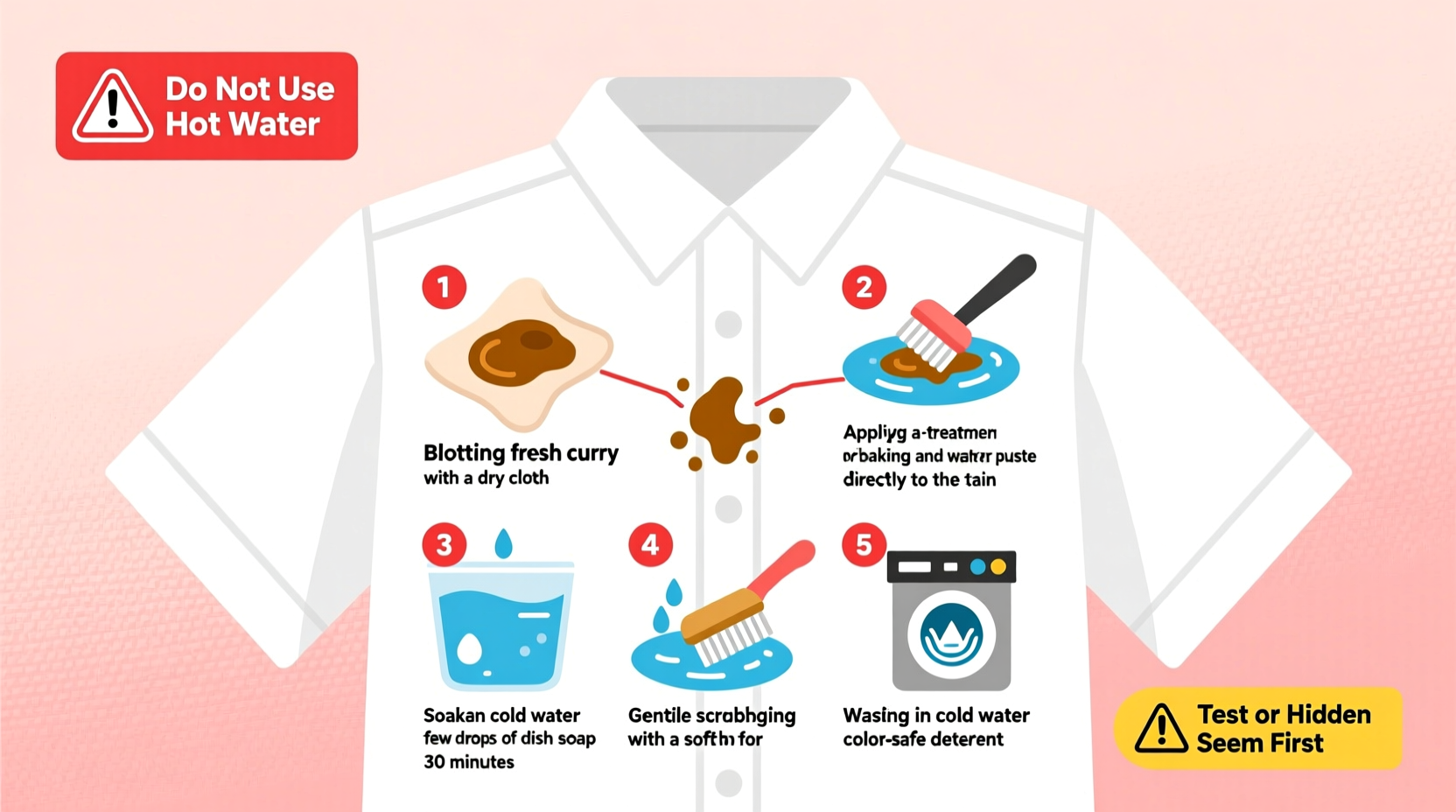
Unlike simple food spills, curry stains are complex. They often combine oil, protein (from dairy or meat), and highly pigmented spices. This combination means the stain has multiple components that require different treatment approaches:
- Turmeric and chili powder – deposit strong colorants that bind to cotton, polyester, and blends.
- Cooking oil or ghee – creates a greasy base that resists water-based cleaners.
- Dairy or tomato sauce – may contain proteins or acids that set into fibers if exposed to heat prematurely.
Washing stained clothes in hot water before treating them can “set” the stain permanently. Heat causes fibers to contract around the pigment, making removal far more difficult. That’s why immediate cold-water pre-treatment is essential.
“Turmeric is one of the most tenacious natural dyes used in textiles—and kitchens. Its staining power is no accident. Immediate blotting and cold water are your first line of defense.” — Dr. Lena Patel, Textile Chemist & Fabric Care Researcher
Step-by-Step Guide: Removing Fresh Curry Stains
For best results, begin treatment within 30 minutes of the spill. Follow this timeline to maximize stain removal while minimizing fabric stress.
- Blot, don’t rub: Use a clean cloth or paper towel to gently absorb excess curry. Rubbing pushes the stain deeper into fibers.
- Rinse under cold running water: Hold the stained area face-down under cool water to flush out as much residue as possible from the back side.
- Pre-treat with liquid detergent: Apply a small amount of enzyme-based laundry detergent directly to the stain. Gently work it in with your fingers or a soft brush.
- Soak in cold water for 30 minutes: Submerge the garment in a basin of cold water mixed with a tablespoon of dish soap (like Dawn) to break down oils.
- Check the stain: If significantly faded, launder as usual in cold water. If still visible, proceed to targeted stain treatments.
Effective Natural Remedies for Set-In Stains
If the stain has dried or survived a wash cycle, stronger intervention is needed—but harsh chemicals aren’t required. These natural methods are proven to lift turmeric and oil-based residues safely.
Vinegar and Baking Soda Paste
Mix two tablespoons of baking soda with one tablespoon of white vinegar to form a thick paste. Apply directly to the stain, let sit for 20–30 minutes, then scrub gently with a soft toothbrush. Rinse thoroughly with cold water before laundering.
Lemon Juice and Sunlight
Lemon juice acts as a mild bleaching agent when activated by UV light. Squeeze fresh lemon over the stain, dampen the area slightly, and lay the garment flat in direct sunlight for 2–4 hours. Reapply juice if the fabric dries. After exposure, rinse and wash normally. Note: Do not use on silk or wool—citric acid can damage protein fibers.
Hydrogen Peroxide (for Cotton Only)
For white cotton garments, apply 3% hydrogen peroxide directly to the stain. Let sit for 10 minutes (no longer—extended exposure weakens fibers). Blot and rinse with cold water. Repeat once if necessary before washing.
| Method | Best For | Time Required | Fabric Safety |
|---|---|---|---|
| Vinegar + Baking Soda | Fresh and oily stains | 30–60 min | Safe for cotton, linen, synthetics |
| Lemon + Sunlight | Set-in yellow stains | 2–4 hours | Only cotton; avoid delicates |
| Hydrogen Peroxide | Stubborn discoloration | 10–20 min | Cotton only; not for wool/silk |
| Dish Soap Soak | Oily residue removal | 30 min | All machine-washable fabrics |
Mini Case Study: Rescuing a Work Shirt After Lunch
Sarah, a marketing executive, spilled coconut curry on her favorite white blouse during a client lunch. She immediately blotted with a napkin and rinsed the back of the stain under cold tap water in the restroom. That evening, she soaked the blouse in cold water with dish soap for 45 minutes, then applied a baking soda-vinegar paste to the remaining yellow mark. After letting it sit for half an hour, she gently brushed the area and washed the shirt on cold with oxygen-based bleach (color-safe). The next day, the blouse was completely stain-free and retained its crisp appearance. Sarah avoided dry cleaning and prevented irreversible setting by acting promptly and avoiding heat.
Do’s and Don’ts of Curry Stain Removal
- ✅ Do treat the stain immediately
- ✅ Do use cold water for rinsing and soaking
- ✅ Do test remedies on a hidden seam first
- ✅ Do air-dry after treatment to check results before heat drying
- ❌ Don’t use hot water until the stain is gone
- ❌ Don’t apply undiluted bleach directly to fabric
- ❌ Don’t put the garment in the dryer with any trace of stain
- ❌ Don’t scrub aggressively with hard brushes
Frequently Asked Questions
Can I use regular bleach on curry stains?
Chlorine bleach can remove the color but risks yellowing white fabrics over time and weakens fibers. It also reacts poorly with turmeric, sometimes creating darker stains. Instead, opt for oxygen-based bleach (like OxiClean), which is gentler and specifically designed for organic stains.
What if the stain remains after washing?
Never dry the garment. Heat sets the stain permanently. Re-treat using lemon-sunlight or hydrogen peroxide methods, then rewash in cold water. Multiple treatments may be needed for deeply set stains.
Are these methods safe for all white fabrics?
Most are suitable for cotton, polyester, and blends. However, avoid acidic solutions (lemon, vinegar) and peroxide on silk, wool, or rayon. For delicates, use a mild detergent soak and consult care labels before applying any remedy.
Conclusion: Restore Your Whites with Confidence
Removing curry stains from white clothes doesn’t require expensive products or risky chemicals. With everyday items like vinegar, baking soda, lemon juice, and careful handling, even the most vivid turmeric marks can be eliminated. The secret is speed, patience, and respecting fabric limitations. By following these science-backed methods, you protect your wardrobe while maintaining cleanliness and confidence in your appearance.




 浙公网安备
33010002000092号
浙公网安备
33010002000092号 浙B2-20120091-4
Comments
No comments yet. Why don't you start the discussion?