
Mini fridges are convenient appliances found in dorm rooms, offices, garages, and guest rooms. But when they reach the end of their lifespan—whether due to malfunction, upgrade, or relocation—many people face the same question: what’s the best way to get rid of them without harming the environment? Improper disposal can lead to toxic refrigerants entering the atmosphere, landfill overcrowding, and wasted recyclable materials. Fortunately, there are responsible, eco-conscious ways to dispose of your mini fridge that protect both the planet and public health.
Why Proper Disposal Matters
Mini fridges contain components that pose environmental risks if not handled correctly. Most notably, they use refrigerants like hydrofluorocarbons (HFCs) or chlorofluorocarbons (CFCs), which are potent greenhouse gases. When released during improper disposal, these gases contribute significantly to climate change. In fact, one pound of HFC can have the same global warming impact as hundreds of pounds of carbon dioxide.
Beyond refrigerants, mini fridges also contain insulating foam with blowing agents, copper wiring, steel casings, and sometimes small amounts of oil or mercury in older models. Tossing the unit into a landfill means these materials either leach into soil and water or emit harmful emissions as they degrade.
“Improper appliance disposal is a hidden environmental threat. Recovering refrigerants and metals from old fridges prevents pollution and conserves resources.” — Dr. Linda Tran, Environmental Engineer at the Sustainable Appliance Coalition
Step-by-Step Guide to Safe and Eco-Friendly Disposal
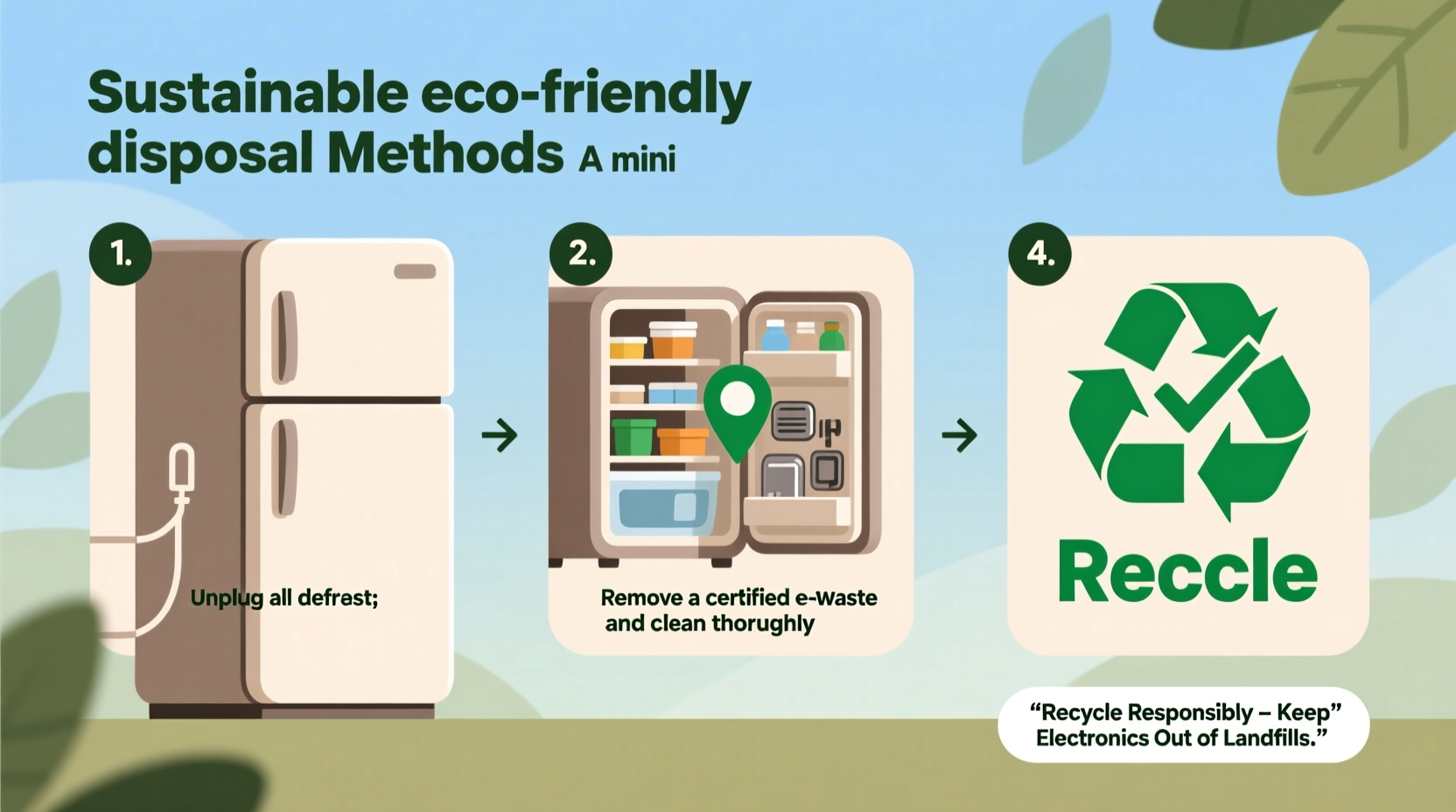
Disposing of a mini fridge responsibly doesn’t have to be complicated. Follow this clear, five-step process to ensure your appliance is handled in an environmentally sound way.
- Unplug and Empty the Fridge: Turn off and unplug the unit at least 24 hours before disposal to allow it to defrost. Remove all food, shelves, and drawers. Clean the interior with a mild vinegar solution to prevent odors and mold during transport.
- Check for Working Condition: Test the fridge to determine if it still functions. If it cools properly and shows no signs of damage, consider donation or resale instead of disposal.
- Locate a Certified E-Waste or Appliance Recycler: Use online tools like Earth911.org or your local municipality’s waste management website to find facilities authorized to handle refrigerant recovery and metal recycling.
- Arrange Pickup or Drop-Off: Many recyclers offer curbside pickup for a fee, while others require you to bring the fridge to a designated facility. Confirm ahead of time whether your mini fridge qualifies under their size or type restrictions.
- Verify Refrigerant Recovery: Ensure the recycler follows EPA guidelines under the Responsible Appliance Disposal (RAD) Program. They should document the safe removal and destruction of refrigerants and foam-blowing agents.
Recycling vs. Donation: Making the Right Choice
The most eco-friendly option depends on your mini fridge’s condition. Here’s how to decide between recycling and donating:
| Factor | Donation | Recycling |
|---|---|---|
| Condition | Works well, clean, no major dents | Non-functional, leaking, or outdated |
| Age | Less than 10 years old | Over 10 years or obsolete model |
| Energy Efficiency | ENERGY STAR-rated or low power draw | Inefficient, high electricity use |
| Environmental Impact | Extends product life, reduces demand for new units | Recovers metals, safely handles chemicals |
| Best For | Community centers, students, shelters | Cities with e-waste programs, hazardous waste facilities |
If your fridge still works, organizations like Goodwill, The Salvation Army, or Habitat for Humanity ReStore may accept it. Call first—some locations have restrictions on appliance donations due to liability or space. Alternatively, list it for free on platforms like Freecycle, Craigslist, or Facebook Marketplace with a note about its working condition.
Real Example: How One College Student Made a Difference
When Maya graduated from college, she needed to clear out her dorm room, including a mini fridge she’d used for four years. Instead of abandoning it or paying for trash pickup, she researched local options. She discovered that her city partnered with a nonprofit called CoolCycle, which specializes in collecting old dorm appliances at the end of each academic year.
Maya scheduled a free pickup through their website. Within two days, a technician arrived, tested the fridge, and confirmed it was still functional. It was cleaned, repaired slightly, and donated to a youth shelter in a neighboring town. The program even emailed Maya a certificate showing that 87% of the fridge’s materials were reused or recycled, and that 1.2 pounds of refrigerant were captured—equivalent to preventing 300 pounds of CO₂ emissions.
This small action kept usable equipment in circulation and prevented environmental harm—all with minimal effort.
Common Mistakes to Avoid
- Throwing it in regular trash: This is illegal in many areas and poses serious environmental hazards.
- Removing refrigerant yourself: Only certified technicians should handle this due to safety and legal regulations.
- Leaving the door unsecured: Old fridges with latched doors can trap children or animals, leading to suffocation risks.
- Assuming all recyclers are equal: Not all facilities follow EPA standards. Always verify certifications.
- Forgetting about rebates: Some utility companies offer $50–$100 for turning in old, inefficient refrigerators—even mini ones.
FAQ: Your Mini Fridge Disposal Questions Answered
Can I recycle a mini fridge for free?
Yes, in many cases. Municipal waste programs, retailer take-back events, and utility-sponsored recycling often offer free pickup or drop-off. Fees typically apply only for private haulers or expedited service.
What happens to my mini fridge after it’s collected?
Certified recyclers dismantle the unit in stages: first removing and capturing refrigerants, then shredding the casing to separate steel, copper, aluminum, and plastic. Up to 95% of the materials are recovered and repurposed for new products.
Is it safe to transport a mini fridge myself?
Yes, if done carefully. Keep the fridge upright during transport to prevent oil from shifting in the compressor. Secure it in a truck or trailer, and wear gloves and closed-toe shoes when lifting. Never lay it on its back unless necessary—and if you do, let it sit upright for at least 24 hours before plugging it in again.
Final Checklist Before Disposal
Before letting go of your mini fridge, complete this checklist to ensure a smooth, responsible process:
- ✅ Unplugged and fully defrosted
- ✅ Interior cleaned and dried
- ✅ All removable parts taken out (shelves, drawers)
- ✅ Functionality tested (on/off, cooling ability)
- ✅ Local recycling/donation options researched
- ✅ Scheduled pickup or drop-off confirmed
- ✅ Doors secured or removed for safety
- ✅ Rebate or incentive program checked
Take Action Today for a Cleaner Tomorrow
Disposing of a mini fridge might seem like a minor task, but the cumulative effect of millions of improperly discarded appliances is anything but small. By choosing responsible recycling, donation, or reuse, you’re not just clearing space—you’re contributing to resource conservation, reducing greenhouse gas emissions, and supporting circular economy practices.
Whether your mini fridge still runs or has seen better days, there’s a sustainable path forward. Take the time to research local options, follow best practices, and encourage others to do the same. Small actions, multiplied across communities, create lasting environmental change.




 浙公网安备
33010002000092号
浙公网安备
33010002000092号 浙B2-20120091-4
Comments
No comments yet. Why don't you start the discussion?