
Losing weight doesn’t require hours in the gym or extreme dieting. The most effective approach combines targeted, high-efficiency workouts with sustainable habits that support fat loss while preserving muscle and energy levels. When done correctly, short, intense workouts can deliver faster results than prolonged, low-intensity sessions. The key lies in maximizing calorie burn during and after exercise, improving metabolic rate, and maintaining consistency without risking injury or burnout.
This guide outlines scientifically supported workout strategies that accelerate fat loss, enhance fitness, and fit into even the busiest schedules. Whether you're starting from scratch or looking to break through a plateau, these methods are designed for real-world application—safe, efficient, and adaptable to any fitness level.
The Science Behind Fast Fat Loss Workouts
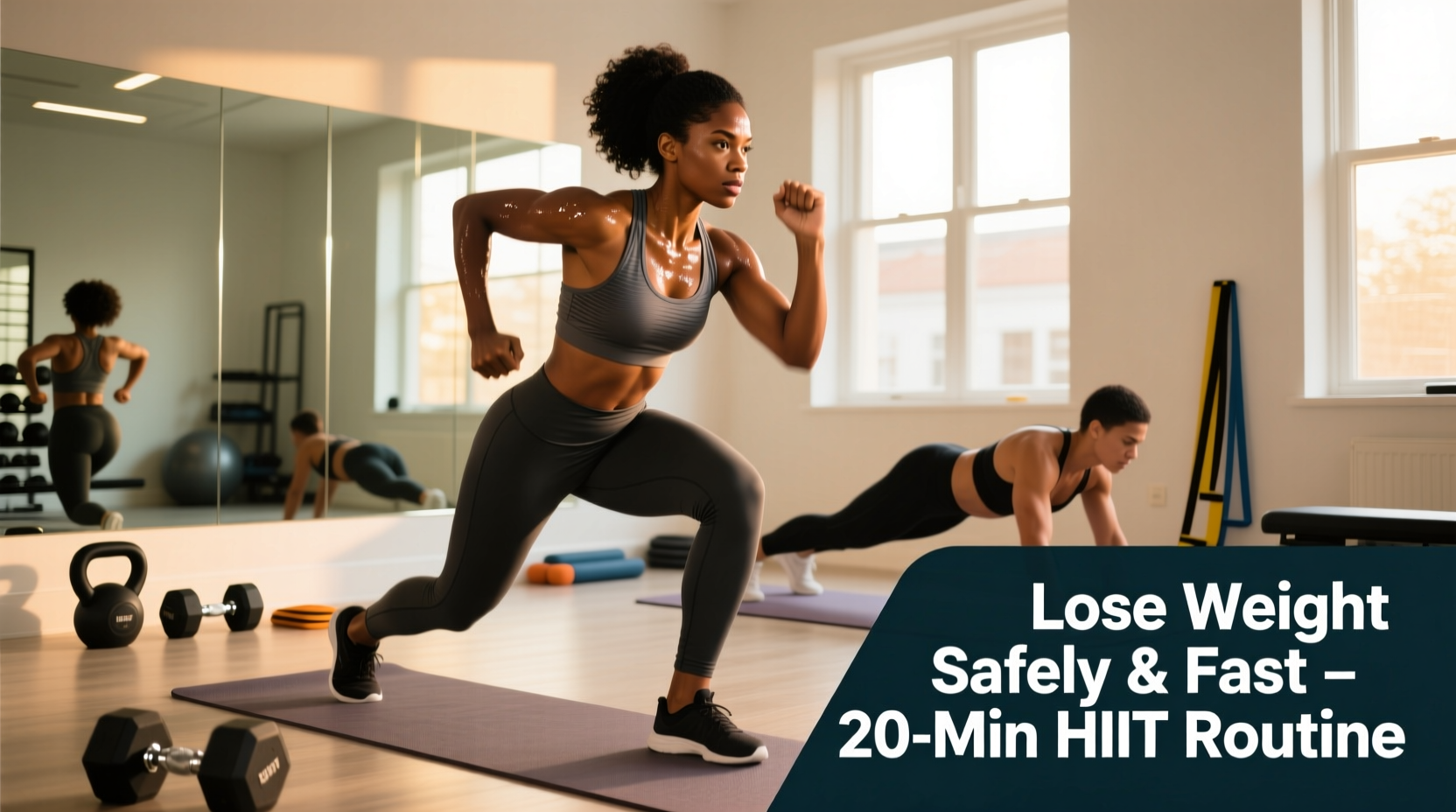
Not all workouts burn fat equally. Research shows that exercises triggering excess post-exercise oxygen consumption (EPOC)—commonly known as the \"afterburn effect\"—lead to continued calorie burning for hours after training. High-intensity interval training (HIIT), resistance circuits, and compound strength movements are particularly effective because they stress multiple muscle groups and elevate heart rate rapidly.
A 2020 study published in the Journal of Obesity found that participants who performed 20-minute HIIT sessions three times per week lost significantly more abdominal fat over 12 weeks than those doing steady-state cardio, despite spending less time exercising. The reason? Intensity drives hormonal responses that favor fat mobilization and insulin sensitivity.
“Short, intense workouts can be more effective for fat loss than longer moderate ones, especially when combined with proper recovery.” — Dr. Lena Torres, Exercise Physiologist at Boston Metabolic Lab
Top 5 Effective and Fast Workouts for Weight Loss
The following workouts are proven to maximize calorie expenditure in minimal time. Each can be completed in 15–30 minutes and requires little or no equipment.
1. HIIT Sprints (15–20 Minutes)
Alternate 30 seconds of all-out sprinting with 90 seconds of walking. Repeat for 8–10 rounds. This can be done on a treadmill, track, or even outdoors.
2. Bodyweight Circuit Training (20 Minutes)
Perform each exercise for 40 seconds, rest 20 seconds between movements. Complete 3 rounds:
- Jump squats
- Push-ups
- Mountain climbers
- Plank to shoulder taps
- Burpees
3. Kettlebell Swings & Turkish Get-Ups (25 Minutes)
Perform 10 kettlebell swings followed by 5 Turkish get-ups per side. Rest 60 seconds between sets. Repeat 4 times. Builds power, burns fat, and improves mobility.
4. Stair Climbing Intervals (20 Minutes)
Climb stairs at a hard pace for 2 minutes, descend slowly for 1 minute. Repeat 6–7 times. Excellent for building lower-body endurance and torching calories.
5. Resistance Band Circuits (15–20 Minutes)
Use bands for row pulls, squat presses, lateral walks, and glute bridges. Perform 3 rounds with minimal rest. Ideal for home workouts and joint-friendly intensity.
Workout Comparison Table: Efficiency & Impact
| Workout Type | Time Required | Calories Burned (Avg) | Best For |
|---|---|---|---|
| HIIT Sprints | 15–20 min | 200–300 | Cardio boost, fat burn |
| Bodyweight Circuits | 20 min | 180–250 | Full-body conditioning |
| Kettlebell Routine | 25 min | 220–320 | Strength + endurance |
| Stair Intervals | 20 min | 190–270 | Legs & cardiovascular health |
| Resistance Band Circuit | 15–20 min | 150–220 | Home workouts, joint safety |
Step-by-Step Weekly Plan for Fast Results
Follow this structured 4-week progression to build momentum and avoid plateaus. The plan balances intensity with recovery to ensure safe, sustainable fat loss.
- Week 1: Perform 3 HIIT sessions and 2 bodyweight circuits. Focus on form and pacing. Rest 2 days.
- Week 2: Add one kettlebell session. Increase circuit speed slightly. Maintain hydration and protein intake.
- Week 3: Replace one HIIT session with stair intervals. Track energy levels and sleep quality.
- Week 4: Combine two workouts into a “superset” day (e.g., HIIT + band circuit). Assess progress via measurements, not just scale weight.
Mini Case Study: From Sedentary to Sustainable Fat Loss
James, a 38-year-old software developer, struggled with fatigue and a 25-pound weight gain over two years. With limited time, he started with 20-minute bodyweight circuits three times a week. He paired this with small dietary changes—replacing sugary drinks with water and adding protein to breakfast.
By week six, James had lost 8 pounds and reported improved focus and energy. At 12 weeks, he added kettlebell swings twice weekly and reached a total loss of 18 pounds, with visible muscle definition. His blood pressure and resting heart rate also improved, confirmed by his physician.
His success wasn’t due to extreme effort—it came from consistency, smart workout selection, and avoiding burnout by respecting recovery.
Do’s and Don’ts of Fast Weight Loss Workouts
| Do’s | Don’ts |
|---|---|
| Warm up properly before high-intensity sessions | Skip rest days to “push harder” |
| Hydrate well before, during, and after workouts | Exercise on an empty stomach if it causes dizziness |
| Pair workouts with adequate protein intake | Rely solely on exercise without adjusting nutrition |
| Listen to your body; modify if injured or overly fatigued | Compare your progress to others’ timelines |
Frequently Asked Questions
How soon will I see results from fast workouts?
Visible changes typically appear within 4–6 weeks when combined with a slight calorie deficit and consistent effort. Early signs include better stamina, tighter clothing, and improved posture—even before major scale drops.
Can I do these workouts every day?
No. High-intensity workouts stress the central nervous system and muscles. Allow at least 48 hours of recovery between intense sessions. Alternate with light activity like walking or stretching on off days.
Are fast workouts safe for beginners?
Yes, if modified appropriately. Start with lower intensity, shorter durations, and focus on technique. For example, replace burpees with step-back push-ups and jump squats with regular squats. Gradually increase difficulty as fitness improves.
Final Checklist for Success
- Choose 2–3 fast workouts per week based on your schedule and equipment access
- Include a 3–5 minute warm-up and cool-down every session
- Track workouts in a journal or app to monitor progress
- Eat enough protein (aim for 0.7–1g per pound of body weight)
- Sleep at least 7 hours per night to support recovery and metabolism
- Reassess body measurements and energy levels every 4 weeks
Conclusion: Take Action Today
Effective and fast workouts to lose weight safely and quickly aren't about shortcuts—they're about smart, science-based strategies that respect your body’s limits while pushing its potential. By focusing on intensity, recovery, and consistency, you can achieve meaningful fat loss without sacrificing health or time.
Start with one workout this week. Master it. Then add another. Small steps compound into lasting transformation. Your journey to a stronger, leaner, and healthier self begins with a single, intentional move forward.




 浙公网安备
33010002000092号
浙公网安备
33010002000092号 浙B2-20120091-4
Comments
No comments yet. Why don't you start the discussion?