
Mascara is a staple in many makeup routines, enhancing lashes and framing the eyes with precision. But when it transfers onto clothing—whether from a blink at the wrong moment or during laundry mishaps—it can leave behind stubborn, oily stains that seem impossible to remove. Unlike water-based stains, mascara contains waxes, oils, pigments, and polymers designed to resist smudging and moisture, making it particularly challenging to eliminate from fabric. The key to successful removal lies not in aggressive scrubbing but in using targeted, gentle techniques that break down the components of the stain while preserving the integrity of the material.
Improper treatment can set the stain permanently or damage delicate fibers like silk or wool. Understanding the composition of both the stain and the fabric allows for smarter, safer cleaning choices. With the right approach, even fresh or dried mascara stains can be lifted effectively without bleach, harsh chemicals, or risk to your garments.
Understanding Mascara Stain Composition
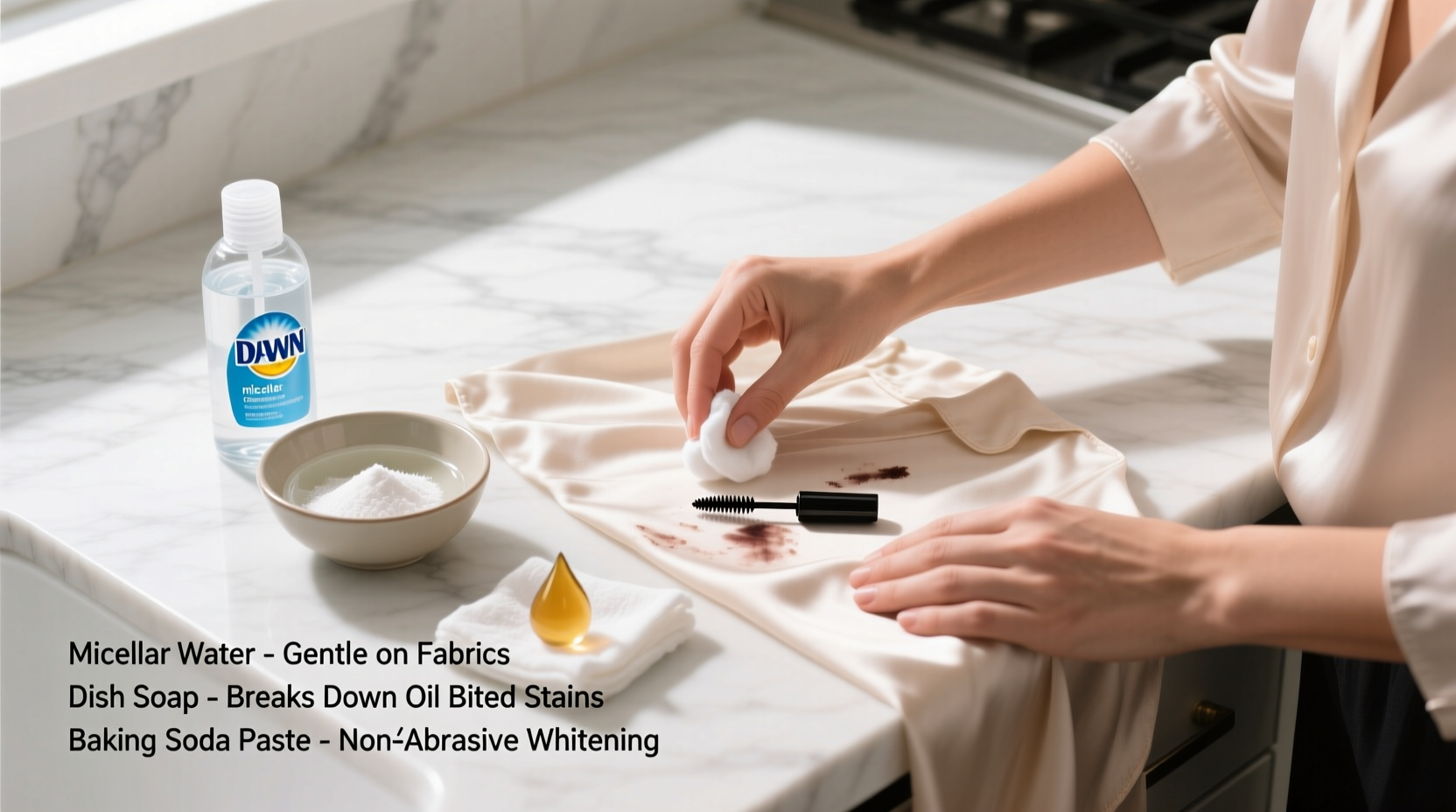
Mascara typically contains a blend of ingredients including beeswax, paraffin, carbon black or iron oxides (for pigment), preservatives, and conditioning agents. These components create a water-resistant film on lashes—but when transferred to fabric, they bind tightly to fibers, especially natural ones like cotton and silk. The oil-based nature of most mascaras means they don’t respond well to plain water; instead, they require solvents that can dissolve oils without weakening textile structures.
Additionally, waterproof mascaras are formulated with polymers that form a flexible film, increasing resistance to removal. This makes immediate action crucial: the sooner you treat the stain, the less time these compounds have to oxidize and bond with the fabric.
Step-by-Step Guide to Removing Mascara Stains
Effective stain removal follows a logical sequence: blotting, pre-treatment, washing, and inspection. Rushing or skipping steps can push the stain deeper into fibers or cause permanent damage.
- Blot, Don’t Rub: Use a clean, dry cloth or paper towel to gently blot excess mascara from the fabric surface. Rubbing spreads the oils and embeds pigment further into the weave.
- Place Paper Towels Underneath: Slide a few layers of paper towels beneath the stained area to absorb loosened residue during cleaning.
- Apply a Gentle Solvent: Dampen a cotton ball with micellar water, rubbing alcohol (70% isopropyl), or a small amount of liquid dish soap. Test on an inconspicuous area first.
- Dab Lightly: Work from the outside inward to prevent spreading. Replace the cotton ball frequently to avoid reapplying pigment.
- Rinse with Cold Water: Hold the fabric under cold running water, allowing it to flush out dissolved oils from the backside of the stain.
- Pre-Treat if Needed: For persistent marks, apply a small amount of enzyme-based stain remover and let sit for 10–15 minutes.
- Wash According to Label Instructions: Launder in the warmest water safe for the fabric, using regular detergent.
- Air Dry and Inspect: Avoid heat drying until the stain is fully gone, as heat sets remaining oils. If the stain persists, repeat the process before tumble drying.
Gentle Cleaning Solutions by Fabric Type
Not all fabrics react the same way to cleaning agents. A solution safe for cotton might degrade silk or cause synthetic blends to pill. Tailoring your method to the material increases success while minimizing risk.
| Fabric Type | Recommended Method | Avoid |
|---|---|---|
| Cotton | Dish soap + cold water, followed by machine wash | Hot water initially (can set stain) |
| Silk | Blot with diluted white vinegar (1:3 with water), rinse immediately | Alcohol, hydrogen peroxide, machine washing |
| Wool | Use dry-cleaning solvent or mild wool shampoo | Aggressive rubbing, hot water |
| Polyester/Blends | Isopropyl alcohol (diluted 50/50 with water), then wash | Undiluted alcohol, chlorine bleach |
| Lace/Delicate Trims | Spot clean with micellar water, hand rinse | Wringing, soaking too long |
Mini Case Study: Silk Blouse Rescue
A professional stylist accidentally leaned back into her vanity mirror after applying waterproof mascara, leaving a dark smudge across the shoulder of a cream silk blouse. Knowing silk’s sensitivity, she avoided tap water and instead placed folded paper towels beneath the stain. Using a cotton swab, she applied a mixture of one part white vinegar and three parts distilled water, dabbing lightly. After five minutes, she rinsed the area under cool running water from the reverse side. The stain faded significantly. She repeated once more, then laid the blouse flat to dry. No discoloration or texture change occurred, and the garment was restored without dry-cleaning.
Expert Insight on Cosmetic Stain Removal
“Mascara stains are among the trickiest because they combine oil, wax, and pigment. Immediate, gentle intervention is far more effective than later aggressive treatment.” — Dr. Lena Peterson, Textile Chemist and Stain Remediation Specialist
Dr. Peterson emphasizes that patience and precision matter more than strength. “Using a soft touch preserves fiber strength and appearance, especially in luxury fabrics,” she adds. “Many people reach for bleach or strong solvents out of frustration, but those often do more harm than good.”
Checklist: Quick Reference for Safe Mascara Stain Removal
- ✅ Blot excess product gently—never rub
- ✅ Identify fabric type and check care label
- ✅ Test cleaning solution on hidden seam or hem
- ✅ Use cold water for initial rinsing
- ✅ Choose appropriate solvent: dish soap for cotton, micellar water for delicates, diluted alcohol for synthetics
- ✅ Rinse thoroughly before laundering
- ✅ Air dry and inspect before using dryer
- ✅ Repeat if necessary—don’t expose to heat until stain is gone
Frequently Asked Questions
Can I use nail polish remover to remove mascara stains?
No. While acetone is effective at breaking down polymers in mascara, it can dissolve or weaken certain synthetic fibers like acetate or triacetate and may strip dyes from colored fabrics. Safer alternatives include isopropyl alcohol or micellar water.
What if the stain has already been washed and dried?
Heat from drying sets oil-based stains, making them harder to remove. Try applying a few drops of liquid dish soap directly to the area, gently agitating with a soft toothbrush. Soak in cold water for 30 minutes, then rewash using a stain-fighting detergent. Repeat as needed before drying again.
Is micellar water effective on old mascara stains?
Micellar water works best on fresh stains due to its mild surfactants. For older stains, it can help lift residual oils but should be combined with a pre-treatment like an enzyme cleaner for full removal.
Final Thoughts and Call to Action
Removing mascara stains doesn’t require extreme measures or expensive products. With careful assessment, the right tools, and a calm, methodical approach, most stains can be eliminated without harming your favorite garments. The goal isn’t just cleanliness but preservation—maintaining the look, feel, and longevity of your clothes through informed care.
Next time a mascara mark appears, pause before tossing the item into the wash. Take a moment to assess the fabric, choose a compatible solution, and follow a proven process. Your wardrobe will thank you.




 浙公网安备
33010002000092号
浙公网安备
33010002000092号 浙B2-20120091-4
Comments
No comments yet. Why don't you start the discussion?