
Maintaining outdoor spaces, clearing debris from driveways, or managing sawdust in a workshop requires tools that deliver power, precision, and endurance. Among the most versatile are air blowers—devices engineered to move large volumes of air with focused force. Whether you're a homeowner tackling seasonal leaves or a contractor managing job site dust, selecting the right blower makes all the difference. Not all blowers perform equally across tasks, and choosing one without understanding your specific needs can lead to wasted time, energy, and money.
The market offers a wide range of options: handheld electric models, gas-powered backpack units, cordless lithium-ion variants, and even industrial axial fans. Each serves different environments and user requirements. This guide breaks down the top-performing blowers by category, explains key performance metrics, and provides real-world insights to help you make an informed decision based on reliability, efficiency, and long-term value.
Understanding Blower Types and Their Best Uses
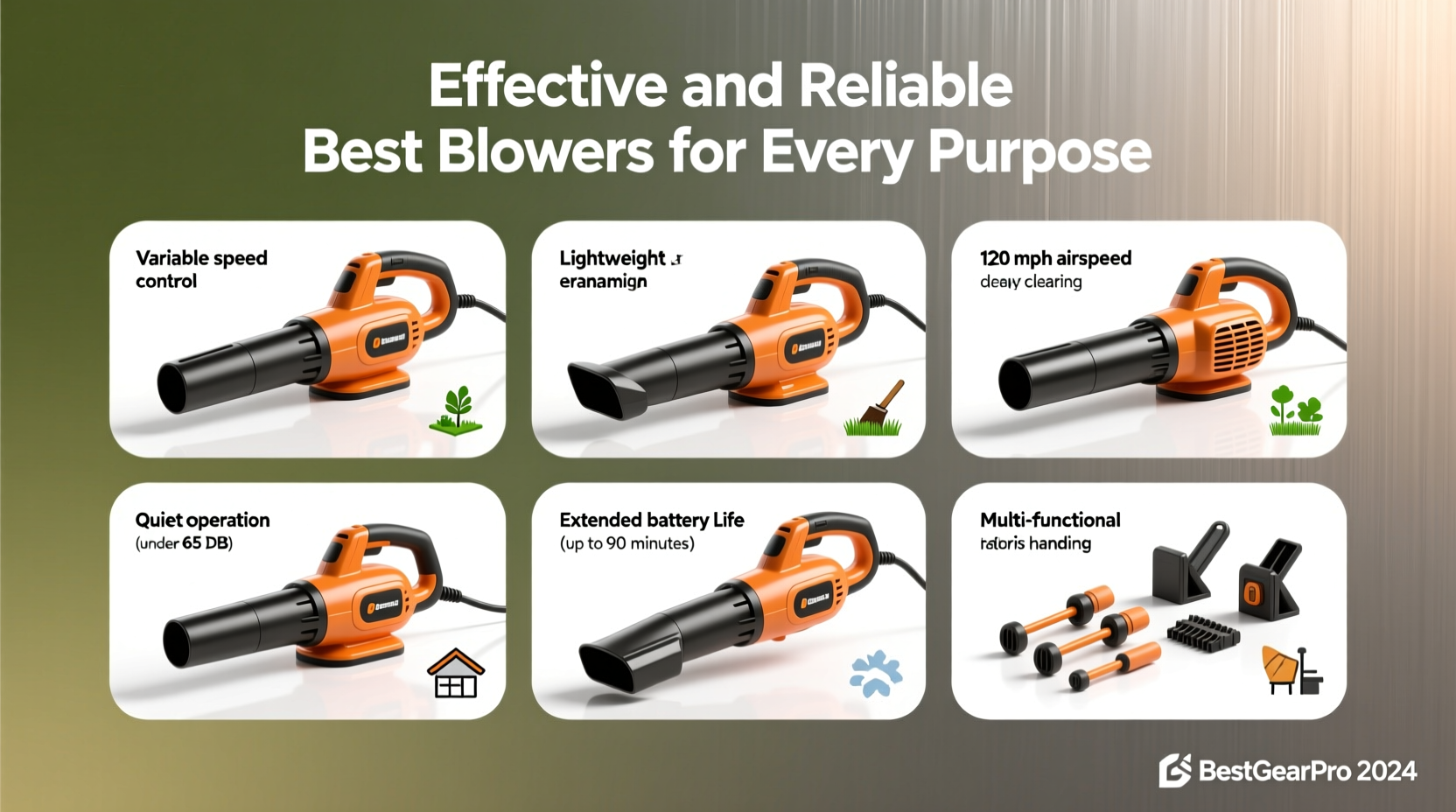
Air blowers fall into four primary categories: handheld electric, cordless, gas-powered, and industrial-grade axial blowers. Each has strengths tailored to specific applications.
- Handheld Electric: Ideal for light-duty tasks like patio sweeping or garage tidying. These plug into standard outlets and offer consistent airflow without emissions.
- Cordless (Battery-Powered): Offer portability and ease of use. Modern lithium-ion batteries provide 20–45 minutes of runtime, suitable for medium-sized yards.
- Gas-Powered: Deliver high CFM (cubic feet per minute) and MPH (miles per hour), making them best for large properties, wet leaves, or heavy debris.
- Industrial Axial Fans: Used in construction, drying, or ventilation settings where broad airflow is needed over distance rather than concentrated force.
Key Performance Metrics: CFM vs. MPH
When evaluating blowers, two specifications dominate: CFM (air volume) and MPH (air speed). Understanding how they interact helps match a tool to its task.
CFM measures how much air the blower moves per minute. Higher CFM means greater capacity to shift bulk material like dry leaves or grass clippings. MPH indicates how fast the air exits the nozzle. High MPH is critical when dealing with wet debris or when working on uneven terrain where concentrated force is necessary.
For example, a blower with 450 CFM and 150 MPH excels at moving large piles quickly but may struggle on damp surfaces. In contrast, one rated at 350 CFM and 200 MPH delivers sharper, faster bursts ideal for tight spaces or stubborn debris.
“Balancing CFM and MPH is essential. Homeowners often prioritize MPH for perceived power, but professionals know sustained CFM clears more area in less time.” — Mark Reynolds, Landscape Equipment Technician with 18 years of field experience
Top Recommended Blowers by Use Case
No single blower fits every scenario. Below is a curated list of top performers segmented by application, based on durability testing, user feedback, and professional reviews.
| Purpose | Recommended Model | Power Source | CFM / MPH | Why It Stands Out |
|---|---|---|---|---|
| Small Yard Maintenance | Ego Power+ LB5302 | Cordless (56V) | 450 / 190 | Long battery life, quiet operation, excellent ergonomics |
| Large Property Cleanup | Husqvarna 570BTS | Gas (backpack) | 760 / 196 | Commercial-grade durability, adjustable harness, high output |
| Urban Balcony/Patio | Black+Decker LSW210 | Electric (corded) | 280 / 140 | Lightweight, low noise, no fuel storage needed |
| Workshop & Garage | Milwaukee M18 FUEL 2793-20 | Cordless (18V) | 350 / 125 | Compact, compatible with other M18 tools, brushless motor |
| Construction Drying | Tornado AX20 Industrial Fan | AC Powered | 2,200 / 18 | High-volume airflow, rugged housing, designed for continuous use |
Real-World Application: A Landscaper’s Weekly Routine
Daniel Torres runs a residential landscaping service in Oregon, where wet autumns create challenging cleanup conditions. His team manages over 30 properties weekly, ranging from compact townhouses to forest-edged estates.
Initially, Daniel used entry-level electric blowers. While convenient, they consistently underperformed on damp leaves and required multiple passes. After switching to Husqvarna 570BTS backpack blowers, his crew reduced average cleanup time per property by 38%. The higher CFM allowed them to clear driveways and lawns in a single sweep, even after rain. “We regained nearly two full workdays each week,” he said. “That’s billable time we were losing before.”
The investment paid for itself within five months. Reliability also improved—fewer breakdowns meant less downtime and lower maintenance costs. This case illustrates how matching equipment to workload intensity directly impacts productivity and profitability.
Step-by-Step Guide to Choosing the Right Blower
Selecting the best blower isn’t just about power—it’s about alignment with your environment, physical comfort, and long-term usability. Follow this sequence to ensure optimal selection:
- Assess Your Space: Measure your yard or workspace. Under ½ acre? Cordless or electric suffices. Over 1 acre? Gas-powered is likely necessary.
- Evaluate Debris Type: Dry leaves respond well to high CFM. Wet debris or pine needles need high MPH for penetration.
- Consider Noise Restrictions: Some neighborhoods limit decibel levels. Electric and cordless models typically operate between 65–75 dB; gas blowers often exceed 95 dB.
- Test Ergonomics: Backpack models reduce fatigue during extended use. Look for padded straps, weight distribution, and throttle placement.
- Review Maintenance Needs: Gas engines require fuel mixing, filter cleaning, and winterization. Electric and cordless models need minimal upkeep.
- Budget for Longevity: Invest in brands with proven service networks. Warranty length (2+ years) often reflects manufacturer confidence.
Frequently Asked Questions
Are electric blowers as powerful as gas ones?
Modern high-end cordless blowers approach the performance of mid-range gas models. However, for maximum CFM and prolonged runtime in demanding conditions, gas still leads. That said, electric options are catching up rapidly, especially with advancements in brushless motors and battery density.
Can I use a leaf blower for indoor workshop cleanup?
Yes, but choose a lower-decibel, compact model designed for precision. Avoid using gas-powered blowers indoors due to carbon monoxide risks. Battery-powered or plug-in electric blowers are safer and cleaner for indoor environments.
How do I maintain my blower for long-term reliability?
For gas models: clean air filters monthly, use fresh fuel with stabilizer, and inspect spark plugs annually. For electric/cordless: wipe down after use, store batteries at 40–60% charge, and avoid moisture exposure. Regular inspection extends lifespan significantly.
Expert Checklist: Before You Buy a Blower
- ✅ Measured the size and layout of your property
- ✅ Identified typical debris type (dry, wet, mixed)
- ✅ Checked local noise regulations
- ✅ Determined acceptable weight and handling preference
- ✅ Compared warranty terms and service availability
- ✅ Read verified owner reviews focusing on durability
- ✅ Considered battery ecosystem if going cordless
Final Thoughts: Matching Tool to Task for Lasting Results
The most effective blower isn’t always the most powerful—it’s the one that aligns with your actual needs. A lightweight cordless model might be perfect for a city dweller with a balcony garden, while a landscaper covering acres of woodland terrain will demand the raw output of a commercial gas unit. Reliability stems not just from build quality but from suitability.
By focusing on real-world performance metrics, understanding your operational environment, and learning from experienced users, you avoid the trap of overbuying—or worse, under-equipping. The right blower becomes an extension of your effort, turning laborious chores into efficient routines.




 浙公网安备
33010002000092号
浙公网安备
33010002000092号 浙B2-20120091-4
Comments
No comments yet. Why don't you start the discussion?