
Losing 3 kilograms in one week is an ambitious goal, but with the right approach, it can be achieved safely—without crash diets, extreme fasting, or harmful supplements. While long-term weight management relies on gradual changes, short-term fat and water weight reduction is possible through targeted lifestyle adjustments. The key lies in combining strategic nutrition, hydration, physical activity, and sleep optimization—all while preserving muscle mass and metabolic function.
This guide outlines science-based, realistic steps that prioritize your well-being. It’s not about deprivation; it’s about precision, consistency, and understanding how your body responds to short-term shifts in energy balance.
Understanding Realistic Short-Term Weight Loss
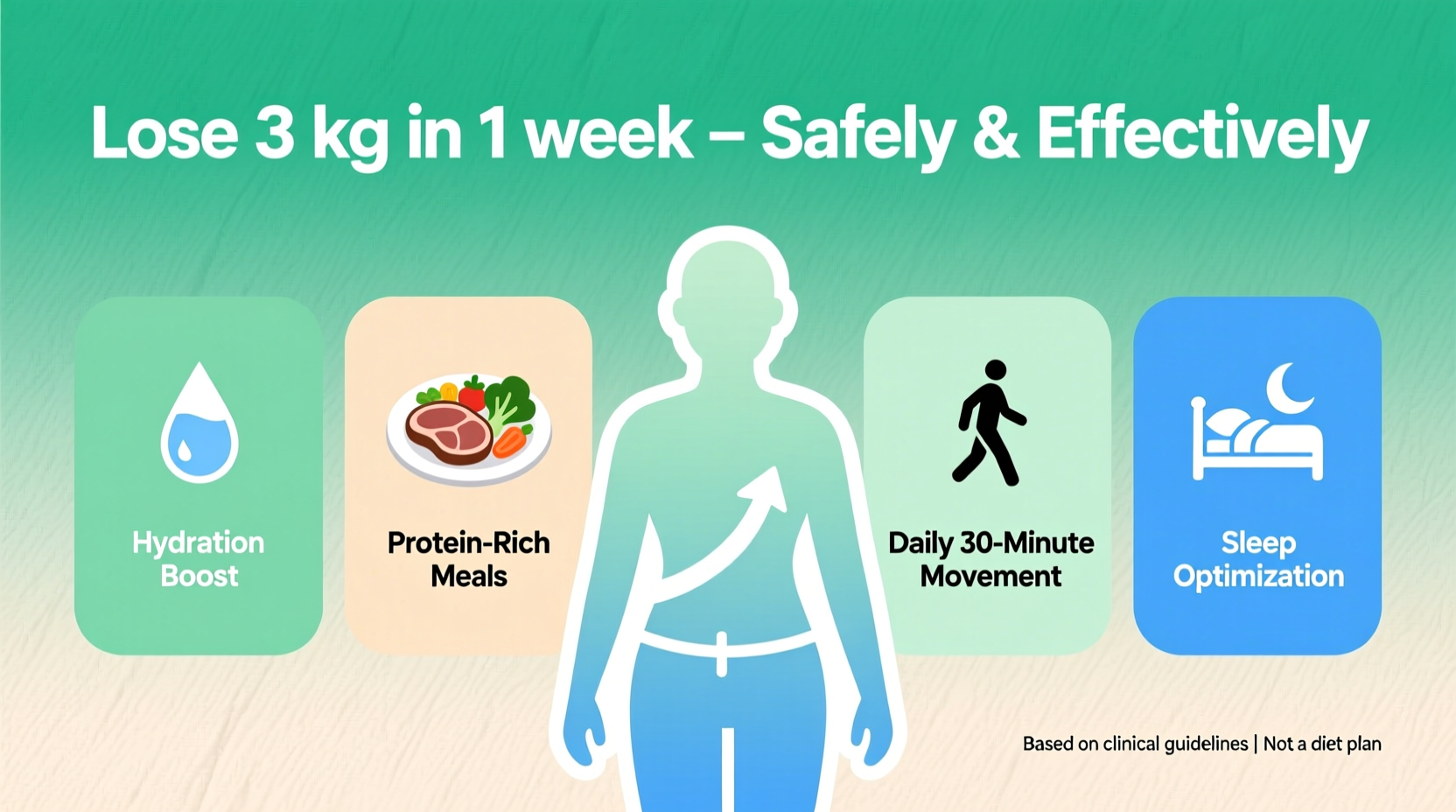
The human body naturally fluctuates in weight due to water retention, glycogen stores, digestion, and hormonal cycles. A loss of 3 kg in seven days is feasible primarily through a combination of fat loss, reduced water weight, and decreased intestinal content. However, expecting pure fat loss at this rate isn’t realistic—true fat loss averages 0.5–1 kg per week under optimal conditions.
According to Dr. Lisa Reynolds, a clinical nutritionist with over 15 years of experience:
“Rapid weight loss should never come at the cost of metabolic damage. When done correctly, short-term weight reduction focuses on reducing bloating, improving insulin sensitivity, and creating a modest calorie deficit—without triggering starvation mode.” — Dr. Lisa Reynolds, RD, Clinical Nutritionist
Therefore, the focus should be on eliminating excess water, optimizing digestion, and creating a moderate caloric deficit through whole foods and movement—not extreme restriction.
Step-by-Step 7-Day Action Plan
To safely lose up to 3 kg in a week, follow this structured daily framework. This plan emphasizes nutrient density, portion control, and metabolic support.
- Day 1: Reset & Detox (Focus: Hydration + Elimination)
- Drink 3 liters of water with lemon or cucumber.
- Eliminate processed sugar, alcohol, and refined carbs.
- Eat high-fiber vegetables, lean protein, and healthy fats.
- Walk for 45 minutes.
- Day 2–3: Calorie Modulation (Focus: Deficit + Satiety)
- Reduce daily calories by 500–700 below maintenance.
- Consume 1.6–2g of protein per kg of body weight.
- Include potassium-rich foods (spinach, avocado, banana) to counter sodium-induced water retention.
- Add 20 minutes of strength training to preserve muscle.
- Day 4–5: Metabolic Boost (Focus: Activity + Thermogenesis)
- Incorporate 15-minute HIIT sessions (e.g., 30 seconds sprint, 90 seconds walk x 10 rounds).
- Drink green tea (2–3 cups/day) for mild thermogenic effect.
- Aim for 10,000 steps daily.
- Continue low-sodium, high-protein eating pattern.
- Day 6–7: Consolidation & Measurement (Focus: Stability + Reflection)
- Weigh yourself first thing in the morning after using the bathroom.
- Maintain hydration and avoid last-night salt binges.
- Reflect on habits: What worked? What felt unsustainable?
- Plan transition into long-term maintenance phase.
Nutrition Guidelines: Do’s and Don’ts
Your diet plays the most significant role in short-term weight loss. The goal is to reduce inflammation, stabilize blood sugar, and minimize water retention.
| Do’s | Don’ts |
|---|---|
| Eat lean proteins (chicken, fish, eggs, tofu) | Consume sugary drinks or juices |
| Choose complex carbs (quinoa, oats, sweet potato) | Eat processed snacks (chips, cookies, fast food) |
| Include potassium-rich fruits and vegetables | Excessively salt meals or eat canned soups |
| Drink herbal teas (dandelion, ginger, green tea) | Fast completely or skip meals regularly |
| Cook at home using fresh ingredients | Rely on “low-fat” or “diet” packaged foods |
One common mistake is cutting carbs entirely. While reducing refined carbs helps, eliminating all carbohydrates depletes glycogen stores, which bind water. This leads to rapid initial weight drop—but much of it is water, not fat. A smarter move is to replace white bread, pasta, and pastries with fiber-rich alternatives that keep you full and energized.
Mini Case Study: Maria’s 7-Day Transformation
Maria, a 34-year-old office worker, wanted to lose 3 kg before her sister’s wedding. She wasn’t obese—just carrying extra water weight and feeling bloated from months of takeout and minimal exercise. She followed a structured plan similar to the one above.
Her strategy included:
- Drinking 3 liters of water daily (up from 1 liter).
- Replacing lunchtime sandwiches with grilled chicken salads.
- Taking evening walks and doing bodyweight exercises at home.
- Eliminating soda and alcohol.
By day 7, Maria lost 2.8 kg. Her clothes fit better, her energy improved, and she looked visibly slimmer. Importantly, she didn’t feel deprived. Her success came from consistency, not extremism. Six months later, she maintained 2 kg of that loss by continuing healthier habits.
Essential Checklist for Safe Rapid Weight Loss
Use this checklist daily to stay on track and protect your health:
- ✅ Drink at least 2.5–3 liters of water
- ✅ Eat 20–30g of protein per meal
- ✅ Consume 5+ servings of vegetables
- ✅ Avoid added sugars and processed foods
- ✅ Get 7–8 hours of quality sleep
- ✅ Move for at least 30 minutes (walk, stretch, train)
- ✅ Monitor portion sizes (use smaller plates if needed)
- ✅ Limit sodium intake to under 2,300 mg per day
Frequently Asked Questions
Is it safe to lose 3 kg in a week?
Yes, if done correctly. Most of the initial loss includes water, glycogen, and waste—not just fat. As long as you maintain adequate protein, stay hydrated, and avoid extreme calorie deficits (below 1,200 kcal/day), it can be safe for healthy adults. Those with medical conditions should consult a doctor first.
Will I gain the weight back immediately?
Not necessarily. If you return to previous eating habits, yes. But if you use this week as a reset and transition into balanced eating and regular activity, you can sustain results. Think of it as a jumpstart, not a finish line.
Can I do this without exercising?
You may see some results, but exercise enhances fat loss, reduces visceral fat, and improves insulin sensitivity. Even light walking supports lymphatic drainage and reduces bloating. For best outcomes, combine dietary changes with movement.
Conclusion: A Sustainable Start, Not a Shortcut
Losing 3 kg in a week is achievable through intelligent, health-conscious choices—not punishment or deprivation. By focusing on hydration, clean eating, movement, and rest, you create an environment where your body naturally sheds excess weight. This approach respects your metabolism and sets the stage for lasting change.
The real victory isn’t just the number on the scale—it’s the confidence, clarity, and momentum you gain. Use this week to build awareness, not dependency on extremes. When you treat your body with care, results follow—and they last.




 浙公网安备
33010002000092号
浙公网安备
33010002000092号 浙B2-20120091-4
Comments
No comments yet. Why don't you start the discussion?