
Traveling across multiple time zones can disrupt your internal clock, leaving you fatigued, disoriented, and mentally foggy. Jet lag isn’t just an inconvenience—it can derail business trips, spoil vacations, and impair performance. The good news is that with science-backed strategies, you can significantly reduce or even prevent its effects. From pre-travel preparation to in-flight habits and post-arrival recovery, a proactive approach makes all the difference.
Understanding How Jet Lag Works
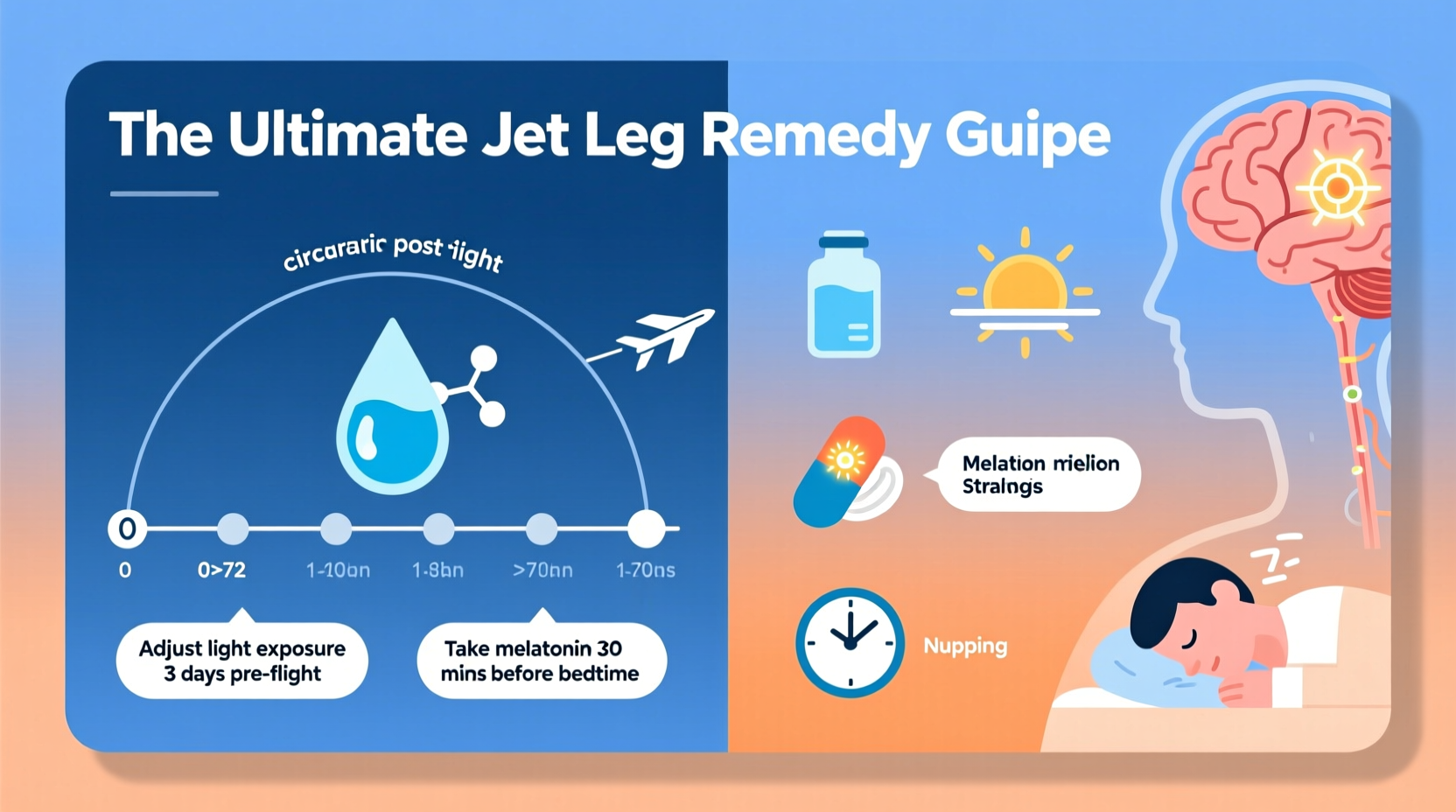
Jets don’t just transport you geographically—they shift you biologically. Your body operates on a circadian rhythm, a 24-hour internal clock regulated by light exposure, hormone release (especially melatonin), and temperature fluctuations. When you fly rapidly across time zones, this rhythm becomes misaligned with local time. The result? Daytime sleepiness, nighttime insomnia, poor concentration, digestive issues, and irritability.
The severity of jet lag generally increases with the number of time zones crossed, particularly when traveling eastward. Eastbound flights compress your day, making it harder to fall asleep at the destination’s bedtime. Westbound travel extends the day, which most people adapt to more easily. According to Dr. Charles Czeisler, chief of the Division of Sleep and Circadian Disorders at Brigham and Women’s Hospital, “The human circadian clock naturally runs slightly longer than 24 hours, so it’s easier to delay sleep than to advance it.” This explains why flying west feels less punishing.
Pre-Travel Preparation: Resetting Your Clock Early
Adjustment begins before takeoff. Gradually shifting your sleep schedule in the days leading up to departure helps prime your body for the new time zone.
“Shifting your light exposure and sleep times just two days before travel can cut adaptation time in half.” — Dr. Jamie Zeitzer, Stanford Center for Sleep Sciences and Medicine
Step-by-Step Pre-Flight Adjustment Timeline
- 72 hours before departure: Begin adjusting meal and sleep times toward destination schedule.
- 48 hours before: Increase morning light exposure if heading east; seek evening light if going west.
- 24 hours before: Avoid alcohol and caffeine, especially late in the day.
- On travel day: Set your watch to destination time immediately upon boarding.
Optimizing In-Flight Habits
What you do during the flight has a direct impact on how quickly you recover. The confined environment, dry air, and cabin pressure contribute to fatigue, but smart choices can mitigate their effects.
- Stay hydrated with water—avoid alcohol and excessive coffee, both of which dehydrate and disrupt sleep.
- Move regularly. Walk the aisle every few hours to improve circulation and reduce stiffness.
- Use noise-canceling headphones and an eye mask to simulate nighttime conditions when appropriate.
- Consider wearing compression socks to prevent swelling and support blood flow.
Jet Lag Do’s and Don’ts During Flight
| Action | Do | Don’t |
|---|---|---|
| Hydration | Drink 8 oz of water per hour | Consume alcohol or sugary drinks |
| Sleep | Align rest with destination nighttime | Sleep randomly based on boredom |
| Light Exposure | Use blue-light blocking glasses if awake during destination night | Stare at bright screens during intended sleep hours |
| Movement | Stretch or walk hourly | Remain seated for over 3 hours continuously |
Evidence-Based Recovery Strategies After Arrival
Upon landing, your focus should shift to rapid synchronization with local time. Light is the most powerful cue for resetting your circadian rhythm.
Expose yourself to natural daylight as soon as possible, especially in the morning if you’ve traveled east. Morning sunlight suppresses melatonin and signals wakefulness. If arriving at night, avoid bright lights and use dim, warm lighting to encourage sleep onset.
Smart Use of Melatonin
Melatonin supplements can be highly effective when timed correctly. Take 0.5 to 3 mg about 30 minutes before desired bedtime at your destination. Start with a low dose to avoid grogginess. Studies show that melatonin is most beneficial for eastward travel and when crossing five or more time zones.
However, timing is critical. Taking melatonin too early or too late can worsen misalignment. As a rule: take it only when preparing for sleep in the new time zone, not based on home time.
Real-World Example: A Business Traveler’s Success Story
Mark, a financial consultant based in San Francisco, frequently travels to London for client meetings. Previously, he’d arrive exhausted, sleep through the first day, and underperform in negotiations. After adopting a structured jet lag protocol, his experience transformed.
Three days before departure, he began advancing his bedtime by 30 minutes nightly. He avoided screens after 9 PM and used a light therapy lamp at 7 AM. On the flight, he wore blue-light-blocking glasses, stayed hydrated, and slept using a neck pillow and white noise app. Upon arrival at 8 AM London time, he stepped outside for a 30-minute walk in the morning sun.
By noon, he felt alert and attended a high-stakes meeting without fatigue. “I used to lose two days to jet lag,” Mark says. “Now I’m productive within hours. It’s changed my career.”
Quick Relief Tips Checklist
- ✅ Step into natural light within 30 minutes of waking
- ✅ Eat meals according to local time—even if not hungry
- ✅ Avoid napping beyond 20 minutes during the first day
- ✅ Take a short walk after meals to aid digestion and alertness
- ✅ Use melatonin only at bedtime (local time), not midday
- ✅ Keep bedroom cool, dark, and quiet for optimal sleep
Frequently Asked Questions
Can children and older adults handle jet lag differently?
Yes. Children often adapt faster due to more flexible sleep patterns, though disrupted routines can increase irritability. Older adults may struggle more, as circadian rhythms tend to weaken with age and sleep becomes lighter. Extra care with light exposure and consistent schedules is recommended for both groups.
Is there a difference between jet lag and general travel fatigue?
Yes. Travel fatigue refers to physical tiredness from long flights, dehydration, and discomfort. It usually resolves after one good night’s sleep. Jet lag involves circadian misalignment and persists for several days, affecting sleep, mood, and cognitive function until the body adjusts.
How long does jet lag typically last?
Most people adjust at a rate of about one day per time zone crossed. For example, crossing six time zones may require five to seven days to fully recover. However, strategic use of light, melatonin, and sleep scheduling can shorten this period by up to 50%.
Conclusion: Master Your Time, Not Just Your Trip
Jettisoning jet lag isn’t about enduring discomfort—it’s about mastering your biology. With deliberate planning, informed habits, and respect for your body’s natural rhythms, you can land sharp, energized, and ready to engage. Whether you're reuniting with family, closing deals, or exploring new cities, your ability to adapt quickly defines the quality of your journey.




 浙公网安备
33010002000092号
浙公网安备
33010002000092号 浙B2-20120091-4
Comments
No comments yet. Why don't you start the discussion?