
Rust on a knife isn't just unsightly—it can compromise performance, dull the edge, and even pose health risks if left untreated. Whether it's a kitchen favorite, a camping tool, or a vintage pocketknife, rust doesn’t have to mean retirement. With common household ingredients like baking soda, you can restore your blade safely, affordably, and without damaging the metal. This guide walks you through every step, explains why baking soda works, and shares expert-backed tips to prevent future corrosion.
Why Baking Soda Works for Rust Removal
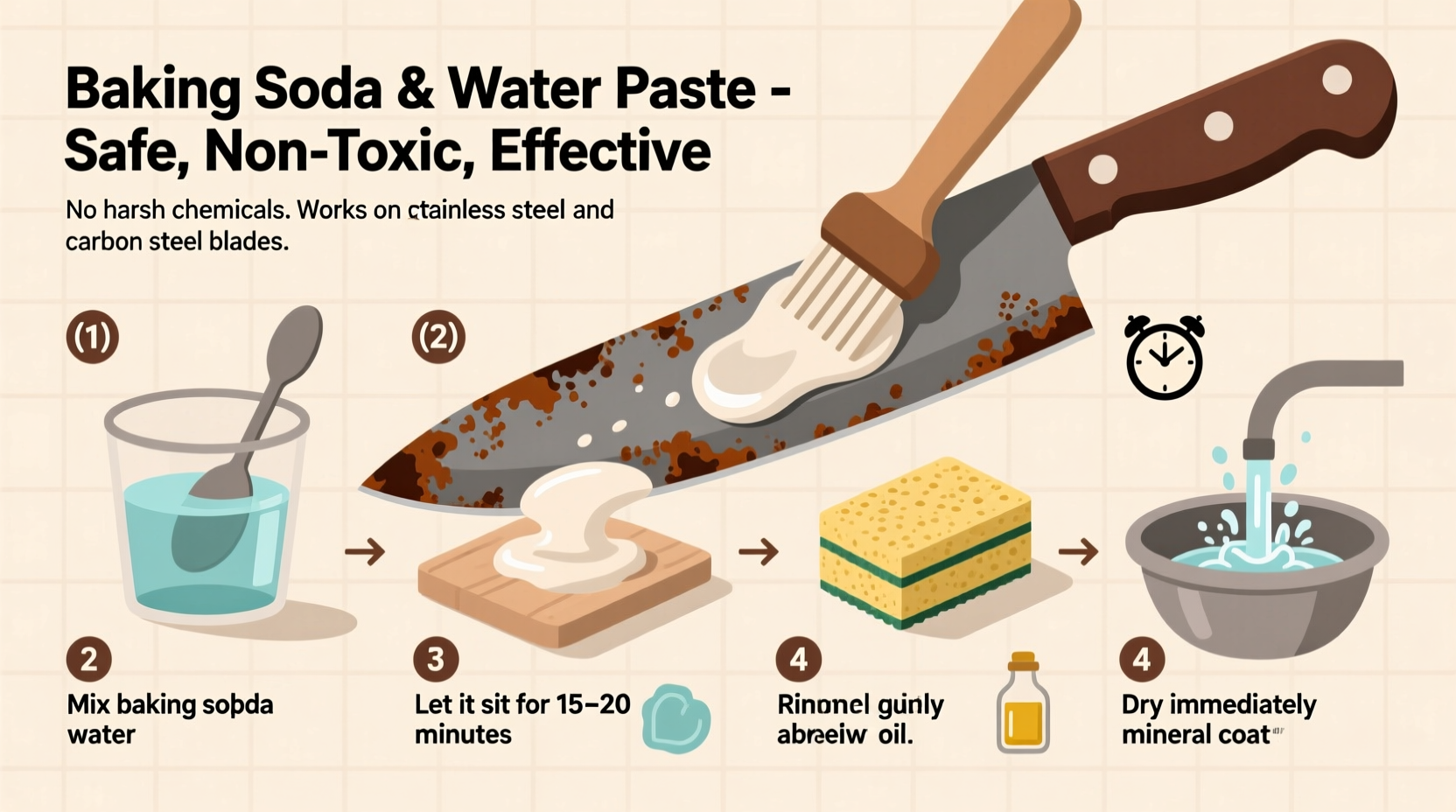
Baking soda, or sodium bicarbonate, is a mild abrasive with slight alkaline properties that help break down iron oxide—the chemical compound behind rust. Unlike acidic rust removers (such as vinegar or lemon juice), baking soda is gentle on most metals, reducing the risk of pitting or etching. When mixed into a paste, it forms a controlled scrubbing agent that lifts rust from the surface without requiring aggressive brushing or steel wool that could scratch the blade.
Additionally, baking soda is non-toxic, readily available, and safe to use around food prep tools when properly rinsed. This makes it ideal for kitchen knives where chemical residue is a concern.
“Baking soda offers a balanced approach—effective enough to lift light to moderate rust, yet gentle enough for frequent use on carbon steel and stainless alloys.” — Dr. Alan Reed, Materials Scientist & Cutlery Conservation Consultant
Step-by-Step Guide: Removing Rust with Baking Soda
This method is suitable for most metal knives, including carbon steel, stainless steel, and high-carbon variants. Avoid using it on wooden-handled knives unless the handle is well-sealed, as prolonged moisture exposure may cause swelling or cracking.
- Remove the knife from its sheath or block and inspect the extent of rust. Light surface rust appears as orange speckles; heavy buildup looks flaky and dark brown.
- Rinse the blade gently under lukewarm water to remove loose debris. Do not soak unless necessary.
- Dry the knife thoroughly with a soft towel. Focus on joints or crevices where moisture hides.
- Prepare the baking soda paste: Mix 3 parts baking soda with 1 part water in a small bowl. Stir until it forms a thick, toothpaste-like consistency.
- Apply the paste directly to rusted areas using fingers, a cotton swab, or a soft cloth. Cover all affected zones evenly.
- Let it sit for 10–15 minutes. For heavier rust, extend to 30 minutes—but do not leave overnight, as prolonged contact may affect some finishes.
- Gently scrub in circular motions with a soft-bristled toothbrush or microfiber cloth. Avoid metal brushes or abrasive pads.
- Rinse under running water and dry immediately with a lint-free towel.
- Inspect the blade. Repeat the process if rust remains.
- Apply a thin layer of food-safe mineral oil to protect the metal and prevent new oxidation.
Do’s and Don’ts When Using Baking Soda on Knives
| Do’s | Don’ts |
|---|---|
| Use distilled or filtered water to minimize mineral deposits | Soak knives for extended periods—especially those with riveted handles |
| Wear gloves to protect hands from prolonged contact with paste | Use on knives with cracked, unsealed wooden or bone handles |
| Store treated knives in a dry, ventilated area after oiling | Scrub aggressively—this can damage the blade’s edge or finish |
| Test on a small area first if the knife has a special coating | Mix baking soda with vinegar for “extra power”—this neutralizes both substances and reduces effectiveness |
| Reapply mineral oil monthly for long-term protection | Leave the knife wet or damp after cleaning |
Real Example: Restoring a Heirloom Kitchen Knife
Sarah from Portland inherited her grandmother’s chef’s knife, a high-carbon steel model from the 1950s. After decades in a humid basement, the blade was covered in patchy rust, and the edge had dulled. Unsure whether to discard it, she tried the baking soda method. After two applications over two days, the rust lifted cleanly, revealing the original stamped logo and smooth metal beneath. She finished by honing the edge and applying mineral oil. Today, the knife is back in regular use—a functional family heirloom preserved without professional refinishing.
This case illustrates how early-stage rust responds well to gentle treatments. Even neglected blades can be revived—if corrosion hasn’t penetrated deeply into the metal.
Preventing Future Rust: Long-Term Care Tips
Prevention is more effective than restoration. Once your knife is rust-free, maintain it properly to avoid recurrence.
- Dry immediately after washing. Never air-dry knives, especially in humid climates.
- Avoid dishwashers. High heat and detergents accelerate oxidation and degrade handles.
- Store in a dry block or on a magnetic strip away from sinks or stovetops where steam accumulates.
- Oil occasionally. A drop of mineral oil on the blade every few weeks creates a protective barrier.
- Use regularly. Frequent handling and wiping reduce moisture retention and keep edges sharp.
Frequently Asked Questions
Can I use baking soda on stainless steel knives?
Yes. While stainless steel resists rust better than carbon steel, it’s not immune—especially when exposed to salt, acids, or moisture over time. Baking soda is safe for most stainless blades and won’t damage the chromium oxide layer that provides corrosion resistance.
Will baking soda dull my knife’s edge?
No, when used correctly. The paste is mildly abrasive but not hard enough to erode steel significantly. However, avoid scrubbing along the cutting edge at an angle; instead, move perpendicularly across the blade face to preserve sharpness.
How often can I use this method?
Only as needed. Repeated applications within short intervals suggest an underlying storage or usage issue. Address humidity, cleaning habits, or improper drying rather than relying on frequent de-rusting.
Essential Checklist for Safe Rust Removal
Before starting, gather these items and follow this sequence to ensure success:
- ☐ Baking soda (at least ¼ cup)
- ☐ Distilled water
- ☐ Small mixing bowl
- ☐ Soft cloth or cotton swabs
- ☐ Soft-bristled toothbrush
- ☐ Lint-free towel
- ☐ Food-safe mineral oil
- ☐ Gloves (optional but recommended)
- ☐ Well-ventilated workspace
- ☐ Time: Allow 20–40 minutes for treatment and drying
Conclusion: Keep Your Knives Sharp, Safe, and Rust-Free
Rust doesn’t have to spell the end for your favorite knives. With a simple paste of baking soda and water, you can safely reverse corrosion, restore functionality, and extend the life of your tools. The method is accessible, eco-friendly, and especially valuable for those who rely on their knives daily—whether in the kitchen, garage, or outdoors. What matters most isn’t perfection, but consistency: regular care prevents small issues from becoming irreversible damage.




 浙公网安备
33010002000092号
浙公网安备
33010002000092号 浙B2-20120091-4
Comments
No comments yet. Why don't you start the discussion?