
Starting an exercise routine at home can feel overwhelming, especially if you've never worked out before. The good news? You don’t need fancy equipment or a gym membership to build strength, improve endurance, and boost your confidence. With the right approach, even 20 minutes a day can lead to noticeable changes in energy, mood, and physical fitness.
The key is starting simple, staying consistent, and designing a plan that fits your lifestyle. This guide outlines practical strategies, sample routines, and mindset shifts that help beginners transition from hesitation to habit—safely and sustainably.
Why Home Workouts Work for Beginners
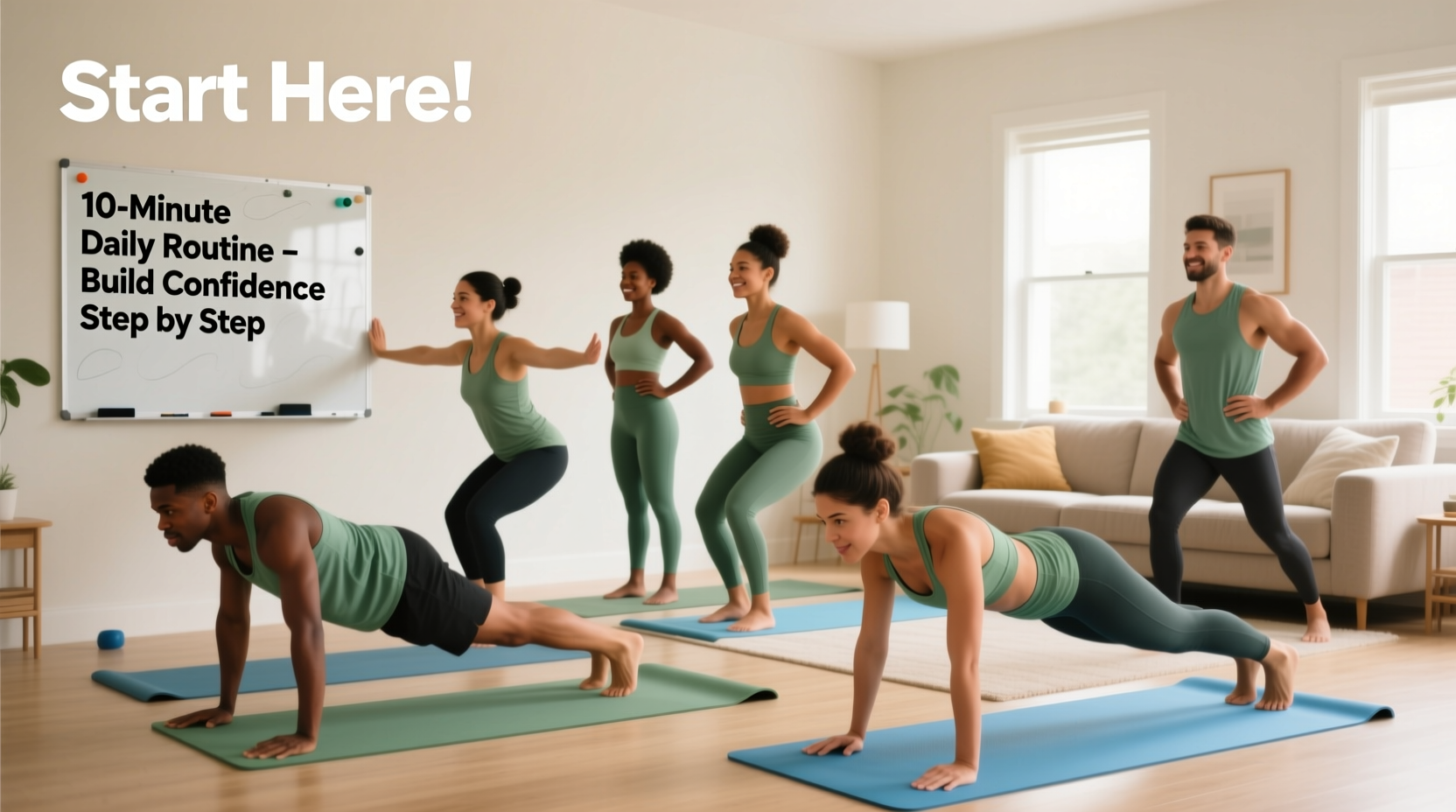
Home workouts eliminate common barriers like travel time, gym intimidation, and cost. They also offer flexibility—essential for building long-term consistency. Research from the American College of Sports Medicine shows that bodyweight training, when performed regularly, improves muscular strength, cardiovascular health, and joint stability as effectively as gym-based routines—for beginners.
More importantly, exercising at home allows you to focus on form and self-awareness without external pressure. This creates a safe environment to learn, make mistakes, and grow at your own pace.
Your First 4-Week Plan: A Step-by-Step Guide
Jumping into hour-long workouts can lead to burnout or injury. Instead, follow this progressive timeline designed for total beginners. Each phase builds confidence while improving coordination and stamina.
- Week 1–2: Foundation & Familiarity
Focus on learning basic movements. Perform three 15–20 minute sessions per week using only your body weight. - Week 3: Add Structure
Increase to four sessions weekly. Introduce light resistance (e.g., water bottles, backpacks) and slightly longer durations (25 minutes). - Week 4: Build Confidence
Aim for five sessions across the week. Include one “challenge” workout where you try completing all exercises back-to-back with minimal rest.
Sample Beginner Routine (Week 1–2)
| Exercise | Sets | Reps or Duration | Purpose |
|---|---|---|---|
| Marching in Place | 1 | 2 minutes | Warm-up circulation |
| Bodyweight Squats | 2 | 10 reps | Leg strength, balance |
| Wall Push-Ups | 2 | 8–10 reps | Chest, shoulder activation |
| Standing Rows (using towel or resistance band) | 2 | 10 reps | Back muscle engagement |
| Glute Bridges | 2 | 12 reps | Core and hip stability |
| Standing Marches (High Knees) | 2 | 30 seconds | Cardio boost |
| Child’s Pose / Standing Stretch | 1 | 1 minute | Cool-down & relaxation |
Rest 30–60 seconds between sets. As movements become easier, increase repetitions by 2–3 each week.
Common Mistakes That Undermine Progress
New exercisers often unknowingly sabotage their efforts. Avoid these pitfalls to protect motivation and prevent injury.
- Doing too much too soon: Soreness isn’t a badge of honor. Overexertion leads to missed workouts and frustration.
- Neglecting form: Moving quickly through squats or push-ups reduces effectiveness and increases injury risk.
- Skipping warm-ups and cool-downs: These prepare your body and mind, reducing stiffness and mental resistance over time.
- Waiting for motivation: Relying on how you “feel” makes consistency impossible. Schedule workouts like appointments.
“Beginners who focus on movement quality over quantity see better adherence and fewer injuries.” — Dr. Lena Patel, Physical Therapist & Movement Educator
Real Example: How Maria Built Confidence at Home
Maria, 47, hadn’t exercised in over a decade. She felt self-conscious about her fitness level and feared looking awkward in public classes. After reading about beginner-friendly routines, she committed to five 20-minute sessions per week in her living room.
She started with seated marches and wall push-ups. By week three, she added floor squats and modified planks. Within six weeks, Maria noticed improved posture, less lower back discomfort, and greater energy during the day. More importantly, she no longer dreaded working out—she looked forward to it.
“I didn’t lose 20 pounds overnight,” she said. “But I gained something better: the belief that I can do this.”
Essential Tips for Staying Motivated
Motivation fades. Systems last. Use these strategies to keep moving forward—even on low-energy days.
- Wear workout clothes during the day to reduce friction when it’s time to start.
- Pair exercise with something enjoyable—like listening to a podcast or favorite playlist.
- Invite a friend to join virtually. Accountability increases completion rates by up to 65%, according to a study in the Journal of Behavioral Medicine.
- Set non-scale victories: “I want to climb stairs without getting winded” or “Hold a plank for 20 seconds.”
Beginner Workout Checklist
Use this checklist before starting your first month:
- ✅ Choose a dedicated space (even a corner works)
- ✅ Gather minimal supplies (yoga mat or towel, water bottle)
- ✅ Pick 3 fixed days/times for workouts
- ✅ Learn proper form via trusted video tutorials
- ✅ Start slow—focus on control, not speed
- ✅ Record your first session to track progress later
- ✅ Celebrate finishing—not just performance
Frequently Asked Questions
How do I know if I’m doing the exercises correctly?
Record yourself or use a mirror to check alignment. Key cues: knees aligned over toes during squats, back flat during planks, and shoulders relaxed during arm movements. If unsure, consult free instructional videos from certified trainers on reputable platforms like YouTube (look for channels affiliated with NASM, ACE, or ACSM).
Can I build muscle without weights?
Absolutely. Bodyweight training builds functional strength, especially when you progressively increase difficulty—such as switching from wall push-ups to knee push-ups, then full push-ups. Muscle adapts to resistance, regardless of source.
What should I do if I miss a workout?
Don’t double up. Just resume your next scheduled session. Missing one day doesn’t break progress; giving up does. Treat it like brushing your teeth—if you skip one night, you just brush the next morning.
Build Strength, One Rep at a Time
Confidence in fitness doesn’t come from perfection. It comes from showing up, trying, and continuing—even when it feels awkward. Every squat, every stretch, every breath taken during your home workout strengthens more than your muscles. It strengthens your belief in what you’re capable of.
You don’t need expensive gear or perfect conditions. You need a plan, patience, and permission to start small. In four weeks, you’ll move with more ease. In eight, you’ll notice real change. And in twelve, you might not recognize the person who once doubted they could begin.




 浙公网安备
33010002000092号
浙公网安备
33010002000092号 浙B2-20120091-4
Comments
No comments yet. Why don't you start the discussion?