
In many households, access to clean, safe drinking water is not guaranteed—whether due to aging infrastructure, rural living, or emergency situations. Contaminants like bacteria, viruses, heavy metals, and sediment can compromise water quality and pose serious health risks. Fortunately, several proven techniques exist to clear and purify water at home without relying on commercial bottled water. This guide outlines reliable, accessible methods that balance effectiveness, cost, and ease of use, empowering you to take control of your household’s water safety.
Why Home Water Purification Matters
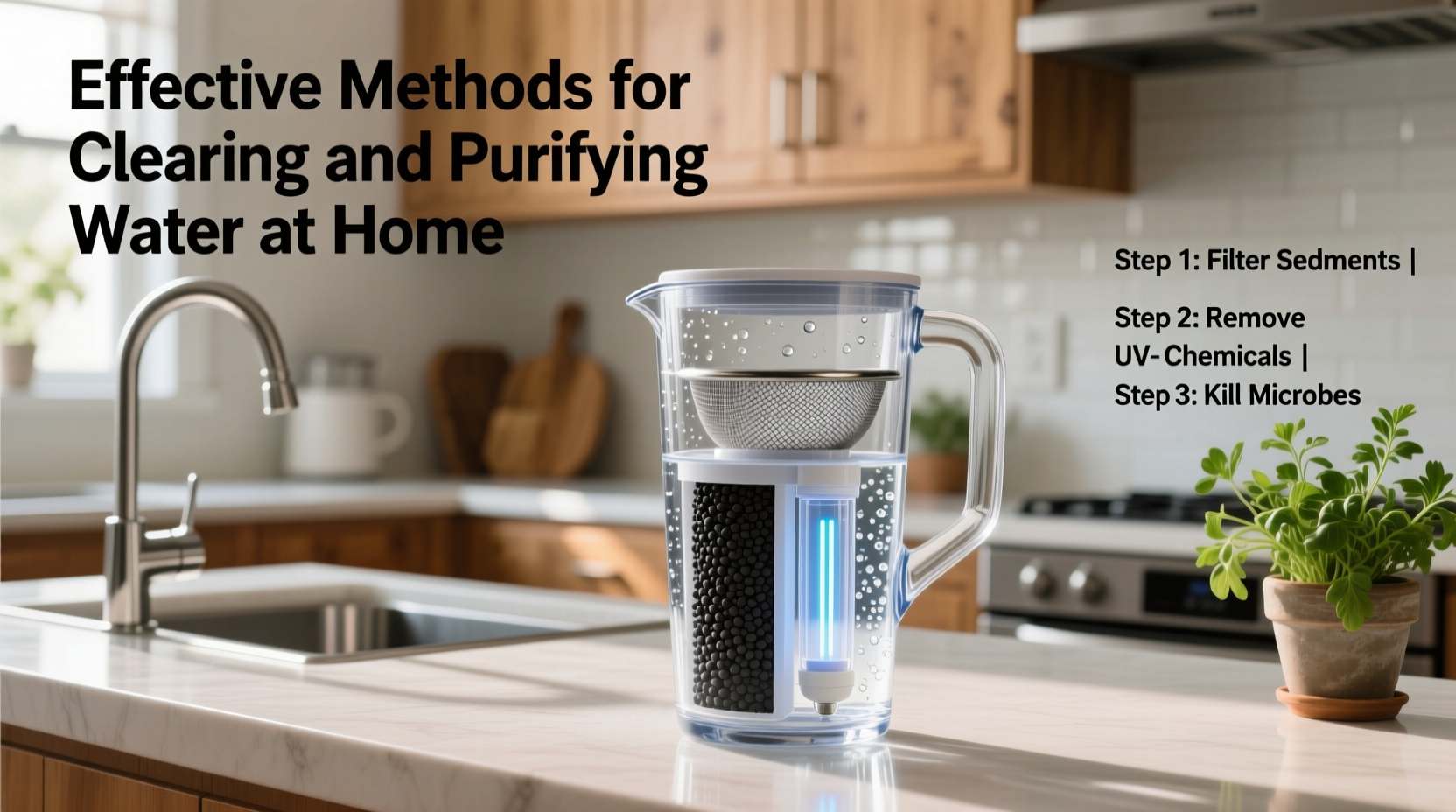
Even municipal water supplies can experience contamination during distribution. Private wells are especially vulnerable to runoff, septic leakage, and natural mineral deposits. According to the World Health Organization, unsafe water contributes to millions of illnesses annually, including cholera, dysentery, and hepatitis A. Treating water at home reduces exposure to pathogens and particulates, ensuring safer consumption for you and your family.
Water purification isn’t just about removing microorganisms—it also involves clarifying cloudy water by eliminating suspended particles and reducing chemical contaminants such as chlorine, lead, or pesticides. The right method depends on your water source, available tools, and intended use.
Common Contaminants in Household Water
Understanding what might be in your water helps determine the best purification approach. Common threats include:
- Bacteria and viruses: E. coli, Giardia, norovirus
- Protozoa: Cryptosporidium, often resistant to chlorine
- Sediment: Dirt, rust, sand causing cloudiness
- Heavy metals: Lead, arsenic, mercury from pipes or soil
- Chemicals: Pesticides, nitrates, chlorine byproducts
Purification strategies must address both biological agents and physical impurities to ensure comprehensive safety.
Step-by-Step: Effective Water Purification Methods
No single method removes all contaminants. A layered approach—first clearing, then purifying—is most effective. Follow this sequence for optimal results:
- Pre-filtering (for cloudy water): Use a coffee filter, cloth, or fine mesh to remove visible debris.
- Settling: Let water sit for several hours so heavier particles sink.
- Primary purification: Apply one or more core treatment methods.
- Final filtration: Run through a certified filter for taste and residual particles.
Boiling: The Most Reliable Pathogen Killer
Boiling remains the oldest and most dependable method for killing disease-causing organisms. To properly boil water:
- Bring water to a rolling boil for at least 1 minute (3 minutes at elevations above 6,500 feet).
- Cool naturally and store in clean, sealed containers.
Boiling does not remove chemicals, heavy metals, or particulates, but it effectively neutralizes biological threats. It’s ideal when power and fuel are available.
Filtration: Physical Removal of Impurities
Home filtration systems vary widely in capability. Key types include:
| Filter Type | Removes | Limits |
|---|---|---|
| Activated Carbon | Chlorine, VOCs, bad taste/odor | Doesn't remove microbes or heavy metals |
| Ceramic | Bacteria, protozoa, sediment | Slow flow; doesn’t remove viruses |
| Reverse Osmosis (RO) | Lead, fluoride, nitrates, microbes | Wastes water; requires installation |
| UV Purifiers | Viruses, bacteria (when water is clear) | Requires electricity; ineffective in cloudy water |
For best results, combine filters—e.g., a ceramic pre-filter followed by activated carbon—especially if using well or stream water.
Chemical Disinfection: Portable and Practical
Household bleach and specialized purification tablets offer convenient disinfection when boiling isn’t possible.
To use unscented bleach (5–9% sodium hypochlorite):
- Add 8 drops per gallon of clear water (16 drops if cloudy).
- Stir and wait 30 minutes before drinking.
- Water should have a faint chlorine smell; if not, repeat and wait another 15 minutes.
Iodine and chlorine dioxide tablets are also effective, though iodine is not recommended for pregnant women or those with thyroid conditions. Chlorine dioxide excels at neutralizing Cryptosporidium, which resists chlorine.
Solar Disinfection (SODIS): Low-Cost Option
In sunny climates, SODIS uses UV radiation and heat to purify water. Process:
- Fill clear PET plastic bottles with pre-filtered water.
- Place horizontally on a reflective surface (like metal or concrete).
- Expose to full sunlight for 6 hours (or 2 consecutive days if overcast).
This method kills bacteria and viruses but won’t remove chemicals or improve taste. It’s best suited for emergencies or off-grid living.
Mini Case Study: Rural Household Water Safety Upgrade
The Thompson family lives in a remote area relying on a shallow well. After recurring stomach issues, they tested their water and found coliform bacteria and elevated iron levels. They implemented a three-stage solution:
- A 5-micron sediment filter to remove rust and particles.
- A UV purifier to eliminate microbial contamination.
- An activated carbon filter to reduce iron-related metallic taste.
Within weeks, water clarity improved, and illness episodes stopped. Annual testing confirmed sustained safety. Their total investment was under $500, with minimal maintenance required.
“Point-of-use treatment systems can dramatically improve water safety, especially in underserved areas.” — Dr. Lena Patel, Environmental Health Scientist, CDC
Do’s and Don’ts of Home Water Treatment
| Do | Don’t |
|---|---|
| Test your water source annually | Assume clear water is safe to drink |
| Replace filters according to manufacturer guidelines | Use scented or color-safe bleach for disinfection |
| Store purified water in food-grade, BPA-free containers | Leave treated water in direct sunlight long-term (can degrade plastic) |
| Combine methods for comprehensive protection | Ignore expiration dates on purification tablets |
Checklist: Building Your Home Water Purification System
- ✅ Identify your water source (municipal, well, rainwater, etc.)
- ✅ Test water for common contaminants (kits available online or via local health departments)
- ✅ Choose a primary purification method based on test results
- ✅ Add pre-filtration for cloudy or particle-heavy water
- ✅ Install final polishing filter (carbon or RO) for taste and chemical reduction
- ✅ Establish a maintenance schedule (filter changes, system cleaning)
- ✅ Store treated water properly in dark, cool conditions
- ✅ Re-test every 6–12 months to confirm ongoing safety
FAQ
Can I use my refrigerator’s filter as my main purification system?
Refrigerator filters typically use activated carbon and reduce chlorine and sediment, but they do not remove bacteria, viruses, or heavy metals like lead unless specifically designed to do so. For complete protection, especially with untrusted sources, additional treatment is recommended.
Is boiled water completely safe?
Boiling eliminates biological contaminants but does not remove chemicals, heavy metals, or microplastics. If your water is suspected of chemical contamination, combine boiling with activated carbon or reverse osmosis filtration.
How long can I store purified water?
Properly stored in clean, sealed, food-grade containers away from light and heat, purified water can last up to 6 months. Rotate supplies every 6 months for emergency preparedness.
Conclusion
Access to clean water should never be taken for granted. By understanding and applying effective home-based purification methods—boiling, filtration, chemical treatment, and solar disinfection—you can safeguard your household’s health with confidence. No single solution fits all scenarios; combining techniques tailored to your water source offers the strongest defense against contamination. Whether preparing for emergencies or improving daily water quality, the knowledge and tools are within reach.




 浙公网安备
33010002000092号
浙公网安备
33010002000092号 浙B2-20120091-4
Comments
No comments yet. Why don't you start the discussion?