
In coastal regions, on boats, or during emergencies, access to fresh drinking water can become a critical challenge. While oceans cover over 70% of the planet, their salt-laden water is undrinkable without treatment. Desalination—the process of removing salt and impurities from seawater—has long been used in industrial plants, but it’s also possible to achieve on a smaller scale at home. With the right knowledge and tools, individuals can produce safe, drinkable water even when traditional sources are unavailable.
This guide explores proven, accessible methods for desalinating ocean water at home, including DIY techniques, equipment recommendations, safety considerations, and real-world applications. Whether you're preparing for emergencies, living off-grid, or simply curious about self-sufficiency, these strategies offer practical solutions grounded in science and field-tested experience.
Understanding the Basics of Desalination
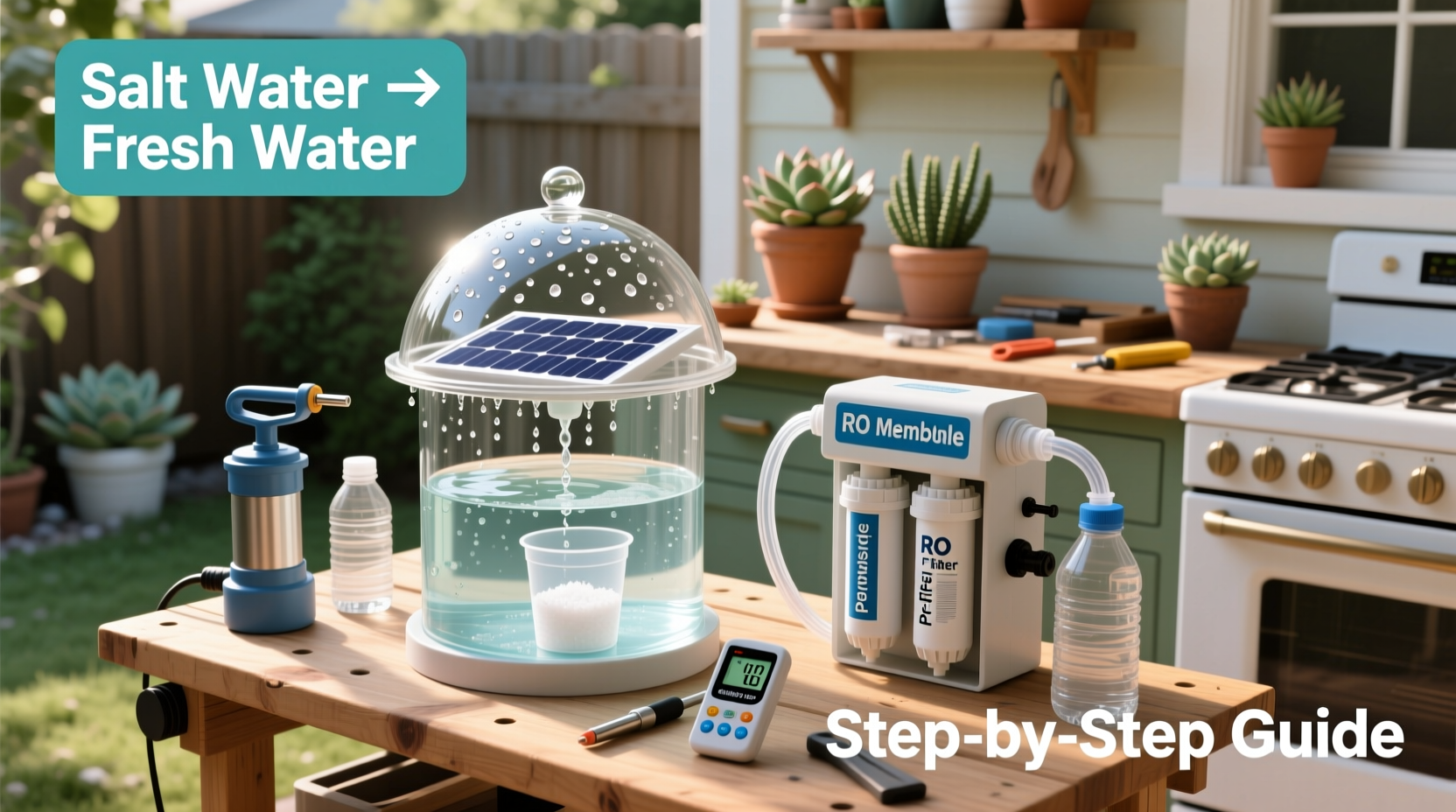
Desalination removes dissolved salts, minerals, and contaminants from seawater to make it potable. The two most common scientific approaches are distillation and reverse osmosis. Distillation involves boiling water and collecting the condensed vapor, leaving salts behind. Reverse osmosis forces water through a semi-permeable membrane that filters out ions, molecules, and larger particles.
While large-scale desalination plants use energy-intensive systems, scaled-down versions can be adapted for household or emergency use. However, not all methods are equally efficient or safe. Factors such as energy source, time, equipment cost, and water quality must be considered before choosing a technique.
Practical Methods for Home Desalination
1. Solar Still (Passive Distillation)
A solar still uses sunlight to evaporate seawater and condense it into fresh water. This low-tech method requires no electricity and is ideal for survival situations or off-grid living.
To build a basic solar still:
- Dig a shallow pit in sandy ground near the shore (or use a large bowl).
- Place a clean collection container in the center.
- Pour filtered seawater around the container, ensuring it doesn’t overflow into it.
- Cover the pit with a clear plastic sheet and secure the edges with rocks or soil.
- Place a small stone in the center of the sheet so it dips directly above the container.
As the sun heats the water, evaporation occurs. Moisture condenses on the underside of the plastic and drips into the container. Yield is typically low—one liter per day under optimal conditions—but it’s sustainable and requires minimal resources.
2. Boiling and Condensation (Active Distillation)
This method mimics industrial distillation but uses household items. It’s faster than solar stills but consumes fuel.
Steps:
- Fill a large pot halfway with filtered seawater.
- Place a clean glass bowl in the center, floating if necessary.
- Cover the pot with a lid, inverted so the handle points downward.
- Add ice to the lid’s top to accelerate condensation.
- Boil gently; steam rises, hits the cold lid, condenses, and drips into the bowl.
The collected water in the bowl is distilled and safe to drink. This method can yield 1–2 liters per hour depending on heat intensity.
3. Portable Reverse Osmosis Devices
For those seeking efficiency and higher output, hand-pumped or battery-operated reverse osmosis (RO) units are available for personal or small-family use. These devices force seawater through a fine membrane that blocks salt and pathogens.
Popular models like the Lifestraw Desalinator or SteriPen Adventurer Flow can produce up to 1.5 liters per minute. Though more expensive ($150–$400), they are durable, compact, and suitable for marine adventures or disaster preparedness.
“Hand-powered RO systems have revolutionized emergency water access. They’re not perfect, but they’re the closest thing civilians have to military-grade desalination.” — Dr. Alan Reyes, Environmental Engineer and Disaster Response Consultant
Comparison of Home Desalination Methods
| Method | Time Required | Yield | Energy Source | Best For |
|---|---|---|---|---|
| Solar Still | 6–12 hours | 0.5–1 L/day | Sunlight | Survival, off-grid |
| Boiling & Condensation | 30–60 min | 1–2 L/hour | Gas, propane, wood | Short-term emergencies |
| Portable RO Device | Minutes | 1–1.5 L/min | Manual pump or battery | Boating, expeditions |
Real-World Example: Coastal Emergency Preparedness
Jamie, a resident of a remote island off Maine, experienced a winter storm that knocked out power and disrupted water delivery for five days. With limited bottled water, she turned to her pre-assembled desalination kit: a stainless-steel pot, glass bowl, plastic wrap, and a supply of charcoal filters.
Each morning, she collected and filtered seawater, then used the stove to run a distillation cycle. She produced about 1.5 liters daily—enough to supplement her reserves until services resumed. “I didn’t think I’d actually need it,” she said later, “but having the setup ready saved us stress and kept us hydrated.”
Her story highlights the importance of preparation. Simple tools, stored and tested in advance, made a significant difference when infrastructure failed.
Safety and Best Practices Checklist
- Always filter seawater first to remove biological matter and sediment.
- Use food-grade materials only—avoid plastics that degrade under heat.
- Never drink untreated seawater—even small amounts can cause dehydration and kidney strain.
- Test pH of desalinated water if possible; distilled water is slightly acidic and may benefit from mineral drops.
- Sanitize all equipment before and after use to prevent bacterial growth.
- Store finished water in clean, sealed containers away from sunlight.
- Inspect membranes regularly if using RO devices; clogging reduces efficiency.
Frequently Asked Questions
Can I use a regular water filter to desalinate seawater?
No. Standard filters, including Brita or activated carbon systems, do not remove dissolved salts. Only reverse osmosis or distillation can effectively desalinate seawater.
Is homemade distilled water safe to drink long-term?
Yes, but it lacks essential minerals like calcium and magnesium. For prolonged use, consider adding a pinch of food-grade electrolyte mix or consuming mineral-rich foods to balance intake.
How do I know if my desalinated water is safe?
Test with a TDS (Total Dissolved Solids) meter. Potable water should read below 50 ppm. Taste can also indicate success—desalinated water should be neutral, not salty or metallic.
Conclusion: Prepare Today, Stay Safe Tomorrow
Desalinating ocean water at home isn’t just for scientists or sailors—it’s a viable skill for anyone facing water scarcity. From simple solar stills to advanced portable units, practical options exist for every budget and scenario. The key is understanding the methods, preparing the right tools, and practicing safety at every step.
Start by building a basic solar still or investing in a compact RO device. Test your system with saltwater before an emergency arises. Knowledge and readiness turn a daunting challenge into a manageable task.




 浙公网安备
33010002000092号
浙公网安备
33010002000092号 浙B2-20120091-4
Comments
No comments yet. Why don't you start the discussion?