
Silica dust, commonly generated during construction, masonry, or industrial work, poses serious health risks when inhaled. But its dangers don’t end there—once it settles on clothing, it can linger unnoticed, contaminating homes, vehicles, and laundry areas. Removing silica dust effectively from clothes is not just about cleanliness; it’s a critical step in minimizing long-term exposure to crystalline silica, a known cause of silicosis and lung cancer. This guide outlines proven, practical methods to safely and thoroughly remove silica dust from garments, protect respiratory health, and maintain fabric integrity.
Why Silica Dust on Clothes Is a Serious Concern
Silica dust particles are microscopic—often smaller than 10 microns—and easily become airborne again when disturbed. When workers bring contaminated clothing home, they risk exposing family members to harmful particulates. The Occupational Safety and Health Administration (OSHA) warns that even low-level, repeated exposure can lead to irreversible lung damage. Washing silica-laden clothes improperly can also spread contamination to washing machines, dryer vents, and clean laundry.
“Silica dust isn’t just dirt—it’s a hazardous substance. Treating contaminated clothing like ordinary laundry increases the risk of secondary exposure.” — Dr. Lena Patel, Industrial Hygienist at the National Institute for Occupational Safety and Health (NIOSH)
Step-by-Step Guide to Safely Remove Silica Dust from Clothing
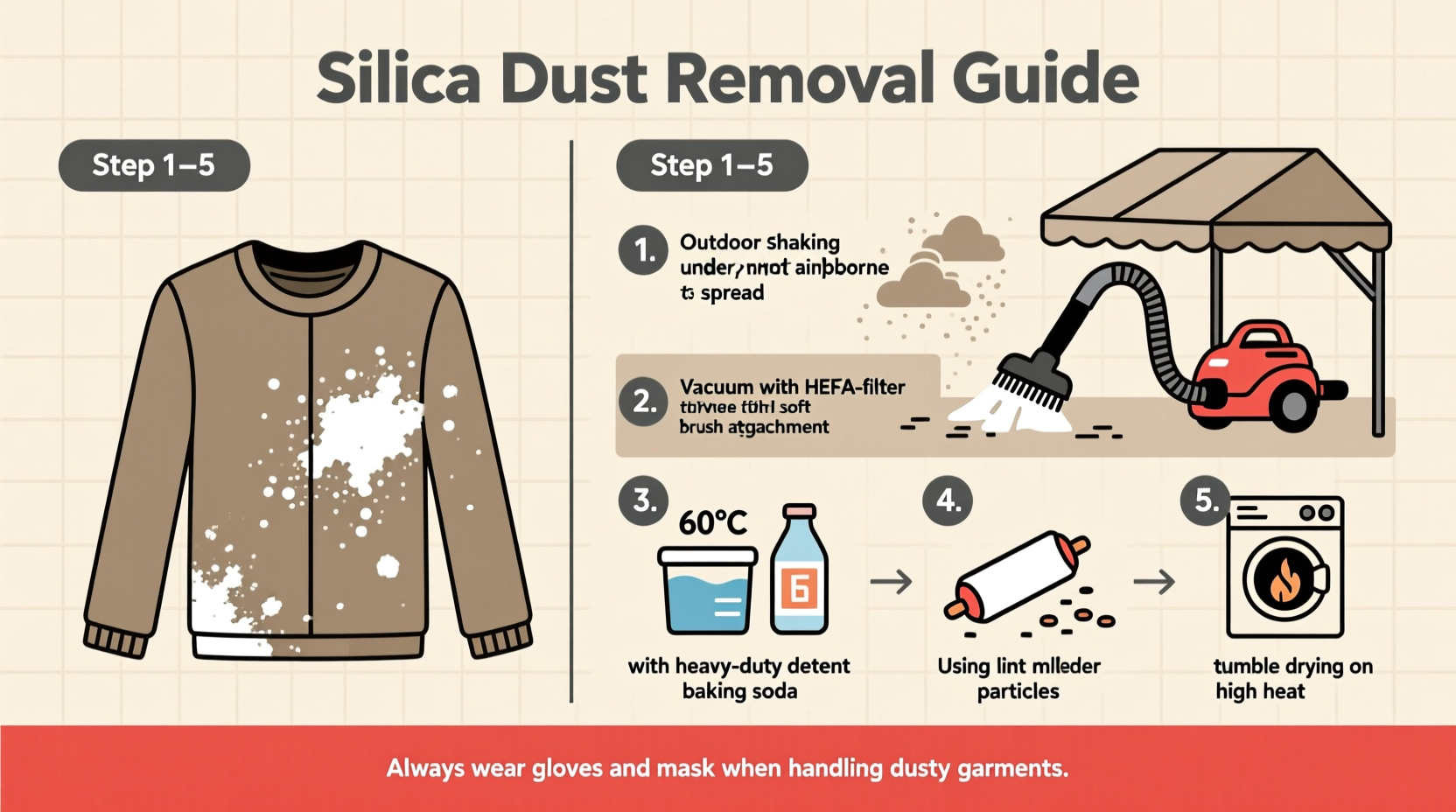
Cleaning silica-contaminated clothes requires more than tossing them into a standard wash cycle. A structured approach minimizes recontamination and ensures thorough particle removal.
- Remove Excess Dust Before Handling: Gently brush off visible dust outdoors using a soft-bristle brush or air compressor (with proper PPE). Never shake clothes indoors—this aerosolizes particles.
- Wear Protective Gear: Put on an N95 respirator, gloves, and safety goggles before handling contaminated garments.
- Bag Clothes Immediately: Place dusty clothing directly into a sealed plastic bag at the worksite to prevent spreading particles.
- Pre-Rinse Under Running Water: If possible, rinse clothes outside using a hose before machine washing. This removes up to 70% of loose particles.
- Wash Separately: Always wash silica-exposed clothing alone. Use hot water (at least 130°F / 54°C) and a heavy-duty detergent with surfactants.
- Add a Dispersant: Include a laundry additive like oxygen bleach or a commercial dispersing agent to help suspend fine particles in water.
- Avoid Overloading: Wash small loads to ensure maximum agitation and cleaning efficiency.
- Dry Thoroughly: Air-dry clothes outdoors if possible. If using a dryer, use high heat and clean the lint trap immediately after.
- Clean the Machine: Run an empty hot cycle with vinegar or a washing machine cleaner afterward to eliminate residual dust.
Do’s and Don’ts of Cleaning Silica-Contaminated Garments
| Do’s | Don’ts |
|---|---|
| Use hot water (above 130°F) | Wash with other household laundry |
| Pre-rinse clothes before washing | Shake or beat clothes indoors |
| Wear protective gear when handling | Use cold water only |
| Use detergents with surfactants or enzymes | Overload the washing machine |
| Run a cleaning cycle after washing | Ignore manufacturer care labels |
Choosing the Right Detergent and Additives
Not all detergents are equally effective at capturing and removing fine particulates like silica. Look for products labeled as “heavy-duty” or designed for workwear. Key ingredients to prioritize include:
- Surfactants: Lower surface tension, helping water penetrate fabric and lift dust.
- Enzymes: Break down organic matter that may bind dust to fibers.
- Oxygen-based bleach: Helps loosen embedded particles without damaging most fabrics.
Avoid chlorine bleach unless specified by the garment manufacturer, as it can degrade certain synthetic fibers commonly used in protective workwear.
Real-World Example: Construction Worker’s Laundry Routine
Carlos, a mason with over 12 years of experience, began experiencing persistent coughing. After a medical check-up, his doctor suspected early signs of respiratory irritation linked to silica exposure. An industrial hygienist reviewed his habits and discovered he was bringing dusty work clothes inside and laundering them with his family’s clothes. Following a revised protocol—using a sealed bin at the job site, pre-rinsing outdoors, and washing separately with hot water and Tide Heavy Duty—Carlos reduced household contamination significantly. Within six months, his symptoms improved, and air sampling in his home showed undetectable levels of respirable silica.
When to Replace vs. Clean Contaminated Clothing
Some garments may be too far gone to clean effectively. Heavily soiled or damaged workwear, especially if worn in high-exposure environments, should be retired. Consider replacement if:
- Fabric appears stiff or discolored despite washing.
- Lint traps consistently collect fine gray dust after multiple washes.
- Clothing has tears or worn seams where dust can embed deeply.
Dispose of heavily contaminated clothing in sealed plastic bags labeled as hazardous waste, following local regulations.
Checklist: Safe Silica Dust Clothing Cleanup Routine
- ✅ Wear N95 mask and gloves when handling dusty clothes
- ✅ Brush off excess dust outdoors before transport
- ✅ Store contaminated garments in sealed plastic bags
- ✅ Pre-rinse under running water before machine wash
- ✅ Wash separately in hot water with heavy-duty detergent
- ✅ Add oxygen bleach or dispersant for better results
- ✅ Dry outdoors or clean lint trap immediately after drying
- ✅ Run a maintenance cycle on the washer afterward
- ✅ Inspect clothing for residue after drying
- ✅ Replace garments that remain contaminated after two washes
Frequently Asked Questions
Can I wash silica-contaminated clothes in a front-loading washer?
Yes, but exercise caution. Front-loaders use less water, which may reduce cleaning efficiency. Ensure you pre-rinse thoroughly and use a high-quality detergent. Always follow up with a cleaning cycle to prevent dust buildup in the drum and seals.
Is it safe to dry silica-exposed clothes in a dryer?
It can be, provided you clean the lint trap immediately after use and ensure the clothes were properly washed first. Residual dust in the dryer can become airborne or create a fire hazard. Whenever possible, air-dry in a well-ventilated outdoor area.
How do I know if my clothes are still contaminated after washing?
Inspect the lint trap after drying. A fine, powdery gray residue indicates remaining silica. You can also perform a water bead test: pour a small amount of water on the fabric. If it beads up instead of soaking in, residues may still be present, requiring another wash.
Protecting Your Health Starts with Smart Laundry Practices
Removing silica dust from clothing isn’t merely a cleaning task—it’s a vital component of occupational health and home safety. By adopting disciplined handling, proper washing techniques, and preventive habits, workers and their families can significantly reduce the risk of long-term respiratory illness. Employers should consider providing on-site laundry services or disposable coveralls for high-exposure tasks. For individuals, consistency is key: treat every dusty garment as potentially hazardous, and follow the steps outlined here without exception.




 浙公网安备
33010002000092号
浙公网安备
33010002000092号 浙B2-20120091-4
Comments
No comments yet. Why don't you start the discussion?